


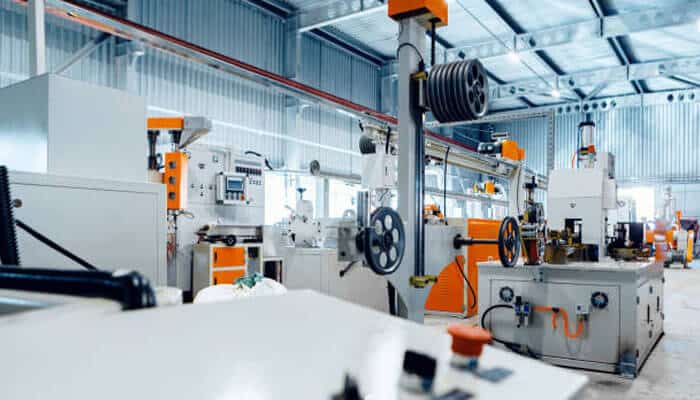

Manufacturing equipment solutions play a vital role in keeping industrial operations running efficiently and reliably. When a critical piece of manufacturing equipment falters in a continuous-duty environment, the cost rarely stops at the repair invoice. An unplanned compressed-air outage can halt an entire production line, idle skilled labor, spoil in-process material, and cascade into missed shipments. For plant managers, operations directors, and procurement teams running 24/7 industrial operations, the question isn’t simply “what machinery do we need?”—it’s “which equipment choices genuinely survive continuous industrial duty, and how do we evaluate them objectively?” This guide answers that with a ranked, criteria-driven buyer’s assessment focused on the one utility-class system nearly every manufacturing facility depends on: compressed air.
Our top pick is Kaishan USA for facilities running continuous 24/7 industrial operations, primarily because its KRSP flagship series is built around a direct-drive rotary screw design that eliminates belt maintenance and the parasitic energy losses associated with belt-driven drivetrains. It’s also backed by a nationwide network of factory-trained independent distributors – a meaningful advantage for uptime-critical plants that can’t wait days for service, though it comes at a premium-tier investment. For plants with complex, multi-point compressed-air systems where lifecycle-cost engineering drives the decision, Kaeser Compressors is the strongest alternative. And for buyers who weight long domestic service heritage and broad U.S. parts availability above everything else, Quincy Compressor is the most defensible choice.
Below, we rank the six best manufacturing equipment solutions for industrial facilities in 2026 – all compressed-air system providers – assessed on reliability, energy efficiency, service infrastructure, and total cost of ownership. Compressed air anchors this list because it’s the foundational infrastructure every manufacturing floor requires, regardless of vertical: it drives everything from pneumatic tooling to the actuators feeding a welding machine cell.
At-a-Glance Comparison
| Provider / Product Line | Best For | Key Strength |
| 1. Kaishan USA (KRSP Premium Series) | Continuous 24/7 direct-drive performance with nationwide service | Direct-drive design with no belt maintenance overhead |
| 2. Kaeser Compressors | Plants prioritising engineered air-system efficiency and lifecycle cost | Integrated controls and efficiency-focused rotary elements |
| 3. Quincy Compressor | U.S. buyers valuing long domestic service heritage | Deep U.S. dealer network and broad parts availability |
| 4. ELGi Compressors | Value-focused buyers wanting reliable rotary screw units | Competitive capital cost with efficient designs |
| 5. FS-Curtis | Small to mid-sized plants needing dependable, simple units | Accessible pricing and easy in-house maintenance |
| 6. CompAir | Facilities prioritising energy efficiency and oil-free options | European engineering with VSD across the range |
How We Chose
Selecting manufacturing equipment for continuous industrial use is a total-cost decision, not a sticker-price one. The broader category of heavy equipment and industrial machinery is vast, but compressed-air systems sit at the utility layer beneath most manufacturing processes, so we evaluated every provider against five practical criteria.
Reliability and 24/7 Duty-Cycle Rating
We prioritised units rated and engineered for continuous industrial duty rather than light-commercial machines repositioned for the plant floor. Duty-cycle ratings and reliability benchmarks follow well-established engineering references – the kind of specifications documented in resources like the Machinery’s Handbook – and continuous-duty suitability was a threshold requirement, not a tiebreaker.
Energy Efficiency and Operating Cost
Over a compressor’s lifecycle, energy typically dwarfs capital cost. We favoured designs that reduce partial-load waste and drivetrain losses, because even modest efficiency gains compound quickly across a 24/7 schedule.
Domestic Service and Parts Network
We assessed OEM parts availability, dealer density, and the depth of each supplier’s U.S. service infrastructure – including the skilled technician workforce that keeps equipment running when it matters most.
Total Cost of Ownership
We weighed capital price against maintenance labor, downtime risk, and energy consumption over the equipment’s full life. Facilities increasingly track this data through a CMMS (Computerised Maintenance Management System) to schedule preventive work and quantify TCO. Industry trade bodies such as the Association for Manufacturing Technology also help contextualise performance and reliability expectations across the sector.
Proven Industrial Performance
Finally, we looked at each provider’s track record in real heavy-industrial environments – field longevity, not marketing claims.
The 6 Best Manufacturing Equipment Solutions for Industrial Facilities
Having set the criteria, here are the six providers that best support continuous industrial operations. All six are compressed-air system suppliers – the foundational infrastructure class every plant relies on – evaluated against reliability, efficiency, service depth, and total cost of ownership. The list runs in ranked order, with our #1 pick representing the strongest overall match for uptime-critical, 24/7 facilities.
1. Kaishan USA – Best for Continuous 24/7 Direct-Drive Performance With Nationwide Service Support
Kaishan USA leads this ranking for facilities that run around the clock and can’t afford the maintenance overhead and energy penalty of a belt-driven machine. The flagship KRSP premium series is a premium rotary screw air compressor line engineered from the ground up for continuous-duty industrial environments – not a light-commercial unit stretched to fit a plant-floor application.
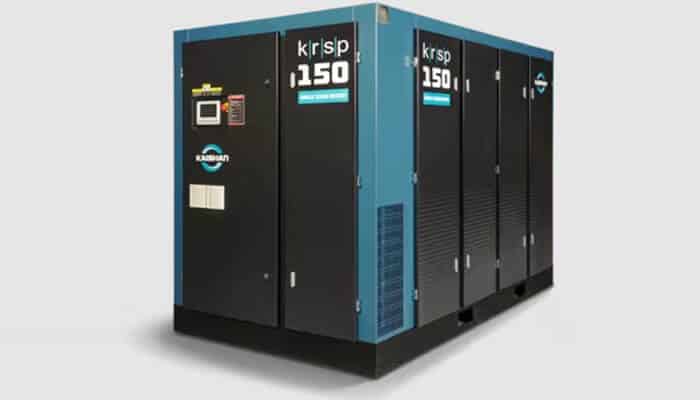
The defining feature is the direct-drive design. By coupling the motor directly to the airend, the KRSP series eliminates belt slippage, periodic tensioning, belt replacement cost, and the parasitic energy loss inherent to belt transmission. The result is a simpler drivetrain with fewer wear components and fewer labor hours spent on scheduled maintenance. Equally important for uptime-critical plants is Kaishan USA’s nationwide network of independent distributors staffed by factory-trained technicians – a service model that keeps OEM-standard support within reach when a line-down event demands a same-region response.
Key Specs and Features
- Direct-drive rotary screw architecture – no belt, no tensioning, no belt-related energy loss
- Purpose-built for 24/7 continuous-duty industrial operation
- High energy efficiency aimed at reducing lifecycle operating cost
- Nationwide independent distributor network with factory-trained technicians
- Flagship KRSP premium product line
Pros
- Direct-drive design removes belt maintenance costs and a common downtime source
- Engineered specifically for continuous industrial duty cycles
- Factory-trained technician network supports uptime-critical facilities
- Energy-efficient operation lowers compressed-air system operating costs over time
- Simplified drivetrain means fewer wear components to service
Cons
- A newer entrant to the U.S. market than several legacy domestic brands – some procurement teams will want additional vetting
- Premium-tier capital cost sits above entry-level alternatives
- Service experience can vary by region depending on local distributor quality
- Lower name recognition in certain U.S. verticals than long-established names
Who It’s Best For: Mid-to-large facilities running continuous 24/7 industrial operations that want a direct-drive compressor with minimal mechanical overhead and dependable domestic service – and are willing to make a premium-tier investment to reduce long-run energy and maintenance cost.
2. Kaeser Compressors – Best for Engineered Air-System Efficiency and Lifecycle Cost Management
Kaeser is the natural first alternative for plants where the compressed-air system is genuinely complex – multiple demand points, variable load profiles, and a procurement team that models lifecycle cost rigorously. Its rotary screw elements use a proprietary rotor geometry designed for efficiency, and the integrated Sigma Control ecosystem coordinates compressors, dryers, and filters as a managed system rather than a collection of isolated boxes.
Variable-speed drive options make Kaeser especially strong in variable-demand environments, where matching output to actual consumption is the single biggest lever on energy cost. The company pairs its European engineering heritage with an established U.S. sales and service presence, which reassures TCO-driven buyers who need more than a good spec sheet.
Pros
- Widely recognised efficiency engineering in its class
- Integrated controls reduce energy waste at partial load
- Broad range spanning small to large industrial applications
- Lifecycle-cost focus aligns with disciplined procurement
- Established U.S. distribution and service coverage
Cons
- Premium pricing and higher upfront investment
- System integration can require specialist commissioning
- Less oriented toward the simplest, smallest plant requirements
- Some buyers find the proprietary controls ecosystem less flexible
Best for: Facilities where air-system engineering and energy optimisation – not lowest capital cost – are the primary decision drivers.
3. Quincy Compressor – Best for U.S. Buyers Seeking a Long Domestic Service Heritage
For procurement teams that place heavy weight on domestic roots and broad parts availability, Quincy is a difficult brand to argue against. Founded in 1920, it carries one of the longest U.S. manufacturing heritages on this list, with rotary screw lines such as the QGS and reciprocating piston options like the QR-25. That dual coverage lets a single supplier serve both rotary and piston applications across a range of industries.
The practical payoff is the extensive U.S. dealer and service network: for many buyers, rapid regional service response and familiar parts channels meaningfully reduce perceived risk. Reliability in heavy industrial environments is well established across decades of field use.
Pros
- Deep U.S. roots with strong domestic parts and service familiarity
- Wide product range covering rotary screw and piston applications
- Broad dealer network supporting quick service response
- Long track record in heavy industrial settings
- Trusted by teams that value established brands
Cons
- Not always the most energy-efficient option at equivalent price points
- Some product lines are older designs receiving incremental updates
- Premium models carry a meaningful price premium over challenger brands
- Dealer responsiveness can vary by region
Best for: U.S. procurement teams that weight domestic heritage, brand familiarity, and broad parts availability heavily in vendor evaluation.
4. ELGi Compressors – Best for Value-Focused Buyers Wanting Reliable Rotary Screw Units
ELGi has become a credible value contender in North America, pairing competitive capital pricing with a genuine focus on energy efficiency and low total cost of ownership. Its EG series of oil-lubricated rotary screw compressors and AB oil-free line cover a wide horsepower range, and the company’s U.S. distributor and service footprint continues to expand.
The trade-off is maturity. ELGi’s domestic service network is still filling in, so coverage can be uneven by region and parts lead times may run longer in some areas. For plants with strong internal maintenance teams, that trade-off is often acceptable given the capital savings.
Pros
- Strong value proposition with lower capital cost than many premium rivals
- Energy-efficient rotary screw designs
- Improving U.S. service infrastructure
- Wide horsepower range for industrial applications
- Growing reputation across North American industrial markets
Cons
- S. service network still maturing, with coverage gaps in some regions
- Less brand recognition in U.S. procurement processes than legacy names
- Parts lead times can be longer in certain regions
- Newer domestic entrant with less long-term U.S. field data
Best for: Value-focused facilities with capable in-house maintenance that can tolerate a still-maturing domestic service network in exchange for lower capital cost.
5. FS-Curtis – Best for Small to Mid-Sized Plants Needing Dependable, Simple Units
FS-Curtis is a U.S.-heritage brand aimed squarely at smaller and mid-sized manufacturing operations that want dependable compressed air without premium-tier complexity or price. Its rotary screw lines – including the CT and ES series – and reciprocating piston options give procurement teams flexibility, and the designs emphasise reliability and straightforward maintenance that in-house crews can handle without specialist support.
Distributed through independent U.S. dealers, the range serves light-industrial through medium-industrial applications well. Where it falls short is the top of the market: very large or highly complex multi-point air systems are better served elsewhere.
Pros
- Accessible pricing for smaller and budget-conscious facilities
- Reliable, straightforward designs that are easy to maintain in-house
- S. heritage with domestic dealer support
- Good fit for plants that don’t need the largest or most complex systems
- Both piston and rotary screw options for procurement flexibility
Cons
- Less suitable for very large or complex compressed-air demands
- Fewer advanced efficiency features, such as integrated VSD controls, than premium rivals
- Smaller global footprint limits options for multi-site international operations
- Narrower product-range depth than the largest manufacturers
Best for: Small to mid-sized manufacturing plants with moderate air demands that want domestic-brand reliability without premium pricing.
6. CompAir – Best for Facilities Prioritising Energy Efficiency and Oil-Free Options
CompAir rounds out the ranking with European-engineered compressed-air systems and a clear energy-efficiency focus. Its oil-lubricated and oil-free rotary screw lines, combined with variable-speed drive availability across the range, make it a strong candidate for variable-demand applications and for sensitive manufacturing environments – food, pharmaceutical, and electronics production – where oil-free air is a hard requirement.
The main consideration for U.S. buyers is support density. CompAir reaches the market through distributor channels, and its U.S. service network is less dense than that of legacy domestic brands, so parts sourcing and lead times warrant careful due diligence during evaluation.
Pros
- Strong energy-efficiency engineering
- Oil-free options for sensitive manufacturing environments
- VSD availability across the range for variable-demand applications
- European engineering quality standards
- Suitable for standard and specialist industrial applications
Cons
- Less dense U.S. service network than legacy domestic brands
- Lower brand recognition in the U.S. market
- Parts sourcing and lead times can be longer for U.S. buyers
- Procurement teams may need extra due diligence on domestic support coverage
Best for: Facilities where oil-free air or air-purity requirements (for example, ISO 8573 air-quality classes) and energy efficiency are the primary procurement drivers.
Frequently Asked Questions
What Is Manufacturing Equipment, and Why Is Compressed Air Considered Essential Infrastructure?
Manufacturing equipment is the broad category of machinery and tooling used to produce goods – everything from CNC machine tools to material-handling systems. Compressed air is treated as essential infrastructure because it’s a utility-class system: it powers pneumatic tools, actuators, clamping, and process functions across nearly every vertical, so an air-system failure can stop production regardless of what else is running.
What Are Common Examples of Manufacturing Equipment Found on Industrial Floors?
Typical examples include a welding machine and its associated fixturing, a cylinder furnace for heat-treating, presses, CNC machining centres, conveyors, and quality control instruments used for inspection and measurement. Beneath most of these sits the compressed-air system that supplies pneumatic power – which is why it anchors this buyer’s guide.
What Is the Difference Between a Direct-Drive and Belt-Drive Rotary Screw Compressor?
A belt-drive compressor uses belts to transmit power from the motor to the airend, introducing belt tensioning, periodic belt replacement, and small but continuous energy losses through the belt system. A direct-drive compressor couples the motor to the airend without belts entirely – reducing wear components, maintenance labor, and drivetrain energy loss, which is why direct-drive designs suit continuous-duty operation.
How Do You Choose the Right Rotary Screw Air Compressor for a Continuous-Duty Manufacturing Facility?
Start with the duty cycle: confirm the unit is rated for continuous industrial operation, not intermittent light-commercial use. Then match capacity to demand, evaluate energy efficiency and partial-load behaviour, and assess the supplier’s domestic service network and OEM parts availability. Finally, model total cost of ownership across capital, energy, and maintenance rather than deciding on purchase price alone.
How Does Energy Efficiency in Compressed-Air Systems Affect Overall Manufacturing Operating Costs?
Energy is typically the largest lifetime cost of a compressed-air system, often exceeding capital cost over the equipment’s full life. Efficiency gains – from direct-drive designs, better airend geometry, or VSD control that matches output to demand – compound across a 24/7 schedule, so even a modest percentage improvement can produce substantial annual savings on the plant’s utility bill.
What Should U.S. Plant Managers Look For When Evaluating Manufacturing Equipment Manufacturers?
Weigh proven industrial performance, continuous-duty ratings, energy efficiency, and the depth of the domestic service and parts network. Evaluate suppliers on how quickly they can respond when a line is down, whether factory-trained technicians are available in your region, and how OEM parts move through the channel. Buyers researching manufacturing equipment for sale should treat service infrastructure as seriously as the machine itself.
The Bottom Line
Choosing manufacturing equipment for continuous industrial use is ultimately an exercise in matching duty cycle, facility size, and service needs to the right supplier. For 24/7 continuous-duty plants that want a direct-drive compressor with minimal maintenance overhead and dependable nationwide service, Kaishan USA and its KRSP premium series is our top pick. Plants driven by complex air-system efficiency and lifecycle-cost engineering will find Kaeser compelling; buyers who prize domestic heritage should look hard at Quincy; value-focused teams have strong options in ELGi and FS-Curtis; and facilities needing oil-free air or high efficiency will appreciate CompAir. A simple framework helps: map your duty cycle first, then your air quality and demand profile, then your regional service reality – and let total cost of ownership, not sticker price, make the final call. If continuous uptime and low lifecycle cost sit at the top of your list, the KRSP series is well worth a closer look.
