


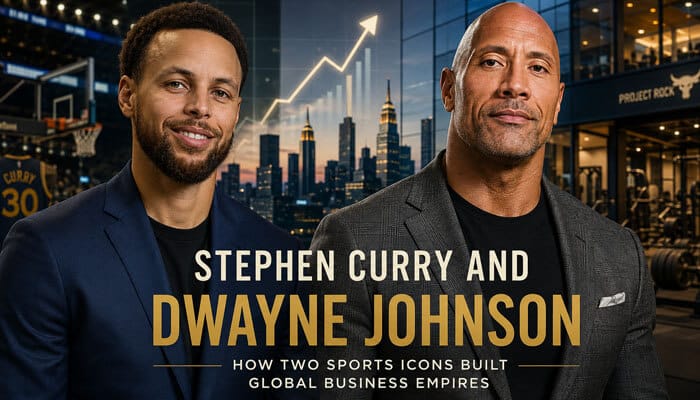

Stephen Curry and Dwayne Johnson did not build their business empires by collecting endorsement checks alone. Curry turned basketball excellence into an organized portfolio spanning footwear, media, venture capital, youth sports, bourbon and philanthropy. Johnson transformed professional-wrestling fame into an entertainment and consumer-business network covering film, television, tequila, energy drinks, personal care, sportswear and professional football.
Their careers developed in different industries, but their business strategies share one central principle: neither man remained only a paid performer. Both moved toward ownership, intellectual property, executive influence and long-term partnerships. They also surrounded themselves with experienced operators capable of turning celebrity attention into functioning companies.
The journeys of Stephen Curry and Dwayne Johnson show that fame can open doors, but lasting enterprise requires credible products, disciplined execution, strategic partners and brands that mean something beyond the celebrity’s name.
Quick Answer: Stephen Curry and Dwayne Johnson
Stephen Curry organizes much of his off-court portfolio through Thirty Ink, a collective covering brands, media, experiences, investments and philanthropy. Curry serves as its CEO, and the wider ecosystem includes Curry Brand, Unanimous Media, UNDERRATED, Gentleman’s Cut, Penny Jar Capital and Eat. Learn. Play.
Curry Brand separated from Under Armour in November 2025. Under Armour launched the Curry 13 as the final Curry Brand x Under Armour signature shoe in February 2026 and said previously planned footwear and apparel would continue through October 2026. Curry Brand later entered a long-term strategic partnership with Li-Ning.
Dwayne Johnson’s portfolio is built around Seven Bucks Productions and several consumer, entertainment and sports ventures. These include Teremana Tequila, ZOA Energy, PAPATUI, Project Rock and the United Football League. Johnson also serves on TKO Group Holdings’ board and secured full ownership of the trademarked name “The Rock” in 2024.
Key Takeaways
- Curry and Johnson progressed from endorsements toward ownership, equity and executive influence.
- Curry’s portfolio is concentrated around sports, media, investing, youth opportunity and philanthropy.
- Johnson’s portfolio spans entertainment, beverages, personal care, sportswear and professional football.
- Thirty Ink gives Curry’s businesses a coordinated parent structure.
- Seven Bucks Productions gives Johnson and Dany Garcia a formal role behind the camera.
- Both entrepreneurs depend on experienced teams rather than personal fame alone.
- Their strongest long-term assets may be their trademarks, media rights, brands and equity holdings.
- Exact company valuations are difficult to verify because many of the ventures are privately held.
Are Stephen Curry and Dwayne Johnson Business Partners?
No major company jointly owned by Curry and Johnson has been publicly documented. Their best-known direct professional connection occurred through HBO’s Ballers. Johnson starred as Spencer Strasmore, a former football player moving into financial management, while Curry appeared as himself during the third season.
Their larger portfolios developed independently. Curry’s business model grew from basketball, footwear, athlete development, media, investments and community programs. Johnson’s model developed through professional wrestling, acting, production, fitness and mass-market consumer products.
The value of comparing them is not that they operate together. It is that they demonstrate two different ways a sports figure can build a commercial platform capable of lasting beyond an active athletic or entertainment career.
Stephen Curry and Dwayne Johnson Business Timeline
| Year | Stephen Curry | Dwayne Johnson |
| 2012 | Curry’s current parent-company structure had not yet emerged | Johnson and Dany Garcia co-founded Seven Bucks Productions |
| 2018 | Unanimous Media expanded Curry’s role in film, television and digital storytelling | Seven Bucks continued developing Johnson’s role as both actor and producer |
| 2019 | Stephen and Ayesha Curry founded Eat. Learn. Play. | Johnson continued expanding his entertainment and consumer-product strategy |
| 2020 | Curry Brand launched within Under Armour | Johnson, Garcia and investment partners acquired the XFL |
| 2021 | Curry became an anchor investor and adviser at Penny Jar Capital | Johnson and his partners developed ZOA Energy |
| 2023 | Curry became president of Curry Brand | Johnson’s portfolio included Seven Bucks, Teremana, ZOA and Project Rock |
| 2024 | Thirty Ink became increasingly visible as Curry’s central organization | Johnson joined TKO’s board and secured ownership of “The Rock” trademark |
| 2025 | Curry Brand and Under Armour announced their separation | Seven Bucks signed a television first-look deal with 20th Television |
| 2026 | Curry Brand announced its strategic Li-Ning partnership | Johnson remained active across Seven Bucks, TKO, PAPATUI, ZOA, Teremana and the UFL |
Seven Bucks identifies Johnson and Garcia as its co-founders, while TKO states that the production company was co-founded in 2012. Penny Jar lists Curry as a special adviser and has also described him as an anchor investor.
How Stephen Curry Built His Business Empire
Thirty Ink: The Structure Behind Curry’s Portfolio
Thirty Ink describes itself as a collective housing Curry’s business entities and aligning purpose with profit. Curry serves as CEO, while the organization works across brands, media, experiences, partnerships, and philanthropy.
This parent structure turns separate ventures into a connected ecosystem.
For example:
- A media production can support a footwear launch.
- A youth-sports platform can strengthen Curry Brand’s mission.
- A corporate partner can contribute to philanthropic programs.
- A personal story can be used across products, content and live experiences.
That is more strategic than treating each endorsement, investment or appearance as an isolated transaction.
Thirty Ink can evaluate whether a proposed venture fits Curry’s values, reaches the right audience and complements businesses already inside the portfolio.
Curry Brand: From Endorsement to Independence
Curry began his relationship with Under Armour in 2013. Curry Brand launched in 2020 as a dedicated footwear and apparel operation inside the company. In 2023, Curry became president of Curry Brand. His responsibilities extended beyond wearing and promoting the products to include athlete insights, product development, marketing, and business strategy.
The relationship changed significantly on November 13, 2025, when Under Armour and Curry announced plans to separate. Under Armour stated that Curry would become independent and that the Curry 13 would be their final co-branded signature shoe.
The Curry 13 launched on February 13, 2026. Under Armour said additional Curry Brand footwear and apparel in basketball and golf would continue to release through October 2026.
Curry Brand’s Partnership With Li-Ning
After separating from Under Armour, Curry Brand announced a long-term strategic partnership with Li-Ning. Curry characterized the relationship as larger than a conventional signature-shoe deal. The plan involves building Curry Brand across basketball, golf and lifestyle categories while using Li-Ning’s product expertise, resources and international footprint.
The announcement also discussed plans for future Curry Brand stores in China and the United States. Those locations should be described as planned expansions rather than already operating stores. Li-Ning is best described as Curry Brand’s strategic partner. The public announcement does not establish that Li-Ning owns the entire company.
Why Curry Brand’s Independence Matters
An independent Curry Brand may give Curry greater influence over:
- Product design
- Athlete partnerships
- Licensing
- Brand positioning
- Retail strategy
- Intellectual property
- International distribution
- Basketball, golf and lifestyle expansion
The potential reward is greater control and a larger share of long-term value. The challenge is that greater independence also brings greater responsibility. Manufacturing, inventory, quality assurance, customer service, marketing and financial performance must still be managed successfully. Celebrity recognition may encourage consumers to try a product once. Repeat purchases depend on performance, value and availability.
Unanimous Media: Owning the Storytelling Platform
Unanimous Media gives Curry a formal platform for developing film, television, publishing, podcast and digital projects. The company is designed to expand Curry’s vision through inspirational and authentic storytelling instead of limiting him to occasional appearances developed by outside studios.
A media company can create value through:
- Development fees
- Production fees
- Distribution agreements
- Licensing
- Publishing
- Podcasts
- Film and television rights
- Intellectual property
It can also strengthen the other businesses inside Curry’s portfolio. A documentary may reinforce the UNDERRATED identity. A family-entertainment project can expand Curry’s audience beyond basketball. A film can support merchandise and footwear collaborations.
How GOAT Connected Media and Consumer Products
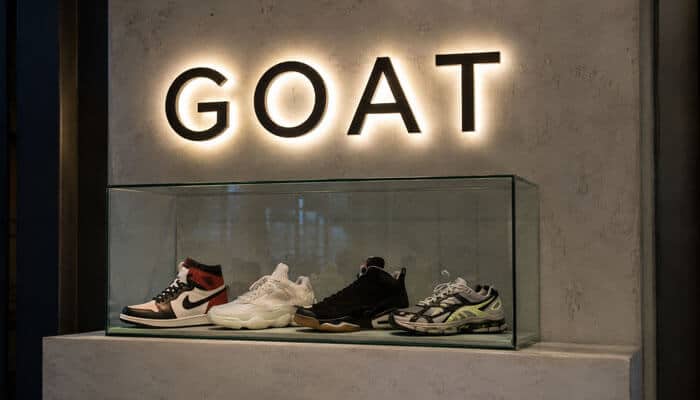
The 2026 animated film GOAT illustrates how Curry can connect media ownership with product marketing. The movie was produced with Unanimous Media, and Curry was involved as both a producer and voice actor. Under Armour connected the Curry 13 launch to the film through character-inspired footwear designs.
The strategy brought several commercial elements together:
- Unanimous Media helped develop the entertainment property.
- Curry’s participation attracted sports audiences.
- Under Armour created related physical products.
- The movie and footwear collection promoted one another.
- The underdog theme matched Curry’s established brand identity.
This is more powerful than an isolated advertisement because the story, product and public figure reinforce the same idea.
UNDERRATED: Converting a Personal Story Into a Platform
Curry was a three-star high-school prospect rather than a nationally dominant recruit. Many leading college basketball programs overlooked him before he attended Davidson College.
That experience became the foundation of UNDERRATED.
Its basketball programming is intended to provide exposure, evaluation resources and development experiences for athletes who may not receive sufficient attention through traditional recruiting systems. The program has included a digital evaluation platform, showcases, instruction, film review and panel discussions involving Curry’s team.
UNDERRATED also expanded into golf, allowing the concept to reach athletes in another sport where access, exposure and financial resources can affect opportunity. The name is commercially effective because it is personal without being exclusive to Curry.
Athletes, students, entrepreneurs and professionals can all relate to being underestimated. That gives UNDERRATED value as:
- A youth-development program
- An event platform
- A sponsorship opportunity
- A media concept
- A broader lifestyle identity
Gentleman’s Cut: Entering the Premium-Spirits Market
Curry entered the spirits industry through Gentleman’s Cut bourbon. The company states that Curry partnered with John Schwartz to create a joint venture with Boone County Distilling. Its bourbon is distilled, aged, and bottled in Boone County, Kentucky, with the core product aged for approximately five to seven years.
A celebrity spirits company can generate revenue through:
- Retail bottle sales
- Bars and restaurants
- Limited editions
- Collaborative releases
- Hospitality partnerships
- Branded events
- Licensing
- Strategic investment or acquisition
Gentleman’s Cut also demonstrates why specialist partners matter. Alcohol production is regulated and operationally complex. Distilling, aging, packaging, distribution and retailer relationships cannot be managed through celebrity visibility alone.
Penny Jar Capital: Curry’s Startup-Investment Strategy
Penny Jar Capital lists Curry as a special adviser. The firm has also publicly described him as an anchor investor, while Bryant Barr and Rich Scudellari serve as its founding partners. This involvement expands Curry’s portfolio beyond consumer products carrying his name.
Venture-capital investments may increase in value when a portfolio company:
- Develops valuable technology
- Gains customers
- Raises additional financing
- Becomes profitable
- Is acquired
- Completes a public offering
The risks are equally important.
Private-company investments can be difficult to sell, valuations may decline, and many startups fail. Curry’s involvement should therefore be described as that of an investor and adviser working alongside professional fund managers—not as the day-to-day operator of every portfolio company.
Eat. Learn. Play.: Connecting Enterprise With Community Impact
Stephen and Ayesha Curry founded Eat. Learn. Play. in 2019 to support children in Oakland through nutrition, literacy, education and access to physical activity.
The foundation reports that it has invested more than $90 million, provided 25 million meals, helped remodel 24 schoolyards and six gymnasiums, redesigned 14 cafeterias and modernized three libraries. It has also committed to delivering tutoring support to 10,000 Oakland students over five years.
These are foundation-reported impact figures rather than audited commercial results.
Eat. Learn. Play. is a nonprofit, not a conventional revenue-producing company. Nevertheless, it strengthens Curry’s broader ecosystem by connecting corporate relationships and public attention with measurable community programs.
How Dwayne Johnson Built His Business Empire
Seven Bucks Productions: The Foundation of Johnson’s Enterprise
Dwayne Johnson and Dany Garcia co-founded Seven Bucks Productions in 2012. The company develops projects across film, television, digital media, podcasts, and other entertainment formats. Its leadership team includes Hiram Garcia as president of production, along with executives responsible for television and film development.
The Seven Bucks name comes from Johnson’s story of reaching a difficult point in his life with only seven dollars in his possession after his football ambitions ended.
That story supports the company’s wider themes:
- Resilience
- Reinvention
- Discipline
- Hard work
- Audience connection
- Building after failure
Seven Bucks allows Johnson to participate in entertainment as more than an actor.
The company can:
- Identify potential projects
- Develop scripts and concepts
- Assemble creative teams
- Negotiate with studios
- Executive-produce content
- Build intellectual property
- Participate in revenue beyond Johnson’s acting salary
Building Ownership Behind the Camera
Seven Bucks has been connected to projects including Ballers, Jumanji: Welcome to the Jungle, Hobbs & Shaw, Young Rock, Red Notice, Black Adam and The Smashing Machine.
Johnson does not necessarily own every character, franchise or completed production associated with Seven Bucks. Entertainment rights may be divided among studios, financiers, producers, distributors and original intellectual-property owners.
The strategic value is that Seven Bucks gives Johnson and Garcia a consistent role in developing and producing content rather than relying entirely on acting opportunities created by other companies.
A successful production company can accumulate:
- Studio relationships
- Development expertise
- Content rights
- Producer fees
- Licensing opportunities
- A recognizable creative brand
- A pipeline of future projects
Disney and 20th Television Agreements
In February 2025, Seven Bucks announced a first-look television agreement with 20th Television. The arrangement allows Johnson, Garcia and the Seven Bucks television team to develop comedy, drama, adult animation, limited series and unscripted projects for Disney-related networks and streaming platforms. It followed an earlier first-look movie agreement with Disney.
A first-look agreement does not mean that Disney must purchase or produce every Seven Bucks proposal. It generally gives the studio an early opportunity to evaluate projects developed by the production company.
For Seven Bucks, the arrangement offers:
- Access to a major studio system
- Global distribution possibilities
- Development resources
- Relationships with networks and streaming platforms
- A continuing pipeline rather than one isolated movie deal
For Disney, the agreement creates access to concepts developed by a production company with an established international audience.
Teremana Tequila: A Founder-Led Consumer Brand
Johnson founded Teremana Tequila and worked with a Mexican family-owned distillery to establish a dedicated production home in the highlands of Jalisco. The company positions the brand around quality, community, gratitude, and bringing people together. Teremana fits Johnson’s public identity because his promotional style frequently emphasizes celebrations, meals, gratitude and relationships.
That connection matters.
Consumers are more likely to accept a celebrity-founded product when it appears consistent with the founder’s established behavior and message.
Teremana can create revenue through:
- Retail bottle sales
- Restaurant and bar distribution
- International distribution
- Craft or limited editions
- Events and hospitality
- Merchandise
- Licensing partnerships
The complete financial arrangements among Johnson, the brand and its commercial partners are private. Precise claims about Johnson’s equity percentage, personal earnings or the company’s valuation should therefore be avoided unless supported by formal disclosures.
ZOA Energy: Competing in a Crowded Beverage Market
ZOA identifies Dwayne Johnson, Dany Garcia, Dave Rienzi and John Shulman as the leadership group behind the brand. Johnson serves as chief energy officer, Garcia as chief visionary officer, Rienzi as chief innovation officer and Shulman as chief positivity officer. ZOA sells energy drinks and pre-workout products.
ZOA differs from a conventional paid endorsement because Johnson is presented as a co-founder rather than only an advertising spokesperson. That may provide greater strategic influence and potential long-term upside, although the exact ownership and compensation terms remain private.
The energy-drink market is highly competitive. Celebrity attention must eventually translate into:
- Repeat purchases
- Retail shelf space
- Consumer loyalty
- Effective distribution
- Competitive pricing
- Product quality
- Profitable customer acquisition
Johnson’s reach can accelerate awareness. It cannot replace these operating requirements.
PAPATUI: Extending Johnson’s Brand Into Personal Care
Johnson founded PAPATUI as a men’s skincare, body-care, grooming and fragrance brand. The company positions its products as simple, effective and accessible. Its range includes face care, body and hair products, deodorant, fragrances and tattoo care. PAPATUI products are promoted through retailers including Target, Walmart and Amazon.
Personal care is a logical extension of Johnson’s identity.
His audience already associates him with:
- Fitness
- Appearance
- Discipline
- Grooming
- Daily routines
- Personal confidence
PAPATUI states that it ranked first in Target’s men’s skincare category based on sales reported by IRI/Circana between February 23 and November 30, 2025. That claim should remain attributed to PAPATUI and include the retailer, category and measurement period.
The ranking is a useful commercial indicator. It is not the same as an audited statement of the company’s total revenue, expenses or profitability.
Project Rock: Turning Fitness Credibility Into Sportswear
Project Rock is Johnson’s performance and training collection with Under Armour. The collection includes clothing, footwear and training accessories associated with Johnson’s “hardest worker in the room” identity. Under Armour’s current Project Rock product listings continue to state that products are approved or tested by Johnson.
This partnership feels credible because fitness has been central to Johnson’s public identity throughout his wrestling and acting careers. A consumer does not need to know his latest film to understand why he is associated with training apparel.
Project Rock demonstrates an important branding principle: the closer a product is to the founder’s established expertise or behavior, the less promotional explanation it requires.
The United Football League: Investing in a Sports Property
Johnson and Garcia entered professional spring football through the acquisition of the XFL alongside investment partners in 2020.
The XFL later combined with the USFL to form the United Football League.
The UFL’s current official description identifies backing from Mike Repole and Impact Capital, RedBird Capital Partners, Fox, Dany Garcia, Dwayne Johnson and ESPN. Johnson and Garcia should therefore be described as part of a broader ownership and backing group rather than the league’s sole owners.
A professional football league can create value through:
- Broadcast and streaming rights
- Sponsorships
- Ticket sales
- Merchandise
- Licensing
- Live events
- Team media
- Player-development relationships
This is a very different business from tequila, skincare or sportswear.
A league requires substantial operating capital and depends on audience growth, venue management, media partners, competitive games and long-term fan loyalty. Johnson’s visibility can support league promotion, but the league’s survival ultimately depends on sustainable economics and operational execution.
TKO and Ownership of “The Rock” Trademark
Johnson joined the TKO Group Holdings board on January 23, 2024, and continues to be listed as a director.
As part of the agreement, Johnson received full ownership of the trademarked name “The Rock.” WWE also entered into services, licensing, and merchandising arrangements with him.
Trademark ownership may create value across:
- Merchandise
- Entertainment projects
- Licensing
- Advertising
- Digital media
- Live appearances
- Consumer products
The arrangement is strategically significant because “The Rock” is not merely a nickname. It is a globally recognized commercial identity.
Johnson’s board position does not mean that he owns or controls TKO. It gives him a governance role within a larger publicly traded sports-and-entertainment company.
Stephen Curry and Dwayne Johnson Business Comparison
The table below compares publicly documented activities. It does not assume that either celebrity owns 100% of every listed venture.
| Business Area | Stephen Curry | Dwayne Johnson |
| Central organization | Thirty Ink | Seven Bucks Companies and Seven Bucks Productions |
| Media production | Unanimous Media | Seven Bucks Productions |
| Sportswear | Independent Curry Brand with Li-Ning partnership | Project Rock with Under Armour |
| Alcohol brand | Gentleman’s Cut bourbon | Teremana Tequila |
| Energy products | No major standalone public energy brand | ZOA Energy |
| Personal care | No major standalone public personal-care line | PAPATUI |
| Athlete development | UNDERRATED Basketball and Golf | UFL sports platform and related athlete opportunities |
| Venture investing | Penny Jar Capital adviser and anchor investor | Investments and partnerships across several ventures |
| Social impact | Eat. Learn. Play. | Charitable activities and brand-supported programs |
| Corporate role | CEO of Thirty Ink | TKO board director |
| Intellectual property | Curry Brand and media properties | “The Rock” trademark and media properties |
| Core message | Opportunity for overlooked talent | Resilience, discipline and hard work |
| Public marketing style | Selective and team-oriented | Highly visible founder promotion |
Who Has the Bigger Business Empire?
Based on the number of mass-market categories, Dwayne Johnson appears to operate the broader portfolio. His businesses reach entertainment, tequila, energy drinks, personal care, sportswear, professional football and corporate governance.
Curry’s portfolio is more concentrated around sports, media, startup investing, athlete development, consumer products and community impact.
However, “bigger” cannot be determined reliably through the number of brands alone.
A valid financial comparison would require information about:
- Revenue
- Profitability
- Debt
- Equity percentages
- Licensing terms
- Cash flow
- Private-company valuations
Most of those details are not publicly available.
Johnson appears to have greater category breadth. Curry appears to have a more centralized portfolio built around a narrower set of connected themes.
How Their Companies Make Money
The phrase “business empire” can hide important differences in ownership.
Depending on the venture, Curry or Johnson may act as:
- Founder
- Co-founder
- Investor
- Adviser
- Executive
- Trademark owner
- Producer
- Licensing partner
- Brand ambassador
- Board director
Those roles do not provide identical control or financial benefits.
Product Sales
Footwear, clothing, tequila, bourbon, energy drinks and personal-care products generate revenue through retail stores, hospitality businesses and online sales.
Licensing and Royalties
A company may pay for the right to use a celebrity’s name, image, trademark or other intellectual property.
Compensation may include:
- Fixed fees
- Sales royalties
- Performance bonuses
- Equity
- Combinations of these arrangements
Equity Ownership
Founders and investors may own a percentage of a company.
That stake can become more valuable when the company grows, becomes profitable, raises capital or is acquired.
Equity also involves risk. Private shares may be difficult to sell and can lose most or all of their value.
Media Production
A production company may earn:
- Development fees
- Producer fees
- Licensing revenue
- Distribution income
- Intellectual-property value
- Participation in a successful project’s financial performance
The economics vary significantly depending on the agreements among studios, financiers, creators and distributors.
Strategic Partnerships
Celebrity-led brands may use established companies for manufacturing, product development, retail distribution or global expansion. Curry Brand’s relationship with Li-Ning and Project Rock’s relationship with Under Armour show how an athlete-led identity can be combined with an established company’s infrastructure.
Sports and Media Rights
A professional league may earn money from broadcasting, streaming, sponsorships, tickets, merchandise and licensing. These revenue opportunities are substantial, but so are the costs of operating teams, staging games and attracting audiences.
Intellectual Property
Trademarks, brand names, film rights, characters, designs and content libraries may retain value after an athlete’s active career ends. Curry Brand’s move toward independence and Johnson’s ownership of “The Rock” trademark demonstrate why intellectual-property control matters.
What Their Business Strategies Have in Common
They Use Authentic Personal Stories
Curry’s portfolio repeatedly draws on the experience of being underestimated.
Johnson’s portfolio uses stories of failure, rebuilding and relentless work.
These narratives are effective because audiences already connect them with each founder.
They Moved Beyond One-Time Endorsements
A conventional endorsement may provide substantial income but limited control.
Ownership and executive participation can create greater influence over:
- Product strategy
- Company values
- Marketing
- Intellectual property
- Expansion
- Hiring
- Long-term financial value
Both men still work with large commercial partners, but their roles frequently extend beyond appearing in advertisements.
They Connect Content With Commerce
Curry can connect Unanimous Media projects with footwear, publishing, youth programs and UNDERRATED.
Johnson can connect Seven Bucks productions with his entertainment identity and consumer brands.
Content attracts and retains attention. Products provide a commercial transaction. Experiences and social media maintain the audience relationship between major releases.
They Depend on Experienced Teams
Neither portfolio is run by one celebrity alone.
Curry’s ecosystem includes executives and partners across Thirty Ink, Unanimous Media, Penny Jar Capital, Curry Brand and Eat. Learn. Play.
Johnson works with Dany Garcia, Hiram Garcia, Dave Rienzi, John Shulman and operating teams across Seven Bucks, ZOA, Teremana, PAPATUI, TKO and the UFL.
Fame may attract attention, but professional teams manage finance, legal agreements, production, manufacturing, retail relationships and daily operations.
They Combine Commercial Activity With Purpose
Curry’s purpose strategy is clearly visible through Eat. Learn. Play. and UNDERRATED.
Johnson’s companies frequently emphasize motivation, confidence and community. PAPATUI also says it donates body-care products to youth groups serving less privileged or at-risk young people.
A mission does not guarantee business success. It can strengthen a company when its actions consistently support its public promises.
Major Differences Between Their Portfolios
Curry Uses a More Centralized Structure
Thirty Ink provides an identifiable parent organization linking Curry’s brands, media, investments and philanthropy.
His ventures repeatedly return to a small number of themes:
- Basketball
- Being underestimated
- Youth opportunity
- Family storytelling
- Community impact
- Purpose-driven business
Johnson Uses High-Visibility Founder Marketing
Johnson is often the main public storyteller for his businesses.
His content may feature a film, tequila bottle, grooming product, training collection or energy drink while still feeling consistent with his broader identity.
This creates major promotional power.
It also creates key-person risk because several brands remain closely connected to Johnson’s reputation, personality and willingness to promote them.
Their Core Audiences Begin in Different Places
Curry’s audiences include:
- Basketball fans
- Young athletes
- Sportswear consumers
- Families
- Golf participants
- Founders and investors
Johnson’s audiences include:
- Movie and television viewers
- Wrestling fans
- Fitness consumers
- Beverage buyers
- Personal-care shoppers
- Football fans
Both reach well beyond those groups, but their original audience relationships were built through different cultural channels.
How Stephen Curry and Dwayne Johnson Expanded Globally
Curry and Johnson use different systems to create international reach.
Curry’s Global Expansion
Curry Brand’s Li-Ning partnership is intended to provide international resources, product innovation and a wider retail footprint across basketball, golf and lifestyle categories.
Thirty Ink has discussed plans to launch Curry Brand stores with Li-Ning in China and the United States. The partnership also gives Curry Brand a stronger connection to the Chinese basketball market and Li-Ning’s existing Asian distribution network.
Curry’s wider global reach is supported by:
- International basketball audiences
- Media distribution
- Golf initiatives
- Youth programs
- Product collaborations
- Olympic and NBA recognition
Johnson’s Global Expansion
Johnson reaches international audiences through:
- Worldwide cinema distribution
- Streaming services
- WWE and TKO
- Under Armour retail channels
- Beverage distribution
- Major consumer retailers
- Seven Bucks studio agreements
Seven Bucks’ Disney and 20th Television relationships give the production company access to platforms capable of distributing entertainment across numerous countries.
Johnson’s TKO role also connects him with an organization whose WWE and UFC properties operate across global media, live events, sponsorships and licensing.
Risks Behind Celebrity-Led Businesses
Celebrity involvement can create immediate awareness, but it does not remove normal business risks.
Reputation Risk
A controversy involving the founder may affect every company associated with that person.
Key-Person Dependence
A brand that relies heavily on one celebrity’s promotion may struggle when that person reduces public activity or loses audience attention.
Overexpansion
Launching too many ventures may weaken product quality, management focus and brand clarity.
Competitive Markets
Sportswear, alcohol, energy drinks, personal care and entertainment are crowded categories.
Competitors may have:
- Greater distribution
- More shelf space
- Larger advertising budgets
- Better pricing
- More established consumer loyalty
High Operating Costs
Manufacturing, inventory, entertainment production, international distribution and professional sports require significant capital.
Regulatory Exposure
Alcohol, beverages, advertising, personal care and professional sports face different regulatory requirements.
Compliance failures can create financial and reputational consequences.
Unclear Ownership Claims
Celebrity coverage often uses the word “owner” too broadly.
A founder, co-founder, investor, adviser, executive, licensing partner and board director may each have a very different financial position.
Limited Financial Disclosure
Many companies in these portfolios are privately held.
Their complete revenue, profit, debt, ownership percentages and valuations are not available publicly. Company-reported sales rankings or impact statistics should not be presented as audited financial results.
Business Lessons Entrepreneurs Can Learn
Build a Clear Parent Strategy
Related ventures can share resources, audiences and commercial opportunities when they operate under a coordinated strategy.
Thirty Ink is a strong example of connecting brands, media, investments and philanthropy around one identity.
Choose Businesses That Match Your Reputation
Curry’s basketball, footwear and athlete-development ventures fit his career.
Johnson’s entertainment, fitness, grooming and beverage businesses fit his public image.
A natural connection reduces the amount of persuasion required.
Seek Long-Term Assets, Not Only Immediate Payments
Endorsement income can be valuable, but equity, royalties, trademarks and intellectual property may provide value for a longer period.
The potential upside must be balanced against the risk that equity may remain illiquid or lose value.
Work With Specialists
Recognition does not replace expertise.
- Spirits brands need distilling and distribution partners.
- Media companies need producers and studio relationships.
- Investment firms need experienced fund managers.
- Sportswear brands need manufacturing and retail teams.
- Sports leagues need broadcasters, venues and operational leadership.
Protect Intellectual Property
Names, logos, trademarks, media rights and product designs can become valuable assets.
Johnson’s ownership of “The Rock” name and Curry’s control over the next phase of Curry Brand demonstrate the importance of protecting a recognizable identity.
Create Multiple Revenue Sources
Diversification can reduce dependence on one career or customer group.
Curry has expanded beyond NBA income. Johnson has expanded beyond acting and wrestling.
Their businesses are intended to continue creating value after their original careers become less active.
Connect Purpose With Measurable Action
A vague promise to help communities is less persuasive than a program with defined activities and published outcomes.
Eat. Learn. Play’s reported investments in meals, literacy and school facilities provide a clearer impact story than a general statement about giving back.
Final Verdict
Stephen Curry and Dwayne Johnson built their business empires by refusing to remain only athletes or performers. Curry created a coordinated portfolio covering sportswear, media, venture capital, athlete development, bourbon and philanthropy. Johnson expanded from wrestling and acting into production, tequila, energy drinks, personal care, sportswear, professional football and corporate governance.
Their most important advantage is not fame by itself.
It is the combination of fame with:
- Experienced operating teams
- Authentic personal stories
- Strategic partnerships
- Product-market fit
- Equity and ownership
- Intellectual-property control
- Global distribution
Curry’s model is more centralized around Thirty Ink and strongly connected to opportunity for people who have been overlooked. Johnson’s model uses Seven Bucks and high-visibility founder marketing to reach a wider range of mass-market industries.
Neither model guarantees success. Their companies still face competition, execution problems, regulatory exposure and reputational risk. However, their transition from short-term endorsement income toward long-term enterprise gives both men greater control over the brands, stories and commercial assets associated with their names.
Stephen Curry and Dwayne Johnson FAQs
1. Are Stephen Curry and Dwayne Johnson business partners?
No major company jointly owned by Stephen Curry and Dwayne Johnson has been publicly documented. Their best-known professional connection is Curry’s appearance in HBO’s Ballers. Their larger business portfolios developed independently.
2. How did Stephen Curry and Dwayne Johnson build their business empires?
Stephen Curry expanded through sportswear, media, startup investing, youth development, bourbon and philanthropy. Dwayne Johnson built ventures across film production, tequila, energy drinks, personal care, sportswear and professional football. Both moved beyond endorsements toward ownership and long-term business assets.
3. What companies and brands are connected to Stephen Curry?
Stephen Curry’s business ecosystem includes Thirty Ink, Curry Brand, Unanimous Media, UNDERRATED and Gentleman’s Cut. He is also connected to Penny Jar Capital as an investor and adviser and co-founded Eat. Learn. Play. with Ayesha Curry.
4. What businesses does Dwayne Johnson own or co-found?
Dwayne Johnson has founded or co-founded Seven Bucks Productions, Teremana Tequila, ZOA Energy, and PAPATUI. He is also associated with Project Rock and the United Football League and serves on the board of TKO Group Holdings.
5. Who has the bigger business empire, Stephen Curry or Dwayne Johnson?
Dwayne Johnson appears to operate across more mass-market categories, while Curry has a more concentrated portfolio focused on sports, media, investing and social impact. Private financial information prevents a reliable comparison based on revenue, profit or valuation.
