


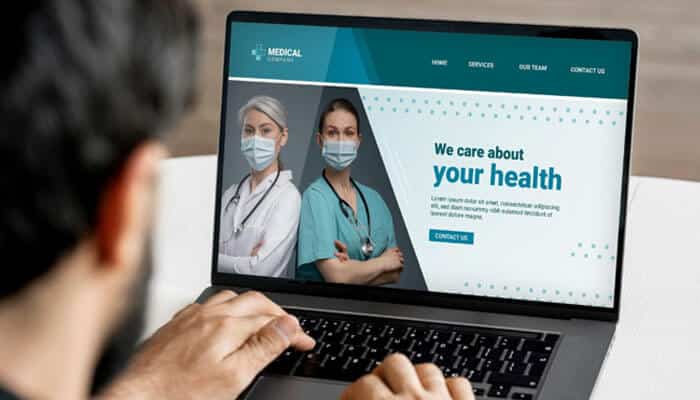

Healthcare has always had a friction problem. Not in the clinical sense, but in the logistical one. The gap between needing care and accessing it has historically been filled with waiting: waiting for appointments, waiting in reception areas, waiting for referrals, waiting for test results. Some of that friction is genuinely necessary. Physical examination, complex diagnosis, surgical intervention: these require the infrastructure of in-person medicine. But a significant portion of healthcare encounters do not. And the digital transformation happening across the sector is separating those two categories in ways that are fundamentally changing what the patient experience looks like for millions of people.
This is not a future trend. It is a present reality that is still finding its shape.
What Has Actually Changed
The shift toward online healthcare is not simply about moving a consultation from a clinic room to a screen. It is about restructuring which parts of the healthcare pathway need to happen where, and removing obstacles from the parts that can be handled differently.
Telehealth platforms in Australia now allow patients to consult with registered doctors in minutes rather than days, receive electronic prescriptions without handling paper, and manage chronic conditions through structured review processes that do not require repeated travel to a clinic. The conditions that benefit most from this model are ones where the clinical process is primarily information-based: establishing a patient history, assessing reported symptoms, reviewing existing medication, interpreting pathology results, and making a treatment decision based on that information.
InstantScripts UTI treatment is a clear illustration of how this works in practice. A urinary tract infection has well-established symptoms and well-established treatment protocols. The patient who recognises those symptoms, consults an InstantScripts doctor online, and has a prescription issued the same day is receiving appropriate, timely care. The alternative, booking a GP appointment three days later, waiting in a clinic, and then collecting a prescription, involves the same clinical outcome but with significantly more burden on the patient and more demand on the system’s in-person capacity. For a condition where time to treatment genuinely affects severity, the difference matters clinically as well as practically.
The Broader Transformation in Patient Engagement
The digital shift in healthcare is producing changes that go beyond convenience. It is changing the relationship between patients and their own health data, and between patients and the providers who care for them.
As the analysis of digital solutions in healthcare outlines, the integration of telemedicine, real-time health monitoring, and AI-supported diagnosis is moving the system toward something more genuinely patient-centred: care that responds to individuals at the point of their need rather than requiring them to fit their need into the system’s schedule and location.
This has particular significance for patients managing chronic conditions, for those in regional or rural areas with limited local provider access, and for people whose work or family circumstances make standard clinic attendance practically difficult. The Australian Digital Health Agency has documented the disproportionate benefit of digital health tools for exactly these populations, noting that the barriers telehealth removes are not distributed evenly across the patient population.
The result is a healthcare system with a wider effective reach than its physical infrastructure would suggest.
What Online Healthcare Is Not

Understanding where digital healthcare works well requires an equally honest view of where it does not. Online consultation is not a substitute for physical examination. It cannot assess a lump, measure blood pressure directly, or provide the kind of holistic observation that a skilled clinician conducts in person without the patient necessarily knowing it is happening.
The patient experience that online healthcare reshapes is the experience of routine, accessible care. The experience of complex care, emergency care, and anything requiring hands-on assessment remains centred on in-person delivery, and it should. What digital tools do is take the volume of routine, manageable care out of that system so that the in-person infrastructure has more capacity for the patients who genuinely need it.
This dynamic is part of what makes home-based and connected healthcare an increasingly interesting area of investment and development: the more that monitoring, chronic disease management, and routine consultation can be handled remotely and continuously, the more the acute and specialist system can function at its intended capacity.
The Startup and Entrepreneurial Angle
For founders and investors paying attention to healthcare, the sector’s digital transformation represents one of the more significant structural opportunities in a generation. The platforms that win in this space are not the ones that simply replicate the clinic experience on a screen. They are the ones that redesign the patient journey around what digital delivery actually makes possible: speed, continuity, data integration, and the kind of patient-specific personalisation that a system built for population averages cannot easily achieve.
The regulatory and trust dimensions are not simple. Healthcare is a domain where the consequences of getting it wrong are severe, and the credibility of online platforms depends entirely on the clinical standards they maintain. Platforms that operate with registered practitioners, maintain appropriate clinical documentation, and integrate responsibly with existing healthcare records are building something durable. Those that prioritise speed over standards are creating a liability.
The patient experience being reshaped by online healthcare is, at its best, one where the right level of care arrives at the right moment through the path of least unnecessary resistance. That sounds obvious stated plainly. Achieving it at scale is the work that is currently underway.
