


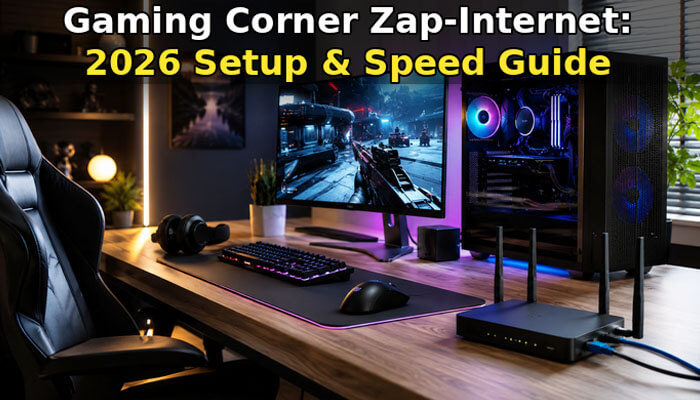

Gaming corner zap-internet is a growing search term among gamers who want a smoother, faster, and more stable online gaming experience. In simple words, it refers to a dedicated gaming corner supported by a well-optimized internet setup for lower ping, fewer lag spikes, stronger Wi-Fi, and better overall gameplay.
In 2026, gaming performance is not only about having a powerful PC, console, mobile device, or monitor. Your internet connection, router placement, Wi-Fi band, Ethernet cable, NAT type, background downloads, game server location, and even your room layout can affect how your games feel.
A gaming corner may look great, but if the internet is unstable, games can still freeze, lag, disconnect, or respond slowly. This guide explains what gaming corner zap-internet means, how to build the right setup, what internet speed you need, how to reduce lag, and how to create a better gaming space for PC, console, mobile, and cloud gaming.
Gaming Corner Zap-Internet is the practice of combining a dedicated gaming setup with optimized internet performance to achieve lower ping, fewer lag spikes, stronger connectivity, and smoother online gameplay.
Quick Answer: Gaming Corner Zap-Internet
Gaming corner zap-internet means creating a gaming setup that focuses on both comfort and internet performance. It includes a dedicated gaming space, stable Ethernet or strong Wi-Fi, low ping, reduced packet loss, optimized router settings, better cable management, and fewer background internet interruptions.
For the best result, use Ethernet when possible, keep your router close to your gaming device, choose 5 GHz or 6 GHz Wi-Fi if supported, pause background downloads, test ping and packet loss, and use the nearest game server.
Why People Search for Gaming Corner Zap-Internet
People search for gaming corner zap-internet because they usually want one of three things: a faster gaming internet setup, a better gaming room arrangement, or a simple way to reduce lag while playing online.
The search intent is mostly informational. Readers are not only looking for a definition. They want practical help with internet speed, ping, Wi-Fi stability, router settings, Ethernet setup, cloud gaming, console gaming, mobile gaming, and troubleshooting.
Common reasons people search this topic include:
- They want to reduce lag in online games.
- They want to build a dedicated gaming corner at home.
- They want to know the best internet speed for gaming.
- They are confused about ping, latency, jitter, and packet loss.
- They want to know if Ethernet is better than Wi-Fi.
- They want a smoother setup for PC, console, mobile, or cloud gaming.
- They want to fix disconnections, slow downloads, or unstable matchmaking.
This is why a strong gaming corner zap-internet setup should focus on both the physical gaming space and the quality of the internet connection.
Key Takeaways
- Gaming corner zap-internet is best understood as a gaming setup plus an internet optimization concept.
- Low ping and stable connection quality matter more than very high download speed for most online games.
- Ethernet is usually the most reliable option for competitive gaming.
- 5 GHz and 6 GHz Wi-Fi are better for gaming than crowded 2.4 GHz Wi-Fi.
- Cloud gaming needs more consistent bandwidth than normal online multiplayer.
- Router settings like QoS, firmware updates, NAT type, and device priority can improve stability.
- Bufferbloat can cause lag spikes even when your speed test looks good.
- A good gaming corner should include airflow, cable control, desk comfort, lighting, power protection, and strong network access.
What Is Gaming Corner Zap-Internet?
Gaming corner zap-internet refers to a gaming environment designed for speed, comfort, and stable online play. The phrase combines two ideas:
- Gaming corner: A dedicated space where a gamer keeps their PC, console, monitor, chair, headset, controller, keyboard, mouse, and accessories.
- Zap-internet: A fast, responsive, low-lag internet setup that helps online games run smoothly.
Because the term is used differently across the web, it is better to treat gaming corner zap-internet as a practical setup concept rather than assuming it is one official product, brand, or company.
The main goal is simple: create a gaming space where your device, internet connection, router, cables, settings, and room layout all work together to reduce lag and improve gameplay.
Gaming Corner Zap-Internet Fact Check
Before going deeper, it is important to understand what is confirmed and what should be treated carefully.
| Topic | Status | Explanation |
| Gaming corner zap-internet as a search term | Confirmed | The phrase appears online and users search for it. |
| Official company or platform | Not clearly confirmed | There is no widely verified official source proving it as one specific brand. |
| Gaming setup meaning | Reasonable interpretation | The term fits gaming space and internet performance topics. |
| Low-latency gaming importance | Confirmed | Ping, jitter, packet loss, and routing affect online gameplay. |
| Ethernet advantage | Generally true | Wired connections are usually more stable than Wi-Fi. |
| “More Mbps always means better gaming” | False | Stability, ping, and packet loss matter more than raw speed during gameplay. |
Why Gaming Corner Zap-Internet Matters in 2026
Online gaming now uses more connected services than ever. Players may use multiplayer games, live streaming, voice chat, cloud gaming, game updates, remote play, Discord, Twitch, YouTube, and cross-platform features at the same time.
A weak internet setup can cause:
- High ping
- Lag spikes
- Rubber-banding
- Game disconnections
- Voice chat delay
- Packet loss
- Cloud gaming blur
- Controller input delay
- Slow downloads
- Delayed hit registration
This is why gaming corner zap-internet matters. It is not just about a fast internet plan. It is about building a complete gaming setup that supports stable, low-lag play.
Expert Insight
Many gamers focus on buying faster internet plans when they experience lag, but speed is often not the real problem. In many cases, high ping, packet loss, poor router placement, Wi-Fi interference, or network congestion have a much bigger impact on gameplay than raw download speed. Optimizing these factors can often improve gaming performance without increasing monthly internet costs.
Gaming Corner Zap-Internet Setup Requirements
A strong setup should include both physical comfort and network stability.
| Requirement | Recommended Setup |
| Internet type | Fiber or stable broadband preferred |
| Connection method | Ethernet first, strong Wi-Fi second |
| Wi-Fi band | 5 GHz or 6 GHz preferred |
| Router location | Open area, close to gaming device |
| Gaming device | PC, console, laptop, tablet, or mobile |
| Ethernet cable | Cat 6 or better preferred |
| Router settings | QoS, firmware updates, device priority |
| Power setup | Surge protector or UPS if possible |
| Room setup | Good airflow, lighting, desk space, and cable control |
Recommended Internet Speed for Gaming in 2026
Many gamers think they need the fastest plan available. That is not always true. Most online games do not use huge amounts of bandwidth during actual gameplay. However, downloads, updates, streaming, cloud gaming, and shared households need more speed.
| Gaming Type | Download Speed | Upload Speed | Ping Goal |
| Casual online gaming | 25–50 Mbps | 3–5 Mbps | Under 80 ms |
| Competitive gaming | 50–100 Mbps | 5–10 Mbps | Under 50 ms |
| Streaming while gaming | 100–300 Mbps | 10–25 Mbps | Under 50 ms |
| Remote play | 15 Mbps or more | 5–15 Mbps | Stable connection |
| Cloud gaming HD | 15–25 Mbps or more | 5 Mbps or more | Under 60 ms |
| Cloud gaming 4K | 45 Mbps or more | 10 Mbps or more | Under 40 ms |
| Busy gaming household | 300–500 Mbps or more | 20 Mbps or more | Stable ping |
For most players, a stable 100 Mbps connection with low ping can feel better than a 1 Gbps plan with packet loss, weak Wi-Fi, or bad router placement.
Internet Speed Needed by Game Type
Different games need different internet quality. A strategy game does not need the same response time as a competitive shooter.
| Game Type | Best Internet Focus | Recommended Setup |
| Battle royale games | Low ping and stable connection | Ethernet or strong 5 GHz Wi-Fi |
| FPS games | Very low latency | Ethernet preferred |
| Racing games | Fast response time | Low ping and low jitter |
| Fighting games | Minimal input delay | Wired connection recommended |
| MOBA games | Stable ping | Ethernet or good Wi-Fi |
| MMORPG games | Consistent connection | Stable broadband |
| Sports games | Smooth matchmaking | Good NAT and stable ping |
| Strategy games | Moderate speed | Stable Wi-Fi usually enough |
| Cloud gaming | High bandwidth and low latency | Ethernet or Wi-Fi 6/6E/7 |
| Streaming while gaming | Strong upload speed | Ethernet and higher upload plan |
A gaming corner zap-internet setup should match the type of games you play. Competitive players need lower latency, while cloud gamers need both strong bandwidth and stable response time.
Speed vs Ping vs Latency vs Jitter
To understand gaming internet performance, you need to know the difference between speed, ping, latency, jitter, and packet loss.
| Term | Meaning | Why It Matters |
| Download speed | How fast data comes to your device | Helps with downloads, updates, and streaming |
| Upload speed | How fast data leaves your device | Important for live streaming and voice chat |
| Ping | Time it takes to reach the game server | Lower ping means faster response |
| Latency | Delay between action and server response | High latency causes input delay |
| Jitter | Variation in ping over time | High jitter causes unstable gameplay |
| Packet loss | Data fails to reach the server | Causes stutter, teleporting, and disconnects |
A good gaming corner zap-internet setup should focus on all of these, not only download speed.
Best Ping for Online Gaming
Ping is one of the most important parts of online gaming. Lower ping usually means faster response between your device and the game server.
| Ping Range | Gaming Experience |
| 0–20 ms | Excellent |
| 20–50 ms | Very good |
| 50–80 ms | Playable for most games |
| 80–120 ms | Noticeable delay |
| 120–150 ms | Difficult for competitive games |
| Above 150 ms | Lag, delay, and disconnection risk |
For fast games like shooters, racing games, fighting games, and battle royale games, try to stay under 50 ms. For slower games like strategy games, turn-based games, or casual multiplayer, a slightly higher ping may still be acceptable.
Bufferbloat: The Hidden Cause of Gaming Lag
Bufferbloat is one of the most overlooked causes of gaming lag. It happens when a router or modem stores too much traffic during heavy internet use. This can make your ping suddenly jump, even if your speed test looks good.
For example, your game may feel smooth when nobody else is using the internet. But when someone starts uploading videos, watching 4K streaming, downloading a large game, or backing up files to the cloud, your ping may spike.
Signs of bufferbloat include:
- Ping is low when the network is idle, but high when others use Wi-Fi.
- Games lag during uploads or downloads.
- Video calls freeze while someone downloads a file.
- Speed tests look good, but games still feel delayed.
- Lag spikes happen randomly in a shared household.
A useful fix is Smart Queue Management, also called SQM, if your router supports it. SQM helps control traffic so one device does not overload the connection.
For a better gaming corner zap-internet setup, test your internet under load, not only when your network is quiet.
Real-World Example
A gamer with a 500 Mbps internet plan may still experience lag spikes during online matches when another family member starts uploading videos or backing up files to the cloud. Although the connection appears fast on a speed test, bufferbloat can temporarily increase latency and create delays. Features such as Smart Queue Management (SQM) can help reduce this problem by managing traffic more efficiently.
Ethernet vs Wi-Fi for Gaming Corner Zap-Internet
Ethernet is usually the best option for serious gaming. It gives a direct wired connection between your gaming device and router. This reduces interference, signal drops, and random lag spikes.
Ethernet Benefits
- More stable connection
- Lower latency
- Less interference
- Better for competitive gaming
- Better for cloud gaming
- Fewer random disconnects
- More consistent speeds
Wi-Fi Benefits
- Cleaner setup
- No long cable needed
- Easier for mobile and handheld gaming
- Better for bedrooms or shared spaces
- Good enough if signal strength is strong
If you can use Ethernet, use it. If you cannot, place your device close to the router and use 5 GHz or 6 GHz Wi-Fi when available.
Best Wi-Fi Band for Gaming
Modern routers often support multiple Wi-Fi bands. Choosing the right one can improve your gaming corner zap-internet setup.
| Wi-Fi Band | Best For | Gaming Quality |
| 2.4 GHz | Long range, basic browsing | Not ideal for gaming |
| 5 GHz | Faster speed, lower interference | Good for gaming |
| 6 GHz | Wi-Fi 6E and Wi-Fi 7 devices | Excellent if supported |
2.4 GHz can travel farther, but it is often crowded. 5 GHz is usually better for gaming because it offers faster speeds and less interference. 6 GHz can be even better, but your router and gaming device must support it.
Wi-Fi 6 vs Wi-Fi 6E vs Wi-Fi 7 for Gaming
In 2026, many gamers are upgrading routers, but not everyone needs the newest model. The best choice depends on your internet plan, home size, number of devices, and device support.
| Wi-Fi Standard | Best For | Should Gamers Upgrade? |
| Wi-Fi 5 | Basic gaming and browsing | Fine for light use |
| Wi-Fi 6 | Homes with many devices | Good value for most gamers |
| Wi-Fi 6E | Devices that support 6 GHz | Great for less crowded gaming |
| Wi-Fi 7 | High-end gaming, cloud gaming, busy homes | Best future-ready option |
Wi-Fi 7 can improve speed, latency, and reliability when both your router and device support it. One important feature is Multi-Link Operation, which can help supported devices use multiple bands more efficiently.
However, Wi-Fi 7 is not magic. If your router is badly placed, your internet plan is unstable, or your device does not support Wi-Fi 7, you may not see a big improvement. For many users, Ethernet or a well-placed Wi-Fi 6 router is enough.
Best Router Settings for Gaming Corner Zap-Internet
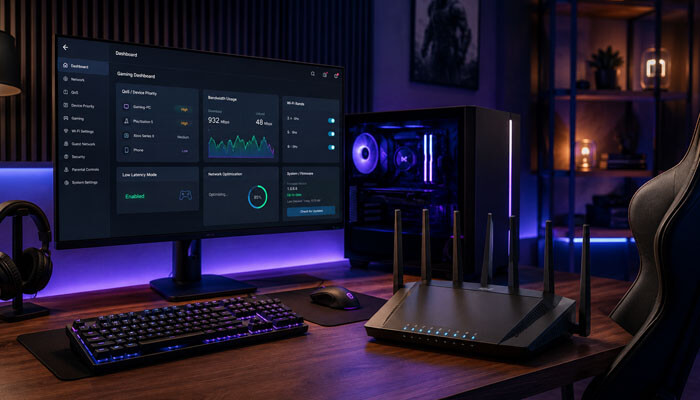
Your router plays a major role in gaming performance. Even with a fast plan, poor router settings can cause lag.
| Setting | What to Do |
| QoS or device priority | Prioritize your gaming PC, console, or phone |
| Firmware updates | Keep router software updated |
| Wi-Fi channel | Use less crowded channels |
| Band steering | Let newer routers move devices to better bands |
| Guest network | Keep visitors and smart devices separate |
| Router restart | Restart occasionally if performance drops |
| Security | Use WPA2 or WPA3 password protection |
| Placement | Keep the router open, high, and away from walls |
QoS means Quality of Service. It helps your router give priority to gaming traffic or your gaming device. This can reduce lag when other people are streaming, downloading, or using video calls.
NAT Type, UPnP, and Port Forwarding for Gaming
NAT type affects how easily your gaming device connects to other players and game servers. This is especially important for console gaming, voice chat, parties, and peer-to-peer multiplayer games.
| NAT Type | Meaning | Gaming Impact |
| Open NAT | Easy connection to most players | Best for multiplayer |
| Moderate NAT | Works with many players but may limit some connections | Usually playable |
| Strict NAT | Limited connection options | Can cause matchmaking and voice chat issues |
Many gamers try to fix NAT problems using UPnP or port forwarding. UPnP allows devices to open ports automatically. Port forwarding lets you manually open specific ports for a console, PC, or game.
However, these settings should be handled carefully. UPnP can be convenient, but it can also create security risks if your router or devices are not secure.
Safe NAT tips:
- Check NAT type inside your console or game settings first.
- Restart your modem and router before changing advanced settings.
- Use only official port information from the game or console provider.
- Avoid opening unnecessary ports.
- Keep router firmware updated.
- Use a strong Wi-Fi password.
- Disable UPnP if you do not need it.
- Ask your ISP for help if you are behind CGNAT.
- Avoid changing firewall settings blindly.
A better NAT type can improve matchmaking and party chat, but security should always come first.
How to Set Up Gaming Corner Zap-Internet Step by Step
Follow this process to create a better gaming corner zap-internet setup.
Step 1: Choose the Right Gaming Location
Pick a place where your gaming device can stay close to the router or Ethernet port. Avoid placing your setup too far from the router if you depend on Wi-Fi.
A good gaming corner should have:
- Enough desk space
- Proper ventilation
- Comfortable seating
- Stable power supply
- Easy cable access
- Good lighting
- Low noise
- Strong Wi-Fi signal or Ethernet access
Step 2: Test Your Internet Speed
Before changing settings, test your connection. Check:
- Download speed
- Upload speed
- Ping
- Jitter
- Packet loss
Run the test at different times of day. Evening hours may be slower because more people are online.
Step 3: Use Ethernet If Possible
Connect your PC, console, or gaming laptop directly to the router using an Ethernet cable. This is one of the easiest ways to improve stability.
Use a Cat 6 or better cable for modern connections. Avoid damaged, loose, or very old cables.
Step 4: Improve Router Placement
If you use Wi-Fi, router placement matters. Place your router:
- In an open area
- Away from thick walls
- Away from microwaves
- Away from Bluetooth-heavy areas
- Off the floor
- Near your gaming space
- Away from metal objects
Do not hide the router inside a cabinet if you want better gaming performance.
Step 5: Use 5 GHz or 6 GHz Wi-Fi
If your device supports it, connect to 5 GHz or 6 GHz Wi-Fi instead of 2.4 GHz. This can reduce congestion and improve gaming response.
Step 6: Close Background Apps
Background apps can quietly use bandwidth. Before gaming, close or pause:
- Game downloads
- Windows updates
- Cloud backups
- Video uploads
- Torrent apps
- Streaming apps
- Browser tabs
- Auto-sync tools
This is especially important if your upload speed is low.
Step 7: Choose the Nearest Game Server
Many games let you select a region or server. Choose the nearest available server for lower ping.
For example, if you are in India, an Asian or Middle Eastern server may perform better than a North American server, depending on the game.
Step 8: Update Your Device and Game
Outdated software can cause bugs, crashes, and connection issues. Keep your:
- Game updated
- Console firmware updated
- PC drivers updated
- Router firmware updated
- Network adapter drivers updated
Step 9: Reduce Network Crowding
If many devices are connected to the same network, your gaming performance can drop. Disconnect unused devices or move them to a guest network.
Common bandwidth-heavy devices include:
- Smart TVs
- Security cameras
- Laptops
- Phones
- Tablets
- Smart speakers
- Streaming sticks
- Downloading PCs
Step 10: Test Again After Changes
After making changes, test your connection again. Compare the new result with your old result. This helps you understand what actually improved your gaming corner zap-internet setup.
Best Setup for PC Gaming
PC gamers usually have more control over settings. For the best result:
- Use Ethernet.
- Update network drivers.
- Disable unnecessary startup apps.
- Keep graphics drivers updated.
- Close launchers not in use.
- Use the nearest game server.
- Avoid VPN during competitive gaming unless required.
- Schedule Windows updates outside gaming time.
- Monitor ping inside the game.
A good PC gaming corner should also have proper airflow. Heat can reduce performance during long gaming sessions.
Best Setup for Console Gaming
For PlayStation, Xbox, and Nintendo Switch, internet stability matters more than extreme speed.
Recommended console setup:
- Use Ethernet if possible.
- Keep the console close to the router if using Wi-Fi.
- Use 5 GHz Wi-Fi when available.
- Keep NAT type open or moderate.
- Update console system software.
- Pause downloads while playing online.
- Avoid 4K streaming on the same network while gaming.
- Restart the router if matchmaking becomes unstable.
Console gamers should also check built-in network tests inside system settings.
Best Setup for Mobile Gaming
Mobile gaming is very popular in 2026, especially for battle royale, MOBA, racing, and esports-style games.
To improve mobile gaming performance:
- Use 5 GHz Wi-Fi when close to the router.
- Avoid weak mobile data signals.
- Turn off battery saver during gaming.
- Close background apps.
- Keep the phone cool.
- Disable automatic updates while gaming.
- Use gaming mode if your phone has one.
- Avoid switching between Wi-Fi and mobile data during gameplay.
Mobile gamers should also avoid playing while downloading large files, because it can increase ping and cause lag.
Best Setup for Cloud Gaming
Cloud gaming needs stronger and more consistent internet than normal online multiplayer because the game runs on a remote server and streams video to your device.
For cloud gaming, focus on:
- Low ping
- Stable bandwidth
- Low jitter
- No packet loss
- Ethernet or strong 5 GHz Wi-Fi
- Strong router
- Good screen response time
- No background downloads
Cloud gaming can work well, but it is sensitive to unstable Wi-Fi. If your stream becomes blurry, delayed, or choppy, your connection may not be consistent enough.
Gaming Corner Zap-Internet Troubleshooting Guide
Use this table to quickly find and fix common problems.
| Problem | Possible Cause | Best Fix |
| High ping | Far server or weak routing | Choose nearest server |
| Lag spikes | Wi-Fi interference or bufferbloat | Use Ethernet, 5 GHz Wi-Fi, or SQM |
| Packet loss | Router issue or bad connection | Restart router, test cable, contact ISP |
| Slow downloads | Congested network | Download during off-peak hours |
| Game disconnects | Unstable Wi-Fi | Move closer to router |
| Voice chat delay | Low upload speed | Stop uploads and cloud backups |
| Cloud gaming blur | Bandwidth instability | Use Ethernet or stronger Wi-Fi |
| Rubber-banding | Packet loss or high jitter | Test network stability |
| Bad NAT type | Router or firewall settings | Adjust NAT carefully using official guidance |
| Random freezes | Background apps | Close downloads and updates |
Common Mistakes to Avoid
Many gamers spend money on expensive gear but ignore simple internet problems. Avoid these mistakes:
- Using 2.4 GHz Wi-Fi for competitive gaming
- Keeping the router behind furniture
- Gaming while large files are downloading
- Ignoring packet loss
- Assuming high Mbps means low ping
- Using old Ethernet cables
- Keeping router firmware outdated
- Playing on far-away game servers
- Using VPN without checking ping
- Letting too many devices use the same network
- Changing UPnP, firewall, or port settings without understanding them
Fixing these basics can improve your gaming corner zap-internet setup without buying a new PC or console.
How to Handle Game Downloads and Updates
Large game downloads and updates can slow down everyone on the network. Modern games often receive big patches, texture packs, seasonal updates, and background downloads. If these updates run while you are gaming, your ping can increase and gameplay may become unstable.
To manage game downloads better:
- Schedule large downloads overnight.
- Pause updates while playing online.
- Use Ethernet for big downloads.
- Limit download speed in game launchers when possible.
- Turn off automatic updates before competitive matches.
- Keep enough storage free on your device.
- Update games before planned gaming sessions.
- Avoid downloading on multiple devices at the same time.
This is especially important in shared homes. A strong gaming corner zap-internet setup should include a simple update schedule, not just a fast internet plan.
Does DNS Improve Gaming Speed?
Changing DNS can sometimes make websites, launchers, or game services respond faster, but it usually does not directly lower in-game ping. Ping mainly depends on server distance, ISP routing, connection type, network congestion, and stability.
DNS may help with:
- Faster domain lookup
- Better launcher loading
- More reliable browsing
- Faster access to some game services
DNS usually does not fix:
- Bad Wi-Fi
- High packet loss
- Weak upload speed
- Far-away game servers
- ISP congestion
- Old router problems
DNS can be useful, but it should not be treated as a magic lag fix.
Should You Use a VPN for Gaming?
A VPN can help in some cases, but it can also increase ping. It depends on your location, ISP routing, game server, and VPN server.
A VPN May Help If:
- Your ISP routing is poor.
- Your game is blocked in your region.
- You need privacy on public Wi-Fi.
- Your connection is being throttled.
- A closer VPN route performs better.
A VPN May Hurt If:
- The VPN server is far away.
- The VPN is overloaded.
- You already have good routing.
- You play competitive games.
- The VPN adds extra delay.
Always test ping with and without VPN before using it for gaming.
Best Internet Type for Gaming Corner Zap-Internet
Different internet types perform differently for gaming.
| Internet Type | Gaming Quality | Notes |
| Fiber | Excellent | Best for low latency and stability |
| Cable broadband | Good | Fast, but may slow during peak hours |
| 5G home internet | Good to mixed | Can be fast but signal-dependent |
| DSL | Basic | May have higher latency |
| Satellite | Mixed | Can have higher latency depending on service |
| Public Wi-Fi | Poor to risky | Not recommended for serious gaming |
Fiber is usually the best option because it often provides low latency and strong stability. However, a well-managed cable or 5G connection can still work well if ping and packet loss are good.
Gaming Corner Zap-Internet for Streaming Gamers
If you stream on Twitch, YouTube, Kick, Facebook Gaming, or another platform, upload speed becomes very important. Streaming while gaming uses more bandwidth than gaming alone.
Streaming gamers should focus on:
- Strong upload speed
- Stable ping
- Ethernet connection
- Good router
- Low packet loss
- Proper bitrate settings
- Separate streaming and gaming settings
- Backup internet if streaming professionally
A streamer with unstable upload speed may experience dropped frames, blurry video, delayed chat, and stream disconnections.
Gaming Corner Setup Ideas for Better Performance
A gaming corner is not only about internet. Your physical setup also affects comfort, focus, and performance.
Useful setup ideas:
- Keep your router or Ethernet access close to your desk.
- Use cable clips to organize wires.
- Keep your PC or console well-ventilated.
- Use a comfortable chair for long sessions.
- Add soft lighting to reduce eye strain.
- Keep drinks away from electronics.
- Use a surge protector.
- Keep your desk clean.
- Use a monitor with low input lag.
- Keep your headset and controller charged.
A clean gaming corner can make long sessions more comfortable and less distracting.
Budget Gaming Corner Zap-Internet Setup
You do not need to spend a lot of money to improve your setup. Start with low-cost improvements first.
| Budget Fix | Why It Helps |
| Ethernet cable | Improves stability |
| Router repositioning | Improves Wi-Fi signal |
| Cable management clips | Keeps setup clean |
| Surge protector | Protects devices |
| Better airflow | Helps prevent overheating |
| Router restart schedule | Reduces random issues |
| Background app control | Frees bandwidth |
| 5 GHz Wi-Fi connection | Reduces interference |
Many gamers can improve performance without upgrading their entire internet plan.
Advanced Gaming Corner Zap-Internet Tips
For more serious gamers, these advanced tips can help.
- Use SQM or Smart Queue Management
SQM can reduce bufferbloat, which happens when your connection becomes overloaded and ping spikes during uploads or downloads. Some advanced routers support this feature.
- Separate Gaming Devices
If possible, keep gaming devices on a dedicated band, guest-free network, or priority list. This reduces competition from smart TVs, phones, and other devices.
- Monitor Packet Loss
Do not only test speed. Check packet loss. Even a small packet loss can cause noticeable problems in fast online games.
- Upgrade Router When Needed
If your router is very old, it may not handle modern devices well. A newer router with Wi-Fi 6, Wi-Fi 6E, or Wi-Fi 7 may improve performance in crowded homes.
- Use a UPS for the router and Modem
A small UPS can keep your router and modem running during short power cuts. This is useful in areas where power interruptions happen often.
When Should You Upgrade Your Router or Internet Plan?
You do not always need to upgrade your internet plan to improve gaming. Sometimes the real problem is router placement, Wi-Fi interference, old cables, weak hardware, or too many background apps.
Upgrade your router if:
- Your router is more than 4–5 years old.
- Wi-Fi drops often.
- Your room has a weak signal.
- Many devices are connected at the same time.
- Your router does not support 5 GHz.
- Your router firmware is no longer updated.
- You experience lag even near the router.
- You want better Wi-Fi 6, Wi-Fi 6E, or Wi-Fi 7 support.
Upgrade your internet plan if:
- Downloads are always slow.
- Multiple people stream and game at the same time.
- Upload speed is too low for streaming.
- Cloud gaming quality is poor.
- Video calls affect gameplay.
- Your household has many heavy internet users.
- Your current plan cannot handle peak-hour usage.
Before spending money, test your connection with Ethernet. If Ethernet works well but Wi-Fi performs badly, upgrade or reposition the router. If Ethernet is also slow or unstable, contact your internet provider or consider a better plan.
Security Tips for Gaming Corner Zap-Internet
A fast gaming setup should also be safe. Gamers often use accounts connected to payment methods, digital purchases, skins, and personal data.
Follow these safety tips:
- Use strong passwords.
- Enable two-factor authentication.
- Avoid fake game download links.
- Do not share account login details.
- Avoid unknown “ping booster” tools.
- Do not install suspicious mods.
- Keep your router password secure.
- Avoid public Wi-Fi for account purchases.
- Use official launchers and game stores.
- Keep recovery email and phone number updated.
- Be careful with UPnP, open ports, and unknown router changes.
A secure gaming setup protects your games, accounts, purchases, and personal information.
Who Should Use This Guide?
This guide is useful for:
- PC gamers
- Console gamers
- Mobile gamers
- Cloud gaming users
- Streamers
- Esports beginners
- Parents setting up gaming internet for kids
- Students building a gaming desk setup
- Gamers dealing with lag or high ping
- Anyone creating a dedicated gaming space at home
It is especially helpful if your games feel slow even though your internet plan looks fast.
Who May Not Need a Full Setup?
You may not need a full gaming corner zap-internet setup if:
- You only play offline games.
- You rarely play multiplayer games.
- You already have stable low ping.
- You do not stream or use cloud gaming.
- Your gaming device is already wired to a strong router.
- You are satisfied with your current performance.
Still, even casual gamers can benefit from basic improvements like better router placement and fewer background downloads.
Gaming Corner Zap-Internet Checklist
Use this checklist before your next gaming session:
- Internet speed tested
- Ping checked
- Packet loss checked
- Ethernet connected if possible
- 5 GHz or 6 GHz Wi-Fi selected
- Router placed correctly
- Background downloads paused
- Game server region checked
- Device updated
- Router firmware updated
- Gaming device prioritized
- Streaming apps closed
- Cloud backups paused
- NAT type checked if matchmaking fails
- Controller or headset charged
- Gaming space clean and comfortable
Why Gaming Internet Optimization Matters
Modern online games depend heavily on stable network performance. Competitive shooters, battle royale games, racing games, cloud gaming platforms, and live streaming services all rely on low latency and reliable connectivity. A well-designed gaming corner combined with optimized internet settings can improve consistency, reduce frustration, and create a smoother gaming experience across multiple devices.
Conclusion:
Gaming corner zap-internet is best understood as a modern gaming setup strategy that combines a dedicated gaming space with a fast, stable, and low-lag internet connection. In 2026, good gaming performance depends on more than raw download speed. Ping, latency, jitter, packet loss, NAT type, router quality, Wi-Fi band, Ethernet access, and server location all matter.
If you want smoother gameplay, start with the basics. Use Ethernet when possible, improve router placement, choose 5 GHz or 6 GHz Wi-Fi, reduce background internet usage, test packet loss, and select the nearest game server. After that, improve your gaming corner with better cable management, lighting, airflow, power protection, and device organization.
A strong gaming corner zap-internet setup does not always require expensive equipment. Small changes can often make your games feel faster, smoother, and more reliable.
Gaming Corner Zap-Internet FAQs
1. What does gaming corner zap-internet mean?
Gaming corner zap-internet means a gaming setup that combines a dedicated gaming space with optimized internet performance. It focuses on speed, low ping, stable Wi-Fi or Ethernet, and smoother online gameplay.
2. Is gaming corner zap-internet an official platform?
There is no clear evidence that gaming corner zap-internet is one single official platform. It is safer to understand it as a gaming setup and internet optimization concept.
3. What internet speed is good for gaming corner zap-internet?
For casual gaming, 25–50 Mbps can be enough. For competitive gaming, 50–100 Mbps or more is better. For streaming or cloud gaming, higher speed and stable latency are recommended.
4. Is Ethernet better than Wi-Fi for gaming?
Yes, Ethernet is usually better for gaming because it provides a more stable connection, lower latency, and fewer interruptions. Wi-Fi can still work well if you use 5 GHz or 6 GHz and stay close to the router.
5. Can cloud gaming work with gaming corner zap-internet?
Yes, cloud gaming can work well with a strong gaming corner zap-internet setup. For the best result, use Ethernet or strong 5 GHz Wi-Fi, keep ping low, avoid packet loss, and stop background downloads.
