




Negligence and strict liability are two important legal concepts frequently used in personal injury and civil law cases throughout the United States. Both legal theories allow injured individuals to pursue compensation when another party causes harm or damages. However, the legal standards required to prove each type of liability are significantly different.
Negligence focuses on whether a person or business failed to exercise reasonable care under specific circumstances. Strict liability, on the other hand, may hold a party legally responsible even when there was no intentional wrongdoing or careless behavior involved. Understanding these legal principles is important for injury victims, businesses, and consumers alike.
Courts across the United States apply negligence and strict liability differently depending on the nature of the accident or injury. These legal theories commonly appear in motor vehicle accidents, defective product claims, workplace incidents, and dangerous activity lawsuits. State laws and court decisions often determine how liability is evaluated in each case.
Understanding Negligence in Personal Injury Law
Negligence is one of the most common legal theories used in personal injury claims throughout the United States. A person may be considered negligent when they fail to act with the level of care that a reasonably careful person would use under similar circumstances. The injured party must prove several legal elements to establish negligence successfully.
Most negligence claims require proof of duty, breach of duty, causation, and damages. Duty refers to a legal obligation to avoid causing foreseeable harm to others.
A breach of duty occurs when someone fails to act responsibly or violates safety standards. Common examples include distracted driving, unsafe property maintenance, or failure to follow workplace safety regulations. The injured party must also show that the negligent conduct directly caused measurable damages or injuries.
Understanding Strict Liability
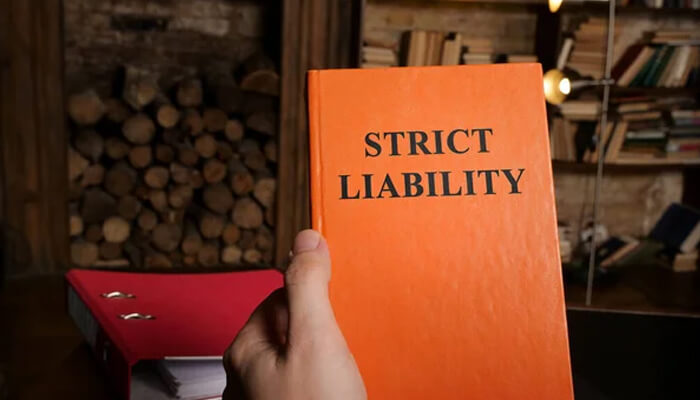
Unlike negligence claims, strict liability does not always require proof that someone acted carelessly or intentionally. Under strict liability laws, a person or company may be held legally responsible simply because their actions or products caused harm. The focus is placed more on the dangerous condition or activity itself rather than the defendant’s behavior.
Strict liability commonly applies in defective product cases involving manufacturing defects, design defects, or inadequate safety warnings. Under California Product Liability law and Restatement (Second) of Torts § 402A, manufacturers and sellers may be liable when defective products injure consumers. Injured individuals do not necessarily need to prove negligence to recover compensation.
Key Differences Between Negligence and Strict Liability
The primary difference between negligence and strict liability involves the level of proof required to establish responsibility. Negligence claims focus on whether the defendant acted unreasonably or failed to exercise proper care. Strict liability cases instead focus on whether the defendant’s product, activity, or conduct caused harm.
In negligence cases, the injured party must usually prove that the defendant breached a legal duty owed to others. Evidence such as surveillance footage, witness testimony, accident reports, and expert analysis may be necessary to demonstrate careless behavior. Strict liability claims often require less focus on the defendant’s specific actions.
Strict liability laws are intended to protect consumers and the public from dangerous products and hazardous activities. Courts recognize that certain risks are so significant that businesses or individuals engaging in those activities should bear responsibility for resulting harm. This legal approach helps encourage stronger safety standards and consumer protection.
Final Key Takeaways
- Negligence requires proof that someone failed to exercise reasonable care.
- Strict liability may apply even when no careless behavior is involved.
- California Civil Code § 1714 commonly applies in negligence-based injury claims.
- Product liability claims may rely on Restatement (Second) of Torts § 402A principles.
- Comparative negligence may reduce compensation in some personal injury lawsuits.
- California generally applies a two-year statute of limitations under Code of Civil Procedure § 335.1.
- Understanding the difference between negligence and strict liability can significantly affect legal claims and compensation outcomes.
