




The concept of employment in the modern corporate world varies significantly depending on local labor laws and regional regulations. One of the most common yet frequently misunderstood arrangements is at-will employment, which defines the professional relationship for millions of people. Understanding the rights and responsibilities of an At-will employee is essential for both employers and workers navigating today’s dynamic workplace.
While it offers a high level of flexibility, it also carries specific legal implications that can impact long-term workforce stability and compliance.
Definition of an At-Will Employee
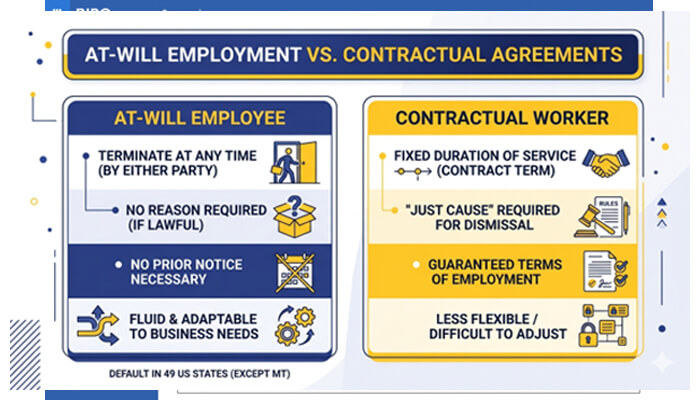
Direct Answer: At-will employment means that either the employer or the employee can terminate the working relationship at any time, for any lawful reason, or for no reason at all, without prior notice. According to the National Conference of State Legislatures (NCSL), at-will is the default employment standard in 49 US states, with Montana being the sole exception[1].
This model differs sharply from fixed-term or contractual agreements. Contractual workers typically sign a document outlining a specific duration of service or requiring a “just cause” for dismissal.
In contrast, at-will workers do not have guaranteed terms of employment. Consequently, this relationship is highly fluid and easy to adjust in response to shifting business needs.
What are the Rights and Responsibilities of At-Will Employees?
Direct Answer: Although employers can dismiss an at-will employee without giving a reason, they cannot terminate an individual for reasons prohibited by federal, state, or local laws. Specifically, terminations cannot be based on discrimination, whistleblowing retaliation, or the exercise of protected statutory rights.
Even within an at-will framework, both parties maintain specific legal protections. It is a common misconception that “at-will” means there are no rules.
For instance, the U.S. Equal Employment Opportunity Commission (EEOC) protects workers from discrimination based on race, gender, religion, age, or disability. Furthermore, employees have the right to safe working conditions and fair wage standards.
Therefore, terminating someone for reporting a safety violation or for serving on a jury constitutes a wrongful termination. Such actions can lead to federal investigations and costly lawsuits.
What are the Advantages and Disadvantages of At-Will Workers?
Direct Answer: At-will employment provides businesses with the operational agility to scale teas up or down quickly, while giving employees the freedom to leave for better job opportunities. However, this flexibility also results in lower job security, higher turnover rates, and persistent legal exposure for employers.
To understand the balance of this arrangement, we can compare the benefits and drawbacks for both sides:
| Key Advantages | Potential Disadvantages | |
| Employers | Ability to adjust staff levels based on market demand | Constant risk of wrongful termination claims
|
| Low administrative burden for general terminations | Higher recruiting and onboarding costs due to turnover | |
| Employees | Freedom to resign immediately for better compensation | Minimal job security |
| No legal obligation to provide lengthy notice periods | Reduced professional stability and workplace morale |
How can Businesses Prevent Costly Wrongful Termination Claims?
Direct Answer: Employers can mitigate legal risks by keeping transparent, objective documentation of employee performance and maintaining a comprehensive employee handbook. Establishing a clear, progressive disciplinary process ensures that any termination is backed by factual evidence.
To manage these risks effectively, employers should address the underlying causes of employment disputes using a structured approach:
The Problem
Wrongful termination claims can be extremely costly for businesses. Industry surveys indicate that out-of-court settlements often range from $30,000 to $40,000, while defending a case through litigation can drive legal costs well beyond $150,000, even before potential damages are awarded[2].
The Cause
Most legal disputes arise because of a lack of documentation, vague verbal promises of “permanent” employment made by managers, or inconsistent application of company rules. Without a paper trail, a terminated employee may easily argue that their dismissal was discriminatory or retaliatory.
The Solution
- Update the Employee Handbook: Clearly state the at-will nature of the employment in your handbook and require a signed acknowledgment from every employee.
- Train Hiring Managers: Prevent managers from making verbal agreements regarding long-term job security during interviews.
- Maintain Digital Records: Use centralized Human Resources (HR) systems to record all performance evaluations, written warnings, and policy violations.
Is At-Will Employment Relevant in APAC States?
Direct Answer: No, the US at-will employment model is not recognized in the Asia-Pacific (APAC) region. Most APAC countries operate under highly protective labor frameworks that require employers to prove a valid, legal reason for any termination.
If your company is expanding into APAC states, you must shift from a flexible at-will mindset to a model focused on strict compliance and detailed documentation.
To highlight these differences, the table below compares termination requirements across key jurisdictions:
| Jurisdiction | Notice Period Required | Separation Cause Required? | Severance Pay |
| United States (At-Will) | None (Immediate) | No | Optional / Non-statutory |
| Singapore | 1 day to 4 weeks (based on service) | Yes (for immediate dismissal without notice) | Subject to collective agreements |
| Japan | 30 days minimum (or pay in lieu) | Yes (must be socially acceptable and reasonable) | Common practice to avoid litigation |
| Australia | 1 to 5 weeks (based on age and service) | Yes (must not be harsh, unjust, or unreasonable) | Statutory scale based on years of service |
As shown above, firing someone in the APAC region without a documented, legally recognized reason—such as gross misconduct or redundancy—can result in severe penalties.
How BIPO Can Support Your Workforce Management
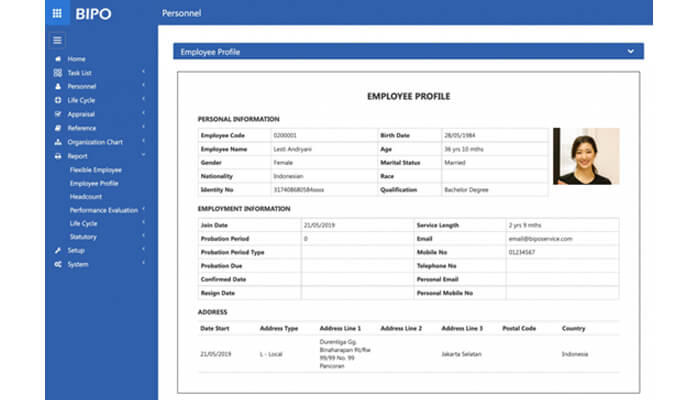
BIPO provides a global HRMS platform and localized payroll services that bridge the gap between US at-will contracts and highly regulated APAC employment frameworks.
BIPO helps international businesses scale compliantly by focusing on four core capabilities:
- Localized Contract Automation: Replaces generic at-will templates with region-specific contracts that automatically embed local statutory rules on notice periods, probation, and severance.
- Centralized Compliance Auditing: Monitors local labor laws across more than 100 countries in real-time, helping HR teams mitigate the risks of wrongful termination and labor disputes.
- Airtight Digital Records: Replaces decentralized Excel spreadsheets with a secure, unified dashboard that tracks performance reviews, warnings, and digital payslips, providing a reliable paper trail.
Proven Global Case Studies: BIPO’s integrated HRMS platform secures compliance for some of the most dynamic, high-growth retail operations on earth, from consolidating decentralized payroll systems across 8 APAC countries for a leading global luxury beauty and lifestyle eCommerce company—saving SGD 28,000 monthly—to automating secure digital payslips and unified e-Leave workflows for over 2,200 international employees. (Read the Full Case Study for more details).
References:
- At-Will Employment – Overview. Available at: https://www.ncsl.org/labor-and-employment/at-will-employment-overview (Accessed: 18th, May)
- Wrongful Termination: How Much Compensation Can I Expect? And What Will a Lawyer Cost? Available at: https://www.nolo.com/legal-encyclopedia/wrongful-termination-claims-how-much-can-i-expect-in-compensation-and-what-will-a-lawyer-cost.html (Accessed: 18th, May)
