You can open a brokerage account in minutes, but mastering markets takes months of deliberate practice. A 2024 University of Cambridge study highlighted by HedgeThink shows that only one in five new day traders stays profitable after two years—evidence that structured Day Trading Courses for Beginners matter.
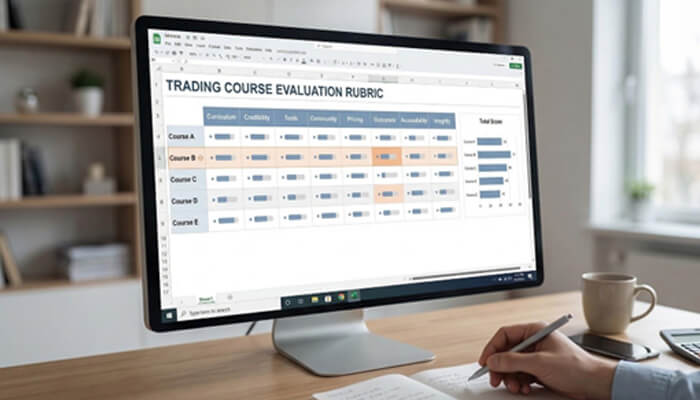
We audited 15 popular classes, interviewed dozens of Reddit students, and pored over Trustpilot reviews. Each program earned scores on eight weighted factors: curriculum depth, instructor credibility, real-time tools, community support, pricing transparency, student outcomes, accessibility, and integrity.
The five winners you’re about to meet each tackle a specific beginner pain point. Before we name them, here’s the yardstick you can use to judge any trading course you see next.
How we picked the winners
Before we crowned any course “best,” we built a scoreboard. We asked one simple question: what does a brand-new trader need to tilt the odds in their favor?
- First, curriculum. A beginner deserves a clear, step-by-step path that starts with platform basics and ends with a repeatable trade plan. No scatter-shot video pile.
- Second, credibility. We looked for mentors who trade their own capital in public or operate under a financial license. Empty marketing claims did not make the cut.
- Third, tools and strategy depth. Real-time scanners, paper-trading simulators, multi-asset coverage: anything that speeds up deliberate practice scored points.
- Fourth, community and mentorship. Learning sticks when you can pepper a pro with questions or compare notes with peers in a live chat room.
- Fifth, pricing transparency. We broke down every fee, from one-time enrollments to add-on simulators, and judged value rather than sticker price.
- We also weighed student outcomes, platform accessibility, and honesty about risk. Together these eight factors formed a 100-point rubric that makes apples-to-apples comparisons easy.
The result is a shortlist that rewards substance over sizzle and gives you options based on how you like to learn, whether that is shoulder-to-shoulder coaching or a low-cost community you can leave anytime.
Now, let’s meet the courses that cleared the bar.
N P Financials: best for one-on-one mentorship
Picture a trading apprenticeship where a pro sits beside you each week, sharpening your entries, exits, and mindset. That is exactly how N P Financials’ Intraday trading Curriculum works, guiding you through five phases (Learn, Practice, Back-test, Demo Trade, then Trade Live) while you meet the same coach for 12 private sessions and 3 masterclasses.
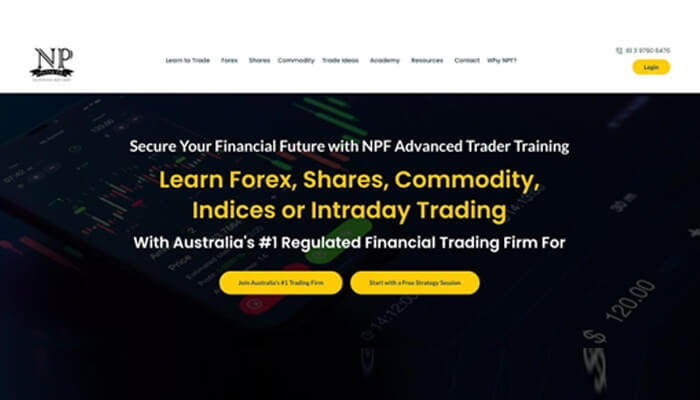
The firm holds an Australian Financial Services Licence and runs its education arm like a regulated prop shop, not a flashy guru brand. Every enrollee receives 12 private coaching sessions, 3 masterclasses, a live trade room, and 120 hours of video lessons. The site even discloses hard numbers—an 87.73 percent win rate on shared trade ideas—backed by verified account statistics.
For a beginner, the value is focus. Instead of sifting through endless chat threads, you meet the same coach on Zoom, review your trades, and set a plan for next week. Multi-asset coverage is built in, so you learn stocks, forex, commodities, and indices under one roof. That matters if you plan to sidestep the U.S. pattern-day-trader rule with futures or forex later on.
The program costs are more than reasonable and demands steady effort of 5 hours per week, but that investment buys accountability, a missing ingredient in most DIY courses. If you learn best through guided reps and want a clear route to potential prop-firm funding, N P Financials sits at the front of the class.
Bear Bull Traders: best community for live practice
Most beginners learn fastest when they can watch a seasoned trader work the tape in real time. Bear Bull Traders provides that view every market morning.
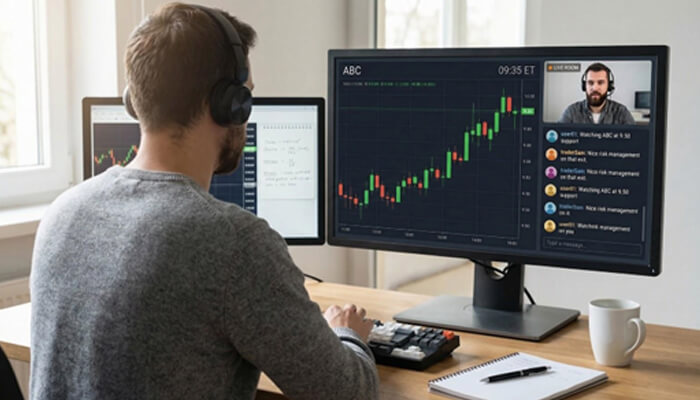
Founder Andrew Aziz and a team of moderators share their screens, talk through entries, and manage risk out loud, so you see the playbook unfold tick by tick. When the bell quiets, the lessons continue with nightly recap webinars and psychology sessions.
Access stays flexible. A one-week trial costs $39, the Basic plan is $99 a month, and the Elite tier (with mentorship webinars and a DAS simulator) costs $199 a month, according to a Daytradingz course comparison. Cancel whenever you like; no year-long chains.
The chat culture feels more study group than hype room. New members post trade ideas, veterans give blunt feedback, and nobody is shamed for rookie questions. That steady drip of peer support keeps you logging in, practicing, and refining your edge.
If you want live reps and a cancel-anytime model, Bear Bull Traders turns the stock market into your daily classroom.
Warrior Trading: most comprehensive curriculum
If you like to binge-watch lessons the way some people stream Netflix, Warrior Trading is built for you. The platform offers more than 100 hours of on-demand video, a live trading room that opens with the bell, and a paper-trading simulator that matches real market speed.
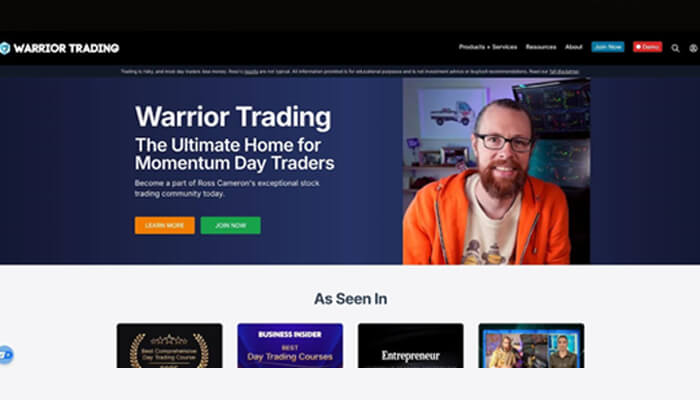
Founder Ross Cameron shares both wins and losses, broadcasting trades on YouTube and posting broker statements. That transparency builds trust, but structure is the main draw. You begin with Day-Trading 101, move to gap-and-go momentum setups, then tackle advanced modules on short selling and algorithmic scans, all inside one dashboard.
The Starter plan gives you a sample, while the Pro tier unlocks every course, live chat, and the proprietary stock scanner. Pro costs more each year, yet you walk away with a complete toolkit: strategy, community, and simulator-based muscle memory.
Beginners who want a full trading “university” under one roof, and are willing to invest both money and screen time, will find Warrior Trading hard to beat.
Humbled Trader Academy: clean, candid beginner road map
Shay Huang, known online as Humbled Trader, grew a one-million-subscriber channel by sharing her losing days as openly as her wins. Her paid academy keeps that candor intact.
The program runs 90 days, but you set the pace. About 12 hours of concise video guide you from platform setup to intermediate tactics like fading parabolic moves. After each module you complete a quiz or homework assignment, locking in what you just watched instead of racing to the next tactic.
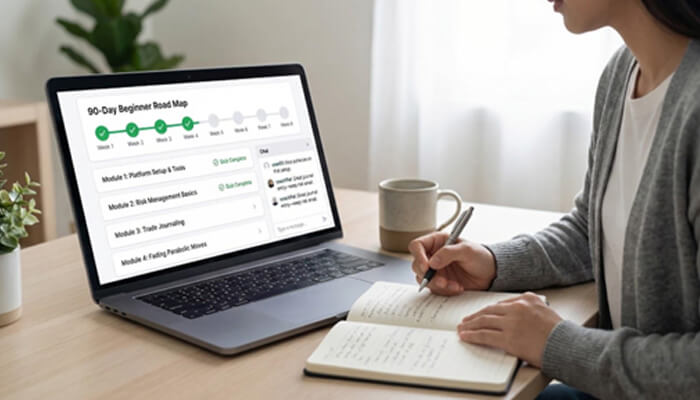
Weekly live Q&A calls put you face to face with Shay’s coaching team, while a private Discord offers round-the-clock peer support. Students praise the positive tone—think study buddies, not meme-stock hype.
A flat $1,290 fee covers a full year of access and every future update. No extra charge for simulators, because Shay directs beginners to free tools until they prove consistency.
If you want straight talk, structured checkpoints, and a community that celebrates small, disciplined gains over lotto plays, Humbled Trader Academy belongs on your short list.
tastytrade: best free knowledge base
Not everyone wants to spend $1,000 or more on day-trading school in week one. That is where tastytrade shines. The full-time financial network streams market shows all day and stores every episode in a free on-demand library.
Need the basics? Start with the “Beginner’s Guide” playlist and learn order types, risk management, and position sizing in plain English. Ready for something spicier? Jump into live options scalps or futures micro-lessons. The hosts trade on screen, explain the math, then recap what worked and what flopped.
Because tastytrade is also a brokerage, you can paper-trade inside its platform while you watch. No credit card, no upsell sequence, just a steady drip of education you can binge at your own pace.
The downside of free is a do-it-yourself syllabus. There are no quizzes, mentors, or community chat rooms pushing you forward. Yet as a zero-cost springboard, or a daily supplement to any paid course on this list, tastytrade offers unbeatable value.
Use it to build strong fundamentals, then decide whether you need the structure of a premium program or prefer to keep learning one live show at a time.
Quick comparison at a glance
Choosing a course is easier when you can see the essentials side by side. Use the table below as your cheat sheet, then circle back to the full reviews for context.
| Course | Core price | Format | Mentorship | Markets covered | Best for |
| N P Financials | Custom package (free consult first) | Live 1-on-1 + video library | Private coaching | Stocks, Forex, Commodities, Indices | Hands-on learners who want a personal trainer and a path to prop-firm funding |
| Bear Bull Traders | $99/mo Basic to $199/mo Elite | Courses + daily live room | Group Q&A | U.S. Stocks (some options/crypto) | Traders who learn best by watching real-time screens and chatting with peers |
| Warrior Trading | $2,497/yr Pro (trial $19) | 100+ hrs video + live room + simulator | Group webinars | Small-cap Stocks, Options | Students seeking a comprehensive, plug-and-play curriculum with built-in tools |
| Humbled Trader Academy | $1,290 for 12 months | 12 hrs video + weekly live Q&A | Group calls | Large-cap Stocks, Options | Beginners who want a candid, structured road map with no hype |
| tastytrade | Free | Daily live shows + on-demand library | None | Stocks, Options, Futures | Self-directed learners building fundamentals on a $0 budget |
Find the row that matches your budget and learning style, then dive into the full review. A quick check now can save months of second-guessing later.
What’s changing in trading education for 2026
Classrooms keep evolving, and that matters for your decision today.
Artificial-intelligence tools now slip into beginner platforms, generating custom drills the moment you stumble. Simulators that once replayed yesterday’s tape can recreate full news-driven whipsaws in real time, so you practice staying calm when headlines hit. HedgeThink reports that many programs already include machine-learning scanners, a trend gaining speed in 2026.
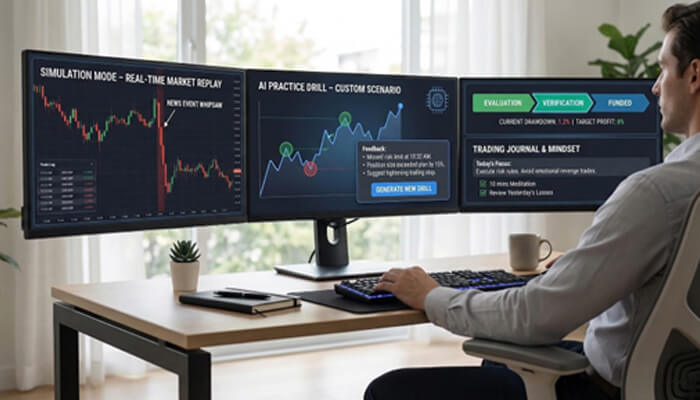
Funding paths are widening, too. Prop-firm challenges let you bypass the U.S. pattern-day-trader rule by trading company capital once you pass a skill test. Courses like NP Financials build that evaluation into their syllabus, while others partner with outside firms so top students can unlock a funded account instead of scraping together $25,000.
Mindset training has moved from afterthought to headline module. Reputable schools now spend as much time on journaling, meditation, and loss recovery as they do on chart patterns, driven by research showing only 20 percent of untrained traders stay profitable after two years, a reality check that keeps instructors honest.
When you shop for a course, look for three green lights: AI-assisted practice, a clear route to outside funding, and at least one dedicated psychology track. Those signals show the provider is building traders for tomorrow’s market, not chasing last decade’s hype.
Quick-fire FAQs for first-time traders
Can I learn day trading for free?
Yes. Resources like tastytrade, BabyPips, and many YouTube channels hand you the basics. The trade-off is structure: you may spend extra hours stitching lessons together and risk picking up habits that a coach would correct.
How much should I budget for a paid course?
Think in tiers. Community subscriptions hover around $100 a month. Structured video programs with live rooms land between $1,000 and $3,000 a year. Personal mentorship, such as NP Financials, costs more but can replace months of trial and error.
Do I need $25,000 to start?
Only if you plan to day trade U.S. equities under FINRA’s pattern-day-trader rule. Many beginners sidestep that hurdle by trading forex, futures, or joining a prop-firm challenge that supplies the capital once you prove competence.
How long before I’m consistently profitable?
Plan on 6 to 12 months of focused practice. That timeline shortens with coaching, detailed journaling, and disciplined risk rules, and lengthens if you bounce between strategies or skip simulator reps.
Are alert services and courses the same thing?
No. An alert room hands you fish; a course teaches you to cast, gut, and cook on your own. Even the programs on this list that provide live trade ideas do so inside a broader curriculum designed to make you independent.
What if I work a nine-to-five?
Look for on-demand video libraries and evening mentorship calls. Humbled Trader Academy and tastytrade both fit a day-job schedule, while Bear Bull Traders archives its morning sessions so you can review after dinner.
Conclusion
Use these answers to narrow your search, then test-drive the course that fits your budget and calendar. The right questions today prevent expensive surprises tomorrow.