


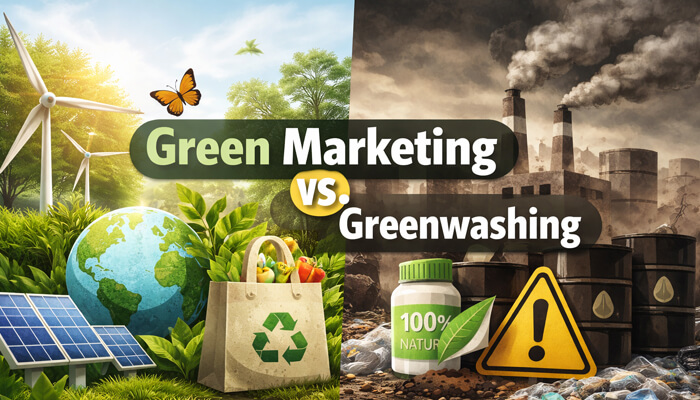

In today’s world, where sustainability is becoming a major concern, both consumers and businesses are increasingly eco-conscious. As a result, terms like green marketing and greenwashing have gained significant traction. While these terms sound similar, they represent vastly different practices.
Understanding the difference is crucial for both consumers making environmentally conscious choices and businesses aiming to align with sustainability principles.
As consumers demand more eco-friendly options, the line between genuine sustainability and deceptive marketing tactics has blurred. This makes it essential to recognize the difference between the two, ensuring both businesses and consumers can make smarter choices.
What is Green Marketing?
Green marketing refers to the promotion of products, services, or practices that are environmentally sustainable. It’s not just about making a product look green; it’s about the real, actionable efforts a company makes to reduce its environmental impact and contribute positively to the planet.
Key Features of Green Marketing:
- Transparency and Authenticity: Brands that practice green marketing are transparent about their sustainability efforts. They use verifiable claims and provide evidence of their environmental impact.
- Sustainability-Focused Innovation: Companies invest in sustainable product development, using eco-friendly materials, renewable resources, and energy-efficient processes.
- Third-Party Certifications: Green marketing often includes recognized environmental certifications, such as Energy Star, Fair Trade, or EcoLabel, to validate a product’s environmental claims.
Examples of Green Marketing:
- Patagonia: Known for its commitment to the environment, Patagonia integrates sustainability in every aspect of its business—from the materials it uses to its responsible production processes.
- Tesla: Tesla’s electric vehicles (EVs) represent green marketing by helping reduce emissions and promoting cleaner transportation.
By embracing green marketing, these brands contribute positively to the environment while building trust with eco-conscious consumers.
What is Greenwashing?
Greenwashing is a deceptive marketing practice where companies exaggerate or falsely claim to be environmentally friendly in order to attract eco-conscious consumers—without making any real changes to their environmental practices.
Key Features of Greenwashing:
- Misleading Claims: Companies make vague, unsubstantiated claims about being “green” or “eco-friendly” without providing clear, verifiable actions.
- Lack of Proof or Certifications: While green marketing involves transparency and credible certifications, greenwashing lacks independent verification or evidence of eco-friendly claims.
- Minor Improvements Masked as Major Changes: Some companies highlight a small, insignificant environmental effort (such as using slightly more recyclable material) while ignoring the larger environmental impact of their operations.
Examples of Greenwashing:
- Volkswagen’s Dieselgate: Volkswagen falsely marketed its diesel cars as low-emission vehicles, only to be exposed for cheating emissions tests in 2015.
- H&M’s “Conscious” Collection: H&M launched a “Conscious” line marketed as eco-friendly. However, the company has faced criticism for not providing adequate evidence to support its green claims, while continuing to produce clothing in environmentally harmful ways.
Greenwashing undermines consumer trust and capitalizes on the demand for sustainability, all while making no meaningful contributions to the environment.
Green Marketing vs. Greenwashing: Key Differences

| Aspect | Green Marketing | Greenwashing |
| Purpose | Genuine effort to be environmentally responsible. | Misleading claims to appear eco-friendly. |
| Transparency | Clear, verifiable, and honest communication. | Vague claims with little to no evidence. |
| Environmental Impact | Positive impact through real sustainable actions. | No significant positive impact on the environment. |
| Trust | Builds consumer trust and loyalty. | Erodes trust and damages brand reputation. |
| Examples | Patagonia, Tesla, Seventh Generation. | Volkswagen Dieselgate, H&M Conscious Collection. |
Why is Greenwashing Harmful?
- Erosion of Consumer Trust: When consumers realize they’ve been misled by greenwashing, it damages the company’s reputation, making it difficult for them to regain trust.
- Legal Consequences: In many regions, greenwashing can lead to legal repercussions. Misleading environmental claims may violate consumer protection laws and regulations.
- Undermines Genuine Efforts: Greenwashing dilutes the credibility of authentic green marketing. It creates confusion in the marketplace, making it harder for consumers to distinguish truly sustainable brands from those only pretending to be eco-friendly.
How Can Consumers Spot Greenwashing?
To avoid falling for greenwashing, consumers should be vigilant. Here’s how to tell if a brand is truly green or just “greenwashing”:
- Look for Third-Party Certifications: Reputable eco-friendly products often have third-party certifications like Fair Trade, Energy Star, or EcoLabel. These certifications validate the company’s environmental claims.
- Beware of Vague Claims: Avoid products that use ambiguous terms like “natural,” “eco-friendly,” or “green” without providing specific details on how they are environmentally friendly.
- Check for Transparency: Authentic companies will openly discuss their sustainability practices, providing data, case studies, or reports to back up their claims.
- Research the Brand: Investigate the company’s history regarding sustainability. Brands with a proven record of sustainable practices are more likely to be genuine in their green marketing efforts.
- Look for Product Lifecycle Information: Genuine green brands provide details on the full product lifecycle, including sourcing, manufacturing, use, and disposal stages, proving their commitment to sustainability.
- Check for Environmental Impact Reports: Brands that are truly green often publish annual sustainability reports to track their environmental performance.
Conclusion: Green Marketing is the Future, But Greenwashing Hurts Us All
As sustainability becomes a key priority, businesses must embrace genuine green marketing to achieve long-term success. Greenwashing, however, not only harms the planet but also erodes consumer trust and puts companies at risk of legal consequences.
For consumers, being informed and discerning when it comes to environmental claims is crucial. For businesses, being transparent, investing in sustainable initiatives, and securing third-party certifications will help build a loyal, eco-conscious customer base.
By distinguishing between green marketing and greenwashing, both businesses and consumers can contribute to a more sustainable and ethical marketplace.
Green Marketing vs. Greenwashing FAQs
1. Why is Greenwashing a Growing Problem?
Greenwashing is growing as more brands seek to capitalize on the demand for sustainable products, but many don’t back up their claims with real environmental actions.
2. Can Small Businesses Practice Green Marketing?
Yes, small businesses can adopt sustainable practices like using eco-friendly materials and reducing waste to attract eco-conscious consumers.
3. How Do Consumers Benefit from Green Marketing?
Consumers can support businesses that genuinely care for the environment, making responsible choices that promote sustainability.
4. What Are the Risks of Greenwashing for Companies?
Greenwashing can lead to consumer mistrust, legal consequences, and long-term brand damage, making it harder to recover once exposed.
5. How Can Consumers Verify Green Claims?
Look for third-party certifications, check for transparency in environmental reports, and research the company’s history with sustainability.
6. Is Greenwashing Legal?
In many regions, misleading environmental claims are illegal, and brands caught greenwashing can face legal penalties.
