


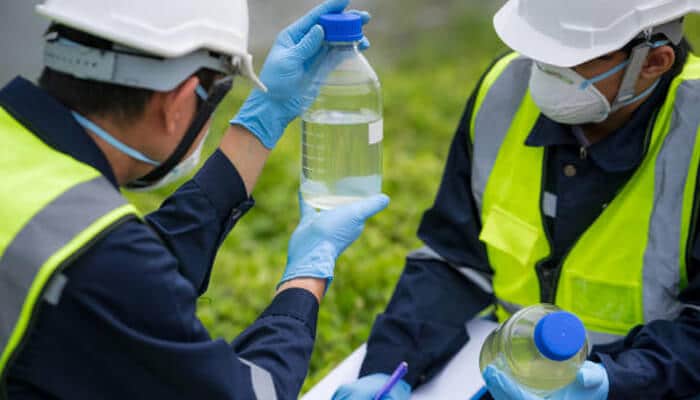

Clean water is, undeniably, one of the most vital resources on earth, and the professionals who manage and treat wastewater play a critical role in protecting it. Behind every safe river, functioning treatment plant, and sustainable reuse project stands a team of certified operators and engineers who ensure that what goes down the drain is treated responsibly before it’s released back to the environment. If you’re considering a career in this field or are already in it and are looking to advance, the first and most important step you should take is to understand all about wastewater certifications.
Why Does Wastewater Treatment Certification Matter?
Wastewater treatment is a quite complex process that involves the removal of different types of contaminants and the management of a variety of chemical and biological reactions. And according to various studies, municipalities in the United States alone handle over 34 billion gallons of wastewater every other day.
Given the scale and importance of this sector, guesswork can never be an option. That’s why you must take a wastewater treatment certification course and be licensed before you can start working in this field. Your certification is proof that you have the necessary skills and training to operate treatment systems safely and effectively, in a way that adheres to strict environmental regulations.
Besides, many of the U.S. states require operators of public and industrial wastewater facilities to obtain state-issued certification. This is their way of ensuring that professionals can handle complex systems involving biological treatment, chemical processes, and mechanical operations, all while meeting rigorous discharge standards by the Environmental Protection Agency (EPA).
Key Online Certification Programmes
Every state has its own mandatory certification, but you can also take online certification programmes from the following reputable institutions.
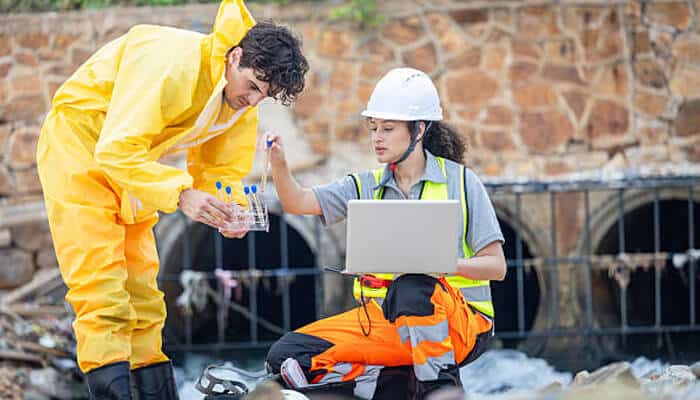
1. Water Environment Federation (WEF)
The Water Environment Federation offers a programme referred to as the Wastewater Treatment Operator Certification. It’s a programme that’s a combination of online coursework and hands-on training. The top reason to invest in this one is that it’s accepted across numerous states. Additionally, the WEF certification is renowned for its rigorous standards and comprehensive content, making it a high-quality certification for wastewater operators.
2. National Association of State Boards of Examiners for Engineering and Surveying (NASEES)
You can also take the Online Wastewater Treatment Certification by NASEES to boost your career profile. This programme focuses on regulatory compliance and operational efficiency. Since it’s a certification that’s tailored to meet state-specific requirements, it’s a versatile option across different jurisdictions and a no-brainer for most operators.
3. American Public Works Association (APWA)
The Public Services Certification Programme from the American Public Works Association is a great choice for operators as it covers various public work topics, including wastewater management. What’s more, it’s designed for multi-disciplinary professionals, and so it provides a holistic understanding of public service operations.
Levels of Certification
Wastewater certifications are, in most cases, divided into multiple levels (often Class I through IV) depending on your education, experience, and the size or complexity of the facility you work in. Class I and II certifications are entry-level certifications that require a high school diploma, completion of a basic training course, and passing an exam that covers fundamentals like safety, process control, and maintenance.
Class III and IV certifications are, on the other hand, advanced certifications that often demand years of hands-on experience, specific continuing education hours, and deeper knowledge of hydraulics, microbiology, and system optimisation.
It’s always a good idea to move up through the ranks, as this will not only enhance your technical expertise but also position you for supervisory or management roles within utilities, engineering firms, and even industrial plants.
Ready to Get Started?
Wastewater certifications aren’t just state-imposed credentials; rather, they are proof of your commitment to public health and environmental stewardship. So, whether you’re just entering the field or aiming for a senior role, investing in the right certification is an advisable way of securing a meaningful, stable, and respected career.
RocketCert makes this process easy for you by streamlining the process of finding and taking your state’s wastewater operator certification program. So, if you’ve been wondering where to start, head over to rocketcert.com right now to check out what they have for you.
