




Latin American workers in the U.S. have full civil rights to pursue wrongful death claims Here’s what your family needs to know before time runs out.
Nobody moves to a new country expecting to lose someone they love to someone else’s carelessness. Yet it happens every single day, and thousands of Latin American families find themselves in exactly that position without any idea that U.S. civil law is fully on their side. Immigration status, language barriers, and a distrust of the legal system all combine to keep families from pursuing justice they are legally entitled to claim. This article breaks down what the law actually says, where it applies, and what steps make or break a case before time runs out.
The Scale of the Problem Is Bigger Than Most People Realize
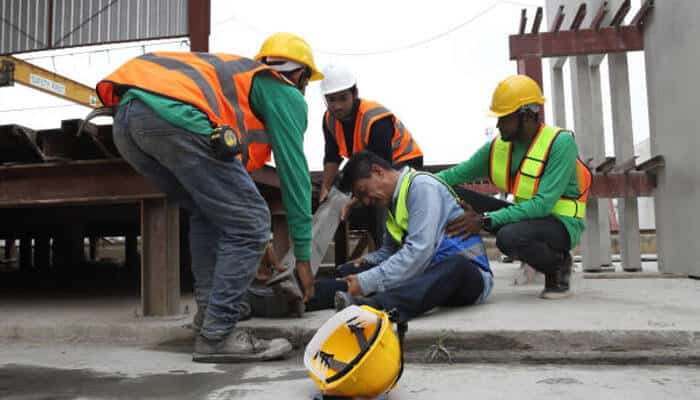
Fatal workplace incidents are far more common in the United States than most workers assume when they arrive. There were 5,070 fatal work injuries recorded in the United States in 2024, down 4.0 percent from 5,283 in 2023, according to the U.S. Bureau of Labor Statistics. That sounds like progress, and it is. But it still means roughly 14 workers die on the job every single day.
The picture for Hispanic and Latino workers is particularly striking. The fatal injury rate for Hispanic or Latino workers was 4.3 fatalities per 100,000 full-time equivalent workers in 2024, with 1,229 total fatalities recorded that year, according to the U.S. Bureau of Labor Statistics (2026). That rate sits higher than the national average of 3.3, which reflects the industries many Latin American workers are concentrated in: construction, agriculture, transportation, and food processing.
Workplace fatalities are only one category. Motor vehicle crashes, dangerous property conditions, and negligent third parties round out the most common sources of wrongful death claims. Any of these can give a surviving family the legal standing to pursue a civil case.
Civil Law vs. Common Law: Why the U.S. System May Feel Foreign
Most Latin American countries operate under a civil law tradition, which can make the U.S. legal system feel disorienting at first. Latin American countries, for the most part, follow the Civil Law tradition, which draws its inspiration from Roman law heritage and emphasizes the systematic codification of general law. The United States, by contrast, is a common law country where court decisions carry significant weight alongside written statutes. In practical terms, this means outcomes in wrongful death cases can vary widely depending on precedent, jurisdiction, and even the specific judge assigned to a case.
One important consequence of that difference: in the U.S., wrongful death is not automatically prosecuted by the state. Your family has to file the civil action itself. Nobody files it on your behalf. If you wait too long, the statute of limitations closes and your claim is gone permanently.
| Feature | Civil Law System (Most of Latin America) | Common Law System (United States)
|
| Primary legal authority | Codified statutes | Statutes plus court precedent |
| Who initiates the wrongful death claim | State authority may act automatically | Surviving family must file civilly |
| Damages recoverable | Often limited to economic losses | Economic and non-economic (grief, loss of companionship) |
| Time limit | Varies by country and code | Varies by state, typically 2 to 3 years |
Understanding this table helps explain why families from Mexico, Colombia, or Guatemala often wait, expecting the system to act. It will not. You have to move first.
Immigration Status Does Not Bar You From Filing
This is the misconception that costs families the most. Many Latin American families living in the U.S. believe that filing any kind of lawsuit will trigger immigration enforcement. That fear is understandable, but it is factually wrong.
The family members directly impacted by a loss, including spouses, children, and possibly dependent parents, can file a wrongful death claim, and you can file regardless of your immigration status. Personal injury and wrongful death cases are civil matters, not criminal proceedings. Filing a lawsuit does not alert immigration authorities, and defendants who attempt to use immigration status as leverage against a plaintiff face serious legal exposure for doing so.
There is a practical wrinkle, though. Proving family relationships, lost earning capacity, and financial dependency all require documentation. Families without formal records face a harder evidentiary road, but not an impossible one. Attorneys who specialize in these cases know how to build the factual record from alternative sources including witness testimony, wire transfer histories, and employment records.
Three Barriers Latin American Families Face in These Cases
Through the patterns that emerge across wrongful death litigation involving immigrant families, three recurring obstacles stand out.
Call this the Access Gap Framework: the three points where a legitimate claim dies before it ever reaches a courtroom.
1. The Information Barrier.
Most families simply do not know a civil claim exists. They receive a workers’ compensation payout or a settlement offer from an insurer and assume that closes the matter. Workers’ compensation and wrongful death are separate legal tracks. Accepting one does not forfeit the other in every case, but the clock is still running on the civil claim.
2. The Language Barrier.
Legal documents in English create real confusion. Statutes of limitations expire because a family did not understand a notice they received. Deadlines do not pause for translation. The single most time-sensitive action any family can take is consulting with a bilingual attorney immediately after a death, before anything is signed
3. The Trust Barrier.
A generation of experience with corrupt legal systems in some Latin American countries makes many families deeply skeptical of any lawyer or official. That skepticism is earned. But in the U.S. civil system, an attorney for wrongful death works on contingency in most cases, meaning they only get paid when the family wins. That structure fundamentally changes the incentive alignment compared to legal systems where upfront fees are the norm.
What U.S. Law Has Changed in Recent Years
Wrongful death statutes across the country have been actively expanding, which is good news for surviving families. Several states have amended their statutes in recent years to allow surviving family members to recover also for emotional distress, grief, and loss of enjoyment of life, with one state increasing its minimum recoverable damages from $250,000 to $350,000 effective in 2024, according to the American Bar Association’s review of a decade of wrongful death statute changes (ABA, 2024).
That expansion matters directly for Latin American families. Non-economic damages, the compensation for grief, lost companionship, and emotional suffering, are often the largest component of a settlement when the deceased was a relatively young worker without decades of high documented earnings. A family in that situation might actually recover more under these newer statutes than they would have five years ago.
“Every decline in workplace fatalities represents a life saved and a family kept whole,” said Lorraine Martin, CEO of the National Safety Council, commenting on the 2024 BLS workplace fatality data. The inverse is equally true: every fatality that did happen was a family that now has a right to ask why.
The Steps That Protect Your Claim Right Now
If your family is in the early days after losing someone, these five actions protect your legal options before anything else:
- Preserve every document: Police reports, employer incident reports, medical records, and any written communications from insurers. Do not sign anything from an insurance company without legal review.
- Document the financial relationship: Bank transfers, shared bills, school enrollment records for children, and any evidence of financial dependency. This builds the damages picture.
- Note all witnesses: Names, phone numbers, employers. Witnesses disappear faster than documents do.
- Identify the statute of limitations for your state: Most states give two to three years. Some are shorter for claims against government entities. The clock starts at the date of death, not the date you learn about your rights.
- Consult a bilingual attorney early: Not eventually. Not after you feel ready. Early consultation costs nothing in most wrongful death cases and protects every option you have.
No legal guide replaces a real conversation about the specific facts of your loss. But knowing your rights exist is where that conversation has to start. The U.S. civil system was built to hold negligent parties accountable, and it does not ask for your passport before it works for you.
