


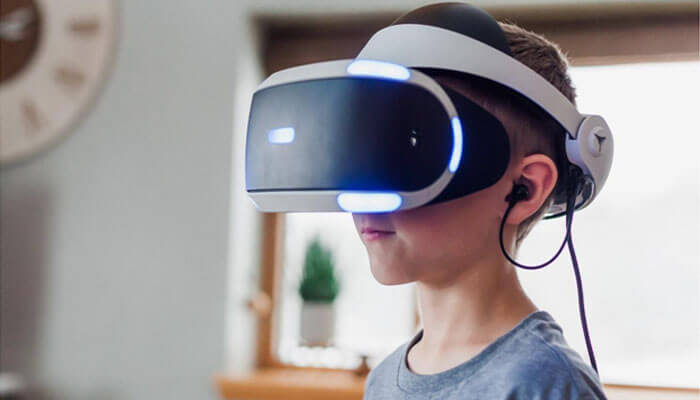

Virtual reality (VR) technology is often used in gaming and entertainment, but it also has many potential applications in other areas, such as education, healthcare, business, and gaming.
In 2020, the VR market was valued at $15.81 billion. It is expected that there will be at least 23 million VR-related jobs. From testing prototypes in the automotive industry to treatment in healthcare and live casinos in gaming, VR is expected to revolutionize the world for good.
What is Virtual Reality (VR)
According to jungeroemer.net VR is a computer-generated simulation of a three-dimensional environment that can be explored and interacted with by a person. It is often used in video games, but it is also being used in a growing number of other industries, such as healthcare, education, and even retail.
Virtual reality can provide a realistic and immersive experience that can be used to simulate real-world scenarios. This can be particularly useful for training purposes, as it can allow people to practice in a safe and controlled environment. VR can also be used to create experiences that are not possible in the real world, such as exploring other planets or going on roller coasters.
There are many different types of virtual reality systems available, ranging from simple smartphone-based headsets to complex multi-user systems. The level of immersion and interactivity can vary greatly between different systems.
Use of VR in Different Industries
Virtual reality has the potential to revolutionize many different industries. It has already been used successfully in a number of different applications, and the potential for further use is huge.
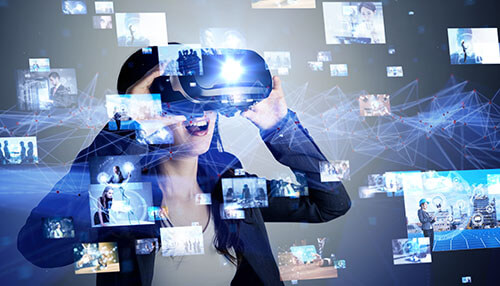
1. Healthcare
VR is being used in healthcare for both training and treatment purposes. For example, it is being used to train surgeons as it allows them to get a realistic experience of performing surgery without any risk to patients. It is also being used to treat conditions such as anxiety and phobias.
2. Retail
Retailers are using VR to give customers a realistic experience of their products. For example, IKEA has created a VR kitchen that allows customers to see how IKEA kitchens would look in their own homes. This is a great way for customers to get an idea of what they want before they make a purchase.
3. Education
VR is being used in education to provide students with immersive learning experiences. For example, Google Expeditions allows teachers to take their students on virtual field trips to places like the Great Barrier Reef or the surface of Mars. This is a great way to engage students and get them excited about learning.
4. Entertainment
VR is being used in the entertainment industry to create immersive experiences for users. For example, there are now VR roller coasters that allow you to experience the thrill of a roller coaster without leaving your seat. This is just one example of how VR is being used to create new and exciting experiences for users.
5. Gaming
VR has the ability to create immersive experiences that are unlike anything we have ever seen before. When you add in the fact that VR can also help us to physically interact with our games, it is easy to see why so many people are excited about its potential.
These are just a few examples of how VR is being used in different industries. It is clear that VR has a lot of potential and we are only just beginning to scratch the surface of what is possible.
