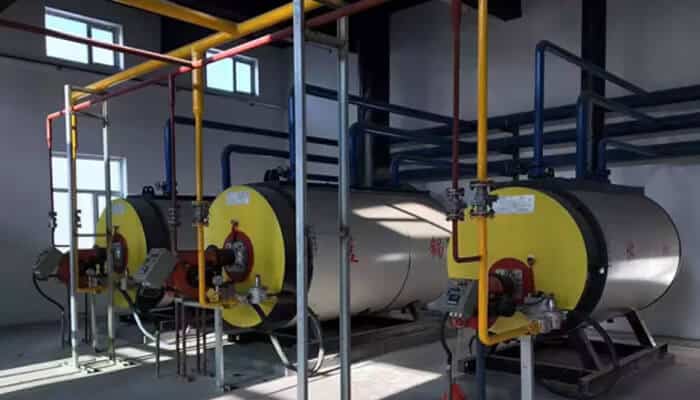
This guide explores the vital “why, when, and how” of upgrading your combustion technology, helping facilities reduce costs and meet strict environmental mandates while ensuring long-term operational reliability and safety through advanced burner solutions!
Why Choose an Industrial Burner Retrofit?
In the current industrial landscape, the decision to upgrade an existing system is often driven by three primary factors: economics, regulation, and reliability.
1. Energy Efficiency and Cost Savings
A burner retrofit is the most direct path to reducing fuel costs. Older burners often require a high excess air coefficient to maintain stable combustion, which inadvertently carries heat away through the stack. Modern designs, such as those utilizing rapid-mix technology, can operate at much lower excess air levels.
By implementing precise combustion controls, such as parallel positioning, facilities typically see a 10% to 25% reduction in fuel usage. Furthermore, burner retrofitting allows for the utilization of variable frequency drives (VFDs). By modulating the fan motor speed based on actual load demand rather than running at a constant high speed, electricity consumption is drastically reduced.
2. Environmental and Regulatory Compliance With Industrial Burner Retrofit
As global emission regulations tighten, burner retrofitting is essential to avoid fines. Older burners utilizing outdated combustion methods are a key source of NOx emissions. They are also more likely to release excessive CO due to poor combustion control.
Modern low-NOx and ultra-low NOx burners employ various techniques—such as flue gas recirculation (FGR) and staged combustion—to achieve NOx levels as low as 30 ppm, or even below 9 ppm. This not only ensures compliance with local air quality standards but also helps corporations meet Environmental, Social, and Governance (ESG) targets by reducing the overall carbon footprint.
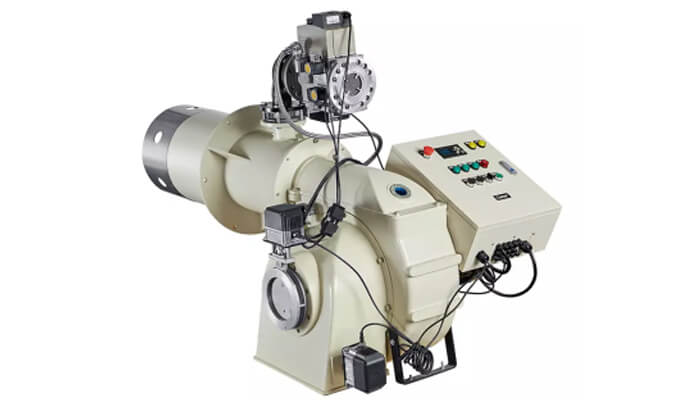
Picture shown: a low NOx burner capable of using natural gas, LPG, and biogas.
3. Operational Reliability and Safety
Safety upgrades are a critical advantage of an industrial burner retrofit. Modern systems incorporate advanced burner management systems (BMS), high-precision flame scanners, and automatic safety interlocks.
Upgrading to components that meet standards like the NFPA 85/86 safety codes is beneficial. It reduces the risk of accidents and can even lower insurance premiums by minimizing the frequency of unexpected downtime.
When Should a Company Retrofit?
Deciding between repair and a full industrial burner retrofit requires evaluating performance, compliance, and remaining equipment life.
Telltale Signs That a Retrofit Is Due
- Rising Fuel Consumption: If your output remains the same but fuel bills are climbing, or if the thermal efficiency noticeably drops, such as by 5–10%, the burner’s performance is likely degrading.
- Surging Maintenance Costs: When annual repair costs exceed 5-10% of the cost of a new machine, or if spare parts have become obsolete and difficult to source, a retrofit is the logical choice.
- Inconsistent Heating: If the burner struggles to maintain the correct air-fuel ratio, leading to soot buildup in boiler tubes or an inability to handle load fluctuations, the system is no longer reliable.
- Regulatory Pressures: If your current emission levels cannot meet the latest standards (such as NAAQS), the risk of forced shutdowns makes retrofitting an immediate priority.
Lifecycle and ROI Benefits of Industrial Burner Retrofit
While a boiler body can last 30 years, the actual lifespan of an industrial burner is typically 10 to 20 years. Retrofitting the burner can extend the overall equipment life by another decade or two at a fraction of the cost of a full replacement.
Most facilities see a return on investment (ROI) within 1 to 3 years purely through fuel savings. If the retrofit prevents even a few days of unplanned production stoppage, the ROI can be instantaneous.
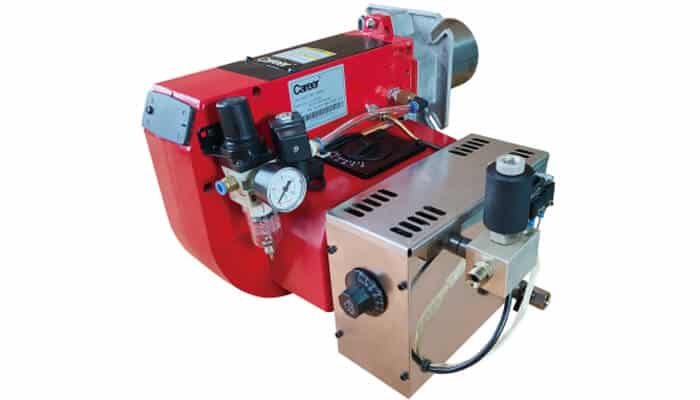
Picture shown: a waste oil burner capable of combusting waste oils derived from cooking oil, tire oil, lubricants, or vehicle oils.
How to Retrofit an Industrial Burner
A successful burner retrofit follows a structured technical approach to ensure compatibility and performance.
Step 1: Conduct a System Assessment
Begin with a comprehensive audit. This should not be limited to the burner but should include the boiler pressure vessels, refractory materials, and existing control systems. It is vital to record baseline measurements—such as current fuel consumption, stack temperature, and emission data—to calculate the exact savings potential.
Step 2: Define Retrofit Goals
Clearly define what you want to achieve. Are you retrofitting to increase capacity, or is the primary goal to meet a specific NOx limit (e.g., <20 ppm)? Do you need a higher turndown ratio (such as 10:1) to handle varying loads without frequent on/off cycling? Establishing these sustainability and capacity targets early will dictate the technology choice.
Step 3: Choose the Right Technology
Select control systems that eliminate mechanical lag. Parallel positioning uses independent servo motors for fuel and air, ensuring the ratio is perfect at every firing rate. Additionally, consider O2 trim systems that use real-time oxygen sensors to automatically micro-adjust the air dampers.
Crucially, ensure the flame geometry (length and diameter) of the new industrial gas burner or oil burner is compatible with your existing furnace dimensions to avoid “flame impingement,” which can damage furnace walls.
Partner with the Right Burner Manufacturer
Choosing the right hardware is the last step for a successful burner retrofit, and partnering with a reliable, experienced burner manufacturer can save you significant time and effort. Career Burner, a professional burner manufacturer from China, offers ISO 9001-certified solutions backed by 20+ years of engineering expertise and a global footprint of over 258,000 units delivered.
The company is impressive for providing a wide array of options to fit specific industrial needs:
- Industrial Gas Burner Solutions: The GX series offers power ranges from 50 kW to 7000 kW. These are ideal for gas fuels, such as natural gas and LPG, featuring high turndown ratios for applications like drying lines.
- Industrial Oil Burner Precision: For facilities using light oil, diesel, or kerosene, Career Burner provides light oil burning units ranging from 24 kW to 1416 kW. These burners offer single-stage, two-stage, or modulating control options to ensure stability under high loads.
- Waste Oil and Low Emission Models: For specialized recycling needs, the FX series handles waste oil efficiently. Their ultra-low NOx series can achieve emissions below 30mg/m³, meeting the strictest environmental mandates.
Conclusion
A burner retrofit is a strategic investment that transforms an aging asset into a high-performance, compliant, and cost-saving powerhouse. By choosing a partner like Career Burner, you gain access to decades of technical mastery and precision-engineered components. Whether you are managing a large-scale boiler or a specialized industrial furnace, the right retrofit will secure your operational efficiency for years to come!