


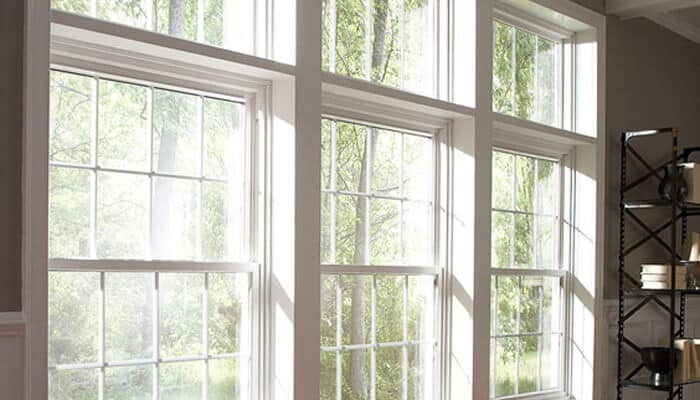

Stand in an old room in the late afternoon and watch the light come through the windows. It does not lie flat on the floor. It shifts, ripples, and pools in a way that feels alive, and most people never stop to ask why. The answer is in the retro glass itself, the single most overlooked element in any old wood window restoration, and the one that quietly carries the soul of a historic facade.
Glass is the part almost everyone gets wrong. Frames get stripped and repaired, profiles get matched, paint gets chosen with care, and then someone drops in a sheet of flawless modern float glass and wonders why the finished window looks subtly, stubbornly wrong. The frame is right, but the light is dead. Understanding why is the difference between a restoration that feels authentic and one that just looks new, a distinction the craftsmen at Artan Window Solutions have spent years learning to honor.
What Modern Glass Took Away
Today’s standard window glass is a triumph of manufacturing. Float glass, the process perfected by Pilkington at the end of the 1950s, is made by floating molten glass on a bed of molten tin, which leaves it perfectly flat, perfectly clear, and uniform in thickness across the whole pane. For a new build, that is exactly what you want. In a period window, it is precisely the problem.
Older glass was never flat in that absolute way. Before float production took over, panes were made by hand, blown and shaped using cylinder and crown methods that left gentle waves, faint striations, and tiny seed bubbles across the surface. Crown glass, common in finer homes before the mid-1800s, carried sweeping curved distortions, while the cylinder glass that filled most nineteenth-century houses showed straighter, more parallel ripples.
Those so-called imperfections are not defects. They are the reason historic glass interacts with light the way it does, bending and scattering it just slightly so the window feels warm and animated rather than sealed and sterile. Drop modern glass into an antique frame and you erase that entire quality in one move, which is why glass is the quiet make-or-break detail in any restoration of old wood windows.
The Case for Retro Restoration Glass
This is where restoration-style glass, often called retro or restoration glass, comes in. It is still made today in Europe by artisans using the same mouth-blown techniques that produced the original panes, deliberately reintroducing the subtle movement and irregularity that machine-made float glass eliminated.
The effect is immediate. Where modern glass holds a flat, mirror-like reflection, retro glass gives a soft, shifting play of light that moves as you move past it. The distortion is most vivid when you view the pane at an angle rather than straight on, which is exactly how the eye catches a window while passing through a room. It captures and releases daylight the way the original glazing did, so the restored window reads as genuinely old rather than freshly manufactured. For a serious old wooden window restoration, this is not a luxury detail. It is what makes the whole window believable, because the eye registers the behavior of light long before it consciously notices the frame.
Why the Detail Matters to Designers
For interior designers and preservationists, this is where projects are won or lost. A room’s atmosphere depends heavily on how natural light enters it, and historic glass shapes that light in a way no modern substitute can fake. The faint ripple casts soft, moving highlights on walls and floors, gives reflections a gentle character instead of a hard mirror finish, and ties the window visually to the period architecture around it.
Swap in flat glass and the whole composition tightens up and goes cold. The proportions might be perfect and the joinery flawless, yet the space loses the very quality that made the original architecture feel special. This is why specifying the right glass belongs in the earliest design conversation, not at the end as an afterthought. The glass is not a backdrop to the restoration. In many period interiors, it is the main event.
When Glass Has to Be Replaced
Wherever possible, original glass is worth keeping, and careful old wood window restoration always tries to save the historic panes that are still sound. Pre-1840 glass in particular is rare enough that every effort should go toward preserving it. But broken, cracked, or missing glass is a reality in old buildings, and that is where thoughtful old window glass replacement becomes essential rather than optional.
The principle is simple. If a pane must be replaced, it should be replaced with glass that honors the character of what was there, not with whatever flat sheet is cheapest and closest to hand. Matching the visual quality of the surviving glass keeps the window reading as a single coherent object instead of a patchwork of old and obviously new. Done with care, the replacement disappears into the whole, and the window keeps telling the same story it always has.
How to Specify the Right Glass
Getting glass right on a restoration project comes down to a few practical habits, and the first is to look closely at what is already there. The surviving panes are the reference. Note whether the waves run curved or straight, how pronounced the distortion is, and whether the glass carries seed bubbles, since matching that character is what makes new and old read as one.
From there, raise glass early and treat it as a real line item, not a finishing afterthought. Restoration glass comes in different grades, from lightly irregular to strongly mouth-blown, so the right choice depends on the period and on how wavy the original glass actually was. It also helps to view samples at an angle and in real daylight rather than flat under a showroom light, because that is the only way to judge how a pane will behave once it is in the wall. Specified this way, the glass supports the rest of the work instead of quietly undoing it.
The Whole Window Has to Agree
A restored window is a system, and every part has to speak the same language. A beautifully repaired frame deserves glazing that matches its age, just as authentic glass deserves a frame restored to hold it properly. When the timber, the profiles, the finish, and the glass all align, the result is a window that belongs to its building completely, indistinguishable from the original in feel even where the materials are new.
That harmony is the real goal of preservation. It is not about chasing perfection, because perfection is exactly what makes modern windows feel lifeless. It is about honoring the gentle irregularity that made historic architecture warm in the first place. Get the glass right, and the light tells the truth about the building all over again.
FAQs
What is retro or restoration glass?
It is glass made specifically to recreate the look of historic glazing. Unlike flat, uniform modern float glass, it is produced with mouth-blown techniques that reintroduce subtle waves and irregularities, so it captures and bends light the way old glass did and matches the character of a period window.
Why does modern glass look wrong in an old window?
Modern float glass is perfectly flat and uniform, which gives it a hard, mirror-like reflection. Historic glass has gentle movement and faint imperfections that scatter light softly. Putting flat glass in an antique frame removes that warmth, so the window looks new even when the frame is perfectly restored.
Should original glass always be saved?
Whenever it is still sound, yes, and very early glass especially so. Original panes carry the authentic character of the window and are worth preserving during restoration. Replacement is reserved for glass that is broken, cracked, or already missing, and even then the goal is to match what was there.
Does the type of glass really affect a room’s atmosphere?
More than most people expect. Historic glass shapes incoming daylight, casting soft moving highlights and giving reflections a gentle character. That quality ties the window to its period architecture, and flat modern glass cannot reproduce it, which is why designers treat glass selection as a key decision.
Can replacement glass be matched to surviving panes?
Yes. The aim of careful glass replacement is to match the visual quality of the original glazing, including the direction and strength of the waves, so old and new panes read as one coherent window. Done well, the replacement blends in and the window keeps its authentic, unified appearance.
