




However, for chief marketing officers and technical founders, this transition harbors a devastating risk. If mishandled, a migration can reset years of accumulated digital trust overnight, causing open rates to collapse and sending critical communications straight to the spam folder.
This failure typically stems from neglecting the mandatory email warm up phase required for any new infrastructure. Without gradually validating your identity, sudden volume spikes can trigger security algorithms and land your new IP addresses on critical blocklists like Spamhaus Zen, turning a routine software upgrade into a deliverability crisis.
The Myth of the “Plug-and-Play” Email Migration
The most common misconception among business leaders is that email reputation travels with the domain name alone. The reality is more complex. Internet Service Providers (ISPs) like Google, Yahoo, and Outlook assign reputation scores based on a combination of the sending domain and the IP address.
When a company switches providers, they are often assigned a new IP address or a set of them. To the ISP’s algorithms, this new IP is an unknown entity. It has no history of good behavior, no track record of engagement, and no established trust.
If a company migrates its database of 50,000 users and immediately resumes its normal sending volume on day one, ISPs perceive this sudden spike in traffic from a “cold” IP as a potential security threat. The result is often an immediate block, regardless of the quality of the content.
The Strategic Necessity of Email Warm Up During Email Migration
To mitigate the shock of a new infrastructure, companies must adopt a phased approach. This is where the concept of email warm up becomes a non-negotiable part of the migration strategy.
Email warm up is the systematic process of gradually increasing the volume of emails sent from a new IP address. The goal is to introduce the new sending identity to ISPs slowly, proving that the traffic is legitimate and that recipients are engaging with the content.
For modern enterprises, relying solely on manual warm-up schedules is increasingly risky due to human error. Automated email warm up solutions have become the standard for reducing the time-to-inbox.
These tools simulate positive interactions (open, replies, marking as no spam) on the new infrastructure before the main marketing campaigns are launched, creating a safety buffer that proves to ISPs that the new server configuration is valid and trustworthy.
Navigating Spamhaus Zen in Email Migration
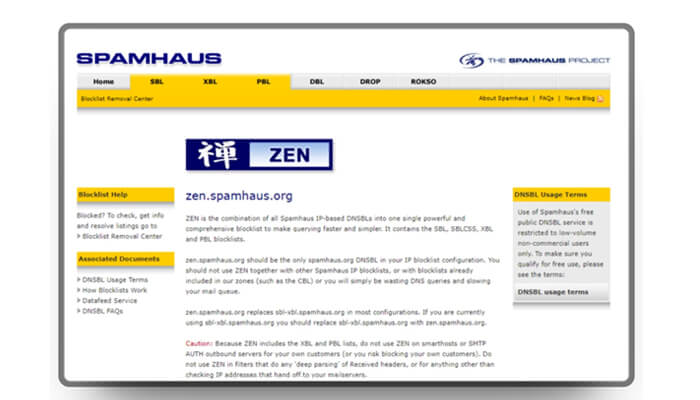
While building a reputation is vital, avoiding the industry’s "watchdogs" is equally critical during a migration. The global email ecosystem is policed by independent organizations that maintain blocklists (Real-time Blackhole Lists or RBLs) to protect users from unsolicited mail.
Among the most influential and widely respected of these is Spamhaus Zen. It is not a single list, but rather a composite zone that combines several Spamhaus datasets (including the SBL, XBL, and PBL).
For a business leader, understanding Spamhaus Zen is essential because it feeds data to the majority of the world's ISPs and enterprise security filters. If a migrating company makes a technical error, such as sending to a "spam trap" (an abandoned email address used to catch spammers) or misconfiguring their server signature, they may find their new IP listed on Spamhaus Zen.
During a migration, monitoring your new IP against the Spamhaus Zen database is a mandatory daily ritual. It serves as the ultimate barometer of your infrastructure's health. If an issue appears, all sending must pause immediately until the root cause is addressed and delisting is requested.
Authentication Protocols
Finally, a migration cannot succeed without immediate and rigorous authentication protocols. This is not a suggestion. In 2024, giants like Google and Yahoo instituted mandatory requirements for bulk senders. Technical authentication is now a strict prerequisite for business continuity; failure to comply means failure to deliver.
Before a single email leaves the new system, three pillars must be verified:
SPF (Sender Policy Framework): Validates that the new ESP’s IP is authorized to send on your behalf.
DKIM (DomainKeys Identified Mail): Adds a digital signature to emails, ensuring they haven’t been tampered with in transit.
DMARC: A policy that tells ISPs what to do if an email fails the first two checks.
Conclusion
By prioritizing technical authentication, respecting the authority of Spamhaus Zen, and committing to a diligent email warm up period, businesses can scale their technology stack without sacrificing their most valuable digital asset: the ability to communicate with their customers.
Ensuring that every message reaches its destination transforms technical compliance into a strategic advantage, safeguarding the direct line to revenue that every growing enterprise relies upon.
