


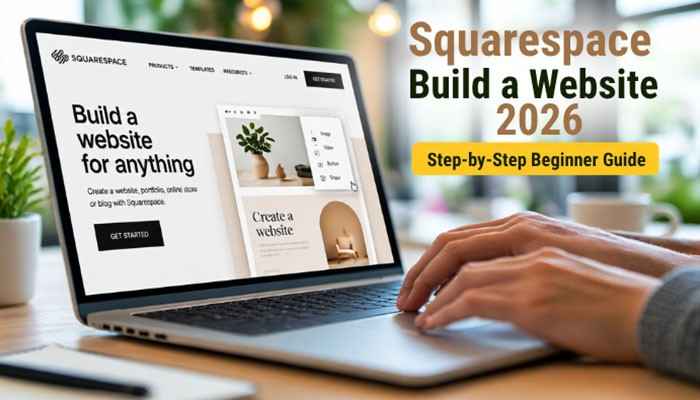

A Squarespace build a website search usually comes from someone who wants a professional website without dealing with complicated coding, separate hosting, or advanced development tools. Squarespace brings website design, templates, AI-assisted creation, domains, blogging, ecommerce, analytics, and SEO tools into one platform.
In 2026, the Squarespace build a website process can begin with a template or Blueprint AI Builder. You can then customize pages with Squarespace version 7.1 and Fluid Engine, add your own content, connect a domain, optimize the site for search engines, and publish it when everything is ready.
Squarespace can support business websites, portfolios, blogs, online stores, appointment-based businesses, creators, and service companies. However, the platform alone will not generate traffic. Strong content, useful page structure, mobile usability, search optimization, and ongoing updates still matter.
This guide explains the complete Squarespace build a website process from planning and design to SEO, AI search visibility, mobile optimization, analytics, domains, security, ecommerce, and final launch.
Quick Answer: Squarespace Build a Website
The simplest Squarespace build a website workflow in 2026 is to start a trial, choose a template or Blueprint AI Builder, plan your main pages, create navigation, customize your branding, add original content, optimize mobile layouts, connect a domain, configure SEO, test important functions, and publish the site on the right Squarespace plan.
A practical process looks like this:
- Start a Squarespace trial.
- Choose a template or Blueprint AI Builder.
- Define your website goal.
- Plan your page structure.
- Create clear navigation.
- Add your branding.
- Build pages with Fluid Engine.
- Add original content and calls to action.
- Create forms and lead-generation paths.
- Optimize the site for mobile.
- Improve accessibility and performance.
- Connect a custom domain.
- Configure Squarespace SEO.
- Connect Google Search Console and analytics.
- Test links, forms, redirects, and checkout.
- Publish the finished website.
Key Takeaways
- Squarespace can help beginners create professional websites without traditional coding.
- Templates and Blueprint AI Builder provide different starting methods.
- Fluid Engine gives version 7.1 users flexible visual page editing.
- A strong Squarespace build a website strategy begins with planning, not design.
- Squarespace handles several technical SEO elements automatically.
- Public websites receive an XML sitemap.
- Connected domains can use SSL protection.
- Mobile design should still be checked manually.
- Google Search Console can help monitor search performance.
- AI-powered search visibility is becoming increasingly important.
- Content quality, internal linking, usability, and authority remain important for organic traffic.
Squarespace Website Building at a Glance
| Stage | Main Task | Primary Goal |
|---|---|---|
| Planning | Define audience and purpose | Create direction |
| Setup | Start trial and choose design | Build foundation |
| Structure | Create pages and navigation | Organize information |
| Branding | Set colors, fonts, and logo | Create consistency |
| Content | Add text, images, and CTAs | Communicate value |
| Mobile | Review responsive layouts | Improve usability |
| SEO | Optimize pages and content | Improve search visibility |
| Technical | Domain, SSL, and redirects | Improve reliability |
| Analytics | Track visitor behavior | Measure performance |
| Launch | Test and publish | Go live |
| Growth | Update content and SEO | Increase traffic |
Is Squarespace Good for Beginners?
Squarespace is designed to make website creation more accessible to people who do not want to build everything from code.
Users can manage:
- Pages
- Website design
- Hosting
- Blogs
- Domains
- Ecommerce
- Analytics
- Forms
- Scheduling
- SEO settings
For many users, this makes the Squarespace build a website process easier than combining a separate hosting provider, content management system, page builder, and multiple plugins.
However, using an easy website builder does not automatically create a successful website.
You still need to understand:
- Who your audience is
- What visitors are searching for
- Which pages they need
- What makes your business useful
- What action visitors should take
- Which topics can attract organic traffic
- How your site demonstrates trust
Squarespace simplifies the technology. Your website strategy determines the result.
What to Prepare Before You Build a Squarespace Website
Before spending hours on colors and layouts, prepare the core information your website needs.
Useful materials include:
- Website or business name
- Logo
- Brand colors
- Main headline
- Business description
- Product or service information
- Contact details
- Original photographs
- Testimonials
- Social-media links
- Domain-name ideas
- Target keywords
- Customer questions
- Privacy information
- Main call to action
Also identify your main website goal.
For example:
- Consultant: Book a consultation
- Online store: Purchase a product
- Local business: Request a quote
- Photographer: View portfolio and inquire
- Creator: Subscribe to a newsletter
- Restaurant: View menu or reserve
Preparing these elements makes the Squarespace build a website workflow faster because you spend less time creating placeholder content.
How to Build a Squarespace Website Step by Step
Step 1: Start Your Squarespace Trial
Begin by creating a new Squarespace website.
Use the trial period to understand how the editor works before committing to the final design.
You can use this stage to:
- Explore templates
- Upload photographs
- Create pages
- Build navigation
- Test page layouts
- Add text
- Configure basic branding
- Experiment with products
- Review mobile appearance
Do not rush directly into publishing.
Use the early Squarespace build a website stage to establish a clear foundation.
Step 2: Choose a Template or Blueprint AI Builder
Squarespace provides more than one way to start.
Start With a Template
A template gives you an existing design direction.
You can replace sample content with your own:
- Text
- Images
- Logo
- Colors
- Pages
- Buttons
- Business information
Templates work well when you already have a clear visual style in mind.
Use Blueprint AI Builder
Blueprint AI Builder can create a customized website starting point based on information you provide about your business and preferred style.
AI-assisted tools can help generate:
- Initial layouts
- Suggested text
- Images
- Style choices
- Page ideas
AI can save time, but generated material should not automatically become your final website.
Replace generic text with:
- Real business information
- First-hand experience
- Original examples
- Accurate service details
- Real qualifications
- Original photographs
- Brand-specific language
A strong Squarespace build a website strategy should use AI as an assistant rather than as a replacement for expertise.
Step 3: Define Your Website’s Main Purpose
Before designing individual pages, define what the website should accomplish.
Write one sentence such as:
Help local homeowners understand our renovation services and request an estimate.
That sentence helps you decide what belongs on the homepage, which pages you need, and which call to action deserves the most attention.
Common website goals include:
- Sell products
- Generate leads
- Book appointments
- Publish articles
- Display a portfolio
- Grow an email list
- Promote a local business
- Sell memberships
Avoid giving five actions equal visual importance.
Choose one primary goal and build the website around it.
Step 4: Plan Your Website Structure
Most new websites do not need dozens of pages.
Start with a simple structure.
| Website Type | Recommended Core Pages |
|---|---|
| Small business | Home, About, Services, FAQ, Contact |
| Consultant | Home, About, Services, Case Studies, Contact |
| Freelancer | Home, Portfolio, Services, About, Contact |
| Ecommerce | Home, Shop, About, FAQ, Shipping, Returns |
| Blog | Home, Blog, About, Categories, Contact |
| Local business | Home, Services, About, Location, Contact |
| Portfolio | Home, Work, About, Services, Contact |
A simple site architecture could be:
Home → Services → Individual Service Pages → About → Blog → Contact
A well-organized structure helps both visitors and search engines understand the website.
Step 5: Create Clear Navigation
Navigation should communicate where each link leads.
Good:
Home | About | Services | Blog | Contact
Less clear:
Start Here | Our Story | What We Make Happen | Thoughts | Say Hello
Creative language can work in limited situations, but usability should come first.
During the Squarespace build a website process, keep navigation simple enough that a first-time visitor can immediately understand where to go.
Step 6: Create a Consistent Brand Design
Now define the visual identity.
Set:
- Logo
- Site title
- Heading font
- Body font
- Primary color
- Accent color
- Button style
- Section spacing
- Image style
- Header
- Footer
Consistency matters more than complexity.
A simple website using two fonts and a limited color palette can look more professional than a site using many competing visual effects.
Step 7: Add a Favicon and Social Sharing Images
Small branding details improve presentation.
A favicon is the small icon that appears in browser tabs.
You should also configure social sharing images for important pages and articles.
These images may appear when your website links are shared through social networks or messaging services.
Use images that accurately represent the page instead of generic graphics.
Step 8: Build a Strong Homepage
Your homepage should quickly answer five questions:
- What do you offer?
- Who is it for?
- Why should people care?
- Why should visitors trust you?
- What should they do next?
Hero Section
Use a specific headline.
Weak:
Welcome to Our Website
Better:
Bookkeeping Services for Growing Ecommerce Businesses
Then add a short supporting sentence and one clear button.
Examples:
Get a Quote
Book a Consultation
View Portfolio
Shop Products
Trust Section
Add relevant proof such as:
- Testimonials
- Reviews
- Certifications
- Client logos
- Portfolio examples
- Case studies
- Professional experience
Avoid fabricated statistics or generic trust claims.
Services or Products
Highlight the most important offers.
Do not force visitors to process every possible service at once.
About Preview
Introduce the business or person behind the website.
Final Call to Action
Finish the homepage with one logical next step.
A strong homepage is one of the most important parts of the Squarespace build a website process because it influences first impressions, navigation, and conversions.
Step 9: Build Pages With Fluid Engine
Fluid Engine provides flexible visual page editing on Squarespace version 7.1.
You can position content such as:
- Text
- Images
- Buttons
- Forms
- Videos
- Galleries
- Products
- Maps
- Newsletters
- Social links
- Scheduling blocks
Desktop and mobile layouts can also be adjusted in supported areas.
Use Whitespace Carefully
Do not fill every blank area.
Whitespace helps visitors:
- Read content
- Identify sections
- Notice buttons
- Understand hierarchy
- Focus on key information
A clean page often feels more professional than a crowded page.
Step 10: Write Specific and Helpful Content
Content should answer real visitor questions.
A strong service page might explain:
What the Service Is
Describe the service clearly.
Who It Is For
Explain who benefits most.
What Problem It Solves
Connect the service to a specific need.
What Is Included
List important deliverables.
How the Process Works
Explain what happens after someone contacts you.
Proof
Add relevant testimonials, examples, qualifications, or results.
FAQs
Address common objections or questions.
Call to Action
Tell the visitor what to do next.
Avoid generic wording.
Weak:
We provide innovative solutions customized to your needs.
Better:
We provide monthly bookkeeping, account reconciliation, and cash-flow reporting for small ecommerce businesses.
The second version provides more useful information and stronger search context.
Step 11: Add Forms and Lead Collection
Forms help turn website visitors into inquiries or subscribers.
You may need:
- Contact form
- Quote request
- Consultation form
- Newsletter signup
- Product waitlist
- Event registration
Keep forms reasonably short.
Every additional field creates more work for the visitor.
After creating the form, test it.
Check:
- Whether submissions arrive correctly
- Whether required fields work
- Whether confirmation messages appear
- Whether redirects work
- Whether the form works on mobile
A Squarespace build a website project should never reach launch without testing important forms.
Step 12: Optimize the Website for Mobile
Many visitors may see your website on a phone before ever viewing the desktop version.
Check:
- Heading sizes
- Paragraph widths
- Navigation
- Buttons
- Image cropping
- Forms
- Product layouts
- Section spacing
- Pop-ups
- Footer links
Use the mobile preview while designing.
Then test important pages on a real phone.
Mobile optimization should be part of the Squarespace build a website workflow from the beginning rather than an afterthought.
Step 13: Improve Website Speed
Large pages can create slow experiences.
Common causes include:
- Oversized photographs
- Large video backgrounds
- Too many animations
- Heavy third-party widgets
- Unnecessary scripts
- Very long pages
Improve performance by:
- Compressing images
- Resizing photographs before uploading
- Limiting unnecessary videos
- Removing unused sections
- Reducing third-party scripts
- Splitting extremely long pages when useful
Do not remove useful information simply to chase a perfect performance score.
Balance speed with visitor needs.
Step 14: Improve Accessibility
Accessibility improves website usability for a wider range of visitors.
Use:
- Logical heading levels
- Descriptive link text
- Appropriate alt text
- Readable font sizes
- Sufficient contrast
- Clear form labels
- Keyboard-friendly navigation
- Video captions when appropriate
Do not choose headings only because you like their visual size.
The heading structure should reflect the content hierarchy.
Step 15: Connect a Custom Domain
A custom domain gives your website an address such as:
yourbusiness.com
You can register a domain through Squarespace or connect an eligible domain purchased elsewhere.
Allow time for DNS changes to update.
Do not make an important domain change immediately before a major launch.
Step 16: Check SSL and HTTPS
Your public website should load securely over HTTPS.
After connecting the domain, check:
https://yourdomain.com
The browser should not display a security warning.
Also be careful with external scripts or content loaded through insecure connections.
Security checks are an important technical step in any Squarespace build a website project.
Step 17: Add a Professional Business Email
A custom domain does not automatically create a professional email inbox.
A business may want an address such as:
hello@yourbusiness.com
or
support@yourbusiness.com
Using a domain-based email can create a more consistent experience for customers.
Squarespace Build a Website SEO Optimization
Once the site structure and design are complete, search optimization becomes a major priority.
Squarespace handles some technical SEO automatically, but website owners still control important elements such as content quality, search intent, internal links, titles, descriptions, URLs, and page usefulness.
Write Strong SEO Titles
Each important page should have a descriptive search title.
Weak:
Services
Better:
Small Business Accounting Services | Example Brand
Keep the title closely connected to the page content.
Write Useful Meta Descriptions
A meta description should explain what a searcher will find on the page.
Avoid stuffing it with repeated keywords.
A good description communicates:
- Topic
- Benefit
- Context
- Reason to click
Optimize URL Slugs
Keep URLs readable.
Good:
example.com/web-design
Less useful:
example.com/page-new-web-design-services-final
Readable URLs are easier to understand, remember, and share.
Focus Each Page on One Main Search Intent

Do not try to rank every page for every topic.
For example, a photography site might use separate pages for:
- Wedding photography
- Engagement photography
- Corporate photography
- Photography pricing
- Individual locations
Create separate pages when the search intent genuinely differs.
Use the Focus Keyword Naturally
The exact focus keyword squarespace build a website can appear naturally in key areas such as:
- SEO title
- Introduction
- Quick Answer
- Selected subheadings
- Main body
- FAQ section
- Conclusion
However, repeating squarespace build a website in every paragraph or heading would reduce readability.
Use natural variations alongside it:
- Build a Squarespace website
- Squarespace website builder
- Create a Squarespace website
- Squarespace beginner guide
- Squarespace website design
- Squarespace tutorial
- Squarespace SEO
This gives the article stronger topical breadth.
Optimize Images
Use descriptive file names.
Instead of:
IMG_5483.jpg
consider:
small-business-accounting-office.jpg
when it accurately describes the image.
Add meaningful alt text where appropriate.
Do not force squarespace build a website into every alt attribute unless the image genuinely relates to that phrase.
Add Internal Links
Internal links help visitors navigate between related pages.
For example:
A bookkeeping article could link to your bookkeeping services page.
A guide about a product could link to the relevant shop page.
A Squarespace SEO guide could link back to this Squarespace build a website tutorial.
Use descriptive anchor text rather than repeatedly writing click here.
Publish Helpful Content
Blog content can bring organic traffic long after the website launches.
Useful formats include:
- Tutorials
- Comparison articles
- Cost guides
- Checklists
- Case studies
- FAQs
- Local guides
- Product guides
- Original research
Focus on questions that your actual audience asks.
What Squarespace Handles Automatically for SEO
Squarespace automatically handles several technical website elements.
Depending on your site and content, these may include:
- XML sitemap generation
- SSL support
- Responsive layouts
- Structured data for supported content
- Technical metadata
These features make the Squarespace build a website process easier, but they do not mean SEO happens automatically.
You still need to create useful content and organize it properly.
Check Your XML Sitemap
Squarespace generates an XML sitemap for eligible public websites.
It is normally available at:
https://yourdomain.com/sitemap.xml
The sitemap helps search engines discover website URLs.
You usually do not need to create one manually.
After publishing, check that the sitemap loads correctly.
Connect Google Search Console
Google Search Console can help you understand how Google interacts with the website.
It can provide information about:
- Search queries
- Clicks
- Impressions
- Indexed pages
- Crawling
- Search visibility
You can also search Google using:
site:yourdomain.com
to see some pages currently indexed from your domain.
Do not expect immediate results after finishing the Squarespace build a website process.
New websites need time to be discovered, crawled, indexed, and evaluated.
Optimize for AI-Powered Search
Search behavior is increasingly extending beyond traditional search-result pages.
Websites can also appear in AI-generated answers and search experiences.
To improve your chances of being understood by both search engines and AI systems:
- Answer important questions clearly.
- Use descriptive headings.
- Publish original information.
- Maintain accurate company details.
- Create strong About and Contact pages.
- Use useful tables.
- Update outdated information.
- Support important claims.
- Build legitimate brand mentions.
- Avoid keyword stuffing.
AI optimization should not replace traditional SEO.
The strongest Squarespace build a website strategy is to produce information that is clear, useful, accurate, and trustworthy regardless of how visitors discover it.
Add a Blog to Increase Long-Term Traffic
A blog can attract people before they are ready to buy.
For example, a landscaping business could publish:
- How Much Does Landscaping Cost?
- Best Plants for Small Gardens
- When Should You Replace a Lawn?
- How Often Should New Grass Be Watered?
- Small Backyard Landscaping Ideas
These articles can link to relevant commercial pages.
For example:
Blog article → Landscaping service page → Portfolio → Request a quote
Avoid publishing large amounts of shallow AI-generated content.
Quality usually matters more than volume.
Improve Local SEO
Local businesses should clearly communicate where they operate.
Useful information includes:
- Business name
- Address when applicable
- Service area
- Phone number
- Opening hours
- Directions
- Location-specific services
Maintain accurate legitimate business listings.
Create location pages only when they contain genuinely useful information.
Avoid producing dozens of almost identical pages where only the city name changes.
Set Up Ecommerce If You Sell Online
Squarespace can support online stores.
Product pages can contain:
- Product titles
- Descriptions
- Images
- Prices
- Variants
- Inventory
- Shipping information
Before launching an ecommerce website:
- Review product information.
- Check product variants.
- Verify inventory.
- Review shipping settings.
- Check applicable tax settings.
- Test checkout.
- Test mobile purchasing.
- Review confirmation emails.
- Publish shipping and returns information.
A Squarespace build a website project for ecommerce requires more testing than a simple informational website because payment and checkout functions must also work correctly.
Squarespace Plans in 2026
Squarespace’s current website-plan structure includes:
| Plan | General Fit |
|---|---|
| Basic | Smaller websites and simpler businesses |
| Core | Businesses needing additional tools |
| Plus | Growing ecommerce businesses |
| Advanced | Businesses with more advanced selling needs |
Pricing, fees, and plan features can change over time and may differ by country or billing cycle.
Always verify the current pricing information before choosing a subscription.
Add Appointment Booking When Needed
Businesses that rely on appointments may need scheduling functionality.
Examples include:
- Consultants
- Coaches
- Photographers
- Salons
- Tutors
- Wellness businesses
A good booking journey might look like:
Service Page → Choose Service → Select Time → Confirm Booking
Make the process as simple as possible.
Connect Analytics
Analytics helps you understand what visitors actually do.
Monitor:
- Traffic
- Popular pages
- Traffic sources
- Mobile usage
- Content performance
- Product activity
- Conversion behavior
Analytics can help answer questions such as:
Which articles attract visitors?
Which service pages receive the most traffic?
Which pages receive traffic but very few inquiries?
Which content needs updating?
Once the Squarespace build a website process is finished, analytics should guide future improvement.
Use 301 Redirects When URLs Change
Changing an established URL without a redirect can create broken links.
Use a 301 redirect when a page permanently moves.
Example:
/old-web-design
redirects to:
/web-design
Redirects are particularly important when:
- Migrating a website
- Changing page slugs
- Deleting old pages
- Combining similar pages
- Restructuring services
Avoid changing established URLs without a reason.
Create a Helpful 404 Page
Sometimes visitors reach a page that no longer exists.
A useful 404 page can include:
- Short explanation
- Homepage link
- Navigation
- Search
- Popular resources
Keep it simple.
Help visitors continue their journey rather than leaving the website.
Review Privacy and Cookie Settings
Depending on the website and location, you may need:
- Privacy Policy
- Cookie notice
- Terms and Conditions
- Shipping Policy
- Returns Policy
- Other applicable disclosures
Legal requirements vary.
Do not assume a generic policy template automatically covers your specific obligations.
Understand Squarespace Export Limitations
Squarespace can export some website content, but not every feature or design setting will transfer perfectly to another platform.
Keep separate copies of:
- Articles
- Original images
- Logos
- Product information
- Legal documents
- Brand assets
That makes future platform changes easier.
Final Squarespace Build a Website Launch Checklist
Before publishing, run through a final checklist.
Content
- Remove placeholder text.
- Check spelling.
- Verify business information.
- Review prices.
- Check calls to action.
- Edit AI-generated material.
- Update outdated claims.
Design
- Check logo placement.
- Review fonts.
- Check colors.
- Add favicon.
- Review social sharing images.
- Maintain consistent spacing.
Mobile
- Test every important page.
- Review navigation.
- Check forms.
- Inspect image crops.
- Check buttons.
- Test checkout.
SEO
- Write SEO titles.
- Add meta descriptions.
- Review URL slugs.
- Check headings.
- Add appropriate alt text.
- Add internal links.
- Review indexability.
Technical
- Check the custom domain.
- Confirm HTTPS.
- Review the sitemap.
- Test redirects.
- Check the 404 page.
- Test forms.
- Check important links.
Business
- Test contact workflows.
- Review bookings.
- Test ecommerce.
- Verify product details.
- Check business hours.
- Review shipping and returns.
Measurement
- Connect Google Search Console.
- Review Squarespace Analytics.
- Configure only the tracking tools you actually need.
This final review is one of the most important stages of the Squarespace build a website process because small technical mistakes can affect visitors after launch.
Common Squarespace Website-Building Mistakes
Designing Before Planning
Do not spend hours choosing colors before deciding what visitors need.
Plan content and structure first.
Using a Generic Homepage Headline
A headline such as:
Welcome to Our Website
does not explain what the business actually offers.
Use a clear value proposition.
Adding Too Many Menu Items
Too many navigation choices can create confusion.
Prioritize important destinations.
Publishing Generic AI Content
Use AI as a drafting assistant.
Add your own expertise, examples, information, and voice.
Ignoring Mobile Visitors
Check:
- Navigation
- Buttons
- Forms
- Images
- Spacing
- Checkout
on smaller screens.
Uploading Huge Images
Oversized photographs can make pages unnecessarily heavy.
Resize and compress them.
Forgetting Calls to Action
Visitors should understand what to do next.
Overusing the Focus Keyword
Even though squarespace build a website is the primary keyword, repeating it unnaturally can damage readability.
Use it strategically and support it with relevant variations.
Changing URLs Without Redirects
Add redirects when established pages permanently move.
Assuming Squarespace Guarantees Google Rankings
No website builder guarantees search rankings.
Visibility depends on factors such as:
- Relevance
- Content quality
- Competition
- Authority
- Search intent
- Internal links
- Technical health
- Backlinks
- User experience
How to Get More Traffic After You Build a Squarespace Website
Finishing the Squarespace build a website process gives you a functioning website. It does not automatically create traffic.
Build content around multiple types of search intent.
| Search Intent | Example Search |
|---|---|
| Informational | How much does wedding photography cost? |
| Problem-solving | Why are my indoor photos blurry? |
| Comparison | Indoor vs outdoor wedding photography |
| Local | Wedding photographer in Austin |
| Commercial | Luxury wedding photography packages |
| Transactional | Book a wedding photographer |
Create a logical visitor journey.
For example:
Informational article → Service page → Portfolio → Contact
Update older content when:
- Prices change
- Products change
- Statistics become old
- Links break
- Customer questions change
- Search intent changes
- New competitors appear
A good Squarespace build a website strategy therefore continues after publication.
How Long Does It Take to Build a Squarespace Website?
The time required depends on complexity.
A simple five-page website with ready-made content can be completed much faster than a large ecommerce site with hundreds of products, custom photography, SEO research, integrations, and multiple decision-makers.
Common delays include:
- Writing copy
- Gathering photographs
- Preparing products
- Approving designs
- Connecting domains
- Configuring ecommerce
- Testing integrations
The most effective way to make the Squarespace build a website process faster is to prepare content before intensive design begins.
Can Squarespace Build Any Type of Website?
Squarespace can work well for many common projects, including:
- Small businesses
- Consultants
- Freelancers
- Creators
- Restaurants
- Portfolios
- Blogs
- Online stores
- Appointment businesses
- Membership projects
It may not be the best fit for projects requiring:
- Complex custom databases
- Highly specialized backend systems
- Unusual permissions
- Advanced custom applications
- Large custom software workflows
Choose a platform based on your requirements rather than popularity alone.
Conclusion: Squarespace Build a Website
The Squarespace build a website process in 2026 makes professional website creation more accessible, but the quality of the final site still depends on the decisions made during planning, design, content creation, SEO, and testing.
Squarespace combines templates, Blueprint AI Builder, Fluid Engine, hosting, domains, SSL, blogging, ecommerce, analytics, and search tools within one ecosystem. These features reduce technical barriers and allow beginners and businesses to launch without building an entire web-development stack.
However, a successful Squarespace build a website strategy should go beyond simply publishing a few pages. Define the website’s purpose, build clear navigation, write specific content, optimize search intent, improve mobile usability, test forms and links, and create logical calls to action.
After launch, use Search Console, analytics, customer questions, and actual conversion data to determine which pages should be improved.
For businesses, creators, and beginners, the strongest Squarespace build a website approach is to treat the website as a long-term digital asset rather than a one-time design project. Continuous improvements in content, usability, internal linking, SEO, and trust can help the site become more useful and potentially attract more qualified traffic over time.
Squarespace Build a Website FAQs
1. What is the easiest way to start a Squarespace Build a Website project?
The easiest way to start a Squarespace Build a Website project is by choosing a template or Blueprint AI Builder, adding your content, customizing the design, and connecting your domain.
2. Is Squarespace Build a Website suitable for beginners?
Yes, Squarespace Build a Website is beginner-friendly because it provides templates, drag-and-drop editing, hosting, SEO tools, and built-in website features without coding.
3. How long does it take to build a Squarespace website?
A basic Squarespace Build a Website project can be completed quickly, while larger websites with ecommerce, custom content, and SEO optimization may require more time.
4. Does Squarespace Build a Website include SEO features?
Yes, Squarespace Build a Website includes SEO tools such as customizable page titles, meta descriptions, mobile-friendly designs, SSL security, and sitemap support.
5. Can I create an online store with Squarespace Build a Website?
Yes, Squarespace Build a Website supports ecommerce features, allowing users to create product pages, manage inventory, accept payments, and sell online.
