




Mobile networks have expanded faster than almost any technology in history. Even so, large parts of the world remain outside their reach. For businesses and government bodies working across shipping routes, remote energy sites, and border regions, satellite communication is not a backup plan. It is the primary way operations stay connected.
In 2026, two satellite technologies continue to carry this responsibility better than anything else on the market: VSAT and L-band. Understanding why they can not be ignored even as newer low-orbit networks gain attention helps decision-makers choose the right connectivity mix for their operations.
The Coverage Gap Mobile Networks Cannot Close
According to the GSMA, mobile broadband now reaches around 96 per cent of the global population. That sounds close to complete. But the remaining 4 per cent, roughly 300 to 350 million people, live in remote, rural areas with limited or no ground infrastructure. These terrestrial blind spots overlap perfectly with the extreme environments that matter most to enterprise and government users: open oceans, polar regions, and deep deserts.
A shipping line moving cargo across the Atlantic. A ministry coordinating disaster response in a remote province. An energy company running an offshore platform. Each depends on connectivity that terrestrial towers cannot provide. A cell tower cannot follow a vessel at sea, and it cannot reach a site hundreds of kilometres from the nearest base station. A satellite phone or a properly built VSAT network can, because neither depends on ground infrastructure.
Why Mobile Networks Reach a Limit
Mobile coverage depends on physical towers connected to a fixed backhaul network. Building and maintaining that infrastructure only makes financial sense where enough people and businesses use it to justify the cost. Open water, mountain ranges, deserts, and sparsely populated regions rarely meet that threshold, so towers simply are not built there.
This creates a hard boundary rather than a gradual drop-off. A vessel loses mobile signal within a few kilometres of shore. A remote site far from a town loses it entirely. Even where towers exist, they can fail during storms, earthquakes, or power outages, precisely when government agencies and emergency teams need communication most, with no automatic fallback once a single tower or cable goes down.
Satellite systems do not share this weakness. A single terminal connects directly to a satellite overhead, without depending on nearby ground infrastructure. This is why satellite communication remains essential for organisations operating beyond city limits.
L-Band: The Reliable Backbone for Safety and Critical Communication
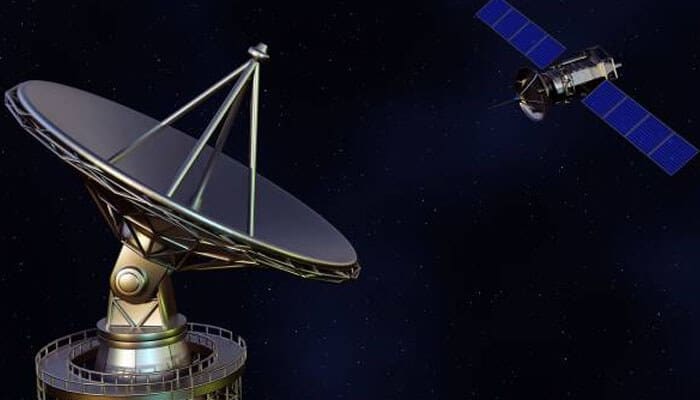
L-band satellite technology has supported voice and data services for more than three decades, and it remains the standard on which international safety regulations depend. Under maritime law, vessels must carry certified distress communication equipment that can send alerts through two separate systems. L-band terminals and handheld satellite phones, are approved for that role.
Research from Valour Consultancy estimates the safety-related portion of this market at around 213 million US dollars a year, supporting close to 78,000 vessels with active subscriptions worldwide. The number holds steady because the requirement comes from regulation, not preference.
L-band earns this trust through simple physics. It operates at a lower frequency than newer broadband satellite systems, which makes it far less affected by heavy rain, storms, or thick cloud cover. While higher-frequency broadband links can lose 30 to 50 per cent of their speed during severe weather, L-band keeps working. For government agencies and businesses that cannot afford a communication blackout during a crisis, that consistency is the entire point.
VSAT: Built for the Bandwidth Modern Operations Need
While L-band protects the safety layer, VSAT technology carries the growing demand for high-speed data. Market research values the global maritime VSAT sector at around 4.2 to 4.8 billion US dollars in 2025 and projected to reach between 7 and 9.6 billion by 2034. That growth is driven by real operational needs, from route planning and equipment monitoring to remote diagnostics and cyber security, all of which depend on a steady and reliable connection.
Geostationary VSATl remains the preferred choice for businesses and government departments that need dependable, wide-area coverage across an entire region rather than a single narrow beam. It is being combined in hybrid network architecture to balance speed with coverage.
Where Newer LEO Networks Like Starlink Fit In
Low orbit broadband networks, including Starlink, have brought welcome improvements in speed and latency. They are increasingly used to support crew welfare, general business communication, and everyday internet access on ships and remote sites.
However, these newer networks are not yet certified in all regions for the safety distress systems that international regulation requires. A well-designed setup uses LEO broadband for speed, VSAT for heavier operational traffic, and certified L-band as the dependable layer underneath both.
Choosing the Right Mix for Business and Government
Most enterprises and government bodies get better results by combining technologies rather than picking one:
VSAT for high bandwidth operations, remote monitoring, and digital business systems. L-band for certified safety communication and all-weather reliability. LEO broadband for speed, crew welfare, and general connectivity where it is available.
Companies like IEC Telecom Group which has worked across maritime and land-based industries for more than three decades is an ideal choice to build hybrid connectivity around this mix, combining GEO, LEO, and L-band networks so operations keep running even when one system reaches its limits. Alongside VSAT connectivity solutions, IEC Telecom also offers a comprehensive portfolio of satellite phones, providing businesses and government organisations with reliable voice communications and high-bandwidth connectivity for operations in remote and challenging environments.
Staying Connected Where It Matters Most
Mobile networks will keep expanding. The hardest-to-reach locations, the ones tied most closely to global trade, energy production, and government operations, will still depend on satellite technology for years to come. Businesses and government agencies that understand the strengths of VSAT and L-band are better placed to keep operations running without interruption, wherever they are in the world.
