


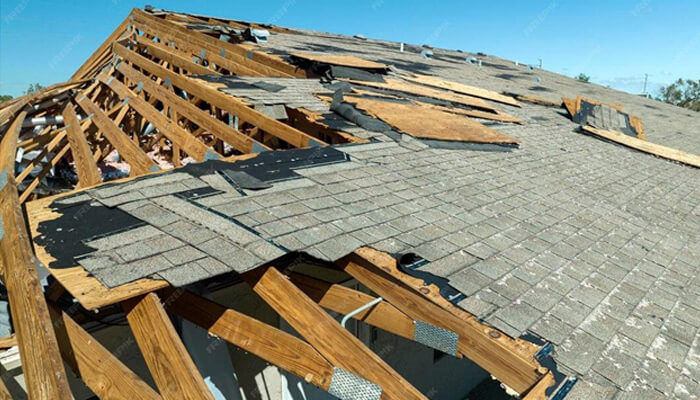

The stain on a ceiling is rarely where the roof damage cost begins. By the time water makes itself visible inside a home, it has usually been traveling for weeks or months through a failed shingle, along a rafter, through insulation before it finally reaches a surface a homeowner can see. That lag between cause and symptom is precisely what makes deferred roof maintenance so expensive. Roof-related insurance claims totaled $31 billion in 2024, driven primarily by wind and hail losses. But a significant share of the real roof maintenance cost is never captured in insurance data at all, because it accumulates slowly, through the kind of neglect that most policies explicitly decline to cover. The gap between what a timely repair costs and what a delayed one costs is not a matter of a few hundred dollars. It is frequently the difference between a repair and a full replacement.
What Roof Repair Costs and What the Averages Miss
The published averages for roofing tell part of the story. The cost of roof replacement for a mid-size home runs between $21,050 and $30,680 in 2026, a figure that has climbed nearly 15 percent from 2022 levels as material costs and labor rates have both risen sharply. A targeted roof repair, by contrast, averages $750, with most jobs falling between $400 and $2,000. The economic case for maintenance over replacement looks obvious when the numbers are laid side by side.
What the averages don’t capture is the multiplier effect of delay. A minor flashing failure or a handful of cracked shingles clear signs of roof damage that would cost a few hundred dollars to fix in spring becomes a different problem by fall if water has been working through the roof deck during every rainstorm in between. At that point, the repair scope expands to include damaged sheathing, compromised insulation, and potentially the framing below it.
Homeowners who postpone roofing work typically do so to save money. The data consistently shows they end up spending substantially more than they would have if they had acted at the first sign of trouble.
The Secondary Damage That Drives Up Roof Maintenance Cost
Water entering through a damaged roof does not stay in the attic. It migrates. Wet insulation loses its thermal resistance, driving up heating and cooling costs on every utility bill until the damage is corrected. If it reaches a wood framing member, the resulting rot can compromise structural integrity in ways that are invisible until they become urgent. The most expensive secondary consequence, however, is mold.
According to FEMA, mold can begin growing on damp surfaces within 24 hours of water exposure. Professional mold remediation costs between $1,500 and $9,000 for an average-sized affected area, with the national average around $3,500. The insurance coverage picture makes this worse, not better. Standard homeowners policies typically cover mold only when it results from a sudden and accidental event: a burst pipe, a storm-damaged roof section. Mold that develops from gradual leaks or deferred roof maintenance is explicitly excluded by most insurers. A homeowner who delayed repairing a slow leak for two seasons does not just face a mold remediation bill. They face it entirely out of pocket, on top of the roof repair cost itself, on top of whatever interior finishes need replacing.
How Gutters Accelerate Roof Damage
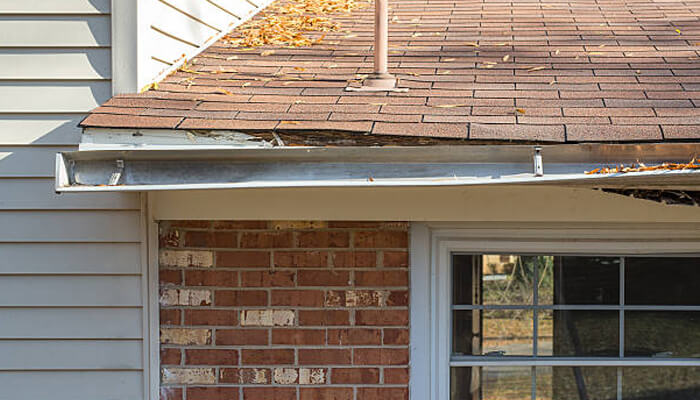
The roof itself is rarely the only system involved when water damage accumulates. Gutters are the drainage mechanism that keeps water moving away from the structure, and when they fail whether from blockage, detachment, or deterioration they redirect that water directly against the home. A clogged gutter during a heavy rain does not overflow harmlessly. It backs up under the drip edge, saturates the fascia board, and over time begins introducing moisture to the roof’s lowest and most vulnerable point: the soffit, the eaves, and the wall assembly directly behind them.
“A lot of the roof damage we see did not start with the shingles,” said Salomon Urizar-Jimenez, owner of Astro Roofing Inc. “It started with gutters that were not cleaned out or were pulled away from the house. By the time we are called in, there is rot in the fascia, the underlayment is compromised, and the homeowner is looking at a repair that is three or four times what it would have been if someone had cleaned the gutters and checked the hangers two years earlier.” The pattern Salomon Urizar-Jimenez describes is consistent with what insurance adjusters and structural engineers document in post-damage assessments: roofing and gutter systems age together, fail together, and when maintenance of one is deferred, accelerate the failure of the other.
The Insurance Gap Tied to Deferred Roof Maintenance
The financial exposure from deferred roof maintenance extends well beyond the repair cost. Insurers have become increasingly aggressive in addressing roof age and condition when setting policy terms. Homes with roofs over 20 years old are three times more likely to file a wind or hail claim than homes with newer roofs. That actuarial reality has translated directly into underwriting practice: in high-claim regions, insurers are raising deductibles specifically for wind and hail on older roofs, requiring pre-renewal inspections, and in some markets, non-renewing policies on homes where the roof condition does not meet their standards.
The coverage exclusion for gradual damage compounds this exposure. Most homeowners carry their policies under the assumption that if something goes wrong, their insurer will pay. That assumption holds for sudden events. It does not hold for the water intrusion that developed over 18 months because a few shingles showing clear signs of roof damage were left unaddressed. The difference between a covered claim and a fully out-of-pocket loss often comes down to whether the damage looks sudden or gradual and gradual almost always points back to something that a routine roof inspection would have caught.
How Roofing Material Affects Your Long-Term Repair Costs
Not all deferred maintenance situations are equal. The underlying material affects how quickly damage progresses and how much lead time a homeowner has before minor issues become major ones. Standard three-tab asphalt shingles, which cover approximately 80 percent of American homes, have effective lifespans of 15 to 25 years under normal conditions and considerably shorter lifespans in hail-prone or high-UV regions.
Architectural shingles perform better under impact and last longer, which is why they now dominate new construction and most replacement projects. Fire-resistant shingle options increasingly relevant in wildfire-adjacent areas can also qualify for insurance premium reductions in states that have adopted fire-risk rating systems.
Material selection at the time of replacement also affects long-term roof maintenance cost. Metal roofing, flat roofing systems using torch-down bitumen, and TPO membranes have different maintenance intervals and failure modes than asphalt shingles. A homeowner who understands what their roofing material requires and sets an inspection schedule based on those requirements rather than waiting for visible symptoms is substantially less likely to face the secondary damage cascade that makes delayed repairs so expensive.
Why Regular Roof Inspection Is the Cheapest Form of Protection
The economics of roof maintenance are straightforward. A professional roof inspection typically costs between $150 and $400. Inspections that find nothing provide documentation that can support an insurance claim if a storm later causes damage. Inspections that find something convert an unknown problem into a defined repair at a predictable cost before that cost multiplies. For homeowners on a budget, annual visual checks from the ground combined with a professional inspection every three to five years represent a practical baseline.
The roofing contractors industry in the U.S. is projected to reach $76.4 billion in revenue by the end of 2026, a figure that reflects both the scale of the housing stock and the volume of damage accumulating across it. A meaningful portion of that revenue is emergency work that arrives at emergency roof repair, the predictable consequence of inspections skipped, gutters left clogged, and shingles left unaddressed for another season. The homeowners who avoid that category are not the ones who never have roof problems. They are the ones who found the problems before the water did.
