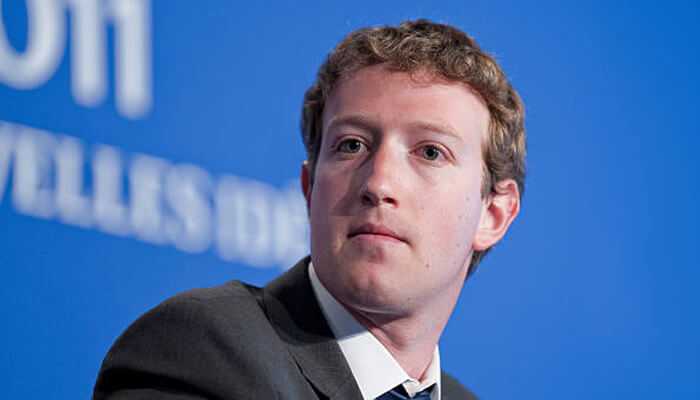
The idea that Mark Zuckerberg Facebook’s fake news problem could have influenced the result of the 2016 presidential elections is a “crazy idea,” says the social network’s co-founder and chief executive.
Mark Zuckerberg was responding to calls Thursday from media writers and experts for Facebook to examine its role in spreading hyperpartisan misinformation to a wide audience in the months before the elections.
Zuckerberg countered that fake news “surely had no impact” on whom voters chose to be president.
“Voters make decisions based on their lived experience,” Mark Zuckerberg said in an interview with David Kirkpatrick at the Techonomy conference in Half Moon Bay, Calif.
“I think there is a certain profound lack of empathy in asserting that the only reason why someone could have voted the way they did is because they saw some fake news.”
There are a couple of reasons why, days after the election of now-President-elect Donald Trump. Mark Zuckerberg is being asked to answer for Facebook’s long-standing difficulties in dealing with hoaxes and fake news that spread freely through its massive user network.
Facebook is a tech company, one that prides itself on neutrality and that has explicitly said it is not a media company. With 1.7 billion monthly active users across the globe, Facebook is also perhaps the most influential distributor of information in the world.
According to a recent Pew study, 44 percent of the general population in the United States says it gets its news from Facebook. And 79 percent of Americans online use Facebook in general, a much larger share than that of any other social network.
Facebook has become the favorite online home for Americans. It has also become host to a wide array of hyperpartisan content machines that publish mountains of misleading or outright fabricated stories that are explicitly designed to be widely shared among people who are more inclined to believe them.
According to a BuzzFeed analysis of many of these hyperpartisan pages, misinformation targets both progressives and conservatives, but false or misleading news stories are more common among right-wing sites.
That’s also reflected in The Post’s own, non-scientific tracking of fake stories about the election across all social media platforms over the past few weeks. Misinformation on Facebook wasn’t exclusive to the supporters of one candidate, but it was more common and viral on the right.
There is also some evidence that right-wing readers of online news are being encouraged to ignore attempts at verification of these stories.
“Forget the press, read the Internet,” Trump told his supporters just months before his victory.
He didn’t specify which parts of the Internet he liked. But we already know that he accepts and repeats information from websites and tabloids that publish false or misleading articles.
For instance, he has in the past complimented the work of Alex Jones. The conspiracy theorist behind Infowars has argued that the massacre at Sandy Hook Elementary School was a “false flag.”
“The Internet,” even just Facebook, looks very different to different people. As Facebook gains influence in the lives of its users. Experts have become concerned about algorithmically enforced “filter bubbles.” People tend to click on stories that confirm their worldview.
Every inch counts when it comes to running a small business. The right space management can mean the difference between…
Small businesses today rely heavily on digital tools to keep operations running smoothly. Email, file sharing, communication platforms, and remote…
Jewelry can be more than decoration. The best pieces feel personal. They carry meaning, history, and artistry. Many collectors seek…
Parenting in the modern world is more complex than ever. Between technology, busy work schedules, emotional development, and social pressure,…
The gaming industry has evolved far beyond simple entertainment. Today, technology and entrepreneurship are merging to create a new innovation-driven…
Indian investors do not have to rely only on the investment options available in their own country. Building a Global…