
Most kitchen upgrades fail for one simple reason: people focus on style before fixing function. A beautiful kitchen may look impressive, but if it does not work efficiently, it quickly becomes frustrating. This is where Kitchen Upgrading Advice Mintpalment becomes valuable, offering a practical approach that prioritizes usability, smart design, and long-term performance over short-term trends.
If you are searching for ways to improve your space without wasting money, Kitchen Upgrading Advice Mintpalment focuses on what truly matters—better layout flow, efficient storage, proper lighting, and durable upgrades. Instead of chasing trends, it helps you make smart decisions that enhance both the functionality and overall experience of your kitchen.
Who This Article Is For
This guide is especially useful if your kitchen fits one of these situations:
- Small kitchens that need better storage, lighter finishes, and smarter layouts
- Outdated kitchens with poor lighting, worn surfaces, or awkward workflow
- Budget refresh projects where you want visible improvement without a full gut remodel
- Full remodel planning where you need to decide what to keep, what to replace, and when to hire professionals
That matters because not every kitchen needs the same solution. A small apartment kitchen may benefit most from vertical storage and slim appliances, while an older family kitchen may need layout changes, electrical upgrades, and better ventilation.
What Does Kitchen Upgrading Advice Mintpalment Mean?
The phrase Kitchen Upgrading Advice Mintpalment is best understood as a search for thoughtful kitchen improvement guidance inspired by Mintpalment-style home-upgrade content. In practice, that means advice centered on layout, storage, lighting, appliances, surfaces, comfort, and visual upgrades that make everyday life easier rather than just making the room look newer. Your original draft already captured that practical angle well.
Why Kitchen Upgrading Advice Mintpalment Works Better Than Trend-Based Upgrades
The most important kitchen upgrade rule is simple: fix function before style. A kitchen that looks expensive but feels frustrating will never feel truly upgraded.
Before choosing colors, hardware, or backsplash tile, ask:
- Is there enough prep space near the sink and cooktop?
- Are the refrigerator, prep area, and stove positioned in a convenient flow?
- Are your most-used items easy to reach?
- Is your storage helping daily use or just hiding clutter?
- Is the kitchen comfortable when two people use it at once?
This approach matches current remodeling behavior. Houzz reports that many homeowners are not just changing finishes; they are also reworking the space itself to improve daily usability, and more than a third enlarge the kitchen footprint during renovation.
Best Order to Upgrade a Kitchen
One of the biggest missing pieces in many kitchen articles is the order of decisions. The smartest approach, based on kitchen upgrading advice mintpalment, usually follows this order:
1. Assess the layout
Look at traffic flow, prep space, storage gaps, and appliance placement.
2. Set your budget
Decide whether this is a light refresh, a midrange upgrade, or a major remodel.
3. Choose what to keep and what to replace
Cabinets, flooring, appliances, and countertops should be evaluated separately.
4. Fix storage problems
Add pull-outs, drawer dividers, pantry zones, and vertical organization early.
5. Plan lighting and electrical needs
Decide where you need task lighting, outlets, island access, and appliance power.
6. Pick surfaces and finishes
Choose counters, cabinet finish, backsplash, flooring, and hardware.
7. Install appliances and fixtures
Finish with the pieces that affect everyday performance, including sink, faucet, hood, dishwasher, and cooktop.
This order helps prevent a common mistake: buying attractive finishes before solving layout, lighting, and usability problems.
Real Cost Ranges by Project Type
Kitchen costs vary by region, kitchen size, labor rates, and material choices, but rough national estimates are still useful for planning. Remodeling’s 2024 Cost vs. Value report puts a minor midrange kitchen remodel at about $27,492 nationally, while a major upscale kitchen remodel averages about $158,530. Angi’s March 2026 update puts a more typical professional kitchen remodel range at roughly $14,588 to $41,534, with an average near $26,949, which reflects many standard projects rather than large upscale overhauls.
Here are practical rough ranges for common kitchen upgrades:
| Upgrade | Typical Cost Range | Budget Level |
|---|---|---|
| Cabinet repainting | $425–$1,464 | Low |
| Cabinet refacing | $4,234–$10,226 | Medium |
| Countertop replacement | $1,852–$4,460 | Medium |
| Backsplash installation | $600–$3,000 | Low to Medium |
| Faucet replacement | Varies widely | Low to Medium |
| Under-cabinet lighting | $200–$800 | Low to Medium |
| Full kitchen remodel | Mid five figures and up | High |
These ranges make one thing clear: targeted upgrades can often improve everyday life far more affordably than a full tear-out.
Upgrade Type Comparison Checklist
| Upgrade Type | Cost Level | DIY or Pro | Impact Level | Best For |
| Cabinet repainting | Low | DIY or Pro | Medium | Dated but structurally sound cabinets |
| Cabinet refacing | Medium | Pro | High | Good cabinet boxes, outdated faces |
| New countertops | Medium to High | Pro | High | Worn or low-quality work surfaces |
| Backsplash | Low to Medium | DIY or Pro | Medium | Quick visual refresh |
| Faucet upgrade | Low to Medium | DIY or Pro | Medium | Better function and efficiency |
| Under-cabinet lighting | Low to Medium | DIY or Pro | High | Poor prep lighting |
| Layout change | High | Pro | Very High | Kitchens with workflow problems |
| Full remodel | High | Pro | Very High | Outdated kitchens with multiple issues |
Storage Upgrades Still Deliver Some of the Best Value
A kitchen often feels outdated because storage is poorly organized, not because the whole room needs rebuilding. Pull-out trays, deep drawers, pantry bins, lid organizers, tray dividers, and vertical wall storage can improve daily use immediately. This remains one of the strongest “value per dollar” kitchen upgrade categories because it solves real frustration. Your original draft already handled this point well, and it remains one of the best parts of the article.
Lighting Is One of the Highest-Impact Kitchen Upgrades
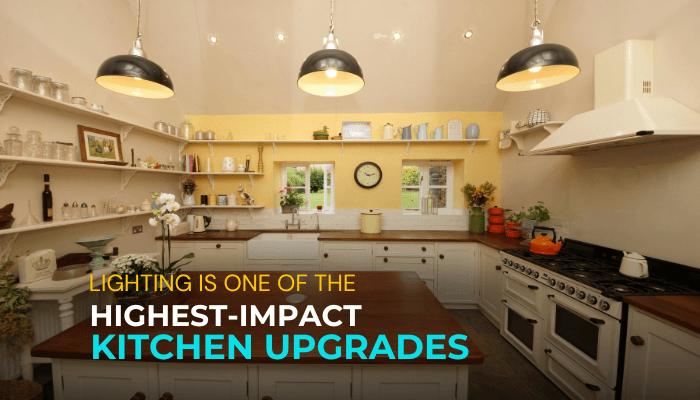
Lighting changes how a kitchen looks and how well it works. The most useful kitchen lighting plan includes three layers:
- Ambient lighting for overall visibility
- Task lighting for counters, sink, and prep areas
- Accent lighting for warmth and visual depth
Under-cabinet lighting is especially valuable because it reduces shadows and improves prep visibility. This also fits with the efficiency side of modern kitchen upgrades, since ENERGY STAR supports more efficient electric appliances and LED-based kitchen improvements as part of a smarter overall kitchen plan.
Electrical and Outlet Planning
This is one of the most overlooked parts of a kitchen upgrade. Before you commit to layout and appliances, think about electrical readiness:
- outlet placement near prep zones
- island outlet needs
- dedicated circuits for major appliances
- charging station space for phones and tablets
- appliance wattage and ventilation requirements
- under-cabinet lighting wiring access
The exact code rules vary by location, but permit and building guidance consistently note that electrical, plumbing, mechanical, and structural changes often require local review or permits, while purely cosmetic work is less likely to. FEMA’s building-code toolkit notes that separate permits may be required for electrical, plumbing, heating, and other specialty work, and Oregon’s building-permit guidance similarly states that structural, plumbing, mechanical, and electrical changes often require permits.
DIY vs Hire a Pro
| Project | DIY or Pro | Why |
|---|---|---|
| Cabinet painting | DIY or Pro | Possible for skilled homeowners, but prep quality matters |
| Hardware replacement | DIY | Simple and budget-friendly |
| Shelf organizers | DIY | Easy install, low risk |
| Faucet replacement | DIY or Pro | Depends on plumbing skill and fixture type |
| Under-cabinet lighting | DIY or Pro | Plug-in versions are easy; hardwired systems need a pro |
| Countertop installation | Pro | Precision cutting and fitting required |
| Rewiring or new outlets | Pro | Safety and code compliance |
| Plumbing relocation | Pro | High error risk and permit issues |
| Ventilation ducting | Pro | Performance and code matter |
| Structural changes | Pro | Requires skilled design and construction |
Not every kitchen upgrade requires a contractor, but some absolutely do.
Cabinet Refacing vs Replacing
| Option | Best For | Cost Level | Pros | Cons |
|---|---|---|---|---|
| Cabinet Refacing | Solid cabinet boxes, good layout | Medium | Lower cost, faster refresh, less demolition | Does not fix poor layout or weak cabinet structure |
| Cabinet Replacing | Damaged cabinets, poor storage, bad layout | High | Full customization, better storage potential, complete upgrade | Higher cost, more labor, longer project |
When refacing makes sense
Choose refacing when:
- Your cabinet boxes are still solid
- The layout still works
- You want a visual refresh without full replacement
- You want a lower cost than replacing everything
When replacing is smarter
Replacement makes more sense when:
- Cabinet boxes are damaged or low quality
- You need a better layout
- Storage design is poor
- You want larger drawers, taller uppers, or deeper cabinets
Cost difference
Cabinet refacing typically falls around $4,234 to $10,226, while full cabinet replacement can climb much higher depending on whether you choose stock, semi-custom, or custom cabinetry.
Durability tradeoff
Refacing can be a smart value choice when the structure is still good. Replacing makes more sense when the kitchen has layout or construction problems that new doors and veneers cannot solve.
Countertop Comparison
| Material | Pros | Cons | Maintenance | Best Use Case |
| Quartz | Durable, consistent look, low maintenance | Can cost more than laminate | Low | Busy family kitchens |
| Granite | Natural stone look, strong resale appeal | Needs sealing in many cases | Medium | Homes wanting natural variation |
| Laminate | Budget-friendly, many designs available | Less premium feel, can wear faster | Low | Budget refreshes |
| Butcher Block | Warm, natural look, repairable surface | Needs more upkeep, can mark and stain | Medium to High | Cozy or farmhouse-style kitchens |
| Solid Surface | Seam-friendly, repairable, clean appearance | Not as heat-resistant as some stone options | Low to Medium | Clean modern kitchens |
If you want the safest “easy-living” choice, quartz remains a favorite for many homeowners because it balances durability and low maintenance. If budget matters most, laminate still has a place. If warmth matters most, butcher block adds character but requires more care.
Small Kitchen and Apartment Kitchen Advice
This is one of the most valuable additions for search intent because many readers are working with limited space.
For small kitchens, focus on:
- Slim appliances that fit real needs
- Vertical storage instead of wider cabinets
- Light-reflective finishes for openness
- Open or glass-front elements used carefully
- Fold-down or movable prep space
- Fewer, better items on the countertop
- Deeper drawer organization instead of clutter
A small kitchen does not need every premium feature. It needs fewer obstacles and better use of every inch.
Appliances, Water Efficiency, and Sustainability
Appliances can take a large share of the kitchen budget, so they should improve real performance, not just the visual finish. ENERGY STAR says certified electric cooking products are 18% more efficient on average than standard models, and choosing an ENERGY STAR kitchen suite can save households about $385 over the products’ lifetime. ENERGY STAR also notes that electric cooking avoids the indoor emissions associated with gas or propane combustion.
Water efficiency matters too. EPA WaterSense says the average family spends about $1,300 per year on water costs and may save as much as $500 by retrofitting with WaterSense-labeled fixtures and efficient appliances.
That makes these eco-friendly kitchen upgrades especially worthwhile:
- LED lighting
- Efficient Appliances
- Induction Cooking Where Practical
- Low-flow Or Watersense-aligned Fixtures
- Repainting Or Refacing Instead Of Replacing When Existing Materials Are Still Sound
- Durable Materials That Last Longer And Reduce Replacement Frequency
NAR has also reported high homeowner satisfaction, or “joy,” from kitchen upgrades, which supports the idea that well-planned improvements add both practical and emotional value.
How Long a Kitchen Upgrade Takes
Timelines depend heavily on scope, but these are good planning expectations:
| Project Type | Typical Timeline | Notes |
|---|---|---|
| Weekend refresh | 1–2 days | Paint, hardware, organization, décor |
| Cosmetic update | 1–2 weeks | Lighting, backsplash, faucet, cabinet paint |
| Midrange kitchen upgrade | 3–6 weeks | Multiple surface and fixture changes |
| Full remodel | 4–8+ weeks | Involves several trades and planning |
| Layout-changing remodel | 8+ weeks | Plumbing, electrical, permits, inspections |
The more you change systems and floor plan, the more inspections, scheduling, and trade coordination matter.
Permits and Code Considerations
Kitchen permits vary by city, county, and country, so there is no universal checklist. But as a practical rule, cosmetic work is less likely to need permits, while electrical, plumbing, structural, mechanical, and gas changes often do. FEMA’s homeowner guidance and state/local permit resources consistently frame permits as a safety and code-compliance issue, not just paperwork.
That means you should always verify local rules before:
- Moving Walls
- Relocating The Sink Or Dishwasher
- Adding Or Moving Outlets
- Changing Major Ventilation
- Altering Gas Lines
- Expanding The Kitchen Footprint
Common Mistakes to Avoid
A strong kitchen plan often comes down to avoiding the wrong decisions:
- Upgrading Style Before Fixing Function
- Overspending On A Major Remodel Without Clear Goals
- Buying Oversized Appliances For A Small Room
- Ignoring Lighting And Outlet Placement
- Skipping Ventilation
- Copying Social-media Kitchens That Do Not Fit Your Daily Routine
- Replacing Cabinets When Refacing Or Repainting Would Do The Job
- Choosing Materials Based On Trend Rather Than Maintenance Reality
The financial side matters too. Remodeling’s 2024 Cost vs. Value data shows that lighter-touch kitchen projects can deliver better value retention than very expensive upscale remodels.
Quick Recap
- Best first upgrade: lighting and storage
- Best budget upgrade: cabinet paint plus hardware
- Best practical upgrade: drawer pull-outs, pantry organization, and task lighting
- Best long-term upgrade: layout, ventilation, electrical planning, and efficient appliances
- Best value-saving move: reface or repaint solid cabinets before replacing them
- Best approach for small kitchens: slim appliances, vertical storage, and lighter finishes
Final Thoughts
In the end, the best kitchen upgrading advice mintpalment comes down to making smart choices that improve function, comfort, storage, and long-term value instead of chasing short-lived design trends. A well-planned kitchen should fit your space, your budget, and the way you actually cook and live every day.
That is why strong kitchen upgrading advice mintpalment focuses on practical upgrades first, balances style with durability, and helps create a kitchen that still feels useful and attractive years from now.
Kitchen Upgrading Advice Mintpalment FAQs
1. How can beginners follow kitchen upgrading advice mintpalment effectively?
Beginners should start with simple upgrades like lighting, storage organization, and cabinet refresh before moving to larger changes like layout or appliances.
2. Does kitchen upgrading advice mintpalment help increase home resale value?
Yes, following kitchen upgrading advice mintpalment can improve resale value by enhancing functionality, modern appeal, and overall kitchen efficiency.
3. What mistakes should be avoided when following kitchen upgrading advice mintpalment?
Avoid focusing only on design trends, ignoring workflow, overspending on unnecessary upgrades, and skipping proper planning.
4. Is kitchen upgrading advice mintpalment suitable for rental kitchens?
Yes, it works well for rentals by focusing on low-cost, non-permanent upgrades like lighting, storage, and removable design improvements.
5. How often should you update your kitchen based on kitchen upgrading advice mintpalment?
Most kitchens benefit from small updates every 3–5 years and major upgrades every 10–15 years depending on wear and lifestyle needs.