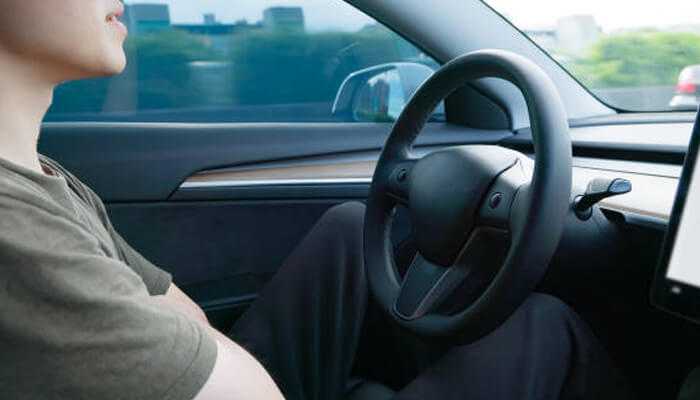
Google’s self-driving car program Wednesday marked more than 2 million miles driven on public roads, a significant lap around traditional automakers’ efforts to develop autonomous vehicles.
Alphabet Inc.’s car program had nearly 60 self-driving vehicles on roads in four states as of August, collecting real-world experience as it learns to navigate the complex world of humans.
Google argues the city-driving experience of its fleet is much more valuable than just highway time. By providing opportunities to learn how to handle construction zones, bicyclists’ hand gestures, and police cars. Google’s self-driving car, loaded with cameras and sensors, is also gathering a greater array of detailed data.
“There are miles and then there are miles,” Dmitri Dolgov, the software lead on Google’s self-driving car program, said in an interview. “An even better way to think about it is not just in terms of miles or time, rather it’s the number of interactions that you have with the world and richness and complexity of those interactions.”
It has taken a little more than a year for the program to go from one million to 2 million miles. In that time, the field of autonomous driving has changed dramatically, suggesting a new era for transportation is about to emerge.
In June 2015, Google announced its one-million-mile threshold. The promise of Tesla Motors Inc.’s Autopilot, a semiautonomous feature that can control the car in certain conditions, was still on the horizon. The feature rolled out in October last year, further sparking interest in what was possible in self-driving vehicles.
General Motors Co., the nation’s largest automaker, acquired Cruise Automation Inc. The developer of self-driving car technology, in a deal valued at $1 billion earlier this year. The company also invested $500 million in Lyft Inc., a ride-hailing service that along with Uber Technologies Inc. is changing the notion of car ownership.
Other automakers have announced their own plans for self-driving cars within a few years, including Ford MotorCo., which is targeting 2021.
Last month, Uber began testing its own self-driving cars on the streets of Pittsburgh. Apple Inc., too, is said to be working on its own self-driving car.
“Autonomous vehicle fleets will quickly become widespread and will account for the majority of Lyft rides within 5 years,” Lyft co-founder John Zimmer wrote last month on Medium. “By 2025, private car ownership will all but end in major U.S. cities.”
IHS Markit estimates global sales of autonomous vehicles will reach 21 million in 2035, while Boston Consulting Group estimates sales of autonomous features will generate $77 billion that year.
Every inch counts when it comes to running a small business. The right space management can mean the difference between…
Small businesses today rely heavily on digital tools to keep operations running smoothly. Email, file sharing, communication platforms, and remote…
Jewelry can be more than decoration. The best pieces feel personal. They carry meaning, history, and artistry. Many collectors seek…
Parenting in the modern world is more complex than ever. Between technology, busy work schedules, emotional development, and social pressure,…
The gaming industry has evolved far beyond simple entertainment. Today, technology and entrepreneurship are merging to create a new innovation-driven…
Indian investors do not have to rely on the investment options available to them in their own country. The idea…