Amazon and SpaceX, its main rival led by Elon Musk, have recently signed an agreement to launch internet-beaming satellites. This development coincides with Amazon founder Jeff Bezos’s pursuit of his own space ambitions through Blue Origin, a rocket company, and SpaceX’s construction of its own internet constellation.
Business rivals frequently collaborate in the field of rocket launches, despite the fact that Musk and Bezos have a history of openly sparring on social media and are infamously competitive in public. Musk frequently makes crude jokes about Bezos and Blue Origin. Certain Amazon satellites will continue to travel on a massive Blue Origin rocket known as the New Glenn. However, it has been years in the making and will launch no later than next year.
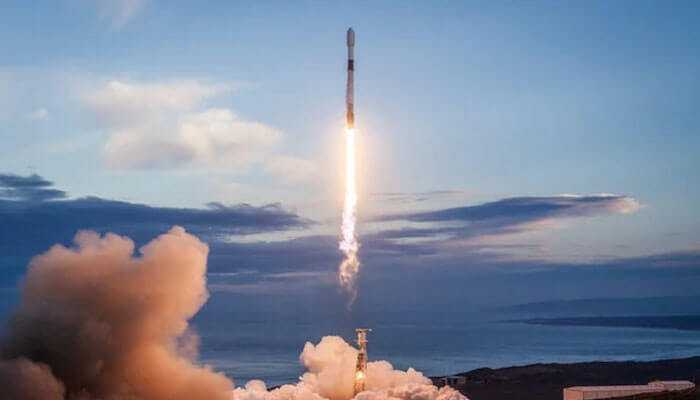
In a press release on Friday, Amazon said that it had signed a contract to have its satellites launched on three SpaceX Falcon 9 flights, with the first launch scheduled for mid-2025.
Project Kuiper, a constellation of thousands of internet satellites that Amazon is developing, aims to provide connectivity to every corner of the earth. With more than 5,000 satellites already in orbit, SpaceX’s Starlink service will be its main rival.
Amazon lags far behind its rival. In October, two of its prototype satellites were launched on a rocket manufactured by United Launch Alliance, a joint venture between Boeing and Lockheed Martin, in October.
The company founded by Jeff Bezos gained notoriety in April 2022 when it inked a billion-dollar deal to launch Kuiper satellites on 77 rockets manufactured by Blue Origin, another endeavor founded by Bezos, as well as ULA and European launch provider Arianespace.
However, a shareholder lawsuit was also sparked by those original contracts.
According to a statement released by Amazon on Friday, the previous agreement offers sufficient capacity for launching most of the company’s satellite constellation, and the extra launches with SpaceX provide even more capacity to support the deployment schedule.
Whichever launches the satellites, though, Amazon has to get the spacecraft operational first.
Rajeev Badyal, Project Kuiper’s vice president of technology, told CNN last month that the prototypes were completely successful.
This creates the opportunity for Amazon to start launching more operational satellite batches. According to Badyal, the business hopes to start customer beta testing of the service as late as 2024.
With about 5,000 satellites in orbit, SpaceX’s Starlink satellite internet service is currently live and rapidly growing. Only in October did Amazon launch its first two prototype satellites. Those two are performing as anticipated, according to the company, “validating key technologies that underpin the network.”
The purpose of both services is to send internet signals to ground stations located in far-flung locations without dependable broadband access.
So, further announcements were made and we came across that Amazon stated in a statement that the SpaceX launches would take place in 2025. It mentioned the Falcon 9’s demonstrated performance history, stating that it “has completed more than 270 successful launches to date.”
Finding the right balance in your vaping experience often comes down to one simple setting: wattage. For many beginners and…
A startup office can feel too small long before the lease ends. Desks get crowded, calls overlap, and storage starts…
Every inch counts when it comes to running a small business. The right space management can mean the difference between…
Small businesses today rely heavily on digital tools to keep operations running smoothly. Email, file sharing, communication platforms, and remote…
Jewelry can be more than decoration. The best pieces feel personal. They carry meaning, history, and artistry. Many collectors seek…
Parenting in the modern world is more complex than ever. Between technology, busy work schedules, emotional development, and social pressure,…