


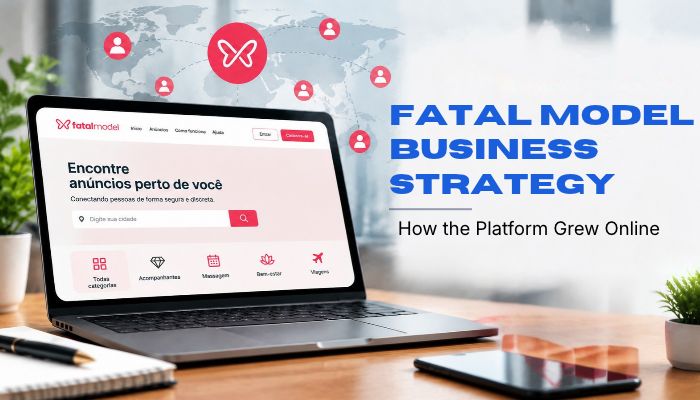

Fatal Model business strategy is built around a simple growth engine: attract advertisers with free listings, monetize premium visibility, and reinvest in technology, trust, and brand exposure.
Founded in Brazil in 2016, Fatal Model operates as a digital advertising marketplace where independent advertisers can create profiles and connect with potential customers. Revenue comes largely from optional visibility products, premium plans, and other paid platform features rather than mandatory listing fees.
This freemium structure helped the platform expand its advertiser base while creating demand for higher placement and stronger exposure. Over time, Fatal Model business strategy expanded further through identity verification, content marketing, football sponsorships, related digital brands, and international growth efforts.
Today, the company operates as a broader digital-platform ecosystem rather than a basic classified-listing website.
Quick Answer
Fatal Model business strategy combines free advertiser listings with paid visibility, verification tools, content marketing, and football sponsorships. This model helped the platform grow its advertiser base, increase brand awareness, and build a larger digital marketplace.
Key Takeaways
- Fatal Model business strategy uses free listings to attract advertisers and paid visibility to generate revenue.
- Premium plans and listing points help advertisers gain stronger placement.
- Verification and identity checks support trust across the marketplace.
- Football sponsorships have played a major role in expanding brand awareness.
- The platform continues to evolve through new products, compliance measures, and market expansion.
What Is Fatal Model?
Fatal Model is a Brazilian digital advertising marketplace launched in 2016, where independent advertisers create profiles with photos, videos, contact details and other information. Basic advertising can be free, while optional paid products provide additional exposure. Fatal Model business strategy therefore focuses on supplying the technology, traffic, verification, moderation and marketing infrastructure needed to operate the marketplace rather than directly managing the services advertised.
Who Founded Fatal Model and Who Leads the Business?
Public reporting describes Fatal Model as having three founding partners who generally remained outside the spotlight. Exame identified Jean Felipe Garcia Quadro in corporate databases, while Samuel Ongaratto has repeatedly been publicly described as a founder and business executive; Nina Sag later became one of the brand’s most visible public representatives. Within the Fatal Model business strategy, this separation between ownership, executive roles and public communication helped the company build a recognizable brand without making its founders the central marketing asset.
How the Fatal Model Business Model Works
Fatal Model follows a freemium marketplace model: advertisers can enter without a mandatory listing fee, while paid visibility products generate revenue from users seeking stronger placement. Fatal Model business strategy connects free supply growth with premium monetization, trust tools, organic content and brand marketing.
| Business Layer | How It Works | Strategic Purpose |
|---|---|---|
| Free advertising | Basic profiles can be created free | Builds marketplace supply |
| Visitor traffic | Users browse available listings | Creates demand |
| Premium plans | Advertisers purchase added visibility | Generates revenue |
| Listing points | Higher totals can improve ranking | Encourages upgrades |
| Verification | Identity and media checks support trust | Improves credibility |
| Content | Blog and help pages capture searches | Supports organic traffic |
| Sports marketing | Sponsorships increase awareness | Builds branded demand |
Free Advertising Helps Build Marketplace Supply
Free registration helps Fatal Model solve a common two-sided marketplace problem: attracting enough supply before every participant is ready to pay. Advertisers can establish a basic presence first and consider premium visibility later, allowing Fatal Model business strategy to use free listings as an acquisition channel while reserving monetization for users who want stronger exposure.
How Fatal Model Makes Money in 2026
Fatal Model currently monetizes optional advertising products rather than charging a single mandatory membership fee. Its August 2026 terms list five plan categories, while its ranking documentation shows how their points affect listing visibility. This makes Fatal Model business strategy primarily a business of monetizing attention and competitive placement inside an established marketplace.
| Product | Listing Points / Main Function |
|---|---|
| Subir Agora | 4,000 points |
| Super Top | 2,000 points |
| Top | 1,000 points |
| Diamante | 500 points |
| Telefone na Listagem | 200 points |
Why Listing Points Matter to the Business Model
Listing points turn visibility into a competitive marketplace asset: higher active point totals can move advertisements upward, while competitors can purchase additional plans or points and change those rankings. Fatal Model business strategy benefits because advertisers can choose different spending levels, combine eligible products and make repeat purchases when greater exposure has commercial value.
Free Trials Can Help Convert Advertisers Into Paying Customers
Fatal Model offers qualifying new advertisers three days of promotional visibility with 4,800 listing points. Within the Fatal Model business strategy, this free trial helps users experience premium placement before deciding whether to pay.
The conversion path is simple:
- Create a free profile
- Complete registration within 24 hours
- Receive promotional visibility
- Compare profile exposure
- Upgrade if premium placement delivers value
This approach reduces the risk of asking new advertisers to pay before they understand the benefits.
Fatal Model Continues Changing Its Products
Fatal Model regularly adjusts its plans, listing points and visibility features. This flexibility strengthens the Fatal Model business strategy because pricing and placement can evolve with advertiser demand and marketplace competition.
The platform can test:
- Plan pricing
- Listing-point values
- Subscription periods
- Premium placement
- Promotional offers
- Additional advertiser features
The goal is to improve monetization without making the basic marketplace difficult to access.
F.Pay: A Payment Experiment That Changed in 2026
F.Pay was introduced as a digital wallet for adding funds and paying for platform features, but new deposits were discontinued in August 2026. For the Fatal Model business strategy, the change shows that the company is willing to test products and remove features that no longer fit its operating model.
Users with existing balances can still:
- Use eligible remaining funds
- Pay for supported platform products
- Request reimbursement through support
F.Pay is therefore better viewed as a product experiment than as a permanent revenue engine.
Verification Is Part of the Product Strategy
Trust is essential in an online marketplace, so verification plays an important role in the Fatal Model business strategy. Identity and content checks help reduce fake profiles while improving confidence among legitimate advertisers and visitors.
Key verification measures include:
- Identity-document checks
- Facial authentication
- Verification videos
- Profile moderation
- Fraud-prevention controls
- Reporting mechanisms
These safeguards make verification part of the platform’s value proposition, not simply a security requirement.
Privacy and LGPD Are Core Business Issues
Fatal Model processes sensitive information, making data protection an important part of the Fatal Model business strategy. Its privacy policy references Brazil’s LGPD and explains how personal and verification information may be collected and processed.
Sensitive data can include:
- Names and contact details
- Dates of birth
- CPF information
- IP addresses
- Verification videos
- Biometric information
Strong privacy controls support user trust while reducing legal, reputational and operational risk.
Age Verification Became More Important in 2026
Age assurance became more important after Brazil’s Digital Statute of Children and Adolescents entered into force in March 2026. The Fatal Model business strategy now has to balance stronger compliance controls with a verification process that remains practical for adult users.
Fatal Model’s current approach includes:
- Blurring sensitive content for unverified visitors
- Facial age authentication
- CPF and date-of-birth verification when required
- Restricting sensitive content until adulthood is confirmed
The business challenge is to protect minors and meet regulatory requirements without creating unnecessary friction for legitimate adult users.
How Network Effects Help Fatal Model Grow

Fatal Model operates like a two-sided marketplace: more advertisers increase choice for visitors, while more visitors make premium exposure more valuable to advertisers. The Fatal Model business strategy turns this relationship into a growth loop supported by brand recognition, verification, usability and marketing rather than relying on listings alone.
Growth loop:
- More advertisers → greater selection
- Greater selection → more visitor interest
- More visitors → higher value of visibility
- Higher visibility demand → stronger monetization
Because advertisers and visitors can also use competing platforms, scale must be combined with trust and brand strength to remain valuable.
Reported Traffic: Why Fatal Model Numbers Differ
Traffic figures vary because visitors, users, visits and pageviews measure different things. The Fatal Model business strategy benefits from a large reported audience, but those numbers should be presented with their metric and date rather than combined as if they were identical. Fatal Model’s current advertiser page claims more than 25 million monthly visitors.
Earlier figures include:
- 20 million monthly users — company figure reported by Reuters in April 2024
- 885 million monthly pageviews — reported in the same Reuters article
- 43.6 million to 62.2 million monthly visits — Semrush figures reported by Exame during an earlier growth period
Best current wording: Fatal Model reports more than 25 million monthly visitors, while historical sources use different audience metrics.
Fatal Model Revenue: What Public Reports Show
Fatal Model is privately held, so publicly reported revenue figures should not be treated like audited listed-company accounts. For the Fatal Model business strategy, the important point is that two reputable reports gave different 2023 totals: Reuters cited approximately R$70 million, while Exame reported R$85 million and 124% year-over-year growth.
| Public Report | 2023 Revenue Figure |
|---|---|
| Reuters | Approximately R$70 million |
| Exame | Approximately R$85 million |
| Reported 2024 target | Around R$100 million |
The discrepancy should remain visible rather than presenting either figure as independently audited fact.
Fatal Model Growth Timeline: 2016–2026
The Fatal Model business strategy developed in stages rather than through one viral campaign, moving from marketplace creation to paid visibility, sports marketing and broader product development. The company’s current advertiser page says it has operated since 2016, while Exame reports that its push into football began gaining momentum in 2022.
| Period | Key Development |
|---|---|
| 2016 | Fatal Model launches in Brazil |
| 2020 onward | Digital content and brand communication expand |
| 2022 | Football marketing gains importance |
| 2023 | Club sponsorships and advertiser base expand |
| 2024 | Outside investment and international growth are explored |
| 2025 | New platform and payment features are tested |
| 2026 | Advertising products and compliance systems continue evolving |
This progression shows a shift from building supply → monetizing visibility → expanding brand awareness → developing a broader platform ecosystem.
Football Sponsorship Changed Fatal Model’s Marketing Strategy
Football became one of the most visible elements of the Fatal Model business strategy, helping the company move from primarily digital promotion into mainstream sports coverage. Exame reported that Fatal Model invested about R$10 million in sports marketing in 2023 and estimated more than R$30 million in earned-media exposure from the resulting publicity.
The strategy can generate value through:
- Stadium and shirt exposure
- Sports broadcasts
- News coverage
- Social-media discussion
- Branded Google searches
- Regional audience reach
This makes sponsorship valuable not only for direct impressions but also for the additional media attention generated around each partnership.
Fatal Model Patrocinador de Qual Time?
The search “fatal model patrocinador de qual time” asks which football club Fatal Model currently sponsors, but the answer changes as agreements expire and new ones begin. In the Fatal Model business strategy, partnerships have involved several Brazilian clubs; for 2026, Clube do Remo has a confirmed agreement worth about R$1 million over 12 months, while Fatal Model’s men’s-team contract with Vitória ended after the 2025 season.
Notable associations have included:
- Clube do Remo — confirmed 2026 partnership
- Vitória — major historical partnership
- Paysandu
- Ponte Preta
- Sampaio Corrêa
- Other clubs and state competitions
Because sponsorship portfolios change regularly, articles should specify the season and club rather than describing Fatal Model as the permanent sponsor of one team.
Why Football Works as a Customer-Acquisition Channel
Football gives Fatal Model repeated exposure to audiences that may never actively search for the platform. Within the Fatal Model business strategy, sponsorships can turn stadium visibility and media coverage into branded searches, direct visits and wider recognition across different Brazilian regions.
Key acquisition benefits include:
- Repeated exposure throughout a season
- Access to large regional fan bases
- Television and stadium visibility
- Social-media discussion
- News and earned-media coverage
- Increased branded searches
This creates a bridge between offline advertising and online customer acquisition.
Sports Marketing Also Creates Regulatory Risk

Greater visibility also creates greater scrutiny, making compliance an important part of the Fatal Model business strategy. In April 2026, Rio authorities imposed fines totaling about R$877,000 on Fatal Model, the Maracanã consortium and FERJ over adult-category advertising shown at the stadium; Fatal Model’s individual fine was R$377,220, and the administrative process allowed a right of defense.
Other risks include:
- Advertising restrictions around minors
- Consumer-protection enforcement
- Reputation management
- Restrictions on sports sponsorships
- Legal costs and disputes
A separate July 2026 ruling ordered CSA to stop displaying the Fatal Model brand and imposed R$100,000 in collective moral damages; the club said it would appeal.
Fatal Model Acompanhantes: How the Marketplace Structure Works
The keyword “fatal model acompanhantes” reflects the platform’s core category, but the Fatal Model business strategy is based on providing advertising infrastructure rather than taking a percentage of the underlying service payment. Fatal Model says advertisers can create profiles for free, retain the full value of their own services, and optionally pay for greater visibility.
The platform provides:
- Search listings
- Advertiser profiles
- Photos and videos
- Contact tools
- Verification
- Moderation
- Ranking systems
- Premium promotional plans
This creates a relatively asset-light marketplace compared with businesses that directly employ service providers.
Model Fatal: Why Brand Variations Matter for SEO
Some users search “model fatal” instead of the official brand name, and the Fatal Model business strategy can benefit from addressing such natural search variations without forcing them repeatedly into the article. Google-focused content should answer the user’s likely intent, use the correct company name prominently and treat reversed or misspelled terms as secondary variations.
Useful brand-query variations can include:
- Fatal Model
- Model Fatal
- Fatal Model business
- Fatal Model sponsorship
- Fatal Model revenue
- Fatal Model acompanhantes
Natural relevance is more useful than repeating an exact variation simply to increase keyword density.
Fatal Model on Disk Is Corrupted Tekla: An Unrelated Search Intent
The phrase “fatal model on disk is corrupted Tekla” has no connection with the Fatal Model business strategy or the Brazilian company. It is a Tekla Structures error indicating that model data stored on disk has become corrupted. Trimble recommends trying the latest service pack, contacting support about possible repair, using a recent backup when recovery is impossible, and checking the storage drive for hardware problems.
For SEO clarity:
- Fatal Model = Brazilian digital advertising platform
- Fatal model on disk is corrupted Tekla = Tekla Structures technical error
Keeping the two intents separate protects topical relevance and avoids confusing readers.
Content Marketing Expands Organic Search Visibility
Content supports the Fatal Model business strategy by attracting informational searches and answering questions that might otherwise require individual customer support. Fatal Model currently operates a blog covering advertiser guidance, platform features, football partnerships, legal changes and related topics.
Content can support:
- Organic search traffic
- Advertiser education
- Product discovery
- Help-center queries
- Brand authority
- Reduced support workload
This gives the platform search visibility beyond its individual advertiser listings.
International Expansion Adds a New Growth Path
International expansion adds geographic diversification to the Fatal Model business strategy. Folha reported in December 2024 that the company had entered 14 European countries and that Samuel Ongaratto described the United Kingdom as an important growth market while the business sought investment and commercial partners.
Expansion can create:
- New advertiser supply
- Larger addressable markets
- Geographic revenue diversification
- New partnership opportunities
However, local rules covering advertising, privacy, payments, age verification and adult-oriented services mean international growth requires localization rather than simply copying the Brazilian model.
The Wider Fatal Model Group Strategy
Expansion into related brands makes the Fatal Model business strategy broader than a single marketplace. FatalFans, which belongs to the Fatal Model Group, moved into football sponsorship during 2026, signing Vila Nova and Operário before later reaching a R$22 million agreement with Corinthians running through the end of 2027.
A wider group can potentially reuse:
- Technology infrastructure
- Marketing expertise
- Creator acquisition
- Sports relationships
- Brand-building experience
- Payment and platform knowledge
This diversification allows expertise developed around Fatal Model to support additional digital products instead of relying on one marketplace alone.
What Gives Fatal Model a Competitive Advantage?
The Fatal Model business strategy is difficult to copy because its advantage comes from combining several capabilities at scale rather than relying on one feature.
Key advantages include:
- Strong brand recognition
- Large advertiser inventory
- Significant visitor traffic
- Identity and content verification
- Established ranking systems
- Search visibility and indexed content
- Football sponsorship relationships
- Years of marketplace data
Competitors can copy individual features, but reproducing the full ecosystem is more difficult.
Challenges Facing Fatal Model
The Fatal Model business strategy also faces risks that could affect future growth, especially as the platform expands into new markets and operates under stricter digital regulations.
Major challenges include:
- Advertising restrictions
- Privacy and LGPD compliance
- Age-verification requirements
- Reputation management
- Marketplace competition
- Payment-provider policies
- Search and social-platform changes
- Different international regulations
The platform must balance monetization, trust, compliance and user experience without making participation too difficult.
Business Lessons From the Fatal Model Strategy
The Fatal Model business strategy offers several lessons for other digital marketplaces, even though Fatal Model operates in a specialized industry.
Key business lessons include:
- Build marketplace supply before aggressive monetization.
- Give free users enough value to encourage participation.
- Monetize premium visibility rather than basic access alone.
- Treat verification and trust as product features.
- Use offline marketing to create online demand.
- Test new products and discontinue those that no longer deliver value.
Sustainable marketplace growth depends on continuous experimentation combined with disciplined product decisions.
Is Fatal Model’s Growth Mainly an SEO Success?
No. The Fatal Model business strategy is better described as a multi-channel acquisition model in which SEO works alongside brand marketing, sponsorships, media coverage and direct traffic.
Its acquisition channels include:
- Branded Google searches
- Organic informational traffic
- Direct website visits
- Football sponsorships
- News and earned media
- Social-media discussion
- Advertising
- Referrals and word of mouth
Football sponsorship is especially important because offline exposure can create new branded searches instead of simply capturing search demand that already exists.
Conclusion
Fatal Model business strategy is ultimately a case study in how a niche digital marketplace can turn scale, visibility, and brand recognition into a broader commercial platform.
The company’s advantage is not one product or one sponsorship. It is the combination of free marketplace access, paid visibility, verification, content, sports marketing, and constant product testing. That mix has helped Fatal Model move from a classified-style platform toward a more diversified digital ecosystem.
The next phase will be harder. Regulation, privacy, age verification, international expansion, and advertiser retention will matter as much as traffic growth. For investors, founders, and digital-platform operators, the real lesson from Fatal Model business strategy is simple: growth becomes more durable when acquisition, monetization, trust, and brand investment reinforce each other rather than operate as separate tactics.
Frequently Asked Questions
1. Where is Fatal Model legally registered?
Fatal Model is legally registered in São Paulo, Brazil, according to its current terms of use.
2. Can Fatal Model advertisers set their own prices?
Yes. Fatal Model advertisers control their own service prices and negotiate terms directly with clients.
3. Can Fatal Model users send gifts to advertisers?
Yes. Fatal Model’s current terms allow registered clients to send monetary gifts to participating advertisers.
4. Does Fatal Model offer premium access for clients?
Yes. Fatal Model’s terms define a paid premium-client category with access to premium platform functionality.
5. Can a Fatal Model profile be limited to premium clients?
Yes. Fatal Model currently allows advertisers to choose whether their profile is visible to everyone or only premium clients.
6. Can Fatal Model change its plan prices?
Yes. Fatal Model’s terms allow plan and subscription prices to change, while protecting applicable conditions of existing fixed-term contracts.
7. Which payment partners does Fatal Model use?
Fatal Model’s August 2026 terms identify Aarin and Paymee as payment-related data processors used within its platform ecosystem.
8. How quickly does Fatal Model support respond?
Fatal Model’s contact page says its customer-service team aims to respond within two days.
