


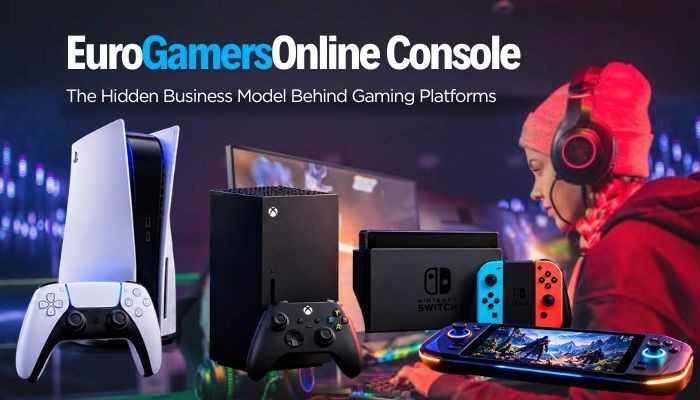

A gaming console may look like a one-time hardware sale, but the real money often starts after the device reaches the customer. EuroGamersOnline Console highlights a wider business model built around games, subscriptions, digital stores, downloadable content, accessories, cloud services, advertising, and valuable gaming IP.
That ecosystem is already operating at massive scale. Video Games Europe reported that the games market across 16 European countries generated €29.7 billion in 2025, with 199 million players and 91% of revenue coming from digital channels. EuroGamersOnline Console therefore fits into a much bigger story: consoles are not just products, but gateways to long-term customer spending, recurring revenue, and platform loyalty.
Quick Answer
EuroGamersOnline Console is not a separate gaming system made by EuroGamersOnline. It refers to the site’s console-related coverage involving platforms such as PlayStation, Xbox, and Nintendo.
From a business perspective, modern consoles are gateways to larger ecosystems where companies generate revenue from games, subscriptions, digital stores, downloadable content, accessories, and services long after the initial hardware sale.
Key Takeaways
- EuroGamersOnline Console refers to EuroGamersOnline’s console-related coverage, not a standalone gaming system.
- Console companies earn revenue from hardware, games, subscriptions, digital stores, add-on content, and accessories.
- Sony’s gaming business shows how software and network services can generate more revenue than hardware alone.
- Xbox increasingly operates across console, PC, cloud gaming, subscriptions, and other platforms.
- Nintendo combines proprietary hardware with strong franchises to drive long-term software sales.
- Store commissions let platform owners benefit from eligible third-party digital transactions.
- Installed base, active users, engagement, and software sales often reveal more than console shipments alone.
What Is EuroGamersOnline Console?
EuroGamersOnline Console refers to EuroGamersOnline’s console-focused gaming coverage rather than a gaming system manufactured by the website. Its console content covers major platforms such as PlayStation, Xbox, and Nintendo, along with games, hardware issues, guides, and related gaming topics.
From a business perspective, the bigger story is what happens after a console reaches the customer. A single hardware purchase can begin a relationship that produces revenue for years through software, subscriptions, digital content, accessories, and online services.
A Console Is the Entrance to an Ecosystem
EuroGamersOnline Console fits into a platform economy where hardware acts as the entry point rather than the final sale. Once customers join an ecosystem, they can continue spending on games, downloadable content, virtual currency, subscriptions, controllers, storage, and future hardware upgrades.
The basic business cycle can be summarized as:
Hardware → Installed Base → Games → Engagement → Digital Spending → Subscriptions → Retention → Future Hardware
This explains why hardware sales alone do not show the full value of a gaming platform. A smaller but highly engaged customer base can still generate substantial long-term revenue through repeat purchases and services.
How Gaming Platforms Make Money
The business behind EuroGamersOnline Console includes several revenue streams working together rather than depending on console sales alone.
- Hardware: Builds the initial installed base.
- First-party games: Generate software revenue and strengthen the platform.
- Third-party games: Expand the catalog and digital marketplace.
- Digital stores: Create an ongoing channel for game and content purchases.
- Store commissions: Allow platforms to earn from qualifying third-party transactions.
- Subscriptions: Generate recurring monthly or annual revenue.
- Add-on content: Extends spending through DLC, expansions, and virtual items.
- Accessories: Add revenue from controllers, headsets, storage, and peripherals.
- Cloud gaming: Expands access beyond locally installed games.
- IP licensing: Extends valuable gaming franchises into other products and media.
The key business concept is customer lifetime value. A player who remains active for several years can generate far more economic value than the margin earned from the original console.
PlayStation Shows Why Software and Services Matter
Sony provides a strong financial example of the EuroGamersOnline Console business model. For the fiscal year ended March 31, 2026, its Game & Network Services segment recorded ¥4.570 trillion in external customer sales, with digital software and add-on content contributing more revenue than hardware and other activities.
| Category | FY ended March 31, 2026 |
|---|---|
| Digital software and add-on content | ¥2.415 trillion |
| Network services | ¥763.1 billion |
| Hardware and others | ¥1.392 trillion |
| Total external customer sales | ¥4.570 trillion |
These figures show why PlayStation cannot be judged only by PS5 hardware sales. Games, add-on content, subscriptions, and network services form a major part of the platform’s economics.
Revenue Is Not the Same as Profit
The economics behind EuroGamersOnline Console also show why higher sales do not automatically mean higher profits. Console companies face manufacturing, components, shipping, marketing, game development, online infrastructure, customer support, acquisitions, and other operating costs.
Sony’s Game & Network Services sales were essentially flat at approximately ¥4.686 trillion in FY2025, yet operating income increased 12% to a record ¥463.3 billion. Sony attributed the improvement partly to higher network-services revenue and foreign-exchange effects, while impairment charges related to Bungie reduced earnings.
For that reason, useful business indicators include:
- Operating income
- Revenue mix
- Software and add-on sales
- Subscription revenue
- Active users
- Customer engagement
- Hardware volumes
Looking at these together provides a better picture than relying on console shipments alone.
Monthly Active Users Can Matter More Than Boxes Sold
Another important measure behind EuroGamersOnline Console is user activity. Sony reported approximately 125 million PlayStation monthly active user accounts as of March 2026, highlighting the scale of customers who remain connected to its ecosystem after purchasing hardware.
Active users can continue buying games, renewing subscriptions, purchasing downloadable content, and using network services. That makes engagement commercially important because an active customer can generate value repeatedly, while an unused console produces little additional economic activity.
Hardware sales show how many systems entered the market. Monthly active users show how much of that ecosystem is still alive.
The Hidden Store Commission Behind Console Gaming
One of the less visible revenue layers behind EuroGamersOnline Console is the fee a platform can collect when third-party developers sell games or qualifying digital products through its marketplace. The platform may not have created the game, yet its store infrastructure can still participate in the transaction.
Microsoft’s current Store App Developer Agreement specifies 30% of net receipts for Xbox console games sold through Microsoft Store, along with certain non-subscription Xbox console apps and in-app products.
This creates a simple marketplace flywheel:
- More console owners attract more developers.
- More developers expand the game catalog.
- More games create additional transactions.
- More transactions increase the commercial value of the platform.
Commission structures vary by platform, product, agreement, and transaction type, so Microsoft’s 30% figure should not automatically be applied to PlayStation, Nintendo, or every Xbox purchase.
Why Hardware Can Work Like Customer Acquisition
The business logic behind EuroGamersOnline Console becomes clearer when hardware is viewed partly as a way to bring customers into a larger ecosystem. The initial console transaction can lead to years of spending on games, subscriptions, accessories, and digital content.
The UK Competition and Markets Authority has described console models where hardware may initially carry low, zero, or negative margins while later revenue comes from games, subscriptions, and accessories. That does not mean every console is always sold at a loss.
The commercial cycle is straightforward:
- Sell or place hardware with the customer.
- Build a large installed base.
- Keep players active.
- Generate repeat software and service spending.
Hardware therefore has both immediate sales value and potential long-term customer value.
Installed Base Creates Future Revenue Opportunities
For EuroGamersOnline Console, installed base is one of the most useful business concepts because it represents the pool of customers a platform can potentially monetize after the original hardware sale.
As of June 30, 2026, Nintendo reported:
- Nintendo Switch: 156.59 million hardware units and 1.562 billion software units.
- Nintendo Switch 2: 23.68 million hardware units and 58.17 million software units.
A large installed base gives publishers more potential buyers for new releases. A stronger software catalog can then make the platform more attractive to new hardware customers.
That creates another flywheel:
More Hardware → Larger Audience → More Developer Support → More Games → Stronger Platform → More Hardware Demand
Attach Rate Helps Explain What Happens After the Hardware Sale
Another useful metric for evaluating EuroGamersOnline Console economics is the software-to-hardware relationship, commonly discussed through attach-rate analysis. It shows how much software activity develops around the installed hardware base.
Using Nintendo’s lifetime figures, 1.562 billion Switch software units divided by 156.59 million Switch systems equals roughly 10 software units per lifetime hardware unit. Switch 2 stood at about 2.5 software units per hardware unit as of June 30, 2026, although the newer platform is much earlier in its lifecycle.
These figures should not be interpreted as the exact number of games bought by an average owner. Nintendo states that its software totals include downloadable versions and software bundled with hardware or other products.
The broader point is that successful hardware can generate repeat software purchases for years.
Business Metrics That Reveal More Than Console Sales
A serious business analysis of EuroGamersOnline Console should look beyond hardware shipments. Console sales show distribution scale, but they do not reveal how actively customers use the platform or how effectively the company monetizes them.
| Metric | What It Reveals |
|---|---|
| Hardware units | Scale of console distribution |
| Installed base | Potential customer pool |
| Monthly active users | Current player engagement |
| Software-to-hardware ratio | Depth of software activity |
| Subscription revenue | Recurring monetization |
| Store transactions | Marketplace activity |
| Revenue per user | Customer monetization |
| Play time and engagement | Retention strength |
| Operating income | Business profitability |
| First-party software sales | Strength of owned IP |
No single metric tells the full story. A platform can sell many consoles but produce weak engagement, while another can generate greater spending from a smaller yet more active customer base.
Digital Stores Changed the Economics of Console Gaming
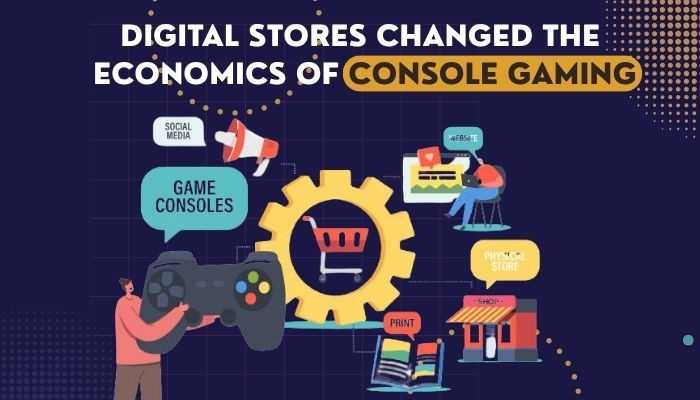
Digital distribution is central to the EuroGamersOnline Console business story because it changes how games reach customers. Physical releases require manufacturing, packaging, shipping, inventory, distributors, and retail space, while digital stores allow purchases directly through the gaming platform.
Digital commerce still carries costs such as payment processing, infrastructure, cybersecurity, bandwidth, customer support, and fraud prevention. However, it creates a direct and continuing commercial relationship between the platform and its users.
Video Games Europe reported that 91% of 2025 games-market revenue across the 16 European countries in its study was digital, while 9% was physical. Console accounted for about 30% of revenue by device across those markets.
The 91% figure covers the overall measured games market. It should not be interpreted as saying that exactly 91% of console-game purchases were digital.
Why Add-On Content Is So Valuable
The economics surrounding EuroGamersOnline Console increasingly extend beyond the original price of a game. Modern titles can generate additional revenue through expansions, characters, cosmetics, virtual currency, season content, and other downloadable purchases.
Sony’s fiscal year ended March 31, 2026 provides a useful example. Its Game & Network Services segment recorded ¥2.415 trillion in external customer sales from digital software and add-on content, compared with ¥1.392 trillion from hardware and other activities. Network services contributed another ¥763.1 billion.
Add-on content can be commercially powerful because companies can generate another transaction from an existing player instead of acquiring a completely new customer.
For successful games, this can extend monetization far beyond launch day and increase the lifetime value of the audience.
Subscriptions Turn Gaming Into Recurring Revenue
Subscriptions add recurring income to the EuroGamersOnline Console ecosystem by allowing players to pay monthly or annually for game libraries, multiplayer features, cloud services, discounts, and other benefits.
Major examples include:
- PlayStation Plus within Sony’s network-services business.
- Xbox Game Pass across Microsoft’s gaming ecosystem.
- Other premium and online-service tiers connected with console platforms.
Microsoft said Game Pass annual revenue reached nearly $5 billion in fiscal 2025. The company defines Xbox content and services as including first- and third-party games and in-game content, Game Pass and other subscriptions, cloud gaming, advertising, and other cloud services.
Subscriptions are valuable because they can create repeatable revenue while keeping players engaged with the ecosystem between individual game purchases.
Xbox Demonstrates a Business Beyond the Console
Microsoft shows how EuroGamersOnline Console economics can extend far beyond the sale of physical Xbox hardware. Xbox now operates across consoles, PCs, subscriptions, cloud gaming, digital content, advertising, and multiple devices.
During fiscal 2025:
- Gaming revenue increased 9%.
- Xbox content and services revenue increased 16%.
- Xbox hardware revenue declined 25%, mainly because of lower console volumes.
The contrast is important. Hardware revenue declined, yet stronger content and services helped overall gaming revenue grow.
Microsoft also reported about 500 million monthly active gaming users across platforms and devices and nearly $5 billion in annual Game Pass revenue during fiscal 2025.
Digital revenue is not guaranteed to rise continuously, however. Microsoft’s Xbox content and services revenue declined 10% year over year in fiscal Q4 2026, showing that game releases, engagement, competition, and content cycles still matter.
Cross-Platform Publishing Is Changing the Traditional Console War
The competitive landscape surrounding EuroGamersOnline Console is becoming less dependent on convincing every customer to own one particular machine. Content owners can increasingly generate revenue across consoles, PCs, cloud platforms, mobile devices, and even competing hardware ecosystems.
Microsoft illustrates this shift particularly clearly. The company said fiscal 2025 gaming revenue exceeded $23 billion, Game Pass annual revenue reached nearly $5 billion, and Microsoft finished the year as the top publisher on both Xbox and PlayStation, driven by its first-party portfolio.
This changes the traditional console model.
A Microsoft-owned game sold to a PlayStation customer can still contribute to Microsoft’s gaming business. Cloud services and PC releases can reach additional users without requiring them to purchase an Xbox console.
The modern competition is therefore increasingly built around:
- Content ownership
- Player engagement
- Subscriptions
- Digital distribution
- Intellectual property
- Cross-platform reach
Hardware remains important, but control of valuable content and long-term player relationships now matters just as much as the number of boxes sold.
Why Microsoft Bought Activision Blizzard
The acquisition of Activision Blizzard shows how EuroGamersOnline Console fits into a wider ecosystem built around content ownership, subscriptions, mobile gaming, and cross-platform distribution. Microsoft completed the deal on October 13, 2023, for approximately $75.4 billion, adding major Activision, Blizzard, and King properties to its gaming portfolio.
Owning major gaming IP can create value through:
- Full-game sales
- Game Pass and other subscriptions
- Downloadable content
- Mobile gaming
- Cross-platform releases
- Licensing and merchandising
- Long-term franchise development
The key business advantage is flexibility. Microsoft can earn from valuable content even when some customers play that content outside the Xbox hardware ecosystem.
Nintendo Uses Intellectual Property Differently
Nintendo gives EuroGamersOnline Console another example of platform economics because its strongest franchises are closely tied to its own hardware. Mario, Zelda, Animal Crossing, Pokémon, Donkey Kong, Kirby, and other properties help attract users while supporting long-term software sales.
As of June 30, 2026, Nintendo reported:
| Nintendo Switch title | Worldwide sales |
|---|---|
| Mario Kart 8 Deluxe | 71.53 million |
| Animal Crossing: New Horizons | 50.29 million |
| Super Smash Bros. Ultimate | 38.14 million |
| The Legend of Zelda: Breath of the Wild | 34.06 million |
| Super Mario Odyssey | 30.80 million |
Mario Kart World had also reached 15.39 million units on Nintendo Switch 2 by June 30, 2026.
Nintendo’s business flywheel can be summarized as:
Popular IP → Hardware Demand → Larger Installed Base → More Software Sales → Stronger IP → Future Hardware Demand
Backward Compatibility Can Protect Customer Value
Backward compatibility strengthens the EuroGamersOnline Console business model by making it easier for customers to move to newer hardware without abandoning their existing game libraries. Nintendo has supported compatible Switch software on Switch 2, helping older titles retain value during the transition.
This can benefit the platform in several ways:
- Reduces friction when customers upgrade
- Protects the value of existing digital libraries
- Extends the sales life of older games
- Encourages users to remain inside the ecosystem
- Supports customer retention across hardware generations
Backward compatibility is therefore more than a technical feature. It can also protect long-term customer relationships.
EuroGamersOnline.com Console Gaming
The EuroGamersOnline.com Console Gaming section connects naturally with the wider EuroGamersOnline Console economy because its coverage includes platforms, games, hardware, setup guidance, and other console-related topics.
A customer’s spending journey can expand from:
- Console hardware
- Games and downloadable content
- Subscriptions
- Controllers
- Storage upgrades
- Headsets and audio equipment
- Networking products
- Premium displays
The console may begin the relationship, but the surrounding products and services create a much larger commercial ecosystem.
Eurogamersonline.com Gadgets
The eurogamersonline.com gadgets coverage expands the EuroGamersOnline Console topic beyond hardware systems into monitors, controllers, mice, keyboards, networking products, portable accessories, and other gaming equipment.
A single console purchase can create demand for complementary products such as:
- Premium controllers
- Gaming headsets
- Storage expansion
- Gaming monitors
- Capture cards
- Microphones
- Routers and networking equipment
- Charging accessories
This wider spending benefits not only console manufacturers but also peripheral brands, retailers, semiconductor companies, display makers, audio businesses, and accessory manufacturers.
Accessories Increase Customer Lifetime Value
Accessories show why EuroGamersOnline Console should be viewed through customer lifetime value rather than the initial hardware purchase alone. Two people may buy the same console, yet one may later spend considerably more on controllers, headsets, storage, displays, and streaming equipment.
The most important accessory categories include:
- Extra controllers
- Headsets
- Storage upgrades
- Charging stations
- Gaming displays
- Streaming hardware
- Networking equipment
This additional spending increases share of wallet and can make an active customer substantially more valuable over the life of the platform.
First-Party Games Are More Than Entertainment Products
First-party games give EuroGamersOnline Console an important strategic layer because owned titles can influence both software revenue and platform demand. A successful game can attract new customers while giving existing users another reason to remain active.
A strong first-party title can:
- Generate direct software revenue
- Increase hardware demand
- Support subscriptions
- Strengthen platform identity
- Improve player engagement
- Create licensing opportunities
- Develop into a long-term franchise
Nintendo demonstrates this model particularly well, while Sony and Microsoft also use owned games and franchises to strengthen their ecosystems.
Third-Party Games Create a Network Effect
Third-party developers are essential to the EuroGamersOnline Console ecosystem because no major platform can rely entirely on first-party titles. Outside publishers provide sports games, shooters, RPGs, racing titles, independent releases, strategy games, and many other experiences.
The network effect works in both directions:
- More players make a platform attractive to developers.
- More developers expand the game catalog.
- More games make the platform attractive to customers.
- More customers create additional sales opportunities.
A console platform is therefore valuable not only because of its hardware specifications but also because of the developers, games, customers, and marketplace surrounding it.
Free-to-Play Games Changed the Revenue Curve
The free-to-play model adds another revenue layer to EuroGamersOnline Console because a game can attract users without an upfront purchase and monetize them later through optional spending. Instead of depending mainly on launch-day sales, publishers can earn from an active audience over months or years.
Common revenue sources include:
- Cosmetic items and skins
- Virtual currencies
- Battle or premium passes
- Expansion content
- Optional upgrades
This model makes retention especially important. A large launch audience has limited long-term value if players leave quickly, while a smaller audience that remains active can continue generating transactions over time.
Why Platforms Want Players to Stay
Customer retention is central to EuroGamersOnline Console economics because players gradually accumulate value inside an ecosystem. Digital games, saved data, friends lists, achievements, subscriptions, accessories, and familiarity with the platform can all make switching less attractive.
Platforms can strengthen retention through:
- Account continuity
- Cloud saves
- Backward compatibility
- Cross-generation game libraries
- Subscription benefits
- Social and multiplayer features
The longer customers remain active, the more opportunities the platform has to generate software, subscription, accessory, and digital-content revenue.
PlayStation, Xbox, and Nintendo Business Models Compared
The EuroGamersOnline Console business landscape shows that PlayStation, Xbox, and Nintendo share many revenue streams but rely on different strategic strengths.
| Platform ecosystem | Major strength | Important monetization channels |
|---|---|---|
| PlayStation | Large, engaged console ecosystem | Hardware, PlayStation Store, games, add-on content, PlayStation Plus, peripherals |
| Xbox | Content and services across multiple devices | Game Pass, games, cloud gaming, digital content, console hardware |
| Nintendo | Strong proprietary IP linked with distinctive hardware | Hardware, first-party games, digital sales, subscriptions, accessories, IP licensing |
Sony has built substantial revenue around software, services, and player engagement. Microsoft increasingly distributes gaming content across console, PC, and cloud, while Nintendo uses major franchises to reinforce both hardware and software demand.
The three companies are therefore building ecosystems around different competitive advantages rather than relying on exactly the same economic model.
Regional Pricing Can Affect Platform Economics
Global pricing adds another challenge to EuroGamersOnline Console economics because hardware costs, exchange rates, tariffs, component prices, taxes, and local market conditions vary by region.
Nintendo demonstrated this in 2026 when it revised Switch 2 pricing differently across major markets. The U.S. MSRP increased from $449.99 to $499.99, while the European My Nintendo Store price rose from €469.99 to €499.99, effective September 1, 2026. Nintendo cited changing market conditions and pressures including memory costs, tariffs, foreign exchange, and other factors.
The business challenge is balancing two priorities:
- Protecting hardware profitability
- Keeping prices attractive enough to expand the installed base
A pricing decision that protects margins can also weaken demand, making regional strategy an important part of platform economics.
Why Console Companies Cannot Depend on Hardware Forever
The long-term logic behind EuroGamersOnline Console becomes clearer when console hardware cycles are considered. New systems launch strongly, mature over time, and eventually experience lower shipments, so depending entirely on hardware would expose companies to major revenue swings.
Microsoft’s fiscal 2025 results illustrate the shift. Xbox hardware revenue declined 25%, while Xbox content and services revenue increased 16%, helping overall gaming revenue rise 9%.
Sony showed a similar pattern. FY2025 Game & Network Services sales remained essentially flat as lower PS5 hardware revenue was offset by higher network-services and third-party software revenue, while operating income rose 12% to ¥463.3 billion.
Software and services therefore give gaming companies additional ways to earn when hardware enters a slower phase of its lifecycle.
Risks Hidden Inside the Platform Model
The ecosystem behind EuroGamersOnline Console can generate recurring revenue, but it also creates significant financial and operational risks.
Major risks include:
- Expensive games failing commercially
- Slower subscription growth
- Players moving to competing titles
- Higher hardware and component costs
- Regulatory pressure on digital stores
- Failed live-service games
- Acquisition and integration costs
- Expensive cloud infrastructure
- Dependence on a small number of major franchises
These risks are visible in current results. Xbox content and services revenue fell 10% year over year in Microsoft’s fiscal Q4 2026, while Sony recorded ¥120.1 billion in impairment losses related to Bungie’s intangible and other assets during FY2025.
Scale alone does not guarantee success. Gaming platforms still need strong content, cost control, customer retention, and disciplined investment.
What Other Businesses Can Learn From Console Gaming
The business model behind EuroGamersOnline Console offers useful lessons beyond gaming because it shows how an initial product can become the gateway to a much larger customer relationship.
The most transferable lessons include:
- Build an ecosystem: The first product can lead to additional services and purchases.
- Create recurring revenue: Subscriptions can extend customer value.
- Increase share of wallet: Complementary products can generate additional spending.
- Own valuable IP: Proprietary content can differentiate the business.
- Build a marketplace: Third-party sellers can increase platform value.
- Reduce switching friction: Compatibility can encourage customers to upgrade.
- Measure engagement: Active customers may matter more than raw acquisition numbers.
Similar strategies appear across software, smartphones, streaming, fintech, marketplaces, connected devices, and other platform businesses.
Where the Console Business Goes Next
The future of EuroGamersOnline Console is likely to involve much more than faster processors and stronger graphics. Gaming companies are increasingly competing through digital stores, subscriptions, cloud delivery, intellectual property, portable gaming, multiplayer communities, accessories, and cross-platform distribution.
Traditional hardware remains important. Nintendo Switch 2 had already reached 23.68 million worldwide hardware units by June 30, 2026, alongside 58.17 million software units.
At the same time, Microsoft shows how gaming content can reach customers beyond proprietary console hardware, while Sony continues expanding revenue from software, network services, and its large PlayStation user base.
The next stage of console competition will therefore be shaped not only by who sells the hardware, but also by who can keep players engaged, spending, subscribing, and returning to the ecosystem over time.
Conclusion
The real value of EuroGamersOnline Console lies beyond the hardware itself. PlayStation, Xbox, and Nintendo have evolved into platform businesses where software, subscriptions, digital storefronts, add-on content, accessories, and intellectual property can generate revenue long after the initial console sale.
The strongest platforms are no longer competing only on processor power or unit sales. They are competing for attention, engagement, recurring spending, and long-term customer loyalty. Sony’s software and services mix, Microsoft’s cross-platform strategy, and Nintendo’s tightly integrated hardware-and-IP model all point in the same direction: the economics of gaming increasingly depend on the ecosystem around the player.
That is what makes EuroGamersOnline Console relevant from a business perspective. The console may open the relationship, but the larger opportunity comes from everything that happens after the customer enters the platform.
FAQs About eurogamersonline console
1. Is EuroGamersOnline Console content free to access?
Yes. EuroGamersOnline Console guides are publicly accessible, and EuroGamersOnline describes its console resources as available without a paywall.
2. How can I tell if an EuroGamersOnline Console guide is current?
Check the publication or update date, console model, firmware references, patches, and DLC details. EuroGamersOnline Console advises readers to verify these signals before relying on a guide.
3. Does EuroGamersOnline Console compare console performance?
Yes. EuroGamersOnline Console coverage can include frame rates, resolution, input lag, controller performance, and other hardware considerations.
4. Can EuroGamersOnline Console help users find console deals?
Yes. EuroGamersOnline Console coverage includes buying guidance, pricing information, hardware deals, and regional purchasing considerations.
5. Does EuroGamersOnline Console cover multiplayer communities?
Yes. EuroGamersOnline Console content includes multiplayer, community, competitive-play, and gaming-event information alongside traditional guides.
6. Does EuroGamersOnline Console feature indie games?
Yes. EuroGamersOnline Console coverage includes indie titles alongside major releases, with attention to gameplay, platform availability, replay value, and performance.
7. Does EuroGamersOnline Console cover cross-play and cross-save?
EuroGamersOnline Console discusses cross-play and related platform features that can affect multiplayer access and the long-term value of a player’s game ecosystem.
8. Is EuroGamersOnline Console useful for European buyers?
Yes. EuroGamersOnline Console can be useful for European players because its coverage includes regional prices, retailer options, language availability, warranties, and local buying considerations.
