




Noise has become a common issue in homes, offices, studios, and industrial environments. Whether it comes from traffic, machinery, neighbours, or internal echoes, excessive sound can affect comfort, productivity, and even health. This is why noise control and acoustic sound insulation have become increasingly important in modern buildings and interior spaces.
Good sound control is not only about reducing noise from outside but also about improving the overall acoustic quality within a room.
What Acoustic Sound Insulation Means
Acoustic insulation refers to materials and techniques used to reduce the transmission of sound between spaces. The goal is to block, absorb, or dampen sound waves so that noise levels become more manageable. Sound insulation is commonly used in walls, ceilings, floors, doors, and even ventilation systems.
Different materials work in different ways. Some absorb sound energy, while others add mass or create barriers that reduce sound transfer.
Why Noise Reduction Matters
Excessive noise can affect concentration, sleep quality, communication, and overall wellbeing. In workplaces, poor acoustics may reduce productivity and increase stress levels. In residential buildings, sound transfer between rooms or neighbouring units can create discomfort and privacy concerns.
This is why modern buildings increasingly include sound insulation as part of their design rather than treating it as an optional feature.
Common Types of Acoustic Insulation Materials
There are many materials used for sound control depending on the environment and type of noise being addressed.
Mineral Wool and Rock Wool
These materials are widely used inside walls and ceilings because they absorb sound effectively while also providing thermal insulation. Rock wool insulation products are commonly used in both residential and commercial spaces due to their density and fire resistance.
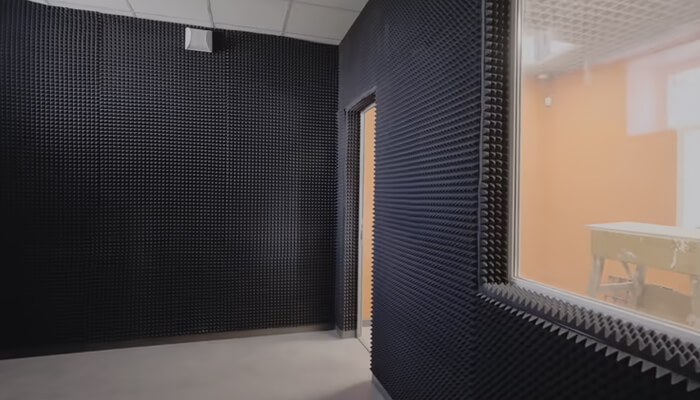
Acoustic Foam Panels
Foam panels are designed mainly for sound absorption and echo reduction. They are commonly used in recording studios, gaming rooms, and office spaces where improving room acoustics is important.
Mass Loaded Vinyl
This is a dense and flexible material used to block sound transmission through walls, ceilings, and floors. It is often used when additional sound blocking is required without significantly increasing wall thickness.
Acoustic Underlayments
Floor insulation materials such as rubber, cork, felt, and specialised foam help reduce impact noise and vibration transfer between floors.
Difference Between Soundproofing and Acoustic Treatment
Many people confuse soundproofing with acoustic treatment, but they serve different purposes.
Soundproofing focuses on stopping sound from entering or leaving a room. This usually involves dense materials, insulation layers, and structural modifications.
Acoustic treatment focuses on improving sound quality within a space by reducing echoes and reverberation. Foam panels and acoustic diffusers are commonly used for this purpose.
In many cases, both approaches are combined for better overall acoustic performance.
Where Acoustic Insulation Is Commonly Used
Acoustic insulation is used across many environments.
In residential spaces, it helps reduce traffic noise, neighbour noise, and sound transfer between rooms.
In offices and conference rooms, it improves speech clarity and reduces distractions.
Recording studios and home theatres use specialised acoustic systems to control reflections and maintain sound quality.
Industrial facilities use insulation materials to reduce machinery noise and improve workplace safety.
Educational institutions and healthcare facilities also rely on sound insulation to create quieter and more comfortable environments.
Importance of Proper Installation
Even high quality materials may not perform effectively if installed incorrectly. Gaps, weak joints, and poorly sealed areas can allow sound to pass through easily.
Proper installation often includes sealing openings, isolating structures, and combining multiple materials for better results. In advanced soundproofing systems, decoupling techniques are used to reduce vibration transfer between surfaces.
This is why professional planning and installation are often recommended for larger projects.
Factors That Affect Sound Insulation Performance
Several factors influence how well a sound insulation system performs.
Material density plays a major role because heavier materials generally block sound more effectively.
Thickness and layering also improve sound reduction, especially for lower frequencies.
Air gaps and structural separation help reduce vibration transfer between surfaces.
The type of noise also matters. High frequency sounds are usually easier to absorb, while low frequency vibrations require denser and more advanced solutions.
Modern Developments in Acoustic Materials
Acoustic technology continues to evolve with the development of lighter and more efficient insulation systems. Researchers are exploring advanced acoustic metamaterials that can improve sound blocking while reducing thickness and weight.
There is also increasing interest in sustainable and recycled acoustic materials that provide effective insulation while reducing environmental impact.
Conclusion
Acoustic sound insulation has become an important part of modern building design and interior comfort. Whether for homes, offices, studios, or industrial facilities, effective sound control improves privacy, productivity, and overall quality of life.
By understanding the different materials, installation methods, and acoustic principles involved, it becomes easier to choose solutions that match specific needs. As awareness of noise management continues to grow, acoustic insulation will remain a key element in creating quieter and more functional spaces.
