


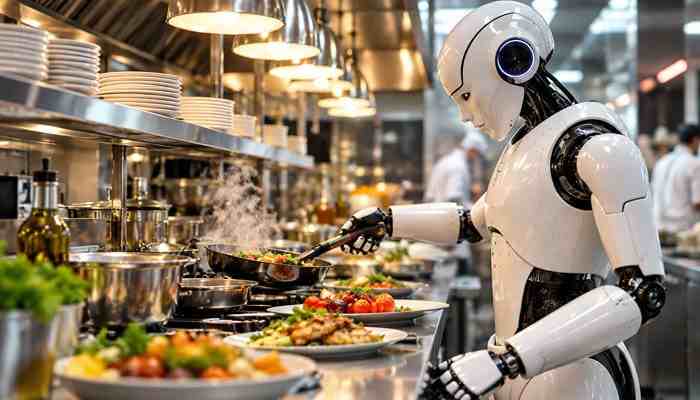

Restaurants lose revenue in moments that rarely appear on daily reports: unanswered calls, incorrect bookings, and staff pulled from service. AI improves those moments when it handles narrow tasks with reliable rules and live restaurant data. Operators should judge the technology through labor time, booking capture, order accuracy, and response speed. The clearest gains appear in routine communication, reservation control, and the handoff between guests and staff. Those measures show whether automation improves service rather than simply adding another system.
A practical review starts with the software’s operating scope. Restaurant-focused systems use voice recognition and natural language processing to answer calls, manage reservations, and pass accurate details into connected systems. A complete guide to AI restaurant software helps operators separate these functions from generic chatbots and assess how each task fits existing workflows. That distinction keeps evaluation tied to service outcomes.
Capture Calls During Service
Phone coverage is one of the clearest operational gaps during lunch, dinner, and shift changes. Staff members cannot greet arriving guests, manage tables, and answer every call at the same time. Voice AI handles routine questions about hours, menus, directions, availability, and reservation changes. It can answer during peak periods and after closing, giving callers a consistent response without pulling employees away from active service.
The financial effect comes from captured demand. The referenced operator guide reports peak-hour answer rates reaching 97%, compared with 20% to 40% missed calls without AI. Even a smaller improvement gives managers a measurable reason to review call volume and lost bookings.
Keep Reservations Accurate
Reservation errors create duplicate work for hosts and frustration for guests. A system that reads live availability can confirm bookings, record changes, and update the reservation system without manual transcription. This process also supports waitlist management. When a table opens, staff can contact the next eligible party quickly instead of searching through notes, messages, and separate spreadsheets.
Operators should track booking time, modification errors, and after-hours reservations before deployment. The guide reports an average booking time of 22 seconds and a 15% increase in after-hours reservation revenue. Those figures provide useful comparison points, not guaranteed results for every location.
Reduce Repetitive Staff Work

Restaurant employees spend substantial time repeating information that follows clear rules. Questions about parking, dress codes, allergens, operating hours, and reservation policies rarely require managerial judgment. AI can handle those requests while routing unusual cases to a staff member. That division gives employees more time for guest recovery, table coordination, and decisions that require context.
The strongest results appear when managers define escalation rules before launch. A call involving a complaint, a large party, a sensitive allergy, or a billing dispute should reach the appropriate employee without delay.
Connect Guest Requests to Operations
Automation creates problems when it operates separately from the restaurant’s working systems. Reservation and POS connections let AI use current menus, prices, availability, and guest records instead of outdated information. A live connection also reduces duplicate entry. When a booking or order moves directly into the correct system, employees spend less time copying details and correcting avoidable mistakes.
Managers should test these connections with real scenarios before opening access to guests. Tests should include sold-out items, changed reservation times, special requests, and canceled bookings. Each result should match the restaurant’s approved operating rules.
Measure the Operational Result
A useful implementation starts with a baseline. Managers can record monthly call volume, missed calls, booking time, staff phone hours, reservation errors, and covers connected to phone bookings. After launch, the same measures show whether the system improves daily work. The guide reports an 87% reduction in staff phone time, 99.5% order accuracy, and up to 141% more phone covers in reported deployments.
Guest feedback still matters. A fast answer has limited value if callers receive incorrect information or cannot reach a person when the situation requires judgment. Operational data and service feedback belong in the same review.
Conclusion
AI restaurant software delivers its clearest value through small operational improvements that repeat across every shift. Call handling, reservation accuracy, staff workload, system synchronization, and measurement provide practical places to begin. Restaurant operators should select one high-volume workflow, record its baseline for several weeks, and test the AI against real service scenarios. That approach limits disruption and creates a defensible decision about expansion. Automation earns its place when the numbers improve, and staff regain time for guests.
