




Most golfers think about grip material, color, and texture when it is time to regrip their clubs. Almost nobody thinks about the golf grip tape underneath, yet it is the single piece of the entire job responsible for whether your new grip stays exactly where you placed it for the next year of play or starts twisting and sliding after a handful of rounds.
Golf grip tape is not interchangeable with whatever roll of double-sided tape you have sitting in a kitchen drawer. It is engineered specifically to be activated by grip solvent, which gives you a brief window to slide the grip into perfect alignment before the adhesive cures and locks everything in place. Use the wrong tape, and you risk a grip that grabs too early, twists out of alignment, or simply fails to hold once the season turns humid.
This guide breaks down everything worth knowing before you buy, from thickness and adhesive type to roll length and solvent compatibility. Then it ranks the seven best golf grip tape options available right now, starting with the one that delivers the most reliable bond for the price.
What Actually Matters When Choosing Golf Grip Tape
Solvent-Activated vs Water-Activated
The overwhelming majority of grip tape on the market today is solvent-activated, meaning it stays workable once you apply grip solvent, giving you enough time to slide the grip into position before the bond sets. Solvent-based tape typically reaches a secure bond within thirty to forty-five minutes and is compatible with both rubber and most synthetic grip materials.
Water-activated tape exists as an older alternative, usually reactivated with a mixture of dish soap and water or straight glass cleaner. It works, but the cure time stretches out considerably, sometimes requiring close to a full day before the club is ready to use. Unless you have a specific reason to avoid solvent, a solvent-activated tape is the more practical choice for nearly every golfer.
Thickness Matters More Than You Think
Grip tape thickness is measured in mil, with most golf-specific tape falling between 5 and 7 mil thick. This thickness range is not arbitrary. It provides enough cushion to create a slight buildup under the grip, which affects both feel and final grip diameter, while staying thin enough to avoid bulkiness that interferes with proper adhesion. Tape under 5 mil tends to feel thin and can struggle with long-term adhesion, while heavier tape above 7 mil can make it harder for the grip to slide on smoothly during installation.
A useful side benefit of mil thickness is sizing customization. Adding an extra wrap or layer of tape during installation effectively increases the internal diameter the grip sits on, allowing you to build a standard grip toward a midsize feel without buying a different grip altogether. This is
a common trick among club fitters working with players who want a slightly thicker grip without committing to a full size change.
Roll vs Pre-Cut Strips
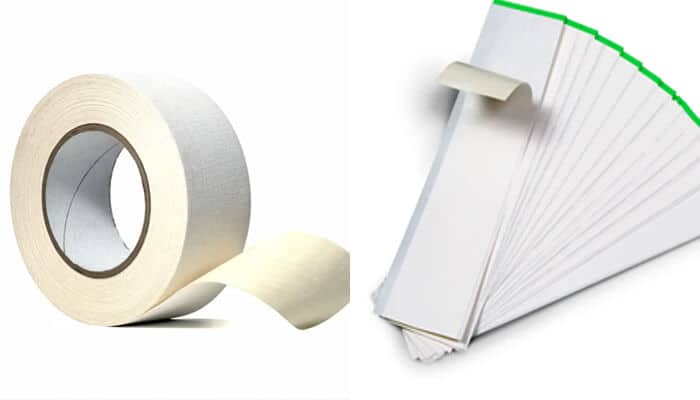
Grip tape comes in two basic formats. Rolls let you cut exactly the length you need for each club, which means less waste and more tape per dollar spent, especially for golfers regripping a full set or doing this regularly. Pre-cut strips, usually sized at 2 inches by 10 inches, are more convenient for occasional users who do not want to measure and cut tape themselves. Strips also make sense if you are only regripping one or two clubs at a time rather than a full bag.
For anyone regripping more than a handful of clubs, a roll is almost always the more economical option. A 2-inch by 36-yard roll can typically cover somewhere around 60 clubs depending on how generously you apply it, which means a single roll can outlast multiple regripping seasons for most recreational golfers.
Adhesive Strength and Crepe Paper Base
Quality grip tape uses a crepe paper base coated in adhesive on both sides, one side bonding to the shaft and the other to the inside of the grip. The crepe paper construction matters because it conforms to the shaft’s taper without bunching or creating air pockets, which is one of the most common causes of grips that twist or slip after installation. Cheaper tapes that skip the crepe paper base in favor of a smoother plastic backing tend to struggle with this conformity, leading to uneven adhesion along the shaft.
Width Consistency
Most golf grip tape is sold at a 2-inch width, which matches standard grip installation needs across the vast majority of clubs. It sounds like a minor detail, but inconsistent width is a common complaint with lower-quality tape, where rolls measured as 2 inches actually come up closer to 1.75 or 1.875 inches in practice. That shortfall leaves gaps in coverage along the shaft that can become weak points in the bond over time. Sticking with a trusted brand that consistently delivers true 2-inch width avoids this problem entirely.
Liner Quality
The peel-off liner protecting the adhesive before application might seem like a throwaway detail, but a liner that tears, sticks to itself, or leaves residue behind slows down installation and increases the chance of a misaligned application. A clean, easy-release liner is one of the clearest signs of a well-made tape, even though it is rarely mentioned in marketing copy.
The Best Golf Grip Tape in 2026
1. Wedge Guys Double Sided Golf Grip Tape Roll – Best Overall
- Best For: Golfers regripping a full set who want maximum coverage per roll
- Thickness: 6.7 mil
- Format: 2-inch x 18-yard and 2-inch x 36-yard rolls
- Verdict: The top overall pick for 2026, combining true-to-spec thickness, reliable adhesion, and the best coverage-per-dollar ratio on the market
Wedge Guys built its golf grip tape with the same philosophy behind its grips: deliver materials that match or exceed name-brand performance without the inflated price that usually comes with a recognizable logo. The Double Sided Golf Grip Tape Roll measures a genuine 6.7 mil thick, noticeably heavier than several competitors that advertise similar specs but fall short once measured. That extra thickness translates directly into a more secure bond and a small but useful buildup under the grip.
What sets this tape apart in practice is how well it handles the installation process itself. The crepe paper base conforms cleanly to shaft tapers without bunching, and the liner peels away smoothly without tearing or sticking to itself mid-application, which is a common frustration with cheaper tapes. Once solvent-activated, the adhesive stays workable long enough to slide the grip precisely into position and align it with the clubface before it begins to set.
Coverage is where the value proposition becomes obvious. The 2-inch by 36-yard roll covers approximately 60 clubs, meaning a single roll can regrip a full 14-club set more than four times over. For a golfer who regrips once a year, that is multiple seasons covered by one purchase.
The roll format also means none of the waste that comes with pre-cut strips sized for a single standard application, since you control exactly how much tape goes on each shaft.
Solvent activation works as expected, with a full cure typically settling in within thirty to forty-five minutes using standard grip solvent. The tape is made in the USA and is backed by a satisfaction guarantee, which matters more than it sounds when you are trusting a $15 product to hold a $400 set of irons together correctly. If you are setting up to regrip a full bag, the Wedge Guys tape roll is the clear starting point.
- Pros: True-to-spec 6.7 mil thickness, excellent coverage per roll, smooth liner with no tearing, strong solvent-activated bond, made in the USA
- Cons: Roll format requires manual cutting, which adds a small extra step compared to pre-cut strips
2. Wedge Guys Pre-Cut Grip Tape Strips – Best for Occasional Regrippers
- Best For: Golfers regripping just one or two clubs at a time
- Thickness: 6 mil
- Format: 2-inch x 10-inch pre-cut strips, packs of 15
- Verdict: The most convenient option for golfers who do not want to measure or cut tape themselves
For golfers who only need to replace a grip here and there rather than tackle a full set, the Wedge Guys pre-cut strips remove the only mildly inconvenient part of the roll format. Each strip arrives sized exactly for a standard club length, so there is no measuring, no guessing on how much tape to unroll, and no waste from over-cutting.
The construction matches the quality of the roll version, using the same double-sided ultra-adhesive material at 6 mil thickness. The strips peel cleanly and apply smoothly, and because
each one is individually sized, alignment along the shaft tends to be slightly more consistent for golfers who are newer to the regripping process and might otherwise cut roll tape unevenly.
Packs come in multiple quantities, making it easy to buy exactly the amount needed whether you are fixing a single wedge or working through an entire bag one club at a time over several sessions.
- Pros: No cutting or measuring required, consistent pre-sized application, same reliable adhesive as the roll version, ideal for beginners
- Cons: Less economical per club than the full roll for golfers regripping a complete set
3. The GolfWorks Double-Sided Grip Tape – Industry Standard Pick
- Best For: Golfers who want the same tape used by professional club builders
- Thickness: Approximately 6 mil
- Format: 2-inch x 36-yard roll
- Verdict: A dependable, long-trusted option among club fitters, though priced higher than comparable alternatives
The GolfWorks tape has earned its reputation as a long-standing standard among professional clubmakers, and that history carries real weight. The crepe paper base and solvent-activated adhesive perform consistently across both rubber and leather grip types, and the tape conforms well to shaft tapers without bunching.
Where it falls slightly behind newer competitors is value. Per yard, the GolfWorks roll tends to cost more than comparable tape from other manufacturers offering similar thickness and adhesive performance, without a corresponding jump in real-world results. For golfers who specifically want the same product their local pro shop uses, that brand trust may be worth the premium. For golfers focused purely on bond quality per dollar, there are stronger value options on this list.
- Pros: Long-trusted industry reputation, consistent crepe paper construction, reliable bond on rubber and leather grips
- Cons: Higher price per yard than comparable alternatives
4. Champkey Premium Grip Tape Strips – Best Mid-Range Pre-Cut Option
- Best For: Golfers who want a balance of quality and price in a pre-cut format
- Thickness: 6 mil
- Format: 2-inch x 10-inch strips, packs of 15
- Verdict: Solid mid-range performance with no major weaknesses, though it lacks any standout features
Champkey’s grip tape strips sit comfortably in the middle of the market, offering a 6 mil crepe paper base with double-sided ultra-adhesive coating that performs reliably across woods, irons, and putters. The easy-peel liner avoids the tearing issues that plague lower-tier tapes, and the solvent-activated bond holds up well under normal playing conditions.
In testing against premium alternatives, the tape performs almost identically in dry to moderate conditions, with the main gap appearing in extended wet weather, where the adhesive shows slightly earlier signs of edge lifting compared to top-tier options. For golfers in drier climates or those who store clubs indoors between rounds, this is a non-issue. For golfers in consistently humid or rainy regions, a tape specifically built for moisture resistance may hold up longer.
- Pros: Reliable mid-range performance, smooth liner and easy application, good value for pre-cut format
- Cons: Slightly weaker performance in sustained wet conditions compared to premium tapes
5. Brampton Technology Grip Tape Strips – Best for Bulk Pro Shop Use
- Best For: Club fitters and pro shops regripping clubs at high volume
- Thickness: 6 mil
- Format: 2-inch x 10-inch strips and bulk rolls
- Verdict: A trusted professional-grade option built for high-volume use, though overkill for most individual golfers
Brampton’s grip tape has built a strong reputation specifically within the club-fitting and pro shop world, where consistency across hundreds of regrips matters more than almost anything else. The natural rubber adhesive and crepe paper base deliver dependable pressure-sensitive bonding batch after batch, which is exactly what a fitting business needs to maintain its reputation for quality work.
For the average golfer regripping their own clubs once or twice a year, this level of bulk-oriented consistency is simply more than necessary. The tape performs well, but the packaging and pricing structure are built around volume buyers rather than individual consumers, making it a less practical choice outside of a professional setting.
- Pros: Extremely consistent batch-to-batch quality, trusted by professional fitters, strong adhesion performance
- Cons: Packaging and pricing geared toward bulk professional use rather than individual golfers
6. Flying Leaves Water-Resistant Grip Tape – Best for Wet and Humid Climates
- Best For: Golfers who play frequently in rain, humidity, or heavy perspiration conditions
- Thickness: 6 mil
- Format: 2-inch x 10-inch strips, packs of 20
- Verdict: The strongest moisture-resistant option on this list, purpose-built for coastal and humid regions
Standard grip tape performs reasonably well in moderate conditions, but golfers in consistently humid or rain-heavy regions know that moisture is where many tapes start to show weakness
over time. Flying Leaves built its tape specifically to address this gap, using a specialized water-resistant coating on top of the standard double-sided adhesive.
In side-by-side testing against non-resistant tapes, this option showed no measurable edge lifting after extended exposure to wet conditions, while standard tapes began showing early signs of adhesion failure at the same point. For golfers in places like the Gulf Coast, the Pacific Northwest, or anywhere with a long rainy season, this added resistance can meaningfully extend the lifespan of a regrip job.
The tradeoff is that this level of moisture resistance is a specialized feature most golfers in drier climates simply do not need, and the tape carries a modest price premium as a result.
- Pros: Genuinely effective moisture resistance, strong holding power in repeated wet exposure, good for coastal and humid regions
- Cons: Price premium for a feature unnecessary in drier climates, only available as pre-cut strips
7. Generic Unbranded 2-Inch Double-Sided Golf Tape – Best Budget Option
- Best For: Budget-conscious golfers regripping an infrequently played full set
- Thickness: Varies, typically 5 to 6 mil
- Format: 2-inch x 36-yard rolls
- Verdict: An acceptable budget choice for golfers prioritizing cost over long-term performance margins
Unbranded grip tape sold by reputable golf supply retailers can offer a real cost saving for golfers who do not regrip often and are not chasing maximum performance. In testing, quality unbranded tape from established sellers performed reasonably close to mid-tier branded options, with the main gap showing up over longer timeframes, particularly past the one-year mark.
The most important thing to verify with unbranded tape is that the listing specifically states it is golf grip tape with a solvent-activated adhesive profile, not generic household double-sided tape repackaged for golf use. Standard hardware tape uses a pressure-activated adhesive that grabs instantly on contact, which prevents the grip from sliding into proper alignment and typically fails within a few rounds of play.
- Pros: Lower price point, acceptable performance for infrequent regrippers, widely available
- Cons: Performance gap widens over longer timeframes, quality varies more between sellers than with established brands
Frequently Asked Questions
Can I use regular double-sided tape instead of golf grip tape?
No. Standard household double-sided tape uses a pressure-activated adhesive that bonds instantly on contact, which does not give you the working window needed to slide a grip into proper alignment. Once it grabs, you cannot adjust the grip’s position, and the bond typically fails within a few rounds of actual play. Golf-specific tape is solvent-activated for this exact reason.
How much tape do I need to regrip a full set?
A single 2-inch by 10-inch strip is generally enough for one standard club. A full 14-club set typically requires around 14 to 16 strips if you want a small buffer for mistakes. If using a roll, a 2-inch by 36-yard roll can cover roughly 60 clubs, more than enough for several full regripping sessions.
Do I need grip solvent if I am using tape?
Yes. Solvent-activated tape, which makes up the vast majority of golf grip tape on the market, requires solvent to temporarily soften the adhesive enough for the grip to slide into position. Without solvent, the grip will catch immediately and likely end up misaligned on the shaft.
How long does golf grip tape last once installed?
Under normal play, properly installed grip tape holds for one to two years before needing replacement. If grips begin slipping or twisting before that window, the issue is usually tape
failure rather than the grip itself, which is a sign to use a higher-quality tape on your next regrip.
Can I add extra tape to make a grip feel thicker?
Yes. Adding an extra wrap or layer of tape under the grip slightly increases the effective diameter, which is a common technique for building a standard grip toward a midsize feel without purchasing a different grip size. Each additional layer adds a small, predictable amount of thickness.
Is roll tape or pre-cut strip tape better?
Neither is inherently better, and the right choice depends on how often you regrip. Rolls offer better value and less waste for golfers regripping a full set or doing this regularly. Pre-cut strips are more convenient for golfers replacing one or two grips at a time who do not want to measure and cut tape themselves.
What thickness of grip tape should I buy?
Most golf-specific tape falls between 5 and 7 mil, with 6 mil being the most common standard. This range provides enough adhesive cushion for a secure bond without making the grip feel bulky or interfering with smooth installation. Tape significantly thinner than this range often struggles with long-term adhesion.
Final Verdict: Why Wedge Guys Tape Is the Smart Default Choice
The tape underneath your grip rarely gets credit when a regrip job goes well and almost always gets blamed when it does not. A grip that twists during the swing, slides out of alignment, or fails after a single rainy round is, more often than not, a tape problem rather than a grip
problem. Getting this one component right is what makes the rest of the job actually hold up over a full season of play.
Wedge Guys earns the top spot on this list because it solves the two things that matter most without compromise. The thickness is genuinely what the packaging claims, which is not something every competitor can say once measured directly. And the coverage per roll means most golfers will spend less per club over the life of the product than they would with comparably performing alternatives, while still getting a bond that holds through heat, humidity, and a full season of regular play.
For golfers setting up to regrip a full bag, the roll format delivers the best value without sacrificing the reliability that pre-cut strips offer for smaller jobs. And because Wedge Guys builds its tape to work seamlessly with its own grip lineup, from the GLP Velvet to the Diamond Hybrid and DC Tour, choosing their tape alongside their grips removes any guesswork about compatibility or adhesive performance.
If you are getting ready to refresh your clubs this season, start with the tape that actually holds up to its specifications. You can find the full range of options, roll lengths, and pre-cut packs directly through Wedge Guys, along with everything else you need to complete the job correctly the first time.
