




Most construction projects don’t fail because of bad crews. They fail because information doesn’t travel fast enough between the people who need it. The best construction workflow management software exists precisely to close that gap, keeping office teams, field crews, and subcontractors working from the same page at all times. After reviewing platforms used across commercial and residential projects of all sizes, the real differentiators come down to how well a tool handles document version accuracy, change order speed, and real-time coordination. This guide breaks down the top options worth your attention.
How this ranking was put together
Every option here was assessed using publicly available information pulled from review platforms, official product pages, case studies, and customer review directories. Only platforms with a verifiable track record in construction management made the cut. Tools without documented real-world construction use were left off entirely.
- Autodesk Construction Cloud – Best for general contractors, specialty contractors, and construction owners
- Planera – Best for construction project scheduling and planning
- com – Best for enterprise project and workflow management
- Procore – Best for enterprise construction management
- Wrike – Best for enterprise project and workflow management
Why Construction Workflow Management Software Is Worth a Closer Look
Construction projects involve layers of moving parts that can’t afford miscommunication. When office teams update drawings, but field crews are still working from last week’s version, rework costs climb fast.
The right software keeps every stakeholder, from the project manager to the subcontractor on site, working from current plans. That kind of document version accuracy is genuinely hard to maintain without the right tools.
Picking a well-matched platform also tightens the metrics that actually matter on a job. Schedule adherence rates improve when tasks are clearly assigned and tracked. Change order cycle times drop when approvals move through a digital workflow instead of phone calls. And RFI response time shortens when the right people get notified instantly. The difference between a good choice and a great one shows up directly in project outcomes.
Comparing the 5 Best Construction Workflow Management Software
Note: All data in this table is sourced from review platforms and the official websites of the listed companies.
| Company Name | Years Operating | Team Size |
| Autodesk Construction Cloud | Est. 2019 | Not disclosed |
| Planera | Est. 2021 | 49 |
| monday.com | Est. 2012 | 2,508 |
| Procore | Est. 2002 | 4,421 |
| Wrike | Est. 2006 | 1,000+ |
1. Autodesk Construction Cloud – Best for General Contractors, Specialty Contractors, and Construction Owners
What Services Are Offered by Autodesk Construction Cloud?
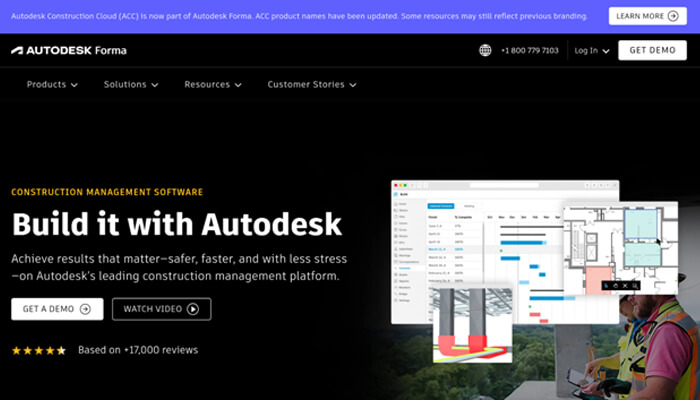
Autodesk Construction Cloud covers the full construction lifecycle, from design and planning through building and operations. The platform handles project management, cost management, safety management, and BIM in one connected environment. It pulls in nearly one million subcontractors through its BuildingConnected integration, which is a network scale that’s genuinely hard to match. Pricing starts at $500, and the platform has been used on over two million construction jobs worldwide.
Why Does Autodesk Construction Cloud Stand Out for Construction Workflow Management Software?
When teams need accurate project bidding, clash detection, and progress tracking all in one place, Autodesk Construction Cloud covers more ground than most platforms can. The 2023 Technology Solution Award and client results like CCPI delivering 97.8% of projects on time and within budget show this platform delivers on its promises in real production environments.
What Users Are Actually Saying:
Users consistently highlight the platform’s breadth as both a strength and a learning curve. Brinkman Construction completing project tasks twice as fast is the kind of result that gets cited frequently, and that kind of outcome is rare without a well-built system behind it. The sheer volume of integrations, especially through BuildingConnected, gets mentioned as a major reason teams stay on the platform long-term.
2. Planera – Best for Construction Project Scheduling and Planning
What Services Are Offered by Planera?
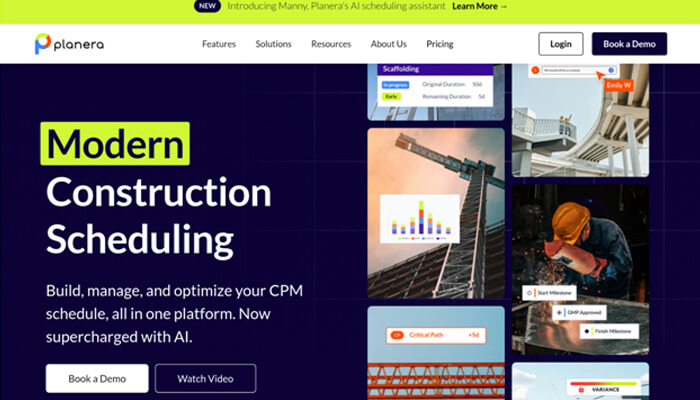
Planera builds collaborative online whiteboard software for creating and managing CPM schedules in construction. Contractors can build resource and cost-loaded schedules quickly without needing a dedicated scheduling expert on staff. The platform supports real-time collaboration between office and field teams working from a single source of truth. It connects directly with Procore, Autodesk, Primavera P6, and Microsoft Project, so teams aren’t forced to abandon the tools they already use.
Why Does Planera Stand Out for Construction Workflow Management Software?
Planera targets one of the most persistently difficult parts of construction management. CPM scheduling has always required specialized skills that most project teams simply don’t have on hand. Their approach of making that process accessible through a visual, collaborative whiteboard format means more contractors can build accurate schedules without relying entirely on outside help.
What Users Are Actually Saying:
Contractors working with Planera point to faster schedule creation and smoother coordination between field and office as the standout wins. The platform has over 500 live projects across major firms like Granite and Barton Malow, which signals that real-world adoption is happening at a meaningful scale. And the $26.9M in total funding also suggests the market is paying attention (not just early adopters, but serious investors too).
3. monday.com – Best for Enterprise Project and Workflow Management
What Services Are Offered by monday.com?
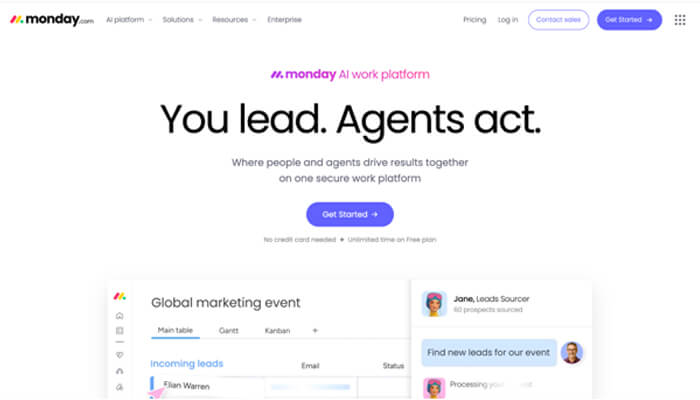
monday.com is a work platform that lets teams build customizable workflows across project management, CRM, service desks, and digital whiteboarding. The modular approach means construction teams can configure it to match their specific coordination needs rather than adapting to a fixed structure. With over 152,000 customers across 200 countries, it’s one of the most widely deployed platforms in this category. Their open API also makes it straightforward to connect with construction-specific tools.
Why Does monday.com Stand Out for Construction Workflow Management Software?
Teams managing complex, multi-phase projects across different departments find that monday.com’s visual, customizable work OS adapts far more flexibly than tools with rigid structures. Being named a Leader in the 2025 Gartner Magic Quadrant for Adaptive Project Management for the fourth straight year isn’t a small thing, and it reflects consistent delivery at the enterprise level.
What Users Are Actually Saying:
Honestly, users tend to love how quickly they can set up workflows without needing a developer to configure everything. The Indosuez case study showing 50% increased productivity gets referenced as a realistic benchmark, not just marketing copy. Some teams note that monday.com’s construction-specific depth isn’t as native as purpose-built tools (think Procore or Planera), but the flexibility makes up for it for teams that need cross-functional visibility.
4. Procore – Best for Enterprise Construction Management
What Services Are Offered by Procore?
Procore covers preconstruction, project management, workforce management, financial management, and analytics in a single platform built specifically for construction. Their Procore Helix includes Copilot for document summarization and Agents for process automation, which genuinely cuts down on manual admin work. The platform runs on an unlimited user model, so there’s no friction around adding subcontractors or field crew to the system. With over 10,000 customers across 150 countries and three million projects managed, the scale here is large.
Why Does Procore Stand Out for Construction Workflow Management Software?
Procore’s unlimited user model removes one of the most common friction points in construction software adoption. Field teams and subcontractors can be added without triggering additional seat costs. SelectHub’s rating it best-in-class for mobile capabilities, safety management, and integrations reflects a platform that’s been refined by feedback from real construction teams over many years.
What Users Are Actually Saying:
Users regularly cite Procore’s mobile experience as one of the strongest in the category, especially for field crews who aren’t sitting at a desk. Turner Construction and Oxford Properties are among the organizations using it, which builds confidence for larger firms evaluating the platform. The App Marketplace also gets consistent praise, since teams can extend the platform with the tools they already use without a lot of custom development work.
5. Wrike – Best for Enterprise Project and Workflow Management
What Services Are Offered by Wrike?
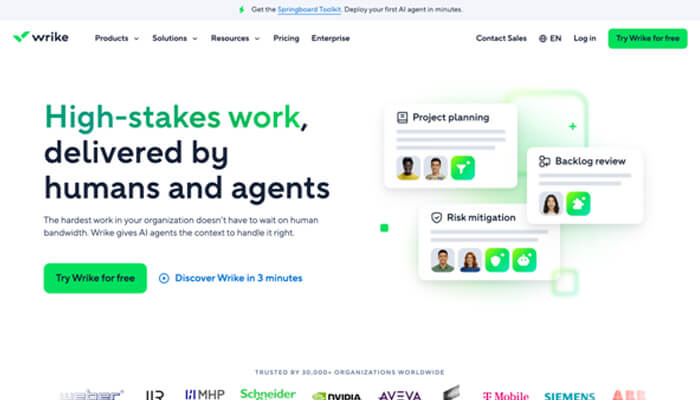
Wrike is a project management platform offering interactive Gantt charts, workload views, time tracking, and customizable data tables. The platform integrates with 400+ applications and is used by over 20,000 companies globally. Construction teams can use Wrike to manage task dependencies, track deadlines, and coordinate across multiple workstreams simultaneously. The reported productivity gains, including a 50% increase in team productivity and 90% reduction in email, are numbers that get repeated often in customer feedback.
Why Does Wrike Stand Out for Construction Workflow Management Software?
Construction project coordination often breaks down when complex dependencies aren’t visible to everyone involved, and Wrike’s Gantt chart and workload management tools address exactly that problem. Being recognized as a Leader in the Magic Quadrant for Collaborative Work Management and winning 14 TrustRadius Top Rated categories in 2024 gives it strong credibility across different use cases.
What Users Are Actually Saying:
Users from major organizations like Siemens and Estee Lauder point to Wrike’s flexibility as the main reason it works across very different types of projects. That kind of cross-industry trust is impressive, though construction teams sometimes note that Wrike needs more customization to match the depth of purpose-built construction tools. Still, for teams managing construction alongside other business operations, Wrike handles the coordination layer well (and the 400+ integrations make connecting it to field tools far less painful than expected).
Methodology Behind These Picks
Gathering Information for Your Analysis
Building the longlist started with a wide sweep across construction management directories, software review platforms, and industry publications. Product listings, feature breakdowns, and verified customer case studies were all pulled together to form an initial picture of what each platform actually does. Options that appeared repeatedly in construction-specific discussions and forums were flagged as higher-priority candidates. The goal at this stage was breadth, capturing enough platforms to make the eventual shortlisting meaningful rather than arbitrary.
The Shortlist Cut
Platforms without documented construction use cases were removed first. From there, review patterns across multiple independent platforms were analyzed to separate genuine user experiences from surface-level ratings. Tools with thin review histories or reviews that lacked construction-specific context were deprioritized. What remained were platforms with consistent, substantive feedback from project managers, general contractors, or operations teams working in the field.
Fact-Checking the Picks
Every platform’s marketing claims were cross-referenced against what actual users reported. Where a company claimed time savings or on-time delivery improvements, the research looked for client case studies or third-party documentation to back that up. Claims that couldn’t be corroborated through an additional source were noted and weighted accordingly. This step filtered out platforms that looked strong on paper but had limited evidence of real-world performance.
Authority Signals and Industry Standing
Recognition from respected industry bodies, placement in analyst reports like the Gartner Magic Quadrant, and coverage in construction or technology publications all served as authority signals during the evaluation. Awards don’t tell the whole story, but consistent recognition across multiple independent evaluators is a meaningful indicator that a platform is doing something right. Platforms with recent, relevant accolades were given additional consideration over those with older or less relevant credentials.
Construction Workflow Management Software Track Record
The final filter focused specifically on construction management relevance. Each platform was checked for dedicated construction workflow pages, documented construction client outcomes, and verified case studies from real construction firms. Platforms that addressed construction-specific challenges, including coordinating field and office teams, managing document revisions, and tracking costs against budgets, were weighted more heavily. Planera’s active deployment across major construction firms, Procore’s purpose-built construction platform, and Autodesk’s two-million-job track record all contributed positively at this stage.
Picking the Right Construction Workflow Management Software for You
Choosing the right platform depends on more than feature lists. The best fit comes down to how well a tool matches the specific demands of your projects, your team’s technical comfort level, and the workflows you already have in place. Here’s what to think through before committing.
- Industry/Domain Experience: Look for platforms that have documented use in construction, not just general project management. Purpose-built tools like Procore and Planera understand construction-specific workflows natively, while flexible platforms like monday.com and Wrike require more configuration.
- Features and Service Offerings: Match features to your actual bottlenecks. If CPM scheduling is the bottleneck, Planera is worth a close look. If you need end-to-end lifecycle coverage, Autodesk Construction Cloud or Procore covers more ground.
- Pricing Structure: Understand how pricing scales. Some platforms charge per seat, which matters a lot when you’re adding subcontractors. Procore’s unlimited user model removes that friction entirely, while other platforms may get expensive quickly as your team grows.
- Results Measurement: Ask each vendor how they help you track schedule adherence rates, RFI response times, and change order cycle times. Platforms that surface those metrics without manual reporting save large amounts of admin time.
- Industry Knowledge and Compliance: OSHA safety standards and local building code adherence aren’t optional. Check whether the platform supports safety documentation, incident reporting, and AIA contract standards before making a final decision.
The Verdict
Getting construction workflows right comes down to picking a tool that fits how your team actually operates, not just what looks best in a demo. Planera handles scheduling demands well for teams that need CPM without a dedicated scheduler. Procore and Autodesk Construction Cloud cover the full project lifecycle for larger operations. monday.com and Wrike bring flexibility for teams managing construction alongside other business functions. As project demands grow, the right platform becomes less optional and more foundational to consistent delivery.
