




Animal hair brushes have been around for centuries, with ancient civilisations being the first to craft tools using hair and fur from livestock tied to wooden handles. These early examples of brush making have been traced back to Egypt and China, where animal hair brushes were found to be used for painting, calligraphy and personal grooming. As brushmaking methods developed over time, animal hair brushes became popular for a wide variety of applications and have been manufactured and used across the globe ever since.
Animal Hair Brush Filaments
The animal hair used to make brush filaments is sourced from different animals depending on the intended brush application. Each animal hair fibre is chosen specifically to ensure the filament has the right levels of thickness and durability for the desired use. The hair or fur is clipped from specific areas of the animal, like the tail, back, or body, to get the ideal length and stiffness, and then it’s treated before being added to a backing or handle.
Brushes manufactured today use filaments made from hair sourced from animals such as horses, boars, hogs, goats, pigs, cows, oxen, squirrels, weasels, and many others. The filaments produced by each of these animals will vary in colour, length, softness, and water absorption levels, and will suit a variety of applications, from cleaning to calligraphy.
Horse Hair Brushes
Horse hair brushes are one of the most common and popular animal hair brushes on the market today. The hair used for the brush filament is taken from the tail of the horse, as tail hair is stiffer than mane hair. Because it has a soft yet slightly stiff texture, the tail hair has enough flexibility to offer gentle cleaning and buffing without scratching delicate surfaces.
Horse Hair Brush Applications
Household Cleaning
Horse hair brushes are ideal for cleaning fragile household items, as the soft fibres will remove dust and fine dirt particles without scratching surfaces. They can also be used to clean electronics around the home, as unlike synthetic filaments, they do not generate static electricity.
Personal Grooming
Dry body brushes made with horsehair filaments are used for gentle, all-over body exfoliation. Horsehair dry brushes are said to be better suited for those with sensitive skin than brushes with harsh plant-based or synthetic filaments.
Shoe Shining
Shoe buffing and leather care brushes are traditionally made with horsehair. The soft bristles remove loose dirt from the surface without marking the leather, and the natural fibres help buff wax and polish into the material, leaving an even shine.
Boar Hair Brushes
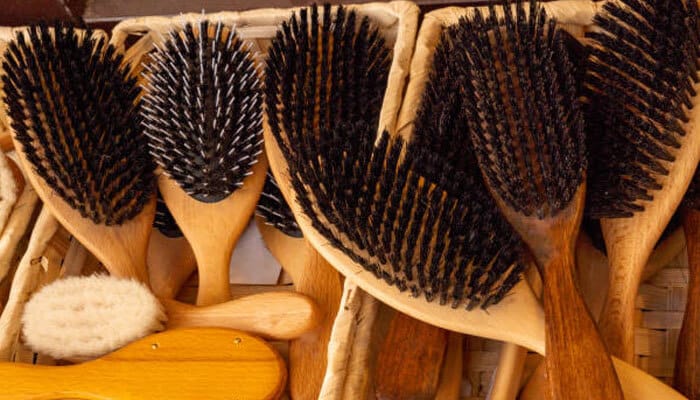
Brushes made from boar hair are relatively expensive but are very sought after for hair care purposes. Boar hair has unique characteristics that make it one of the best natural filling materials for a wide variety of brushes. Each strand of hair used in boar hair brushes has a natural taper from the follicle, or flesh end, to the tip, which gives it more resilience than other hairs used for brush making. The tip of each boar hair bristle is naturally split into two or more branches, called the flag, which is what helps hold oils for hair care and painting applications. Boar hair brushes have excellent durability and water resistance, allowing them to be easily cleaned and last a long time.
Boar Hair Brush Applications
Hair Care
Boar hair brushes are one of the most popular hair care tools for styling and gentle cleaning. The filament is tightly packed into the brush, and the smoothing properties of the boar hair help remove dirt and distribute natural oils from the scalp.
Painting
Paint brushes with boar hair filaments are ideal for applying thick oil and acrylic paint, as the unique tip of the brush holds paint well. They can also be used for dry brushing techniques as the bristles easily smooth harsh paint lines.
Goat Hair Brushes
Brushes made from goat hair use fur that is clipped from the breast of the animal and is very soft and springy in texture. The fine hair is flexible and naturally absorbent, making goat hair an ideal material for a variety of brush applications.
Goat Hair Brush Applications
Baby Care
Used to make brushes for babies, the ultra-soft goat hair fibres are gentle enough on newborns to gently massage the scalp. The filaments help loosen cradle cap and distribute natural oils through the baby’s hair, without scratching or causing irritation.
Art and Calligraphy
Goat hair is absorbent and can hold a lot of water, which makes it an ideal filament for paintbrushes. Suitable for watercolour and calligraphy, the fine texture of the goat hair creates smooth strokes and washes without leaving brush marks behind. Artists also use dry goat hair brushes to sweep away dust, graphite or eraser crumbs from canvases and paper without smudging their artwork.
Cleaning
Ideal for cleaning delicate items, goat hair brushes are soft enough to use on electronics, musical instruments and camera lenses. Used in and around the home, the naturally soft goat hair bristles leave no scratches or marks on soft furniture and surfaces.
Disadvantages of Using Animal Hair Brushes
Unfortunately, there are downsides to using animal hair fibres as brush filaments. Due to being naturally sourced, animal hair is not suitable for use with strong chemicals, like acids or alkalis. This makes them hard to use with certain household cleaning products, as they are not designed to withstand being exposed to harsh chemicals like bleach. Animal hair fibres are also not naturally antibacterial, meaning animal hair brushes can trap bacteria and begin to smell or go mouldy if they are left damp for prolonged periods of time. Certain animal hair used in brushmaking is quite brittle, meaning it can snap or shed when washed or with heavy usage, which is why many people have switched to plastic or synthetic cleaning brushes. Synthetic filaments have been becoming increasingly popular due to the manufacturing methods making synthetic brushes cheaper and easier to source for daily household cleaning applications. While animal hair brushes may be ideal for specific applications, synthetic brushes are a more suitable option for most modern-day brush applications.
