


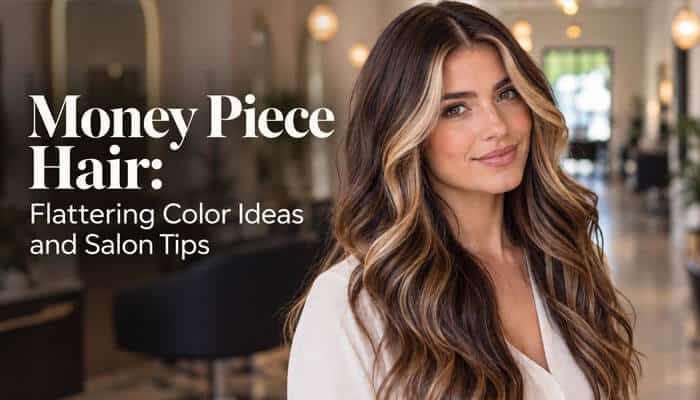

Money piece hair adds lighter or contrasting color around your face without changing your entire hairstyle. Soft chestnut highlights can create a subtle brunette look, while bright blonde, copper, or pink sections make a stronger statement.
Choosing the right version involves more than selecting a shade. The width, placement, root finish, and condition of your hair all affect the result. This guide explains how to choose money piece hair that suits your style, what to discuss at the salon, and how to maintain it.
Quick Answer
Money piece hair features colored sections near the front hairline that frame the face. Fine, softly blended highlights create a gentle effect, while wider sections with stronger contrast look more dramatic. The placement should work with your haircut, normal parting, starting color, and maintenance preferences.
Key Takeaways
- Money piece hair describes color placement rather than one specific coloring technique.
- It can work with balayage, foil highlights, or an otherwise unchanged base.
- Section width and shade contrast determine how noticeable the result looks.
- Coloring a small area still requires attention to hair condition.
- Discuss the full appointment price and future upkeep before booking.
What Is Money Piece Hair?
Money piece hair is a coloring style that draws attention to the strands surrounding your face. These sections are usually lighter than the rest of your hair, although contrasting shades can create a similar focal point.
The look does not have to mean two thick blonde streaks. It can include delicate highlights, a softly blended frame, or broader sections with clearly defined edges.
Stylists may use foils, painted highlights, or a combination of methods. Hair educator Dawn Bradley demonstrates connecting front highlights with woven sections and painted color to blend the face frame into the surrounding hair. You can choose money piece hair as a small update or include it in a larger color appointment.
Money Piece Hair vs. Balayage and Highlights
These terms describe different aspects of hair coloring, so they can overlap.
| Term | What it describes | Main decision |
|---|---|---|
| Money piece hair | A color accent around the face | Width, contrast, and placement |
| Balayage | A technique involving painted highlights | How the lighter areas should blend |
| Foil highlights | Selected sections isolated in foils during coloring | Distribution and overall brightness |
| Babylights | Very fine highlights | How delicate the dimension should look |
| All-over color | Color applied throughout the hair | Overall shade and coverage |
For example, you could have balayage through the lengths with brighter money piece highlights at the front. You could also keep your current base color and change only the sections beside your face.
Describe the appearance you want first. Your colorist can recommend the technique that suits your starting point.
How to Choose Flattering Money Piece Hair
Start with how much change you want to see, then consider shade, width, and placement together.
Choose Your Level of Contrast
Contrast is the difference between your main color and the front sections. Chestnut against dark brown creates a quieter effect than pale blonde against black. If you want your money piece hair to look understated, compare shades closer to your base.
For a more noticeable result, consider a bigger difference. A useful question is whether you want the color to be a small detail or the main feature of your hairstyle.
Balance Width and Brightness
Fine sections are not always subtle. A narrow platinum streak against very dark hair can still look dramatic.
Likewise, a broader section close to your base shade may appear relatively soft. Ask your stylist to show the proposed section width before starting.
Decide How the Root Should Look
A defined root makes the color change visible near the scalp. A blended transition keeps more depth around that area.
When choosing money piece hair reference photos, examine where the lighter color begins. The root finish can change the overall appearance even when the lengths are the same shade.
Consider Your Everyday Parting
The placement should suit how you normally wear your hair. Arrive with your usual parting and mention whether you switch sides, tuck your hair behind your ears, or wear it tied back. Check the planned placement in those positions before committing.
Compare Shades Beside Your Face
Color names can mean different things to different people. “Caramel” might describe a deep toffee brown or a much lighter golden blonde.
Compare swatches or photographs in natural or neutral lighting. Consider your surrounding hair color, eyebrows, and personal preferences. Undertone advice can help start the discussion, but it does not need to restrict your choices.
Money Piece Hair Color Ideas
Use these combinations as inspiration. Your current color, treatment history, and hair condition will affect what is achievable.
| Starting color | Color idea | Visual direction |
|---|---|---|
| Black or very dark brown | Chestnut | A restrained accent within an overall dark look |
| Dark brown | Caramel | Warm, noticeable contrast |
| Medium brown | Beige blonde | A softer blonde frame |
| Light brown | Golden blonde | A warm, brighter front section |
| Dark blonde | Creamy blonde | Gentle variation within a blonde palette |
| Auburn | Apricot copper | A lighter accent within the red color family |
| Gray or mixed silver | Pearl-toned accents | A frame that works with existing silver |
| A suitable prepared base | Rose or berry | A colorful focal point |
1. Chestnut Money Piece Hair on Dark Hair
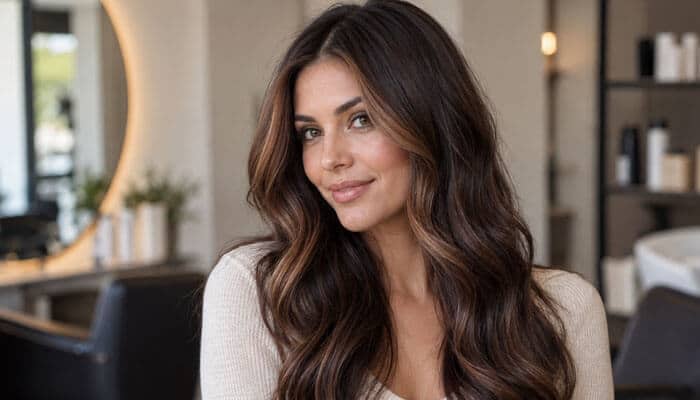
Chestnut is an option for keeping an overall dark appearance while adding definition around the face. Picture narrow brown accents beside a deeper brunette base. The contrast remains focused at the front without making blonde the dominant feature. Choose reference photos showing the whole hairstyle so you can judge how noticeable the difference is.
2. Caramel Money Piece Hair on Brown Hair
Caramel offers a warm direction between a subtle brunette accent and a much lighter blonde frame. A deeper toffee shade gives one effect, while a brighter golden caramel creates another. Soft edges can help connect the front sections with the surrounding hair.
More defined placement makes the accent stand out. When comparing caramel money piece hair ideas, focus on both warmth and brightness.
3. Beige Blonde on Medium Brown Hair
Beige blonde is worth exploring if you want lighter front sections without a strongly golden or icy appearance.
Imagine a neutral-looking blonde frame against a brown base. Compare several examples because “beige” can describe different depths and tones. A photograph of the full hairstyle is more useful than a close-up of the blonde section alone.
4. Golden Blonde on Light Brown Hair
Golden blonde creates a warm color combination with light brown hair. A narrow face frame keeps the change concentrated around the front. A broader section makes the blonde more prominent. Decide whether you want the brightness to remain around your face or connect with highlights through the lengths.
5. Creamy Blonde Money Piece Hair
Money piece hair can be understated when both the base and accent are blonde. Creamy front sections offer lighter variation within the same color family. This is an option to compare if you want a noticeable refresh without a sharp dark-to-light contrast.
Check photographs taken in ordinary lighting. Strong sunlight can make a small shade difference appear more dramatic.
6. Copper Money Piece Hair on Auburn Hair
Apricot or lighter copper pieces offer an alternative to blonde on auburn hair. A coordinated version stays close to the existing red shade. A bolder design uses a stronger difference in depth or brightness. Clarify whether you want gentle variation or a clearly separate color accent.
7. Bold Blonde Money Piece Hair on Black Hair
Pale blonde against black creates strong contrast. Even relatively narrow front sections can become a major feature.
This version needs a realistic consultation, particularly if your hair has previously been dyed dark. Discuss what your hair can tolerate, how close the result may come to your reference photo, and whether multiple appointments could be necessary.
8. Silver-Inspired Money Piece Hair
A silver-focused frame can be part of a plan to work with existing gray. Expert commentary in Real Simple describes using lighter sections around the face to soften the contrast with naturally graying areas. Suitability depends on where your gray appears and the surrounding color.
9. Pink, Rose, or Berry Accents
Colorful money piece hair offers a different direction from traditional blonde and brunette highlights. Dusty rose and saturated berry shades create different impressions. Compare the freshly colored appearance with examples of how the chosen shade may fade.
That helps you decide whether you will enjoy the changing color or prefer a routine that keeps it closer to its original shade.
Money Piece Hair for Different Haircuts and Textures
The haircut affects where the accent appears, how it moves, and how much is visible.
Short Hair and Bobs
Money piece hair on a bob can be a small detail or a prominent part of the cut. Compare the colored section with the haircut’s outline. Check how it looks when the front is tucked behind your ears if that is how you often wear it.
Long Hair and Layers
Look beyond the roots. The color should make sense through the lengths and as the front layers move. A reference photo with similar layering helps communicate the placement. Notice whether the accent remains distinct or gradually connects with surrounding highlights.
Curly and Coily Hair
For money piece hair on curls or coils, show your stylist the texture you usually wear. Explain whether you also wear stretched or straightened styles. The consultation should consider how the selected sections sit in each style and the current condition of your hair.
Ask to see examples of the stylist’s work on a similar texture.
Bangs and Curtain Bangs
Specify whether you want color through the bangs, beside them, or both. A lighter section next to curtain bangs creates a different result from a fully lightened fringe. Point to the exact placement you prefer in your reference image.
Does Money Piece Hair Damage Your Hair?
Money piece hair can involve chemical processing. Treating a smaller area does not automatically make the service damage-free.
The American Academy of Dermatology notes that coloring can damage hair. It recommends allowing more time between touch-ups and avoiding closely scheduled chemical services.
Tell your stylist about previous bleach, permanent dye, relaxers, perms, and other treatments. If the front sections are already breaking, discuss postponing the service or choosing a different target shade.
The condition of your hair should guide the plan alongside the appearance you want.
What to Ask Your Stylist Before Getting Money Piece Hair
Bring two or three useful reference photographs, your treatment history, and a budget that includes upkeep.
Before the service begins, clarify:
- Target shade: Is it achievable from your current color?
- Section width: How much hair will be included?
- Placement: How will it look with your usual parting?
- Root finish: Will it be defined or softly blended?
- Price: Which services are included?
- Appointment plan: Could more than one visit be needed?
- Maintenance: What follow-up services and home care are appropriate?
Choose photographs with a similar starting color, haircut, and texture. You can use one image for the shade and another for placement.
A specific request is easier to interpret than a general one. Explain which details you like rather than expecting an exact copy of someone else’s hair.
What Happens During a Money Piece Hair Appointment?
The process varies according to your starting point and desired result.
| Stage | What it covers |
|---|---|
| Consultation | Goals, treatment history, and feasibility |
| Section planning | Selection of the hair included in the face frame |
| Color application | The technique chosen for the intended result |
| Refinement | Toning or root blending where appropriate |
| Finishing | Drying, styling, and reviewing the appearance |
| Maintenance planning | Home care and future appointments |
Ask for an estimate covering the entire visit. Application time alone does not include all processing, rinsing, and finishing.
How Much Does Money Piece Hair Cost?
There is no universal price for money piece hair. Salons may book it as a face-frame highlight, partial highlight, express service, or addition to another appointment. The total depends on location, stylist pricing, existing color, and the work required to reach the desired shade.
Confirm whether the quote includes:
- Toning or glossing.
- Root blending.
- Recommended treatments.
- Drying and styling.
- A haircut, if requested.
- Additional appointments, if needed.
A small colored section does not necessarily mean a simple service. An itemized estimate makes it easier to compare what different salon quotes actually include.
How Long Does Money Piece Hair Last?
Think about the lightened section, its tone, and visible regrowth separately. Lightened hair does not return to its original shade simply because a toner fades. However, tone changes and new growth can alter the appearance of money piece hair over time.
Use the specific concern to guide maintenance.
| What has changed | What to discuss |
|---|---|
| The shade has shifted, but the brightness still suits you | Whether a tone refresh is appropriate |
| New growth creates unwanted contrast | Root maintenance or a softer transition |
| The front section feels too prominent | Options for reducing its visual impact |
| You want less contrast overall | A darker or more blended color plan |
| Hair is fragile or breaking | Pausing processing and assessing its condition |
Do not assume every follow-up appointment requires additional lightening.
How to Maintain Money Piece Hair
A useful routine should suit your shade, hair condition, and everyday habits.
Handle the Front Sections Gently
The American Academy of Dermatology recommends gentle scalp cleansing, conditioner after shampooing, and avoiding rough towel rubbing. It also advises lower heat settings and less frequent hot-tool use. Source: AAD hair-care guidance
Notice how often you restyle the same front pieces. Repeated passes with a straightener or curling tool add exposure to an already frequently handled area.
Follow a Shade-Specific Product Plan
Ask which shampoo, conditioner, and optional color-maintenance product suit your money piece hair.
Do not assume every blonde result needs the same toning routine. Follow product instructions, including contact time, and clarify how frequently each product should be used.
Account for Swimming and Sun Exposure
Tell your stylist if swimming is part of your routine. The AAD recommends a swim cap, rinsing after swimming, and suitable cleansing and conditioning afterward. It also suggests protecting hair from the sun with options such as a wide-brimmed hat.
Can You Create Money Piece Hair at Home?
The front sections are highly visible, so uneven placement or an unexpected shade can be difficult to conceal. For substantial lightening or a complicated color history, start with a professional consultation. Removable colored pieces can help you preview the width and contrast before committing to a chemical service.
If using hair dye, follow its directions and required allergy testing. The FDA advises a skin test before every use and notes that reactions can occur after previous trouble-free coloring. Do not color an irritated or damaged scalp. A strand test evaluates the hair result and does not replace an allergy test.
Clear expectations help prevent avoidable disappointments.
- Choosing only by shade. Agree on width and placement too.
- Ignoring your usual hairstyle. Check the accent with your everyday parting and styling.
- Relying on filtered photographs. Compare several realistic examples.
- Leaving out treatment history. Mention home dye, henna, bleach, and other chemical services.
- Assuming maintenance will be minimal. Ask what your specific design requires.
- Trying to correct the color immediately at home. Contact your stylist before applying more products.
Conclusion
Flattering money piece hair comes from choosing a shade, contrast, and placement that fit your style. A soft brunette accent, creamy blonde frame, or bold copper section can each create a different effect.
Bring realistic reference photos, share your treatment history, and agree on the price and upkeep before the appointment. The best money piece hair is a result you enjoy wearing between salon visits as well as on the day it is colored.
Money Piece Hair FAQs
1. What Is Money Piece Hair?
Money piece hair features lighter or contrasting sections around the face. It can range from fine, softly blended highlights to a broad, clearly defined accent.
2. Does Money Piece Hair Have to Be Blonde?
No. Brown, copper, red, silver-inspired, pink, and other shades are options. The defining feature is the placement around the face.
3. Is Money Piece Hair the Same as Balayage?
No. Money piece hair describes color placement, while balayage describes a painting technique. Both can be used in the same hairstyle.
4. Can Money Piece Hair Work on Short or Curly Hair?
Yes. The placement should account for the haircut, texture, and normal styling. Reference photographs with similar hair are particularly useful.
5. Is Money Piece Hair Low Maintenance?
It depends on the design and how closely you want to preserve the original appearance. Discuss regrowth, tone changes, and follow-up services before choosing a shade.
6. Can I Get Money Pieces on Previously Dyed Hair?
Possibly. Share your complete color history so your stylist can assess the options. Testing, a revised shade, or multiple appointments may be necessary.
7. How Do I Avoid Chunky Money Pieces?
Request narrow sections and show examples of the blending you prefer. Confirm the section width before starting. Remember that strong color contrast can make even a fine section noticeable.
8. What Should I Do if My Money Piece Is Too Bright?
Explain whether the concern is brightness, tone, or the amount of hair included. Ask your stylist about an appropriate adjustment before applying more color yourself.
