


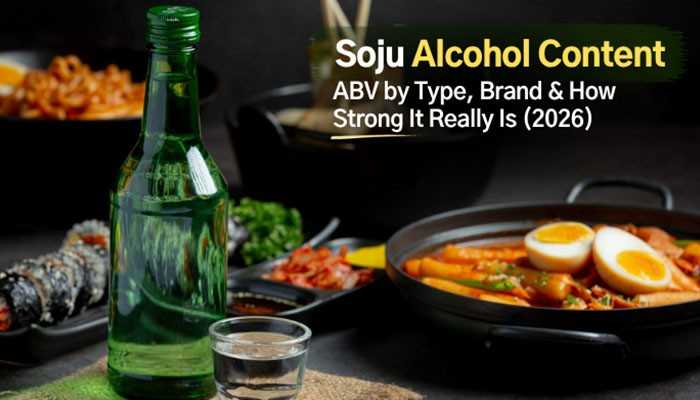

Soju alcohol content varies much more than many people realize. A light fruit-flavored soju may contain around 12–13% alcohol by volume, while mainstream Korean soju now commonly sits around 15.7–16% ABV. Traditional and premium distilled soju can reach 20%, 40%, or even more than 50%.
Understanding soju alcohol content is especially important in 2026 because several major Korean brands have reduced their alcohol percentages. Jinro, Chamisul Fresh, Saero, and Good Day now sit around 15.7% ABV in their latest Korean formulations, while Chum Churum is also transitioning from 16% to 15.7%.
So, how strong is soju compared with beer, wine, sake, shochu, or vodka? How much alcohol is inside a typical 360 mL bottle? And why can the same brand show different alcohol percentages in different countries?
This complete guide explains soju alcohol content by brand, type, bottle size, and production method, along with standard drinks, proof, calories, flavored soju, zero-sugar soju, regional Korean brands, traditional spirits, and somaek.
Quick Answer: What Is the Soju Alcohol Content?
For most mainstream Korean products, soju alcohol content is approximately 15.7–16% ABV in 2026. However, there is no single alcohol percentage for every type of soju.
| Type of Soju | Typical or Representative ABV |
| Fruit-flavored soju | About 12–13% |
| Mainstream Korean soju | About 15.7–16% |
| Stronger mainstream soju | Around 18–20% |
| Premium distilled soju | About 17–28%+ |
| Traditional Andong-style soju | Around 40–45% |
| High-proof premium soju | Can exceed 50% |
That means ordinary green-bottle soju is generally stronger than beer and typical table wine, but considerably weaker than standard 40% vodka.
Traditional soju is a different category. Some traditional and premium distilled versions can match or exceed the strength of vodka.
Soju Alcohol Content: Key Takeaways
- Mainstream soju alcohol content is commonly around 15.7–16% ABV in 2026.
- Jinro and Chamisul Fresh are 15.7% in their latest Korean formulations.
- Saero is also 15.7%.
- Chum Churum is moving from 16% to 15.7%.
- Good Day has also moved to 15.7%.
- Fruit-flavored soju often contains around 12–13% ABV.
- Daesun 159 is 15.9%, while C1 is stronger at 18%.
- Hallasan Original is listed at 21%.
- Premium distilled soju can exceed 40% ABV.
- Some Hwayo expressions reach 53%.
- A 360 mL bottle of 15.7% soju contains about 3.2 U.S. standard drinks.
- Zero-sugar soju still contains alcohol and calories from ethanol.
- Export versions may have different ABVs from Korean domestic versions.
- The bottle label is the most reliable source for the exact alcohol percentage.
What Does Soju Alcohol Content Mean?
Soju alcohol content is normally expressed as ABV, which means alcohol by volume. ABV tells you what percentage of the liquid consists of ethanol.
For example, a bottle labeled 15.7% ABV contains approximately 15.7 mL of alcohol for every 100 mL of beverage.
The higher the ABV, the stronger the drink. In Korea, alcoholic strength is also frequently written using 도, often translated as “degrees.”
Therefore:
15.7도 ≈ 15.7% ABV
If you see 15.7 degrees on a Korean soju bottle, it is effectively telling you that the soju alcohol content is approximately 15.7% ABV.
Soju Alcohol Content vs Proof
In the United States, proof is approximately twice the ABV.
| Soju ABV | Approximate U.S. Proof |
| 12% | 24 proof |
| 13% | 26 proof |
| 15.7% | 31.4 proof |
| 16% | 32 proof |
| 18% | 36 proof |
| 20% | 40 proof |
| 25% | 50 proof |
| 40% | 80 proof |
| 45% | 90 proof |
| 53% | 106 proof |
This makes the difference between mainstream and traditional soju easy to understand. A regular green-bottle soju at 15.7% is roughly 31.4 proof, while traditional 40% distilled soju is around 80 proof.
Soju Alcohol Content by Brand in 2026
The easiest way to compare soju alcohol content is by looking at individual brands and products.
| Brand or Product | ABV | Notes |
| Jinro, Korean renewed version | 15.7% | Reduced from 16% |
| Chamisul Fresh, South Korea | 15.7% | Reduced in 2026 |
| Chamisul Fresh, some export markets | 16% | Market-specific |
| Saero | 15.7% | Current Korean version |
| Chum Churum | 16% → 15.7% | New formula rolling out |
| Good Day | 15.7% | Reduced from 16% |
| Daesun 159 | 15.9% | Regional Busan soju |
| C1 | 18% | Stronger regional product |
| Jinro fruit flavors | 13% | Several international variants |
| Chamisul Original | 20.1% | Stronger Jinro product |
| Jinro 24 | 24% | Higher-strength product |
| Jinro Ilpoom | 25% | Premium product |
| Hallasan Original | 21% | Jeju soju |
| Hwayo 17 | 17% | Premium distilled soju |
| Hwayo 25 | 25% | Premium distilled soju |
| Hwayo 41 | 41% | High-strength spirit |
| Hwayo 53 | 53% | High-proof premium spirit |
| WON Soju Original | 22% | Distilled rice soju |
| WON Soju Spirit | 24% | Distilled rice soju |
| WON Soju Classic | 28% | Stronger distilled version |
These figures show why soju alcohol content cannot be reduced to one universal percentage. The exact strength depends on the brand, product, production style, country, and formulation.
Why Soju Alcohol Content Changed in 2026
One of the biggest developments affecting soju alcohol content in 2026 is the continued move toward lighter mainstream products.
Jinro Soju Alcohol Content: 15.7%
Jinro’s Korean formulation moved from 16% to 15.7% ABV in 2026. This continues a longer trend toward lower alcohol levels. Jinro had already moved through several reductions before reaching its current strength.
Chamisul Fresh Soju Alcohol Content: 15.7%
Chamisul Fresh also dropped from 16% to 15.7% ABV in the Korean market during 2026. However, some export-market listings still show 16%.
That means the exact soju alcohol content may depend on where the bottle was produced and sold.
Saero Soju Alcohol Content: 15.7%
Saero is another major mainstream brand at 15.7% ABV. It remains known for its zero-sugar positioning, but zero sugar does not mean zero alcohol.
Chum Churum Soju Alcohol Content: Moving to 15.7%
Chum Churum is transitioning from 16% to 15.7% ABV.
Because existing stock may remain in stores during the rollout period, shoppers can encounter both 16% and 15.7% bottles. This is another reason to check the individual label rather than relying only on online information.
How Soju Alcohol Content Has Changed Over Time
Modern soju alcohol content is much lower than it was several decades ago. Mainstream diluted soju was historically much stronger.
| Period | Representative Soju Alcohol Content |
| 1965 diluted soju | About 30% |
| 1999 diluted soju | About 23% |
| 2006 diluted soju | About 20% |
| Late 2010s | High teens |
| Early 2020s | Around 16–17% |
| 2026 mainstream soju | Around 15.7–16% |
Chamisul also illustrates this long-term trend.
| Chamisul Period | Approximate ABV |
| Original launch era | 23% |
| Mid-2000s | Below 20% |
| 2020 | 16.9% |
| 2024 | 16% |
| 2026 | 15.7% |
This explains why older articles may describe soju as a 20% drink even though many modern mainstream products are now much lighter.
Regional Soju Alcohol Content in Korea
National brands dominate international attention, but regional Korean soju adds more variation to overall soju alcohol content.
Good Day Soju Alcohol Content
Good Day is now 15.7% ABV in its renewed 2026 formulation. That puts it in the same general strength range as Jinro, Chamisul Fresh, and Saero.
Daesun Soju Alcohol Content
Daesun 159 is listed at 15.9% ABV.
It remains slightly stronger than several national mainstream brands.
C1 Soju Alcohol Content
C1 is stronger at 18% ABV.
This makes it a useful example showing that regional soju does not always follow the 15.7% trend.
Hallasan Soju Alcohol Content
Hallasan is strongly associated with Jeju.
Hallasan Original is listed at 21% ABV, although Hallasan also has lighter products.
This means the soju alcohol content of Hallasan depends on the exact bottle or variant.
Flavored Soju Alcohol Content
Flavored soju is usually weaker than mainstream unflavored soju. Many popular fruit-flavored products are around 12–13% ABV.
Examples may include flavors such as:
- Green grape
- Grapefruit
- Peach
- Strawberry
- Plum
- Lemon
A useful rule of thumb is:
| Soju Style | Typical ABV |
| Flavored soju | 12–13% |
| Mainstream soju | 15.7–16% |
| Stronger soju | 18–28% |
| Traditional/high-proof soju | 40%+ |
This means flavored soju alcohol content is often close to that of wine.
Does Flavored Soju Have Less Alcohol?
Usually, yes.
Many fruit-flavored bottles contain 12–13% alcohol, compared with around 15.7–16% for mainstream unflavored soju. However, flavored soju can taste much weaker than it actually is. Sweetness and fruit flavors can mask the taste of alcohol. That means a 13% flavored soju may taste mild even though its alcohol concentration is similar to many wines.
Is Flavored Soju Technically Soju?
Not always.
Consumers commonly call these products “fruit soju,” but some flavored Korean alcoholic drinks can technically be classified as liqueurs rather than soju.
This depends on the formulation and legal classification. For readers interested primarily in soju alcohol content, the practical point is simple: always use the ABV printed on the bottle rather than relying only on the marketing name.
Zero-Sugar Soju Alcohol Content
Zero-sugar soju can still have nearly the same soju alcohol content as regular mainstream products. For example, Saero is marketed as zero sugar while containing around 15.7% ABV.
Zero sugar does not mean:
- Alcohol-free
- Low-alcohol
- Calorie-free
- Non-intoxicating
The alcohol percentage still matters.
Does Zero-Sugar Soju Have Calories?
Yes.
Alcohol itself contains calories.
Ethanol provides approximately 7 calories per gram.
A 360 mL bottle at 15.7% ABV contains roughly 44.6 grams of alcohol.
That means alcohol alone contributes approximately:
44.6 × 7 = 312 calories
The actual total calorie count can vary because some products may also contain:
- Sugar
- Flavorings
- Carbohydrates
- Other ingredients
So zero-sugar soju is not the same as zero-calorie soju.
Modern Soju Alcohol Content vs Traditional Soju Alcohol Content
One reason the range of soju alcohol content is so large is that modern and traditional soju are produced differently.
Modern Diluted Soju
Most familiar green-bottle products are diluted soju.
A high-strength neutral alcohol base is diluted and blended until it reaches the desired bottling strength.
Modern mainstream soju usually falls around 15.7–16% ABV.
Traditional Distilled Soju
Traditional soju is produced through fermentation followed by distillation. It may retain more grain character and is often bottled at much higher strength.
Traditional or premium distilled soju may reach:
- 20%
- 25%
- 30%
- 40%
- 45%
- More than 50%
That makes traditional soju alcohol content much closer to whisky, vodka, or other full-strength spirits.
Andong Soju Alcohol Content
- Andong soju is one of Korea’s best-known traditional distilled spirits.
- Traditional Andong-style soju is commonly associated with alcohol levels around 40–45% ABV.
- That makes it dramatically stronger than mainstream 15.7% green-bottle soju.
- A 40% Andong soju is roughly equivalent in alcohol concentration to standard vodka.
Premium Soju Alcohol Content: Hwayo
Hwayo demonstrates how broad the premium-soju category can be.
| Hwayo Product | ABV |
| Hwayo 17 | 17% |
| Hwayo 25 | 25% |
| Hwayo 41 | 41% |
| Hwayo 53 | 53% |
The difference between 17% and 53% shows why premium soju alcohol content should always be checked product by product.
WON Soju Alcohol Content
WON Soju is another example of stronger distilled Korean soju.
| WON Soju Product | ABV |
| WON Soju Original | 22% |
| WON Soju Spirit | 24% |
| WON Soju Classic | 28% |
These bottles are considerably stronger than mainstream green-bottle soju.
Soju Alcohol Content by Bottle Size
ABV measures concentration, but total alcohol also depends on bottle size.
At 15.7% ABV, different bottle sizes contain different amounts of pure alcohol.
| Bottle Size | Pure Alcohol | Approx. U.S. Standard Drinks |
| 350 mL | 55.0 mL | 3.1 |
| 360 mL | 56.5 mL | 3.2 |
| 375 mL | 58.9 mL | 3.3 |
| 750 mL | 117.8 mL | 6.6 |
Therefore, comparing soju alcohol content requires looking at both ABV and bottle volume.
How Much Alcohol Is in a 360 mL Bottle of Soju?
Use this formula:
Bottle volume × ABV = pure alcohol volume
For a 360 mL bottle at 15.7%:
360 × 0.157 = 56.52 mL
Here are several examples:
| Soju ABV | Pure Alcohol in 360 mL |
| 12% | 43.2 mL |
| 13% | 46.8 mL |
| 15.7% | 56.5 mL |
| 16% | 57.6 mL |
| 18% | 64.8 mL |
| 20.1% | 72.4 mL |
| 25% | 90 mL |
This shows how much difference a few percentage points can make.
How Many Standard Drinks Are in a Bottle of Soju?
In the United States, one standard drink contains approximately 14 grams of pure alcohol.
Using that definition:
| 360 mL Bottle | Approx. U.S. Standard Drinks |
| 12% | 2.4 |
| 13% | 2.6 |
| 15.7% | 3.2 |
| 16% | 3.2 |
| 18% | 3.7 |
| 20.1% | 4.1 |
| 25% | 5.1 |
A bottle of soju is therefore not one standard drink.
A mainstream 360 mL bottle contains more than three U.S. standard drinks.
How Many Shots Are in One Bottle of Soju?
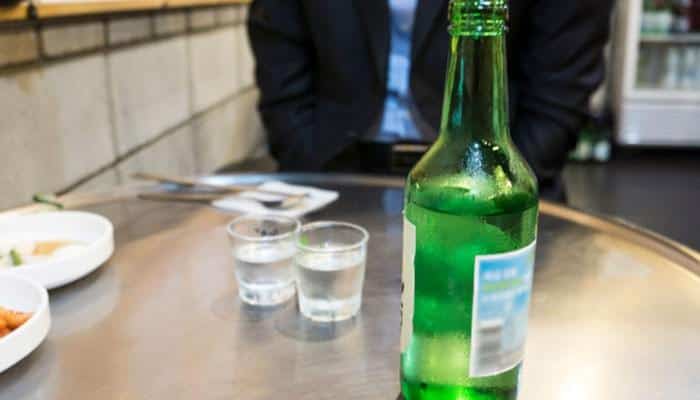
There is no universal soju-shot size.
The glass size and pouring level vary.
Using a 50 mL serving as a simple example:
360 mL ÷ 50 mL = 7.2 servings
A 360 mL bottle therefore contains about seven 50 mL pours.
At 15.7% ABV, each 50 mL serving contains approximately 7.85 mL of pure alcohol.
How Many Beers Equal One Bottle of Soju?
A useful way to understand soju alcohol content is to compare total ethanol.
A 360 mL bottle of 15.7% soju contains:
360 × 0.157 = 56.5 mL alcohol
A 355 mL beer at 5% contains:
355 × 0.05 = 17.75 mL alcohol
Then:
56.5 ÷ 17.75 ≈ 3.2
So a 360 mL bottle of 15.7% soju contains approximately as much alcohol as 3.2 regular 355 mL beers at 5% ABV.
Soju Alcohol Content vs Beer, Wine, Sake, Shochu and Vodka
| Drink | Typical or Representative ABV |
| Regular beer | About 5% |
| Table wine | About 12% |
| Flavored soju | About 12–13% |
| Japanese sake | About 15–16% |
| Mainstream Korean soju | About 15.7–16% |
| Stronger soju | 18–28% |
| Japanese shochu | Often around 25% |
| Vodka | About 40% |
| Traditional soju | Around 40%+ |
| Hwayo 53 | 53% |
This comparison makes the overall soju alcohol content range easier to understand.
Is Soju Stronger Than Beer?
Yes.
Mainstream soju at 15.7% ABV is more than three times as concentrated as a typical 5% beer.
However, the amount consumed also matters.
A small glass of soju contains less alcohol than an entire bottle of beer, while a full bottle of soju contains considerably more.
Is Soju Stronger Than Wine?
Usually.
Typical table wine is around 12% ABV.
Mainstream soju is around 15.7–16%, making it somewhat stronger.
Flavored soju alcohol content, however, may be around 12–13%, putting it close to ordinary wine.
Soju vs Sake: Which Is Stronger?
Modern mainstream soju and Japanese sake can be very similar in alcohol strength.
Typical sake is around 15–16% ABV.
Mainstream Korean soju is around 15.7–16% ABV.
Therefore, the difference in alcohol concentration can be very small.
Their major differences are production method, ingredients, aroma, and flavor.
Soju vs Shochu: Which Has More Alcohol?
Many Japanese shochu products are around 25% ABV.
That makes them stronger than typical mainstream Korean soju.
However, premium distilled Korean soju can also reach 25%, 40%, or higher.
So the answer depends on which products are being compared.
Is Soju Stronger Than Vodka?
Most mainstream soju is much weaker than vodka.
A simple comparison is:
- Mainstream soju: 15.7% ABV
- Vodka: 40% ABV
However, traditional and premium soju alcohol content can reach 40% or more.
So saying all soju is weaker than vodka is not completely accurate.
Somaek Alcohol Content: How Strong Is Soju Mixed With Beer?
Somaek is a popular Korean mixture of soju and beer.
A commonly cited ratio is around:
- 30% soju
- 70% beer
If the soju is 15.7% and the beer is 5%, the approximate strength is:
(15.7 × 0.30) + (5 × 0.70)
= 8.21% ABV
So a 3:7 somaek made from 15.7% soju and 5% beer would contain approximately 8.2% alcohol by volume.
The exact strength depends on the ratio and the ABV of both drinks.
Why Does Soju Taste Weaker Than Its Alcohol Content?
Taste is not always a good indicator of strength.
Modern mainstream soju is often formulated for a smooth, clean drinking experience.
Flavored varieties may taste even milder because fruit flavors and sweetness mask some of the alcohol sensation.
That means a drink with significant soju alcohol content may not taste particularly strong.
Always rely on the ABV, not the flavor.
Can Soju Get You Drunk?
Yes.
A 360 mL bottle at 15.7% ABV contains approximately 3.2 U.S. standard drinks.
The effect of alcohol varies from person to person and depends on:
- Amount consumed
- Drinking speed
- Body size
- Food intake
- Medications
- Metabolism
- Individual sensitivity
There is no universal number of soju shots that affects everyone the same way.
Why Do Websites Show Different Soju Alcohol Content?
You may find conflicting numbers when researching soju alcohol content online.
There are several reasons.
Product Reformulation
Manufacturers frequently change ABV.
An article written several years ago may describe an older formula.
Korean vs Export Versions
A Korean domestic bottle can have a different ABV from an export version.
Old Inventory
When a new formulation launches, older bottles can remain on shelves.
Multiple Products Under One Brand
The same brand may sell several varieties with different strengths.
Regional Differences
Some products are made specifically for certain countries or markets.
The safest approach is always to check the ABV printed on the actual bottle.
How to Calculate Soju Alcohol Content Yourself
You can calculate the amount of pure alcohol in any bottle using:
Bottle volume × ABV decimal = pure alcohol volume
Example:
360 mL × 0.157 = 56.52 mL alcohol
For a 375 mL bottle at 24%:
375 × 0.24 = 90 mL alcohol
This formula is useful when comparing different bottle sizes and strengths.
How to Choose Soju Based on Alcohol Content
Light Soju: 12–13%
Many flavored products fall into this range.
They are roughly comparable with wine.
Mainstream Soju: 15.7–16%
This is the most common modern Korean strength range.
Medium-Strong Soju: 17–20%
These bottles are stronger than mainstream green-bottle products.
Strong Soju: 20–30%
Many premium distilled products fall into this range.
High-Proof Soju: 40%+
Traditional and premium spirits in this category are comparable with vodka, whisky, and other strong distilled drinks.
What Is the Strongest Soju?
There is no single product that defines the strongest possible soju alcohol content.
High-proof distilled soju can exceed 40%.
Hwayo, for example, offers a 53% expression.
That is dramatically stronger than ordinary 15.7% mainstream soju.
Conclusion: Soju Alcohol Content
Soju alcohol content varies dramatically depending on the brand, type, production method, bottle size, and market. For mainstream Korean soju, 15.7–16% ABV is now the most important range in 2026. Jinro, Chamisul Fresh, Saero, and Good Day are all around 15.7%, while Chum Churum is also moving toward that level.
Flavored soju alcohol content is typically lower at around 12–13%. Regional brands can be stronger, with products such as C1 at 18% and Hallasan Original around 21%. Premium and traditional soju expands the range even further. WON Soju reaches the 20% range, while high-proof Hwayo products and traditional distilled soju can exceed 40%.
The most accurate way to check soju alcohol content is therefore simple:
Read the ABV printed on the exact bottle you are buying or drinking.
The name “soju” covers everything from wine-strength fruit drinks to powerful distilled spirits, so checking the label gives you the clearest answer.
Soju Alcohol Content FAQs
1. What is the average Soju Alcohol Content?
Most mainstream Korean soju contains around 15.7%–16% ABV, although the exact strength varies by brand and product.
2. Which soju has the highest alcohol content?
High-proof distilled soju can exceed 40% ABV, with some premium varieties reaching 50% or more.
3. Is Soju Alcohol Content higher than beer?
Yes. Mainstream soju at about 15.7%–16% ABV is roughly three times as concentrated as a typical 5% beer.
4. What is the Soju Alcohol Content of flavored soju?
Flavored soju commonly contains around 12%–13% ABV, making it generally weaker than standard unflavored soju.
5. How many standard drinks are in a bottle of soju?
A 360 mL bottle at 15.7% ABV contains approximately 3.2 U.S. standard drinks, based on 14 grams of pure alcohol per standard drink.
