


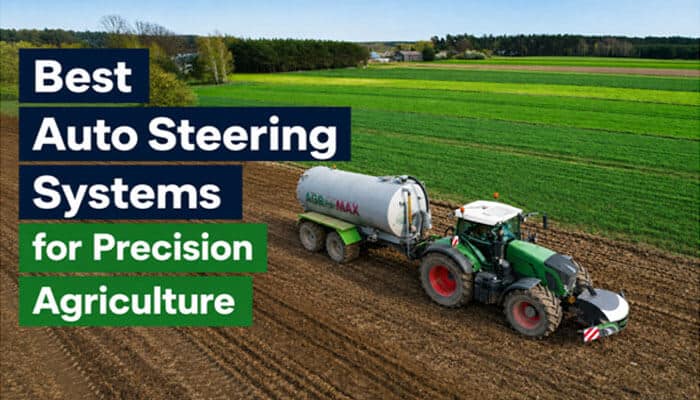

An auto steering system uses GNSS positioning to automatically guide a tractor or self-propelled machine along a set path, with little or no manual steering input. As a core building block of precision agriculture, a reliable auto steer system helps farmers cut overlap and skips, reduce fuel and input costs, ease operator fatigue during long shifts, and keep field passes consistent from planting through harvest.
This guide looks at some of the best auto steering systems on the market today and offers practical guidance on choosing and using one.
5 Best Auto Steering Systems for Precision Agriculture
Note: This list is not a ranking of the five best auto steering systems. Instead, it highlights five leading brands and their advanced systems in precision agriculture, giving readers a useful reference for understanding the current state of tractor auto steering technology.
| System | Core Brand Strength | Core Product Strength | Applications |
| EFIX eSteer20 Max | Strong focus on OEM integration and flexible GNSS solutions | Multi-mode accurate positioning (SPP, DGPS, RTK, H-PPP, PointSky), ±2.5 cm accuracy, 0.1–30 km/h range, ISOBUS support | Mixed machinery fleets, retrofit projects, and farms needing flexible precision-ag expansion |
| John Deere AutoTrac | Deep integration within John Deere ecosystem and strong dealer support network | High-accuracy SF-RTK (± 2.5 cm), seamless machine connectivity, modular retrofit options | Farms operating primarily John Deere equipment and using connected farm management systems |
| PTx Trimble Autopilot | Established global precision-ag technology provider with strong retrofit focus | Hydraulic, motor-drive, and CAN steering options; high-precision GNSS compatibility; terrain compensation | Mixed-brand fleets, older machinery upgrades, and complex terrain operations |
| Sveaverken F100 | Emphasis on affordability and simplified installation | RTK accuracy up to 2.5 cm, PPP option (~10 cm), fast installation, ISOBUS support | Small to mid-sized farms seeking cost-effective RTK auto steering with easy setup |
| Topcon Premium Line Steering | Strong modular precision-ag ecosystem with scalable solutions | Horizon OS integration, boundary-based guidance, headland automation, multiple correction options | Farms expanding into full digital agriculture and implement-level automation |
1. EFIX eSteer20 Max
EFIX is a global precision agriculture technology company providing GNSS auto steering solutions, while offering tailored OEM hardware and system integration services for machinery manufacturers, with a team of over 1,000 R&D engineers and products deployed across 140+ countries and regions.
Its flagship tractor auto steering system, the eSteer20 Max, is built to hold accuracy across a wide range of field speeds and conditions.
Key Advantages: Wide speed range with high-precision guidance (0.1–30 km/h), fast convergence in <5 minutes with PointSky correction, full ISOBUS compatibility, and flexible path and turn automation from basic AB lines to advanced U-turn modes.
Best Suited For:Ideal for mixed-brand fleets operating across variable speeds (from slow seeding to fast spraying) that require rapid satellite signal convergence without relying on local RTK base stations.
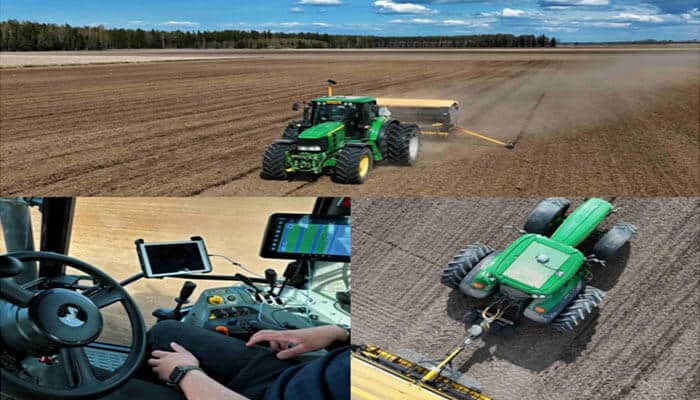
2. John Deere AutoTrac
Founded in 1837, John Deere is one of the world’s leading agricultural machinery manufacturers with a long history of innovation. Its AutoTrac guidance system is tied closely to the John Deere Operations Center, which connects machines, field data, and farm records across an operation.
Key Advantages: Automated headland turns, advanced positioning accuracy with StarFire 7500 Receiver, compatibility with a wide range of John Deere and supported machines, connected fleet management through John Deere Operations Center.
Best Suited For: Ideal for large-scale operations deeply invested in the John Deere ecosystem that require automated headland turns, multi-machine data sharing, and advanced fleet coordination.
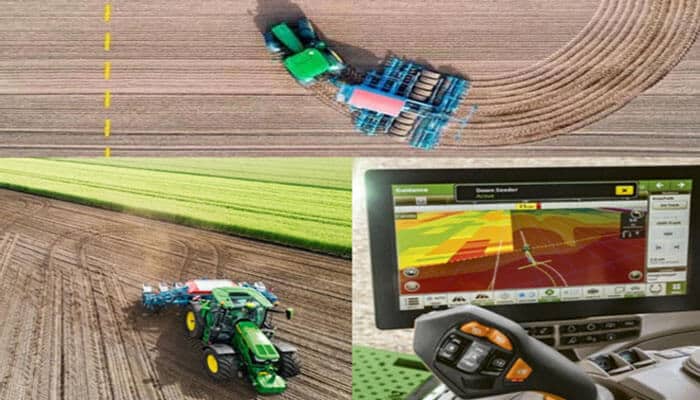
3. PTx Trimble Autopilot Steering System
Formed through the integration of Trimble’s positioning tech and precision planting’s application control, PTx focuses on providing flexible, brand-agnostic aftermarket solutions. The brand specializes in helping farmers upgrade legacy or multi-brand fleets with precision control without being locked into a single machinery manufacturer.
Key Advantages: Advanced terrain compensation, NextSwath end-of-row turns, versatile hardware options, low-speed & reverse guidance.
Best Suited For: Ideal for farms with rolling topography or mixed-brand and legacy machinery requiring a versatile retrofit with robust terrain compensation.
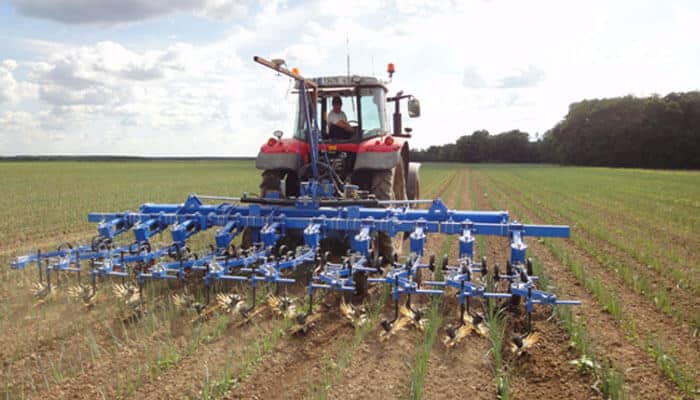
4. Sveaverken F100 Auto Steer System
Sveaverken builds straight-to-the-point agricultural automation under the philosophy of making farming simpler. Moving beyond complex enterprise platforms, the brand focuses on things like accessible, cost-effective guidance systems for farming operations and helpful tools for livestock farming automation, lowering the barrier to entry for digital farming.
Key Advantages: No subscription fees, quick 30-minute installation, free PPP feedback, smart U-turn functions.
Best Suited For: Ideal for small-to-medium, cost-conscious operations seeking high-precision RTK guidance with fast installation and zerosubscription fees.
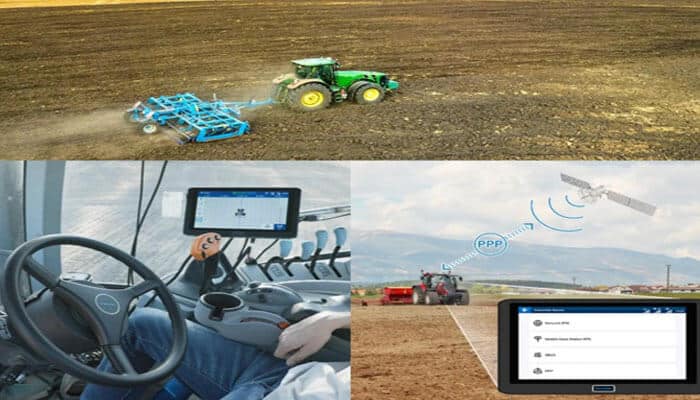
5. Topcon Premium Line Steering
Topcon Positioning is a global precision technology company whose agricultural division specializes in modular, data-driven farming upgrades. Topcon supports a step-by-step digital transition, allowing farmers to begin with basic manual guidance and expand into cloud-based field analytics.
Key Advantages: Modular Horizon OS architecture, Guidelock & boundary steering, Topcon Agriculture Platform, remote diagnostic access
Best Suited For: Ideal for farm managers planning a step-by-step digital transition that prioritizes cloud-based data management, variable-rate applications, and remote dealer diagnostics.
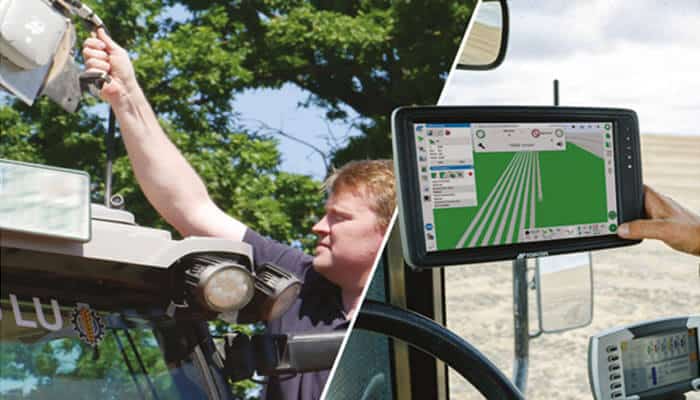
What to Look for When Choosing an Auto Steer System
Finding the best auto steer system requires matching technical capabilities to your operational realities:
- Accuracy Needs: Match the correction type to the job. Pass-to-pass RTK accuracy in the ±2.5 cm range suits row-crop planting and strip-till; tillage or hay work may tolerate looser tolerances from free PPP or SBAS correction.
- Compatibility and Expandability:Check whether the system works with your current tractors and implements, and whether it can grow into ISOBUS control, section control, or variable-rate application without a full hardware swap.
- Ease of Use:A clear display, straightforward calibration routine, and intuitive line and U-turn management reduce training time, especially with seasonal or rotating operators.
- Signal and Correction Options:Confirm whether the system relies on a local RTK base station, a subscription correction network, or a PPP-style service, and whether that’s practical for your region’s coverage.
- Support and Service:Look for local dealer support, firmware update processes, and how quickly issues can be resolved during a tight planting or harvest window.
- Budget and Payback:Weigh upfront hardware cost against ongoing correction fees, and estimate payback through reduced overlap, fuel savings, and labor efficiency.
Match the Right Tractor Auto Steering System to Your Farm
1. Small Farms and Specialty Crop Operations
For operations managing smaller areas, specialty vegetables, or orchards, flexible retrofit kits with simple electric steering wheels offer high utility. Quick-install systems allow operators to move a single guidance kit between a primary utility tractor, a secondary sprayer, and a harvesting unit as the season progresses.
2. Medium Farms with Row Crops
Medium-sized row-crop operations benefit from full-featured automatic guidance paired with reliable RTK or fast-converging satellite PPP corrections. Prioritize systems supporting saved field boundaries, easy AB-line transfers, and onboard ISOBUS support. Adopting a multifunctional solution like the EFIX eSteer20 Max not only simplifies in-cab equipment management but also ensures precision during inter-row operations.
3. Large Farms and Custom Operators
Large-scale farms requiring multiple operators and long field hours should focus on turn automation, high-speed tracking stability, and fleet telematics. Shared line management across machines prevents duplicate passes, while high-brightness displays and automated headland management keep operators effective through multi-shift operations.
Tips for Getting the Most From Your System
Implementing a tractor auto steering system successfully involves good operational routines:
1. Spend Time on Setup and Calibration
Accurate tire measurements, correct antenna height, and a proper steering test are the foundation of good performance — rushed calibration is a common source of drift and inconsistent lines.
2. Save Field Boundaries, AB Lines, and Headlands for Reuse
Building a library of field data once saves setup time in future seasons and supports consistent coverage year over year.
3. Train Every Operator on the Basics
Make sure operators understand core functions, common error messages, and when to take manual control, especially near people, obstacles, or field edges.
4. Keep Firmware Updated and Back Up Guidance Data
Keep terminals and receivers updated with stable firmware releases. Export guidance lines and field boundary files to external storage or cloud services at the end of each season.
Implementation Tip: Many operations gain confidence by deploying automated steering on a single core pass first (such as planting or strip-tilling). Once operators are comfortable with line management and settings, extend system use to post-emergence spraying, cultivation, and harvest.
Conclusion
Auto steering systems have moved from a specialty tool to a mainstream part of precision agriculture, and the right choice depends on farm size, terrain, existing equipment, and budget.
For operations seeking high-precision guidance without fleet limitations, EFIX offers scalable auto steering solutions built to demanding manufacturing standards.Farm owners, machinery manufacturers, and dealers evaluating their nextguidance investment can contact EFIX’s team for more details.
