




Start ThriftyEvents.net with a simple idea: memorable events do not require huge budgets. They require clear priorities, realistic spending limits, and smart decisions about where money creates the most value.
That matters in 2026, as Cvent reports that 72% of surveyed planners expect event costs to rise, while 35% say staying within budget is their biggest concern.
ThriftyEvents.net focuses on budget-friendly event planning, DIY ideas, and practical ways to reduce unnecessary spending without sacrificing the guest experience.
This guide explains how to Start ThriftyEvents.net with a budget-first approach covering venues, catering, vendors, contingency funds, hidden costs, deposits, accessibility, and post-event spending analysis
Quick Answer
Start ThriftyEvents.net by defining your event goal, expected guest count, and maximum budget before booking venues or vendors.
Then:
- Identify the three parts of the event that matter most
- Separate essential costs from optional upgrades
- Distinguish fixed expenses from per-guest expenses
- Compare multiple vendor quotes and total costs
- Reserve a contingency fund for unexpected expenses
- Track deposits and final payment deadlines
- Compare estimated costs with actual spending
- Cut low-impact extras before essential guest needs
When you Start ThriftyEvents.net with clear priorities, the goal is not simply to spend less but to get more useful value from every dollar you spend.
Key Takeaways
Start ThriftyEvents.net with a realistic budget and a clear understanding of which expenses directly support your event’s purpose and guest experience.
- ThriftyEvents.net primarily provides event-planning, budgeting, and DIY ideas.
- Set your total budget before choosing major vendors.
- Separate fixed expenses from variable costs.
- Calculate cost per guest when comparing different event options.
- Keep contingency funds separate from optional upgrades.
- Track deposits, payment deadlines, and actual spending.
- Plan early for accessibility and dietary requirements.
- Include permits, insurance, taxes, service charges, staffing, technology, and other hidden costs where applicable.
- Review the final budget after the event to improve future planning.
Using this budget-first approach can help you Start ThriftyEvents.net without treating the cheapest option as the best choice in every category.
What Does “Start ThriftyEvents.net” Mean?
Start ThriftyEvents.net means using the site’s budget-friendly event-planning ideas to organize celebrations without unnecessary spending.
ThriftyEvents.net already operates as an informational website covering event planning, DIY ideas, and budgeting strategies for different types of events.
Readers can Start ThriftyEvents.net by exploring relevant planning tips, setting a realistic budget, and adapting useful ideas to their own guest count, priorities, and event needs.
The site should mainly be treated as a source of inspiration. Any claims about booking tools, vendor marketplaces, ticketing, or other specialized services should be verified directly before relying on them.
What Is ThriftyEvents.net?
ThriftyEvents.net is primarily a budget-focused event-planning resource. People who Start ThriftyEvents.net can find guidance in three main areas:
| Main Area | What Readers Can Expect |
|---|---|
| Event Planning | Planning, venues, logistics, and organization |
| Budgeting Tips | Cost-saving ideas and budget management |
| DIY Ideas | Creative alternatives to paid solutions |
Its content can apply to small gatherings, weddings, community events, and corporate functions.
Overall, Start ThriftyEvents.net is most useful for finding practical ideas that can be adapted to real budgets, current prices, and individual event requirements.
Start With the Event Goal Before the Shopping List
Before you Start ThriftyEvents.net, define the purpose of the event, the expected guest count, and the maximum amount you can spend.
- Set the event purpose: Decide whether the goal is celebration, fundraising, networking, education, employee engagement, or another clear outcome.
- Estimate the guest count: Attendance affects food, venue size, seating, staffing, transportation, rentals, and other variable costs.
- Set a maximum budget: Decide the spending limit before booking venues, vendors, catering, or entertainment.
- Choose your top three priorities: Focus spending on the parts of the event that matter most, such as food, venue, photography, entertainment, or technology.
- Cut optional extras first: Reduce low-impact upgrades before removing essential guest needs or important experiences.
When you Start ThriftyEvents.net with clear priorities, every later spending decision becomes easier to evaluate and control.
Build the Budget Using Three Spending Buckets
When you Start ThriftyEvents.net, divide your event budget into three simple spending groups:
- Essentials: Venue, basic catering, seating, staffing, safety, permits, and necessary technology.
- High-impact spending: Photography, entertainment, lighting, speakers, or other elements that strongly improve the guest experience.
- Optional extras: Favors, premium decorations, luxury stationery, extra backdrops, and other nonessential upgrades.
Fund essentials first, then high-impact experiences. Start ThriftyEvents.net with optional extras only when enough money remains after your main priorities are covered.
Understand Fixed Costs vs. Variable Costs
A useful way to Start ThriftyEvents.net budgeting is to separate costs based on whether they change with the number of guests.
| Cost Type | Examples | Changes With Guest Count? |
|---|---|---|
| Fixed | Venue fee, photographer, DJ | Usually no |
| Variable | Meals, drinks, favors | Usually yes |
| Mixed | Staffing, transport, furniture | Sometimes |
For example, catering at $30 per person would fall by about $600 if attendance drops from 100 to 80, assuming there is no minimum charge. A fixed photographer package may remain unchanged. Understanding this difference helps you Start ThriftyEvents.net with better control over where reducing attendance can actually save money.
Calculate Your Cost Per Guest
When you Start ThriftyEvents.net, cost per guest is a simple way to compare different event plans.
Cost per guest = Total event cost ÷ Number of attendees
- $3,000 event ÷ 60 guests = $50 per guest
- $3,400 event ÷ 100 guests = $34 per guest
The second option costs more overall but less per attendee. Use this calculation when comparing catering, venues, guest-list sizes, ticket prices, and event formats.
Cost per guest should not be your only measure of value. Start ThriftyEvents.net by balancing the number with event quality, guest experience, and your overall budget.
Example: A $1,500 Event Budget
For a 40-person birthday event, Start ThriftyEvents.net with a clear spending limit and divide the money across essential costs, important experiences, and contingency funds.
| Expense | Example Allocation |
|---|---|
| Venue | $300 |
| Food | $400 |
| Drinks | $100 |
| Decorations | $75 |
| Entertainment | $120 |
| Invitations | $25 |
| Rentals and supplies | $100 |
| Transport/logistics | $55 |
| Contingency | $225 |
| Optional upgrades | $100 |
| Total | $1,500 |
- The figures are examples, not current market prices.
- The $225 contingency fund equals 15% of the total budget.
- Keep contingency money available for unexpected expenses rather than optional upgrades.
- Adjust the percentage according to the event’s size, complexity, and risk.
A Contingency Fund Is Not Optional Spending Money
When you Start ThriftyEvents.net, keep contingency money separate for genuine unexpected costs such as equipment failure, extra seating, bad weather, vendor changes, overtime, transportation, or technical problems.
- Use contingency funds only when something unexpected happens.
- Do not convert unused emergency money into optional decorations or upgrades.
- Keep the reserve available until the event is complete.
A protected contingency fund helps you Start ThriftyEvents.net without allowing one unexpected expense to disrupt the rest of your budget.
Build a Backup Plan as Well as a Backup Budget
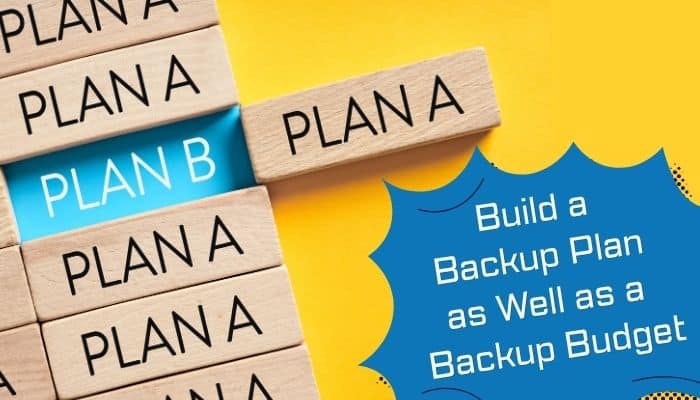
A good way to Start ThriftyEvents.net is to prepare for the most likely problems instead of trying to predict every possible issue.
| Possible Problem | Simple Backup Plan |
|---|---|
| Rain | Arrange an indoor or covered option |
| Vendor cancellation | Keep a backup supplier contact |
| AV failure | Have replacement equipment available |
| Extra attendees | Know the venue’s maximum capacity |
| Catering delay | Prepare a temporary food or drink option |
| Cancellation | Review refund and contract terms |
Focus first on problems that are both likely and capable of seriously affecting the event.
How to Track Event Deposits and Vendor Payment Deadlines
To Start ThriftyEvents.net with better cash-flow control, record what each vendor costs, what has already been paid, and when the remaining balance is due.
| Expense | Total | Deposit | Balance | Example Due Point |
|---|---|---|---|---|
| Venue | $1,000 | $300 | $700 | Before event |
| Catering | $1,500 | $500 | $1,000 | After final count |
| Photographer | $600 | $200 | $400 | Event date |
| Entertainment | $500 | $150 | $350 | Event date |
These figures are examples only. Always follow the payment dates, refund terms, and conditions written in the actual vendor contract.
How to Save Money on an Event Venue
A cheaper advertised rental price does not always mean a cheaper event. When you Start ThriftyEvents.net, compare the venue’s total cost rather than the base rental fee alone.
Check whether the price includes:
- Tables and chairs
- AV equipment
- Wi-Fi
- Cleaning
- Staffing
- Security
- Parking
- Setup
- Overtime
- Taxes and service fees
| Venue Cost | Option A | Option B |
|---|---|---|
| Base rental | $ | $ |
| Furniture | $ | $ |
| AV | $ | $ |
| Cleaning | $ | $ |
| Staffing/security | $ | $ |
| Taxes and fees | $ | $ |
| Estimated total | $ | $ |
Consider Alternative Venues
Lower-cost possibilities may include:
- Community centers
- Clubhouses
- Restaurants with private rooms
- Cultural spaces
- Schools or university facilities
- Outdoor spaces
- Home or backyard settings
Cvent’s 2026 research found that 48% of surveyed planners were sourcing non-hotel venues. Alternative spaces can offer flexibility and potential savings, but always check accessibility, capacity, insurance, permits, noise restrictions, and other local requirements before booking.
How to Save Money on Event Catering Without Sacrificing Quality
When you Start ThriftyEvents.net, save on catering by simplifying the menu rather than lowering food quality.
- Offer fewer appetizers, entrées, and desserts.
- Set a clear RSVP deadline to avoid over-ordering.
- Confirm minimum guarantees and final guest-count deadlines.
- Check staffing, service charges, taxes, equipment, and tableware costs.
- Ask whether the catering package can change if attendance falls.
A smaller, well-planned menu can reduce food waste, preparation time, staffing needs, and overall costs while still giving guests a good experience.
Do Not Cut Costs at the Expense of Guest Needs
A smart way to Start ThriftyEvents.net is to remove unnecessary extras before cutting accessibility, dietary options, or other essential guest needs.
Check for:
- Food allergies and dietary restrictions
- Vegetarian or vegan options
- Mobility and seating requirements
- Accessible entrances and parking
- Clear signage and communication support
A cheaper event is not good value if guests cannot participate comfortably or safely.
Compare Vendors on Value, Not Only Price
When you Start ThriftyEvents.net, compare vendors by total value rather than choosing the lowest advertised price.
| Factor | Why It Matters |
|---|---|
| Base price | Shows the starting cost |
| Included services | Reveals the real value |
| Delivery and setup | Can increase the final price |
| Overtime | May create extra charges |
| Cancellation policy | Affects financial risk |
| Flexibility | Helps when plans change |
| Reputation | Indicates reliability |
Ask vendors:
- Is there a smaller or simpler package?
- Are weekday or off-peak rates lower?
- Are delivery and setup included?
- What is the minimum order?
- Can the package change if attendance falls?
- Are service fees and taxes included?
The best vendor is not always the cheapest one. Choose the option that offers the strongest combination of price, reliability, flexibility, and included services.
DIY Only When DIY Actually Saves Money

When you Start ThriftyEvents.net, remember that DIY is only worthwhile when it genuinely reduces costs.
True DIY cost = Materials + tools + transportation + mistakes + time
- Choose simple projects with inexpensive materials.
- Use tools you already own whenever possible.
- Compare DIY costs with buying or renting.
- Allow extra time and materials for mistakes.
- Avoid DIY work involving electrical systems, structural safety, food safety, rigging, or licensed services.
Professional help may be better value when safety or specialist skills are involved.
Rent, Borrow, Reuse, or Buy Second-Hand
A practical way to Start ThriftyEvents.net is to avoid buying new items that will only be used once.
Consider:
- Renting
- Borrowing
- Reusing existing items
- Buying second-hand
- Choosing multipurpose decorations
This works well for vases, frames, table decor, serving equipment, signs, fabrics, lighting, and display materials.
Look for Community Resources
When you Start ThriftyEvents.net, also check whether local organizations offer affordable spaces, furniture, equipment, or event supplies.
Possible sources include:
- Community centers
- Libraries
- Schools
- Clubs
- Cultural organizations
- Nonprofits
- Neighborhood groups
Always confirm availability, deposits, capacity, insurance requirements, damage policies, and other conditions before relying on a community resource.
Do Not Forget Permits, Insurance, and Mandatory Costs
When you Start ThriftyEvents.net, include required expenses that may not appear in the advertised price.
- Permits and licenses
- Insurance
- Security and staffing
- Taxes and service charges
- Parking and waste disposal
- Safety equipment
- Technology or ticketing fees
Before treating a venue or event plan as inexpensive, Start ThriftyEvents.net by checking local rules, venue requirements, insurance conditions, and other mandatory charges.
How to Track Projected vs. Actual Event Costs
To Start ThriftyEvents.net with better budget control, record estimated and actual spending side by side.
| Item | Projected | Actual | Difference |
|---|---|---|---|
| Venue | $500 | $525 | +$25 |
| Catering | $750 | $710 | -$40 |
| Décor | $150 | $170 | +$20 |
Update the budget whenever a contract, invoice, refund, attendance change, or new expense affects the final cost.
Watch for Budget Creep From Small Purchases
When you Start ThriftyEvents.net, track small purchases as carefully as major expenses because several minor additions can quickly push the event over budget.
Simple rule: Record the purchase before making the purchase. If the budget cannot comfortably absorb it, reconsider the expense.
Add a Simple Planning Timeline
A practical way to Start ThriftyEvents.net is to connect important financial decisions with each stage of event planning.
| Planning Stage | Main Financial Task |
|---|---|
| Early planning | Set goals, guest count, and budget |
| Before booking | Compare venues and vendors |
| After booking | Record deposits and payment dates |
| Mid-planning | Compare projected and actual costs |
| Final stage | Recalculate costs and limit extras |
| After event | Record final spending and lessons |
The exact timing will vary according to the event’s size, location, season, and complexity.
Choose “Thrifty,” Not Automatically “Cheap”
When you Start ThriftyEvents.net, focus on value rather than automatically choosing the lowest price.
| Cheap Planning | Thrifty Planning |
|---|---|
| Chooses the lowest price | Chooses the best overall value |
| Cuts every category | Protects important priorities |
| Looks only at upfront cost | Considers total cost |
| May sacrifice reliability | Considers quality and reliability |
| Buys unnecessary new items | Reuses or rents when practical |
Cheap asks: What costs the least?
Thrifty asks: What gives the best result for the money available?
Reduce Guest Count Before Cutting Everything Else
Reducing the guest count is not suitable for every event, but it can lower several variable expenses at once. Fewer attendees may reduce spending on meals, drinks, favors, seating, rentals, printed materials, and transportation.
If the budget becomes too tight, consider whether the original guest list can be adjusted before cutting quality across several important parts of the event. The goal is to protect the experience that matters most rather than make small compromises everywhere.
For Paid Events, Calculate Revenue and Break-Even
Paid events such as conferences, workshops, festivals, fundraisers, and community events may generate income through tickets, sponsorships, grants, donations, exhibitor fees, merchandise, or food and beverage sales. For these events, track income alongside expenses so you can understand whether the plan is financially sustainable.
A simple break-even formula is:
Break-even attendees = Total fixed costs ÷ Contribution per attendee
For example, if fixed costs are $4,000 and each attendee contributes $40 toward those costs after variable expenses, the calculation is:
$4,000 ÷ $40 = 100 attendees
In this example, about 100 paying attendees would be needed to reach break-even. Real event calculations may also include taxes, ticketing fees, refunds, sponsorship income, grants, variable costs, and different ticket prices.
Do not use the ticket price alone as the contribution amount when significant per-person expenses are involved.
How Start ThriftyEvents.net Can Help Your Planning
Start ThriftyEvents.net by using the website mainly for budget-friendly event ideas, planning guidance, and DIY inspiration.
Its clearest content areas are:
- Event Planning: Ideas for venues, logistics, organization, and execution
- Budgeting Tips: Strategies for controlling costs and using money wisely
- DIY Ideas: Creative ways to make, reuse, or repurpose event elements
When you Start ThriftyEvents.net, use these ideas as a starting point and then compare them with real vendor quotes, contracts, venue requirements, and your own event circumstances.
What You Should Not Automatically Assume About ThriftyEvents.net
Before you Start ThriftyEvents.net, remember that its homepage and About page most clearly present it as a content-focused resource for event planning, budgeting, and DIY ideas.
Some individual articles describe broader services such as vendor networks, planning packages, booking processes, and venue partnerships, but these claims are not as clearly established by the site’s core navigation.
Therefore, when you Start ThriftyEvents.net, verify directly before relying on claims involving:
- Vendor marketplaces
- Venue booking
- Supplier discounts
- Ticket sales
- Planning packages
- Price-comparison tools
- Member communities
- Built-in planning software
This is especially important before making payments, sharing personal information, or relying on a service claim for an important event.
How to Evaluate ThriftyEvents.net Advice
When you Start ThriftyEvents.net, evaluate each recommendation before applying it to your own event.
- Check the date: Prices, suppliers, venues, technology, and regulations can change.
- Verify prices: Treat unsourced prices as examples and request current quotes.
- Consider your location: Permits, insurance, taxes, noise rules, and venue requirements vary.
- Match the event size: An idea suitable for 25 guests may not work efficiently for 500.
- Use authoritative sources when needed: Legal, safety, accessibility, insurance, health, and contractual matters should be checked with official or professional sources.
Use Start ThriftyEvents.net for ideas and inspiration, but verify important decisions whenever inaccurate information could create financial, legal, or safety problems.
Budget Wedding Planning
Weddings can easily attract emotional upgrades and last-minute spending. When you Start ThriftyEvents.net, focus the budget on the parts of the celebration that matter most.
Possible savings include reducing guest count, simplifying flowers and favors, reusing décor, limiting menu choices, choosing digital invitations, and considering off-peak dates. Avoid cutting accessibility, food safety, contractual protections, or personally important experiences simply to save money.
Budget Planning for Corporate Events
For corporate events, Start ThriftyEvents.net by connecting every major expense to a business objective such as lead generation, training, networking, employee engagement, recruitment, or customer retention.
Question expensive upgrades that do not improve the attendee experience or support measurable outcomes. A cheaper event is not automatically successful if it fails to achieve its purpose.
Birthdays and Small Gatherings
Small events provide more flexibility when you Start ThriftyEvents.net because fewer guests can make venues, catering, décor, and entertainment easier to control.
Savings may come from hosting at home, using a community venue, simplifying the menu, sending digital invitations, borrowing equipment, reusing supplies, or creating your own playlist. Spend more on experiences guests will notice and less on low-impact extras.
Community and Fundraising Events
For community or fundraising events, Start ThriftyEvents.net by exploring partnerships before paying commercial rates for every requirement.
Local grants, donated supplies, volunteers, venue sponsorships, community partnerships, and in-kind contributions may reduce costs. For fundraisers, evaluate whether each major expense is likely to improve attendance, donations, sponsorship income, or the guest experience.
Common Budget Event Planning Mistakes
Avoiding common mistakes is another important part of Start ThriftyEvents.net planning.
- Buying before budgeting: Set the spending limit before making purchases.
- Assuming DIY is free: Include materials, tools, transport, mistakes, and time.
- Comparing only headline prices: Compare the full cost and included services.
- Forgetting variable costs: Per-person expenses can rise quickly with attendance.
- Ignoring payment timing: Deposits and final balances can create cash-flow problems.
- Using contingency money for extras: Keep emergency funds protected.
- Forgetting accessibility: Saving money should not prevent guests from participating.
- Ignoring permits and fees: Mandatory costs can make a cheap option expensive.
- Failing to update actual spending: Replace estimates with real costs as invoices arrive.
How to Review Your Event Budget After the Event
When you Start ThriftyEvents.net, the budgeting process should continue after the event. Compare what you planned to spend with what you actually spent and identify which decisions delivered the best value.
| Question | What It Reveals |
|---|---|
| What was the approved budget? | Original spending limit |
| What was actually spent? | Final event cost |
| Which categories went over? | Forecasting weaknesses |
| Which came under budget? | Possible future savings |
| What did guests value most? | High-impact spending |
| What went unused? | Potential future cuts |
| Which vendors performed well? | Useful suppliers for future events |
A useful Start ThriftyEvents.net review should also consider guest feedback. Saving $300 on food is not worthwhile if guests go hungry, while removing $300 of unnecessary décor may be a saving worth repeating.
Keep your final invoices, contracts, vendor notes, attendance numbers, budget variance, attendee feedback, and lessons learned so the next event can be planned using real evidence instead of estimates.
Final Start ThriftyEvents.net Budget Checklist
Before finalizing your event, use this Start ThriftyEvents.net checklist:
- Define the event purpose.
- Estimate attendance realistically.
- Set a maximum budget.
- Identify the three highest priorities.
- Separate essential and optional expenses.
- Identify fixed and variable costs.
- Calculate cost per guest where useful.
- Compare several vendor quotes.
- Compare total rather than advertised prices.
- Reserve contingency money.
- Prepare backup plans.
- Record deposits and payment deadlines.
- Confirm accessibility and dietary needs.
- Check permits, insurance, taxes, and mandatory fees.
- Track projected and actual spending.
- Recalculate costs after the final guest count.
- Avoid unnecessary last-minute upgrades.
- Complete a post-event budget review.
Is Start ThriftyEvents.net Worth Using?
Start ThriftyEvents.net can be useful for finding budget-friendly event-planning, DIY, and money-saving ideas, but its advice works best as a starting point rather than automatic instruction.
Before acting on an idea, compare it with your actual budget, current vendor quotes, contracts, venue restrictions, guest requirements, local rules, available time, and safety considerations.
The best thrifty decision is not always the one that saves the most money. It is the one that protects the purpose and quality of the event while eliminating expenses that provide little value.
Conclusion
Start ThriftyEvents.net with a simple principle: better events are not created by spending more, but by spending with greater purpose. In an environment where venue, catering, staffing, and technology costs continue to pressure budgets, disciplined planning has become as important as creativity.
The real advantage of Start ThriftyEvents.net is the mindset behind it. Set priorities early, understand where costs are fixed or flexible, compare total value rather than headline prices, protect contingency funds, and measure what actually improved the guest experience.
Ultimately, Start ThriftyEvents.net is less about cutting costs and more about allocating money intelligently. The strongest event budget is the one that protects what matters, removes what does not, and leaves planners with better information for the next event.
FAQs About Start ThriftyEvents.net
1. What Does Start ThriftyEvents.net Mean?
Start ThriftyEvents.net is best interpreted as beginning with the budget-friendly event-planning ideas available on ThriftyEvents.net. The website already exists, so users do not need to create or launch it.
2. What Is ThriftyEvents.net Used For?
ThriftyEvents.net currently presents itself mainly as a content resource covering event planning, budgeting tips, and DIY ideas for affordable events.
3. Can Start ThriftyEvents.net Help With Last-Minute Events?
Yes. Start ThriftyEvents.net principles can help prioritize essential expenses, remove unnecessary upgrades, confirm key vendors, and keep last-minute spending under control.
4. Can Start ThriftyEvents.net Be Used for Virtual or Hybrid Events?
Yes. Start ThriftyEvents.net budgeting principles can also apply to virtual and hybrid events by accounting for streaming platforms, AV equipment, technical support, speakers, and digital attendee experiences.
5. How Much Contingency Money Should an Event Have?
There is no universal percentage for every event. The amount should reflect the event’s size, complexity, financial exposure, and potential risks.
6. Can Start ThriftyEvents.net Help With Recurring Events?
Yes. Start ThriftyEvents.net can be useful for recurring events because previous budgets, vendor notes, actual expenses, and attendee feedback can improve future planning.
7. How Can I Reduce Event Costs Without Hurting Quality?
Protect important guest experiences, simplify low-priority elements, compare vendors, control variable costs, reuse suitable items, and eliminate purchases that provide little value.
8. Does ThriftyEvents.net Book Venues or Vendors?
Its current visible structure most clearly presents ThriftyEvents.net as an informational content resource. Verify any marketplace, booking, vendor, or platform functionality directly before relying on individual article claims.
