


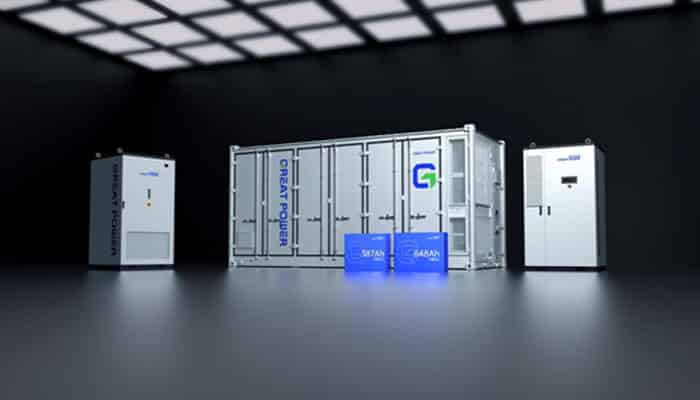

Sourcing cells for a grid-scale ESS project has become harder as the format standard moves. The 314Ah cell that anchored 2025 procurement is being displaced by 587Ah and larger formats, and every supplier now publishes a flagship number that looks impressive in isolation.
The ten manufacturers below were selected on published cell specifications, verifiable production or deployment status, and relevance to utility-scale and commercial storage rather than pack assembly alone.
By the end, you should have a working shortlist with cell capacities, cycle life, and operating windows lined up for direct comparison.
Quick Comparison
| # | Manufacturer | Best For | Flagship Cell | Stated Cycle Life |
| 1 | CATL | High-volume standardized procurement | 587Ah | 12,000+ |
| 2 | Great Power | Multi-segment sourcing from one supplier | 587 / 588 / 648Ah Ultra | 10,000+ to 70% |
| 3 | EVE Energy | Deployed 600Ah+ references | 628Ah | 8,000 to 80% SOH |
| 4 | Hithium | Long-duration configurations | 587 / 1175 / 1300Ah | 10,000-11,000+ |
| 5 | REPT Battero | Cold-climate charging windows | 588Ah | 10,000-12,000 |
| 6 | CALB | Density-per-container optimization | 588 / 684Ah | 10,000-15,000 |
| 7 | Envision AESC | Highest container-level density | 700 / 790Ah | ~16,000 |
| 8 | Gotion High-Tech | 7MWh container platforms | 650Ah | 12,000+ |
| 9 | BYD | Integrated system procurement | 2710Ah | ~10,000 |
| 10 | CORNEX | Mid-format container efficiency | 472Ah | Not disclosed |
How We Selected These Manufacturers
Each manufacturer was assessed against five factors:
- Cell-level manufacturing: Companies producing their own cells, not assembling packs from purchased cells.
- Published specifications: Capacity, energy density, cycle life, and operating temperature available for comparison.
- Production or deployment status: Cells shipping or installed, not announced-only roadmap items.
- Segment coverage: Suitability for utility-scale and commercial and industrial (C&I) applications.
- Certification and documentation depth: International safety certifications and technical documentation available to buyers.
The Manufacturers
1. CATL
Best for: high-volume standardized procurement
CATL manufactures LFP cells for both stationary storage and electric vehicles, and its format transitions have set the market standard through three generations, from 280Ah to 314Ah to the current 587Ah.
What stands out:
- The 587Ah cell is rated at 430-434Wh/L volumetric energy density with a round-trip efficiency of 96.5% and cycle life above 12,000.
- Operating range is stated at -40°C to +70°C, with a 6.25MWh capacity in a standard 20-foot container configuration.
Consider if: you need format continuity across a multi-site program and are matching a widely supported container standard.
Watch for: the published figure is a combined operating range rather than separate charge and discharge windows, so request the charging limit separately for cold-climate siting.
2. Great Power
Best for: sourcing across utility, C&I, and residential segments from one supplier
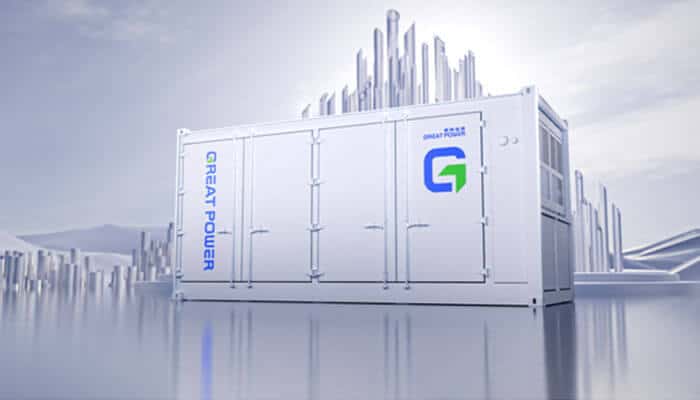
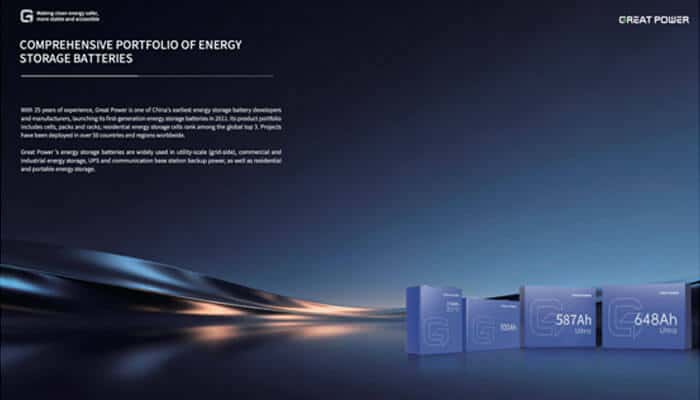
Guangzhou Great Power launched its first-generation ESS system in 2011 and has 25 years of lithium battery manufacturing experience. It placed TOP 8 in 2025 global energy storage battery shipments and TOP 2 in C&I ESS shipments, with over 300,000 sets installed. Its Ultra series spans 587Ah, 588Ah, and 648Ah formats alongside 314Ah and 280Ah cells.
What stands out:
- The 587Ah Ultra cell (GSP73274218) is rated above 10,000 cycles to 70% capacity, a 25-year lifespan, and cell efficiency above 96%.
- The 314Ah cell carries GB/T36276, UL1973, UL9540A, IEC62619, and UN38.3 certification, with zero accidents recorded across installed projects.
Consider if: you want one supplier covering utility-scale, C&I, and residential formats through a single documentation chain.
Watch for: the Ultra series lists UN38.3 and IEC62619 with GB certification in progress, so confirm certificate status for your market.
3. EVE Energy
Best for: buyers who want 600Ah+ cells with grid-connected references
EVE Energy began mass production of LFP cells above 600Ah in December 2024, making it the first manufacturer to reach that threshold for stationary storage. Its 628Ah cell is marketed as Mr Big.
What stands out:
- The 628Ah cell has a volumetric energy density of 386Wh/L and 193.3Wh/kg gravimetric, reaching 80% state of health at around 8,000 cycles with a 15 to 20 year design life.
- The world’s first 100MWh-class project using 628Ah cells, a 200MW/400MWh installation, entered operation in early 2026.
Consider if: you want the largest widely deployed format with an operating grid-scale reference behind it.
Watch for: the charging temperature range is stated at 0°C to 60°C, narrower than the -30°C discharge floor, which matters for cold-climate siting.
4. Hithium
Best for: long-duration storage configurations
Hithium was an early mover in LFP cells for long-duration energy storage and now offers three large formats in parallel rather than a single flagship, covering 2-hour through multi-hour configurations.
What stands out:
- The 587Ah and 1175Ah cells have both been used in GWh-scale installations, with the 1300Ah cell moving to mass production in Q4 2026.
- The 587Ah cell is rated at 413-415Wh/L with over 11,000 cycles; the 1300Ah cell is stated at 96% DC round-trip efficiency with a 25-year service life.
Consider if: your project mixes 2-hour and 4-hour duration blocks and you want format consistency across both.
Watch for: the 1300Ah format is not yet in mass production, so near-term procurement is limited to the 587Ah and 1175Ah cells.
5. REPT Battero
Best for: projects with cold-climate charging requirements
REPT Battero produces a 588Ah cell in the same practical capacity class as the 587Ah standard, aimed at 20-foot containerized systems for utility and C&I applications.
What stands out:
- The 588Ah cell is rated at 430Wh/L and 190Wh/kg, with 10,000 to 12,000 cycles and a service life above 20 years.
- Charging is permitted from -10°C to 65°C, a wider low-temperature charge window than most cells in this capacity class.
Consider if: the installation site sees sub-zero ambient conditions and you want to reduce pre-heating load at the system level.
Watch for: the stated storage temperature range of -40°C to 60°C differs from both the charge and discharge windows, so all three need to be checked separately.
6. CALB
Best for: maximizing energy per container footprint
CALB offers two cells above 500Ah with a shared specification base, differentiated primarily by cycle life and the container capacity each is designed to build.
What stands out:
- Both the 588Ah and 684Ah cells are stated at 450Wh/L volumetric energy density, the highest cell-level figure among the large formats compared here.
- The 588Ah cell supports 6.25MWh 20-foot containers at 10,000 cycles; the 684Ah cell supports 6.9MWh containers with over 15,000 cycles and a 20-year-plus lifespan.
Consider if: container count is a binding constraint on your site and you need maximum capacity per unit.
Watch for: the published 95% figure is a charge-discharge efficiency rather than a round-trip efficiency, so it is not directly comparable to RTE figures from other suppliers.
7. Envision AESC
Best for: highest system-level energy density
Envision Energy holds a majority stake in Japan-headquartered AESC, which manufactures the cells used in Envision’s containerized systems. The company moved from 315Ah to 700Ah in a single generation to cut system-level cost.
What stands out:
- The 700Ah cell delivers over 8MWh in a 20-foot container at more than 440Wh/L, with 96% round-trip efficiency and close to 16,000 cycles.
- Production of a 790Ah cell began in 2026, alongside a 12.5MWh system platform.
Consider if: you are optimizing for site footprint and can accommodate a container weight around 55 tons.
Watch for: container weight at this density approaches the threshold where standard transport arrangements may not apply, which affects logistics planning.
8. Gotion High-Tech
Best for: 7MWh container platforms
Gotion High-Tech produces LFP cells and containerized systems, with production bases outside China supporting buyers who need non-China manufacturing options.
What stands out:
- Its 7MWh 20-foot container platform is built on 587Ah cells rated above 430Wh/L, against the 5MWh that was standard for the same footprint.
- Each 587Ah cell provides 1.87kWh with a cycle life exceeding 12,000.
Consider if: you need a higher-capacity container platform and value overseas production capacity for trade compliance.
Watch for: the 650Ah cell and the 587Ah-based container platform were announced together, so confirm which format is in production for your delivery window.
9. BYD
Best for: integrated system procurement rather than cell-only supply
BYD develops the largest cell format among major manufacturers and applies it primarily within its own integrated storage systems rather than selling cells as a standalone product line.
What stands out:
- The 2710Ah cell is stated at around 10,000 cycles with an operating range of -30°C to 50°C.
- In its Haohan system, the format delivers a system energy density of 233.8kWh/m³ with a minimum unit capacity of 14.5MWh.
Consider if: you are procuring complete systems rather than cells and want the lowest part count per megawatt-hour.
Watch for: relatively little cell-level specification is publicly released, since the company focuses on integrated units rather than merchant cell sales.
10. CORNEX
Best for: container efficiency without moving to the largest formats
CORNEX New Energy produces prismatic LFP cells for stationary storage, positioning a mid-size format against the trend toward 587Ah and above.
What stands out:
- Its 472Ah LFP cell reaches more than 7MWh in a 20-foot container, matching platforms built on cells over 100Ah larger.
- Hitting that capacity with a smaller format means higher packing efficiency rather than higher cell weight, which keeps container mass inside conventional handling limits.
Consider if: site logistics constrain container weight and you would otherwise be pushed into non-standard transport arrangements.
Watch for: the 472Ah format has less industry-wide container standardization behind it than 587Ah, so confirm system-level compatibility early.
How to Choose
Normalize the datasheets before you compare them: Cycle counts are quoted to different end-of-life thresholds, and operating ranges usually describe discharge rather than charge. Put every supplier’s figures on the same basis first, because the raw numbers are not comparable as published.
Separate announcement from production: Several large formats were announced well ahead of volume manufacturing. Ask for the production start date and one project reference at your target capacity and duration.
Check trade and compliance exposure before technical evaluation: Suppliers face restrictions or scrutiny that vary by jurisdiction, and eligibility conditions attached to funding sources can disqualify a vendor after the engineering work is already done. Confirm market and funding eligibility while the field is still wide.
Frequently Asked Questions
1. What is the difference between a battery cell manufacturer and a BESS integrator?
Cell manufacturers produce the electrochemical unit itself, controlling chemistry, electrode design, and cell-level quality. Integrators combine purchased or in-house cells with power conversion, thermal management, and control software into a deliverable system. Some companies do both, which is why supplier lists often mix the two categories.
2. Which battery chemistry dominates utility-scale storage in 2026?
Lithium iron phosphate. Its share of BESS deployments grew from 48% to 85% between 2021 and 2024 according to IRENA, driven by lower cost, longer cycle life, and higher thermal runaway onset temperature than nickel manganese cobalt chemistries.
3. Why has 587Ah become a common cell capacity?
It balances capacity against container weight. A 20-foot system built on 587Ah cells can carry advanced cooling while staying under standard 45-ton weight limits, whereas substantially larger formats risk exceeding the threshold and requiring non-standard transport arrangements.
4. What certifications should a utility-scale cell supplier hold?
UL1973 and UL9540A for cell and system-level fire safety, IEC62619 for industrial secondary cells, and UN38.3 for transport. Manufacturing sites should hold ISO9001 quality certification at minimum. Confirm certificate numbers and validity dates directly rather than accepting a logo grid.
Building Your Shortlist
If your priority is format continuity across a large standardized program, CATL and Gotion both operate at that scale. Projects that need deployed 600Ah+ references should look at EVE Energy, while long-duration configurations point toward Hithium. For cold-climate sites, REPT Battero’s charge window is worth checking against your ambient minimums.
Buyers sourcing across utility, C&I, and residential segments at once often prefer a single supplier relationship. Great Power’s energy storage cell portfolio covers all three, and technical datasheets are available on request.
