


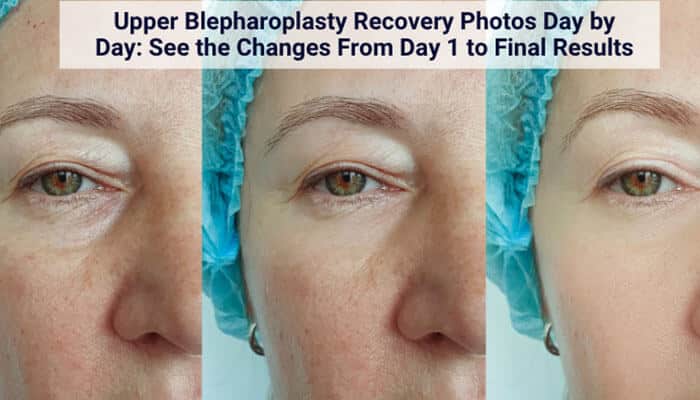

If you are searching for upper blepharoplasty recovery photos day by day, you probably want more than a standard before-and-after picture. You want to know how the upper eyelids may actually look immediately after surgery, during peak swelling, after one week, at two weeks, and when the final result begins to emerge.
Looking at upper blepharoplasty recovery photos day by day can be reassuring because the early postoperative appearance often looks much more dramatic than the mature result. Swelling may increase during the first three days before starting to settle, while bruising and puffiness can remain noticeable for two to three weeks in some patients.
Many patients become comfortable appearing in public at around 10 to 14 days, but this is only a social-recovery milestone. The eyelids can continue healing for several months, and incision lines may continue fading and refining for much longer.
This detailed recovery guide explains:
- What upper eyelids may look like from surgery day through Day 14
- When swelling usually looks most noticeable
- How bruising changes during recovery
- When sutures may be removed
- Why one eyelid may temporarily look more swollen
- What upper-eyelid scars may look like over time
- Dry eyes and temporary blurry vision
- When you may return to work, exercise and driving
- When makeup and contact lenses may be resumed
- What warning signs need medical attention
- How to take meaningful recovery photographs
- How to compare online blepharoplasty photos responsibly
Quick Answer: Upper Blepharoplasty Recovery Photos Day by Day
Upper blepharoplasty recovery photos day by day typically show the greatest visible swelling during the first several postoperative days. Swelling may continue increasing through approximately Day 3 before gradually improving.
Bruising and puffiness commonly become much less noticeable during the following 10–14 days, although mild swelling or discoloration may persist for two to three weeks or longer in some patients.
A typical visual timeline may look like this:
| Recovery Point | What Upper Blepharoplasty Photos May Show |
| Surgery Day | Fresh incision, ointment, redness and early swelling |
| Day 1 | Puffy eyelids and developing bruising |
| Days 2–3 | Increasing or near-peak swelling and discoloration |
| Days 4–5 | Early reduction in puffiness for many patients |
| Days 6–7 | Clearer eyelid contour with a visible incision |
| Days 8–10 | Bruising and swelling becoming less noticeable |
| Days 11–14 | More natural eyelid appearance |
| Weeks 3–4 | Most obvious bruising usually gone or much lighter |
| 1–3 Months | Residual swelling and scar redness continue settling |
| 3–6 Months | More refined eyelid contour |
| 6–12 Months | Incision continues fading and maturing |
These are general milestones, not deadlines. Your own healing may be faster or slower.
Key Takeaways
- Upper blepharoplasty recovery photos day by day often look most dramatic during Days 1–3.
- Swelling may continue increasing during the first three postoperative days before improving.
- Bruising and swelling commonly improve substantially within 10–14 days.
- Some bruising or puffiness may remain for approximately two to three weeks.
- Many patients feel socially presentable around 10–14 days, but complete healing takes longer.
- Removable upper-eyelid sutures are often taken out within approximately the first week.
- Temporary dryness, irritation, watering, and blurry vision from ointment can occur.
- Swelling may look worse first thing in the morning.
- Temporary asymmetry does not automatically mean the final result will be uneven.
- Scar maturation takes much longer than swelling reduction.
- Severe pain, significant bleeding, or major vision changes require prompt medical attention.
- Recovery photographs can document appearance but cannot diagnose complications.
What Is Upper Blepharoplasty?
Upper blepharoplasty is surgery performed on the upper eyelids to remove or reshape excess tissue. The incision is commonly positioned within the natural upper-eyelid crease. Depending on the patient’s anatomy and surgical plan, the surgeon may remove excess skin and may also address fat or muscle.
Upper blepharoplasty may be performed to improve:
- Loose upper-eyelid skin
- Hooded eyelids
- Excess tissue folding over the crease
- Upper-eyelid puffiness
- A tired or heavy eyelid appearance
- Excess skin that interferes with peripheral vision
The operation may therefore be cosmetic, functional, or both.
Upper Blepharoplasty vs Ptosis Repair
These procedures are sometimes confused.
- Upper blepharoplasty mainly removes or reshapes excess eyelid tissue.
- Ptosis repair treats an upper eyelid that itself sits abnormally low.
A patient who undergoes upper blepharoplasty plus ptosis repair may look different during recovery from someone having upper blepharoplasty alone.
That matters when comparing upper blepharoplasty recovery photos day by day online.
Upper Blepharoplasty Recovery Photos Day by Day: Surgery Day to Day 14
The most useful recovery photographs show the progression rather than only a before-and-after result. The descriptions below explain what you may notice during each stage.
Surgery Day: Immediately After Upper Blepharoplasty
Immediately after surgery, photographs may show:
- A thin incision in the upper-eyelid crease
- Sutures or another closure method
- Early puffiness
- Redness
- Initial bruising
- Lubricating ointment
- Slightly different swelling between the two sides
Temporary symptoms may include:
- Blurry vision from ointment
- Watery eyes
- Puffy or numb eyelids
- Mild discomfort
- Light sensitivity
- Dryness or irritation
A surgery-day picture is a recovery baseline. It should not be judged as an indication of the final eyelid shape.
Day 1: Swelling Starts to Build
Day 1 upper blepharoplasty recovery photos may look puffier than pictures taken immediately after surgery.
Possible changes include:
- Puffy upper lids
- Purple, reddish, or blue bruising
- Visible incision lines
- Mild differences between the eyes
- Ointment around the incision
Early swelling is expected.
Cold compresses are commonly included in postoperative instructions, although the timing and frequency vary by surgeon. Follow your own surgeon’s advice rather than copying another patient’s routine.
Day 2: The Eyes May Look Worse Before They Look Better
Day 2 can be one of the more surprising stages.
You may see:
- Increased puffiness
- Darker bruising
- A swollen eyelid crease
- Unequal swelling
- Eyes appearing temporarily smaller because of surrounding swelling
Swelling can continue building through the first several days. Therefore, looking worse on Day 2 than immediately after surgery does not necessarily indicate a problem.
Day 3: Often Near Peak Swelling
Upper blepharoplasty recovery photos day by day often show Day 2 or Day 3 as one of the puffiest stages.
A Day 3 photograph may show:
- Significant upper-eyelid swelling
- Purple or dark bruising
- A swollen crease
- Temporary asymmetry
- Pink or red incision lines
- Swelling extending around the eye area
This is why Day 3 should never be used to judge the final cosmetic result. However, contact your surgical team promptly if swelling is accompanied by symptoms such as:
- Severe new eye pain
- Major bleeding
- Loss of vision
- Significant new vision changes
- Rapidly worsening one-sided swelling
Day 4: Early Improvement May Begin
By Day 4, some patients begin noticing that swelling is no longer increasing.
A photograph may show:
- Slightly less puffiness
- Bruising that remains visible
- More recognizable eyelid contours
- A pink incision
- Temporary differences between the eyes
Recovery is not always perfectly linear.
Your eyes may look puffier in the morning and better later in the day.
Day 5: More Eyelid Shape May Become Visible
By approximately Day 5, the new upper-eyelid contour may become easier to see.
Possible changes include:
- Reduced puffiness
- A more visible eyelid crease
- Bruising beginning to fade
- A thin incision line
- Sutures still visible if they have not been removed
When removable sutures are used, they are often removed within approximately the first week. Exact timing depends on the closure technique and your surgeon.
Day 6: Swelling Becomes Less Dominant
A Day 6 photograph may show:
- Less pronounced swelling
- Reduced discoloration
- Easier eyelid opening
- A clearer crease
- A visible pink incision
The incision will not normally look completely mature at this point.
Scar maturation takes months rather than days.
Day 7: One-Week Upper Blepharoplasty Recovery
A one-week upper blepharoplasty recovery photo often looks significantly better than Days 2 and 3.
You may notice:
- Much less swelling
- Remaining yellow, purple, or reddish bruising
- A pink incision
- Mild puffiness
- Temporary asymmetry
Will I Look Normal Seven Days After Blepharoplasty?
Some patients look reasonably presentable after one week.
Others still have obvious bruising or swelling.
Approximately 10–14 days is a more useful general reference for social recovery. One week should therefore be considered an important milestone rather than a universal deadline.
Day 8: Beginning the Second Week
By Day 8, recovery photos may show:
- Mild residual puffiness
- Less obvious bruising
- A clearer crease
- Pink incision lines
Temporary unevenness may remain.
Do not judge final symmetry at this stage.
Day 9: A More Natural Eyelid Shape May Emerge
Day 9 photographs may show:
- Better upper-eyelid definition
- Fading bruising
- Reduced puffiness
- A scar that is most visible at close range
Changes are generally becoming less dramatic from one day to the next.
Day 10: A Common Social-Recovery Milestone
By Day 10, many upper blepharoplasty recovery photos day by day galleries show substantial improvement.
A Day 10 image may include:
- Much less bruising
- Reduced swelling
- A more defined crease
- Residual pinkness
- Mild remaining asymmetry
Some patients feel comfortable returning to public-facing activities at this point.
Others may prefer several more days.
Day 10 is still an early result, not the final result.
Day 11: Changes Become More Subtle
By Day 11, you may see:
- Small areas of residual swelling
- Minor discoloration
- A thin incision
- Improving symmetry
- A more natural eyelid contour
Daily photographic changes become less obvious as recovery progresses.
Day 12: Bruising May Be Minimal
Some patients have little visible bruising by Day 12.
Others may still show mild discoloration.
Possible features include:
- Localized swelling
- A thin pink scar
- Better-defined eyelids
- Improved symmetry
Remaining bruising at this stage does not automatically mean healing is delayed.
Day 13: The Incision May Be the Most Visible Feature
By Day 13, bruising may be less noticeable than the incision itself.
A photograph may show:
- Minimal discoloration
- Mild puffiness
- Pink crease incisions
- A relatively stable eyelid shape
Scar maturation is still in its early stages.
Day 14: The Two-Week Milestone
Two-week upper blepharoplasty recovery photos often show a significantly more natural appearance.
You may notice:
- Major reduction in bruising
- Significantly less swelling
- A clearer eyelid contour
- Mild remaining puffiness
- Pink incision lines
Many patients are comfortable appearing in public by around this stage.
However, two weeks is not the same as complete healing.
Upper Blepharoplasty Recovery Photos Day by Day Timeline
| Day | What Photos May Show | Typical Healing Stage |
| Day 1 | Puffiness, fresh incision, early bruising | Inflammation beginning |
| Day 2 | Increased swelling and darker bruising | Swelling still building |
| Day 3 | Significant puffiness and discoloration | Often near peak swelling |
| Day 4 | First reduction in swelling for some | Early improvement |
| Day 5 | More visible eyelid contour | Bruising begins settling |
| Day 6 | Less puffiness and discoloration | Crease becoming clearer |
| Day 7 | Reduced swelling; pink incision | One-week milestone |
| Day 8 | Mild residual bruising and swelling | Second-week healing |
| Day 9 | Better eyelid definition | More natural appearance |
| Day 10 | Significant improvement for many | Social recovery approaching |
| Day 11 | Small pockets of swelling | Continued tissue healing |
| Day 12 | Bruising often lighter | Contour becoming clearer |
| Day 13 | Scar may be most visible | Incision maturation |
| Day 14 | More natural appearance | Common social-recovery milestone |
This table should be used as a visual guide rather than a recovery guarantee.
What Happens After Day 14?
A good upper blepharoplasty recovery photos day by day article should not stop at Day 14 because subtle healing continues for months.
Week 3
At approximately three weeks, photographs may show:
- Little remaining bruising
- Less obvious swelling
- A clearer eyelid crease
- A pink incision
- Improving symmetry
Some patients may still have minor swelling or discoloration.
One Month
A one-month photograph may show:
- Minimal obvious swelling
- A clearly defined upper-eyelid crease
- A thin pink scar
- Better symmetry
- An appearance closer to the eventual result
One month should still be viewed as an early cosmetic result.
Three Months
At approximately three months, photographs may show:
- Little residual swelling
- Softer incision lines
- More stable symmetry
- A natural-looking crease
- More refined results
The eyes usually look substantially different from early recovery photographs.
Six Months
At six months, the incision may:
- Appear flatter
- Look less pink
- Blend more naturally into the crease
Changes during this phase are more subtle.
Six to 12 Months
- Long-term photographs are particularly useful for evaluating scar refinement.
- The incision may continue fading and blending into the natural upper-eyelid crease during this period.
- This is why comparing your Day 7 photograph with another person’s one-year result is not meaningful.
Why Upper Blepharoplasty Recovery Photos Look Different Between Patients
Two people may have surgery on the same day and still look very different one week later.
Possible reasons include:
- Amount of skin removed
- Amount of tissue manipulation
- Whether fat or muscle was addressed
- Whether other eyelid procedures were performed
- Individual bruising tendency
- Individual swelling response
- Closure technique
- Medications
- Smoking or nicotine exposure
- General health
- Postoperative activity
- Natural healing differences
Therefore, upper blepharoplasty recovery photos day by day should be used to understand general patterns rather than to predict exactly how your own eyes must look.
Why One Eye May Look More Swollen Than the Other
Temporary asymmetry is common during healing because both sides may not swell and recover at identical rates.
A mild difference that gradually improves is different from:
- Rapidly expanding one-sided swelling
- Severe eye pain
- Significant bleeding
- Major vision changes
- Loss of vision
Sudden or severe symptoms require medical assessment.
Why Is Blepharoplasty Swelling Worse in the Morning?
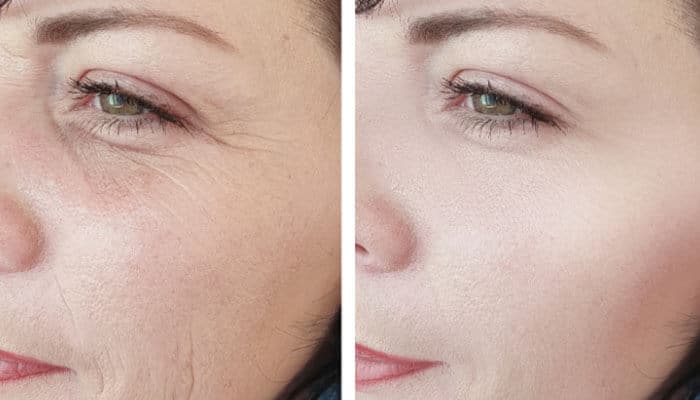
Some patients notice that their eyelids look more swollen immediately after waking.
Swelling can be more noticeable in the morning and improve while you remain upright during the day.
This can make upper blepharoplasty recovery photos day by day look misleading if photographs are taken at very different times.
For more accurate comparisons:
- Take photographs at approximately the same time
- Use similar lighting
- Keep the camera at eye level
- Maintain the same distance
- Keep your expression neutral
- Use the same camera or lens when possible
Upper Blepharoplasty Scar Healing Timeline
Upper blepharoplasty incisions are generally positioned within the natural eyelid crease.
That helps the mature scar blend into the surrounding anatomy.
| Recovery Period | Possible Scar Appearance |
| Days 1–7 | Fresh pink or red incision; sutures may remain |
| Weeks 2–4 | Thin pink line |
| Months 1–3 | Gradual softening and fading |
| Months 3–6 | Less conspicuous incision |
| Months 6–12 | Continued scar maturation |
A visible pink incision during the first several weeks is not necessarily the final scar appearance.
What Your Eyes May Feel Like During Recovery
Recovery photos cannot show sensations.
Temporary symptoms may include:
- Tight or heavy eyelids
- Mild soreness
- Puffy or numb eyelids
- Watery eyes
- Dryness
- Irritation
- Light sensitivity
- Temporary blurred vision from ointment
| What Photos May Show | What the Patient May Feel |
| Puffy eyelids | Tightness or heaviness |
| Bruising | Mild tenderness |
| Pink incision | Irritation |
| Watery eyes | Increased tearing |
| Little visible abnormality | Dry or gritty sensation |
| Swollen lids | Difficulty opening comfortably |
This is why a photograph cannot determine whether your recovery is medically normal.
Dry Eyes After Upper Blepharoplasty
Dryness can occur during early recovery.
Symptoms may include:
- Dry or gritty eyes
- Irritation
- Increased watering
- Sensitivity
- Discomfort while blinking
Use lubricating drops, gels or ointments only according to your clinician’s instructions.
What If My Eyes Do Not Close Completely?
Temporary changes in eyelid closure can occur after surgery.
However, persistent or significant difficulty closing an eye should be discussed with your surgical team.
Contact your surgeon if incomplete closure is accompanied by:
- Increasing dryness
- Significant irritation
- Eye pain
- Vision changes
Is Blurry Vision Normal After Upper Blepharoplasty?
Temporary blurry vision can occur because lubricating ointment may interfere with clear vision.
However, not every vision problem should automatically be blamed on ointment.
Promptly contact your medical team for:
- Loss of vision
- Significant new visual changes
- Severe eye pain
- Significant bleeding
- Rapid severe swelling
Is Double Vision Normal After Blepharoplasty?
Temporary double vision can occur after eyelid surgery.
However, significant, new or persistent double vision should be reported to your surgeon or eye-care professional.
A photograph cannot determine the cause.
Normal Upper Blepharoplasty Recovery vs Warning Signs
| Symptom | Often Seen During Early Healing | More Concerning |
| Swelling | Mild to moderate swelling that later improves | Rapidly increasing or severe swelling |
| Bruising | Purple, red or yellow discoloration | Major swelling with significant bleeding |
| Pain | Mild soreness or tightness | Severe or worsening eye pain |
| Vision | Temporary blur from ointment | Significant new change or vision loss |
| Symmetry | Mild temporary difference | Sudden dramatic one-sided change |
| Incision | Pink or mildly red | Increasing redness, pus, opening or drainage |
| Dryness | Mild temporary irritation | Severe dryness with incomplete eyelid closure |
| Double vision | May occur temporarily | Significant, worsening or persistent symptoms |
When Should You Contact Your Surgeon?
Do not rely only on upper blepharoplasty recovery photos day by day when deciding whether a symptom is concerning.
Contact your surgical team for unexpected or worsening symptoms.
Seek prompt medical care for:
- Severe new eye pain
- Significant or uncontrolled bleeding
- Loss of vision
- Major new visual changes
- Rapidly worsening swelling
- Increasing wound redness or pus
- Incision opening
- Significant difficulty closing the eye
Urgent systemic symptoms such as chest pain or sudden shortness of breath also require immediate medical attention.
What Recovery Photos Cannot Tell You
Recovery photographs can show:
- Bruising
- Swelling
- Incision color
- Eyelid contour
- Visible symmetry
But they cannot reliably determine whether:
- Vision is normal
- The eye surface is excessively dry
- Pain is abnormal
- The eyelids close completely during sleep
- Significant bleeding exists beneath the tissue
- Infection is developing
Use recovery photographs to track appearance—not to diagnose complications.
How to Reduce Swelling After Upper Blepharoplasty
Your surgeon’s postoperative instructions should always take priority.
Common recovery recommendations may include:
Cold Compresses
- Cold compresses are commonly used during early recovery to help manage swelling and discomfort.
- The exact schedule varies by surgeon.
Keep Your Head Elevated
- Head elevation is commonly recommended while sleeping during early recovery.
- Ask your surgeon how long this should continue.
Avoid Rubbing Your Eyes
- Rubbing or pulling at the eyelids can put unnecessary pressure on healing tissue.
- Be gentle when cleaning or applying prescribed treatments.
Use Medication as Directed
Use prescribed:
- Eye drops
- Lubricants
- Ointments
- Pain medication
exactly as instructed.
Do not copy another patient’s medication routine.
Avoid Smoking and Nicotine
- Smoking and nicotine can interfere with normal wound healing.
- Follow your surgeon’s restrictions before and after surgery.
Protect Your Eyes From Sun
Sunglasses and appropriate sun protection can protect the healing eyelids and incision area.
Cold Compresses vs Warm Compresses
- Postoperative compress instructions vary considerably.
- Some surgeons use cold compresses primarily during the first day, while others recommend them longer.
- Some may advise switching to warm compresses later.
Ask your surgeon:
- How long should I use cold compresses?
- Should I use warm compresses later?
- How frequently?
- Can the compress touch the incision?
Your own postoperative plan matters more than another patient’s schedule.
When Can You Wash Your Face?
There is no universal day for normal face washing or showering.
General precautions may include:
- Do not scrub healing incisions
- Avoid strong water pressure over the eyes
- Wash your hands before touching the eye area
- Use only approved cleansing products
- Avoid swimming or submerging the incision until cleared
Follow your surgeon’s wound-care instructions.
When Can You Wear Makeup?
Some surgical protocols advise avoiding eye makeup for approximately two weeks.
Do not place makeup over:
- An open incision
- Drainage
- Active bleeding
- Significant irritation
- Possible infection
Wait until the surgical area has healed sufficiently and your surgeon has cleared makeup use.
When Can You Wear Contact Lenses?
Many postoperative instructions recommend avoiding contact lenses for approximately two weeks.
Glasses are often more convenient during early healing because contact lenses require more eyelid manipulation.
Your surgeon may recommend a different schedule depending on dryness, swelling and your procedure.
When Can You Drive?
Do not drive if:
- Your vision is blurry
- You have significant visual disturbance
- Pain medication affects alertness
- You cannot see and react safely
Some patients may be ready within several days, while others need longer.
Safe vision is more important than reaching a specific postoperative day.
When Can You Exercise?
Exercise recommendations vary.
Ask separately about:
- Walking
- Running
- Weightlifting
- Yoga
- Swimming
- Contact sports
- Repetitive bending
- Physical work
Strenuous exercise and heavy lifting are generally restricted during the initial recovery period.
Your surgeon should tell you when each activity can safely resume.
When Can You Return to Work?
Return-to-work timing depends on the job.
Desk or Remote Work
Some patients may feel capable of light desk work relatively early.
However, swelling, eye dryness, and screen discomfort may make long computer sessions difficult.
Client-Facing Work
Many patients prefer approximately 10–14 days before returning to highly visible social or professional situations.
Physical Work
Jobs involving:
- Heavy lifting
- Repeated bending
- Straining
- Dust
- Eye hazards
may require more recovery time.
Follow-Up Visits After Upper Blepharoplasty
Attend your follow-up appointments even if your upper blepharoplasty recovery photos day by day appear reassuring.
Your surgeon may evaluate:
- Incision healing
- Swelling
- Bruising
- Eyelid position
- Symmetry
- Eye closure
- Dryness
- Vision symptoms
- Possible infection
- Possible bleeding
- Whether sutures should be removed
Photographs cannot replace a clinical examination.
How to Take Useful Upper Blepharoplasty Recovery Photos Day by Day
If you are documenting your own recovery, consistency improves the value of your photographs.
Useful photo checkpoints include:
- Before surgery
- Surgery day
- Day 1
- Day 2
- Day 3
- Day 5
- Day 7
- Day 10
- Day 14
- Week 3
- One month
- Three months
- Six months
- One year
For consistent upper blepharoplasty recovery photos day by day:
- Use similar lighting
- Use the same room if possible
- Keep your camera at eye level
- Maintain approximately the same distance
- Use the same camera or lens
- Keep your facial expression neutral
- Do not use beauty filters
- Avoid skin-smoothing effects
- Take photographs at approximately the same time each day
Useful views include:
- Straight-on
- Right three-quarter view
- Left three-quarter view
- Eyes gently closed
How to Interpret Upper Blepharoplasty Recovery Photos Online
Before comparing yourself with another patient, ask:
- Did they have upper blepharoplasty alone?
- Did they also have lower blepharoplasty?
- Was ptosis surgery performed?
- Was a brow procedure performed?
- Is the postoperative day accurately labeled?
- Are the lighting and camera angles consistent?
- Is makeup being worn?
- Are filters being used?
- Was the photo retouched?
- Is it a genuine patient photograph?
A Day 7 photograph following upper blepharoplasty alone cannot be directly compared with a Day 7 image following several combined procedures.
Real Upper Blepharoplasty Recovery Photos vs AI or Stock Images
A page specifically targeting upper blepharoplasty recovery photos day by day should use genuine clinical recovery photography whenever real postoperative results are being presented.
Useful clinical images should ideally include:
- Proper patient consent
- Accurate postoperative dates
- Consistent angles
- Similar lighting
- Disclosure of procedures performed
- No beauty filters
- No misleading retouching
Stock photography, illustrations and AI-generated images can still be used for general educational design.
However, they should never be presented as photographs of a real patient’s postoperative result.
Common Mistakes When Comparing Recovery Photos
Mistake 1: Judging the Result on Day 3
Swelling may still be increasing.
Mistake 2: Expecting Both Eyes to Heal Identically
Temporary asymmetry can occur.
Mistake 3: Comparing Different Procedures
Upper blepharoplasty, lower blepharoplasty and ptosis surgery do not have identical recovery patterns.
Mistake 4: Comparing Morning and Evening Photos
Morning swelling can make the eyes appear puffier.
Mistake 5: Assuming Day 14 Is the Final Result
Two weeks is generally a social-recovery milestone, not the end of healing.
Mistake 6: Comparing Filtered Images
Filters, lighting and camera angles can alter eyelid appearance.
Mistake 7: Diagnosing a Problem From a Photograph
A photograph cannot properly evaluate vision, pain or ocular-surface health.
Questions to Ask Your Surgeon
Consider asking:
- Am I having upper blepharoplasty alone?
- Do I also have ptosis?
- Is brow position contributing to my eyelid heaviness?
- How much swelling should I expect?
- When do you expect swelling to peak?
- Will my sutures dissolve?
- When are sutures removed?
- When is my first follow-up appointment?
- How long should I use cold compresses?
- Should I ever switch to warm compresses?
- When can I shower normally?
- When can I wear makeup?
- When can I wear contact lenses?
- When can I drive?
- When can I return to work?
- When can I exercise?
- Which symptoms require an urgent call?
- When should I expect the result to look mature?
Conclusion: Upper Blepharoplasty Recovery Photos Day by Day
Looking at upper blepharoplasty recovery photos day by day is one of the clearest ways to understand why the early postoperative appearance should never be confused with the final result.
Days 1–3 may show increasing swelling and bruising. During the following week, puffiness and discoloration usually begin becoming less noticeable. By approximately 10–14 days, many patients look substantially more natural and feel more comfortable appearing in public.
That does not mean healing is complete.
Subtle swelling, scar redness and tissue firmness can continue improving during the following weeks and months.
The most useful upper blepharoplasty recovery photos day by day therefore include multiple milestones rather than only a before-and-after comparison:
Before surgery → surgery day → Day 1 → Day 2 → Day 3 → Day 5 → Day 7 → Day 10 → Day 14 → one month → three months → six months → mature result
Use these images to understand the overall healing pattern, not as a deadline for how your own eyelids must look.
And remember that even the best upper blepharoplasty recovery photos day by day cannot diagnose complications. Severe new pain, significant bleeding, rapidly worsening swelling or major changes in vision require prompt medical evaluation.
Upper Blepharoplasty Recovery Photos Day by Day FAQs
1. What do Upper Blepharoplasty Recovery Photos Day by Day show?
Upper Blepharoplasty Recovery Photos Day by Day typically show early swelling, bruising, visible incision lines and gradual improvement in eyelid contour. Most bruising and swelling noticeably improve within about 10–14 days.
2. When does swelling peak after upper blepharoplasty?
Swelling is usually most noticeable during the first few days after upper blepharoplasty before gradually decreasing. Mild residual swelling can continue after the initial recovery period.
3. What does upper blepharoplasty look like after 7 days?
At one week, photos may show reduced swelling and bruising but a visible pink incision and some puffiness. Upper-eyelid stitches commonly remain for about a week.
4. When will I look normal after upper blepharoplasty?
Many patients feel comfortable appearing in public approximately 10–14 days after eyelid surgery, although complete healing and refinement can take several months.
5. When can I see the final results in Upper Blepharoplasty Recovery Photos Day by Day?
Early improvements become visible within weeks, but the eyelids continue refining for months. Incision lines may continue fading and maturing for up to a year.
