


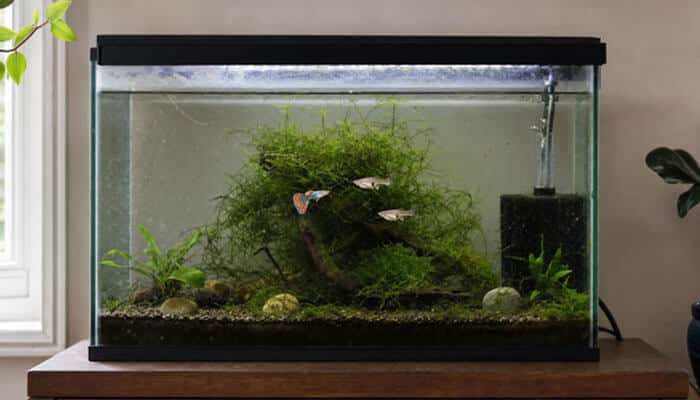

Guppies are colorful, adaptable fish, which is why they appear in so many first aquariums. They still need stable water, suitable tankmates and regular care to stay healthy.
Most guppies live one to three years. That is worth knowing before you buy, because a tank set up properly in the first month tends to produce fish that reach the upper end of that range rather than the lower one.
How to choose your first guppies
Watch the store tank for a few minutes before buying. Healthy guppies should have clear eyes, open fins, smooth scales and steady swimming behavior.
Avoid fish with clamped fins, white spots, damaged skin, labored breathing or a habit of scraping against decorations. If several fish look unwell, skip the entire tank rather than selecting the healthiest-looking individual.
Keep guppies in a small group rather than alone. If you mix males and females, aim for two or three females per male. This helps distribute the males’ attention and reduce stress.
If you aren’t prepared to raise or rehome fry, choose an all-male group. You’ll still get varied colors and fin patterns without rapid population growth.
Telling males from females
This matters more than most beginner guides suggest, because getting it wrong is how a tank of six becomes a tank of sixty.
Males are smaller and slimmer, with brighter color and longer, more elaborate fins. The reliable marker is the anal fin, which in males is narrow and rod-shaped. This modified fin is called a gonopodium.
Females are larger and deeper-bodied, usually with more muted color and a shorter, fan-shaped anal fin. Mature females often show a visible dark spot near the vent.
Young fish are harder to sex, and shop tanks are not always sorted accurately. If you want an all-male group, check each fish yourself rather than trusting the label on the tank.
Where to buy and what to look for
Have the tank running and cycled before you order or collect anything. Reputable local stores and established breeders are sensible starting points. Ask how long the guppies have been in the seller’s care, whether new arrivals are quarantined and whether the fish have recently been treated for illness.
Looking at strain photos before shopping can help you compare colors, body shapes and fin types. Australian readers can buy guppies from LiveFish® when researching strains suited to a home aquarium.
LiveFish ships livestock within Australia using a premium air service, making it a regional option rather than a source for readers in the United States. Buyers should still review current delivery areas, arrival procedures and livestock policies before ordering.
Set up a tank that stays stable
Although a 5-gallon aquarium (about 19 litres) can house a very small group, a 10 or 20-gallon tank (roughly 38 to 76 litres) is easier for a beginner to manage. More water dilutes waste and changes temperature and chemistry more slowly.
Keep the equipment simple. A heater, gentle sponge filter, fitted lid, light and a few plant clumps will cover most needs. Java moss and guppy grass provide cover without taking up much swimming space.
Aim for a temperature of 72 to 82 degrees Fahrenheit (22 to 28 Celsius) and a pH of about 6.8 to 7.8. Guppies often do especially well in moderately hard water with a neutral or slightly alkaline pH. Stability matters more than chasing a precise number.
Cycle the aquarium before adding fish. In a cycled tank, beneficial bacteria process toxic ammonia and nitrite. Test the water weekly at first, and perform small, regular water changes rather than waiting for a major problem.
Quarantine new fish in a separate tank for at least 30 days before introducing them to an established aquarium. This observation period can help prevent parasites and infections from spreading.
Getting them home safely
Float the sealed bag in the tank for 15 to 20 minutes so the temperature equalises. Then open it and add a small amount of tank water every five minutes over the following half hour.
Net the fish across rather than pouring the bag in. Transport water can carry waste you have no reason to introduce.
Keep the lights off for the first few hours. Guppies that arrive after a long journey settle faster in a dim tank, and they will not eat on the first day regardless of what you offer.
Daily care and feeding that prevent problems
Feed adult guppies a small amount once or twice a day. Offer only what they can finish within a couple of minutes, and remove obvious leftovers. Growing fry usually do better with three to five tiny meals spread throughout the day.
Use a suitable flake or small pellet as the main food. You can add frozen or live foods, such as brine shrimp, for variety. Avoid heavy feeding, which can quickly reduce water quality.
Check the heater, filter, fish and water temperature each day. Test regularly for ammonia, nitrite, nitrate and pH, especially after adding fish or changing the feeding routine. A sudden change in behavior often provides the first warning that something is wrong.
Choosing tankmates that work
Guppies suit calm community tanks. Corydoras catfish, otocinclus, small rasboras, neon tetras and platies all generally coexist well, and snails or shrimp add cleanup without competing for space.
Avoid known fin-nippers. Tiger barbs and serpae tetras will target long guppy tails, and male bettas often will too. Angelfish and most cichlids grow large enough to treat guppies as food.
Match the water as well as the temperament. A fish that thrives in soft, acidic water is a poor companion regardless of how peaceful it is.
Breeding basics, only when you are ready
Guppies are livebearers, meaning females give birth to free-swimming fry rather than laying eggs. Females can also store sperm, so one mating may result in several broods.
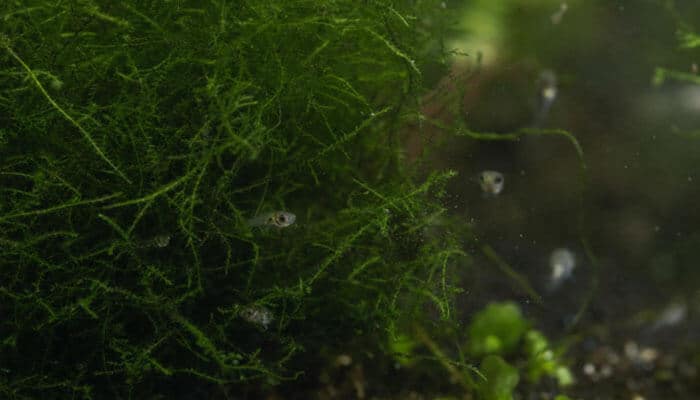
Expect the adults to eat most of the fry. That is normal, and in a mixed tank it is the only thing keeping numbers manageable. Dense planting gives some fry cover if you want a few to survive without intervening.
Plan where the young fish will go before allowing the population to increase. Local aquarium shops, fish clubs and hobbyist groups may accept healthy juveniles, but demand varies.
When a hobby starts becoming a side venture
Guppies breed quickly enough that some keepers end up with surplus stock and start selling it. That shift deserves more thought than it usually gets.
Costs scale faster than most people expect once you move past one tank. Additional heaters, filters, food, water conditioner and electricity add up, and livestock sales are seasonal. Working through basic financial planning before you expand will tell you whether the numbers work at the volume you are considering.
Check the rules too. Many online marketplaces prohibit live animal listings outright, and some regions require permits for selling livestock. Both are easier to establish before you have three hundred fish than after.
Common mistakes to avoid
Overcrowding is the most common problem. Guppy numbers can rise quickly, while a small tank’s ability to process waste remains limited.
The others are familiar to anyone who has worked in a fish shop. Mixing sexes unintentionally, overfeeding, choosing aggressive or fin-nipping tankmates and making abrupt changes to temperature or pH all cause avoidable losses.
Add one more to the list: treating a tank without knowing what is wrong. Medicating on a guess damages the biological filter and often stresses fish that had a water quality problem rather than a disease.
Keep care simple and consistent
Guppies benefit more from a steady routine than from elaborate equipment. Stable water, modest feeding, compatible tankmates and a covered aquarium handle much of the job.
Whether your first fish come from a neighborhood shop or a regional supplier such as LiveFish, quarantine them and pay close attention during the first few weeks.
Never release aquarium fish into local waterways. If the tank outgrows your available space, rehome fish through a responsible store, aquarium club, breeder or experienced keeper.
FAQs
1. How many guppies fit in a 10-gallon tank?
A 10-gallon aquarium can support a small group of guppies when it is fully cycled and properly filtered. Starting with three to five adults leaves some room for waste and reduces the risk of immediate overcrowding. Keep fewer fish if you expect breeding or plan to add tankmates.
2. Do guppies need a heater?
Most guppy tanks benefit from a heater. It keeps the water within the preferred range of 72 to 82 degrees Fahrenheit and limits fluctuations during cold nights or seasonal changes. A heater may be unnecessary only when the room stays consistently within that range.
3. How can I tell if a guppy is male or female?
Check the anal fin. Males have a narrow, rod-shaped fin called a gonopodium, while females have a shorter fan shape. Males are also smaller, slimmer and more brightly colored, and mature females are noticeably deeper-bodied.
4. What fish can live with guppies?
Corydoras, otocinclus, small rasboras, neon tetras and platies are reliable choices, along with snails and shrimp. Avoid tiger barbs, serpae tetras, male bettas, angelfish and cichlids, which either nip long fins or grow large enough to eat guppies.
5. Why did my guppy die suddenly with no warning?
Water quality is the usual answer, and ammonia or nitrite is the usual cause, particularly in a tank that was not fully cycled. Test before assuming disease. Sudden temperature swings from a failed heater are the second most common explanation.
6. Do I need to separate pregnant females?
Only if you want the fry to survive. Adults eat most fry in a community tank, which keeps numbers under control. If you do separate her, return her to the main tank soon after birth, since breeding traps stress females kept in them too long.
