


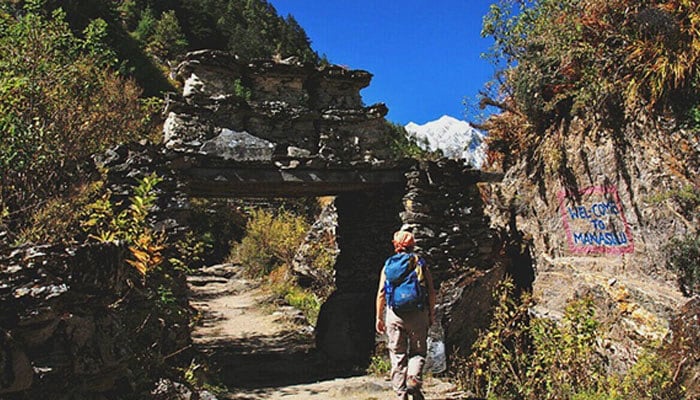

Thinking of trekking to the Himalayas and wondering how to prepare physically and mentally for the journey? If yes, this guide is exactly what you need. Whether you’re planning a short mountain adventure or a demanding high-altitude manaslu trek, proper preparation is essential for a safe and rewarding experience. Be it a short trek or a remote and challenging journey like the Manaslu Circuit Trek, this article covers everything you need to know before setting out.
Understanding The High-Altitude
Elevation gain is one of the major challenges when trekking in the Himalayas. As the altitude increases the air becomes thinner, and the oxygen level also lowers. Additionally, the atmospheric pressure and barometric pressure also decrease. As a result, our body can struggle to adapt and perform even the simplest activities, like walking. Above 2,500 meters you may experience the initial signs of Acute Mountain Sickness (AMS). This includes headache, nausea, and extreme fatigue. With that, here is how to prepare to handle it better and minimize the risk.
Acclimatization
It is one of the simplest yet most effective ways to handle the change in altitude. In simple terms acclimatization means taking a rest day before or after significant elevation gain. This allows our bodies to adjust to the low oxygen level and reduces the chances of AMS.
Slow and Steady Pace
You should always avoid rapid elevation gain when trekking in the Himalayas. Gaining too much elevation in a short time puts pressure on our bodies and does not provide them enough time to make necessary adjustments. Moreover, follow the “climb high and sleep low” principles. Basically, even if you trek up to the viewpoints or base camp during the day, trek back down to the lower region to rest for the night.
Stay Hydrated and Consume Balanced Diet
Proper hydration is more important than you think, especially in the higher regions. Even though dehydration does not directly cause altitude sickness, it amplifies the symptoms. Moreover, it makes you feel dizzy and nauseous, masking the initial signs of AMS. This delays the timely assistance via primary care and makes the signs even worse.
Similarly, eating food that is rich in carbohydrates and protein provides energy for longer hours and helps you sustain yourself in the cold better. It is recommended to take frequent and filling meals rather than heavy and greasy meals. This keeps you full for longer hours and makes digestion easier. It is better to avoid meat in higher regions as it may be contaminated due to a lack of proper refrigeration.
How to Train For High-Altitude Trekking
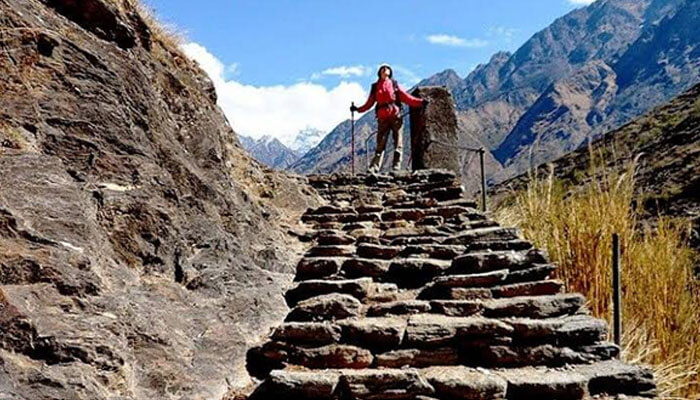
Here are a few activities that are highly effective to help you train for Himalayan trekking.
Stamina Building
- Running
- Swimming
- Jogging
- Stair-climbing
These exercises are helpful to strengthen cardiovascular health. Likewise, they support stamina building and make it easier to walk continuously while trekking. Running for about 30 minutes to 1 hour every day improves aerobic capacity. This means you will be able to sustain physical activities, like walking, for longer hours, without feeling exhausted. Furthermore, it also improves muscle coordination, which is important while crossing rugged and rocky terrain and sharp and exposed ridges. Running and swimming, in particular, also support muscle recovery.
Improve Lung Capacity and Breathing
Breathing techniques are extremely beneficial for better oxygen absorption above 3,500 meters.
- Box breathing
- Pressure breathing
- Belly (Diaphragmatic) breathing
- Equal breathing
- Pursed-Lip breathing
Box breathing
This technique is effective in stabilizing breathing patterns, and it also keeps a steady oxygen flow. Thus, it is useful when climbing steep uphill trails and narrow paths.
- First, you inhale slowly for about 4 seconds through the nose
- Then hold your breath for 4 seconds
- After that, exhale through your mouth slowly for 4 seconds
- Continue the same process for 3 to 5 minutes
Pressure Breathing
This exercise focuses on improving the oxygen flow into the bloodstream. Similarly, it is useful during continuous ascents and descents and significant elevation gain.
- You start by taking a deep breath through your nose
- Thereafter, forcefully exhale through your mouth
- Once you are done exhaling, keep your lips pursed so that it creates resistance
- Repeat these steps about 5 to 10 times
Diaphragmatic or Belly breathing
It is one of the most effective techniques for high-altitude trekking. You basically train to use your lungs to their full capacity. Thus, it improves oxygen absorption and circulation.
- Start by placing one hand on your chest and the other on your stomach
- After that, inhale through your nose slowly
- Let your stomach rise and keep your chest still
- Then exhale through your mouth and allow your stomach to fall
- Do this exercise for about 10 minutes every day
Pursed-Lip breathing
This exercise is useful for improving oxygen exchange in the lungs and preventing shortness of breath. Moreover, it also helps with controlling your breath when ascending to higher regions.
- First, inhale slowly through your nose for 2 to 3 seconds
- After that, purse your lips as if blowing out a candle
- Exhale slowly for 4 to 6 seconds
- Also, make exhalation longer than inhalation
Improve Core Strength and Balance
- Planks
- Leg raises
- Dead Bug
- Step-ups
- Balance board
These activities are helpful to make your core, abdominal and back muscles stronger. Thus, this allows you to stay stable on the uneven and rocky terrain. Plank and dead bug improve body control and make it easier to walk long hours while carrying heavy backpacks. Furthermore, they also refine your posture and prevent back strain after continuous ascents and descents. Lastly, good core strength supports coordination between lower-body and upper-body movement.
Better Endurance and Terrain Adaptation
It is highly recommended to go on a few short hikes that mimic the ascents and descents of the trek. Also, carry a heavy trekking bag while doing so to get an actual trekking experience. Doing so helps you train specifically for real trekking conditions, including uneven trails, altitude change and continuous walking.
You also get an idea of how to carry your backpacks better and distribute weight equally. They are also helpful for improving balance on different routes. Furthermore, short hikes strengthen leg muscles and knee joints and ankles. Lastly, you can practice different breathing techniques on the trail for better oxygen absorption.
