


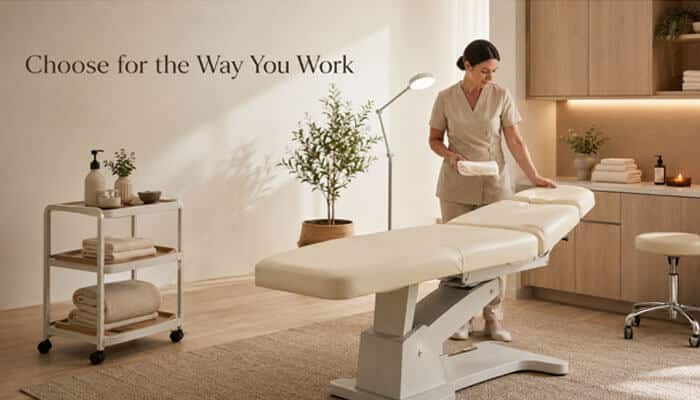

Choosing the right beauty bed plays a major role in the comfort, efficiency, and overall client experience of any salon or wellness business. A treatment bed is one of the most important purchases a salon or wellness business makes. It is where clients spend the majority of a facial, massage, body-care, or relaxation appointment. It is also where therapists need to work with focus, comfort, and consistent access to the client.
Yet many owners choose a bed too quickly. They may focus on colour, a single feature, or the lowest available price, then discover that the furniture does not fit their services, room size, or daily workflow.
The right choice depends less on finding one universally “best” model and more on understanding what the business needs from it. A skincare studio, massage practice, lash space, and multi-service salon may all need different configurations. The most useful starting point is to think about the appointment itself: what happens during the treatment, how the professional moves around the client, and what helps the room feel calm and reliable.
Start With The Services You Provide
Before comparing finishes or optional functions, consider the treatment menu.
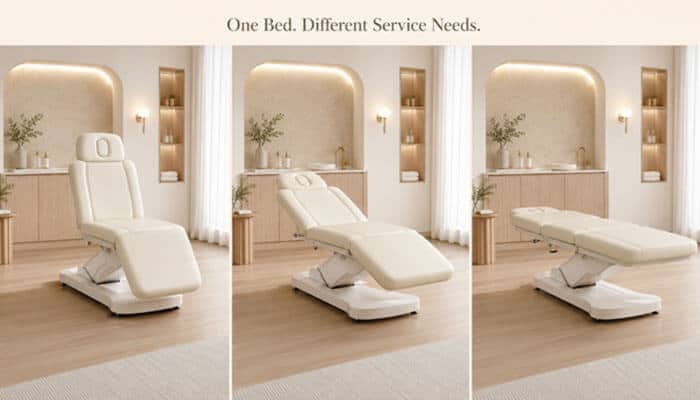
A salon that mainly provides facials may need flexible backrest positioning and close access around the client’s head. A wellness studio may need a wider, more supportive surface for longer body treatments. A business offering several services may need a setup that can move easily between consultation, skincare, massage, and relaxation appointments.
This is why it helps to compare a Beauty Bed based on its intended use, rather than viewing it as a standard piece of salon furniture. The bed should support the way the team works now while still leaving room for the service menu to evolve.
Questions worth asking include:
- How long do clients normally stay on the bed?
- Does the therapist need close access to the head, shoulders, or legs?
- Will the room be used for one specialist service or several?
- Does the client need to sit up between stages of the appointment?
- How much room is available for a trolley, stool, lamp, or storage?
A bed that is suitable for short skincare appointments may not be comfortable for extended body treatments. Likewise, a wide wellness table may be unnecessary in a compact facial studio where working space is limited.
Think About Therapist Comfort As Carefully As Client Comfort
A treatment room should work for both people in it.
Clients notice the cushion, the headrest, and how stable the bed feels when they sit down or change position. Therapists notice whether they need to lean, stretch, crouch, or work around an awkward frame. Those daily details can affect service quality more than many owners expect.
Height is particularly important. If the surface is too low, a therapist may spend much of the day bending forward. If it is too high, detailed work may become difficult. Adjustable positioning can help a team create a more comfortable setup for different services and different staff members.
There should also be enough room around the bed to work naturally. A technician needs space to move, reach a trolley, adjust a lamp, and change position without constantly stepping around furniture. In smaller rooms, the shape of the base and the placement of storage can matter as much as the width of the bed itself.
Before ordering, it is useful to map the room with simple measurements. Mark the proposed location of the bed, the door swing, power outlets, storage, and working clearance. This can prevent a costly mistake: buying furniture that looks right online but makes the treatment room feel crowded once it arrives.
Stability And Support Come Before Extra Features
A long feature list does not automatically make a treatment bed more suitable.
The basics should come first: a stable frame, supportive cushioning, secure adjustment, and a surface that feels comfortable throughout the appointment. Clients should be able to settle in without feeling movement or instability when the therapist changes position nearby.
For businesses offering bodywork or longer relaxation services, a Massage Bed should be evaluated with particular attention to support and working access. The therapist may need to apply steady pressure, move around the full length of the bed, and maintain a natural posture for an extended period. A stable surface helps the service feel more professional for the client and more manageable for the practitioner.
Cushioning is also about balance. A surface that is extremely soft may look inviting but can become uncomfortable if it does not provide enough support for the back, shoulders, and legs. A well-designed bed should help clients relax without making them feel as though they are sinking into the surface.
If a supplier offers samples, detailed dimensions, or product demonstrations, these can be useful for comparing the practical experience rather than relying only on photos.
Make Cleaning Part Of The Everyday Workflow
Treatment-room furniture should support the salon’s normal reset routine.
During a typical day, a bed may come into contact with skincare products, massage oils, makeup, towels, sanitising products, and a steady flow of clients. Materials should be chosen with regular wiping and routine maintenance in mind.
It is worth looking closely at more than the main treatment surface. Consider the seams, headrest, adjustment controls, underside of the frame, and the floor area around the base. Can the team clean the space easily between appointments? Are cables arranged safely? Is there sufficient clearance for a quick reset when the schedule is busy?
Storage is part of the same decision. Clean towels, disposable items, tools, and products should be within reach but not clutter the room. A simple trolley or nearby cabinet can make a treatment area feel more organised and reduce unnecessary movement during a service.
A room that is easy to maintain tends to feel calmer for clients as well. Clean surfaces, clear pathways, and organised tools communicate care without needing to be explained.
Choose A Style That Fits The Salon As A Whole
A treatment bed often occupies the visual centre of the room, so it should feel connected to the wider interior.
Some businesses want a quiet, minimal skincare environment with pale colours and clean lines. Others may prefer a warmer spa atmosphere, natural textures, or a more luxurious finish. The goal is not simply to make the furniture stand out. It is to create a setting that feels intentional and consistent from reception to treatment room.
Colour, upholstery, base finish, and supporting furniture can all affect that impression. It may also be helpful to consider whether the room needs to align with other treatment spaces, future locations, or a wider salon brand.
UniRelax is a Shenzhen-based supplier of salon and spa furniture whose product range includes beauty, facial, massage, lash, wellness, and nail-service furniture. Its website also presents customisation options for professional businesses, including choices around colour, size, logo, and functional configuration. For salon owners, the useful consideration is whether those options support a practical and consistent setup—not simply whether a product looks attractive in isolation.
Ask Practical Supplier Questions Before You Buy
A treatment bed is a business investment, so the discussion should go beyond the initial price.
Before committing, ask about product dimensions, assembly requirements, packaging, lead times, warranty coverage, and the availability of replacement parts. If the business is sourcing several pieces of furniture, it can also be useful to clarify whether the supplier can maintain consistent finishes or configurations across the order.
For a new salon, questions about room planning can be just as valuable as questions about the bed itself. Does the layout leave enough working space? Can the room support the treatment type being planned? Is the chosen model suitable for the level of service the salon wants to provide?
These details may not be as visually exciting as upholstery colours or electric controls, but they help determine whether the furniture remains practical after months of daily use.
Choose For The Appointment, Not The Catalogue
The right beauty bed is the one that supports a real appointment from beginning to end.
It should help the client feel settled, allow the therapist to work comfortably, fit the available room, and make cleaning and preparation manageable. It should also suit the services the business plans to offer, whether those involve skincare, massage, wellness treatments, or a flexible mix of salon services.
When owners make the decision around workflow rather than appearance alone, they are more likely to create a treatment space that feels comfortable, professional, and worth returning to.
