



Garden success begins long before the first seed enters the soil. It comes from matching the right plants to the right location and managing sunlight, climate, soil, water, spacing, nutrition, pollination, pests, and weather as one connected system.
You do not need a large backyard, expensive equipment, or years of experience to grow healthy plants. A balcony container garden, a compact raised bed, a flower border, or a traditional vegetable plot can all thrive when their basic growing requirements are understood and managed consistently.
The most reliable path to garden success is not searching for one miracle fertilizer or perfect planting method. It is learning how your garden behaves, responding to changing conditions, and making informed improvements throughout the growing season.
This complete guide explains 12 practical steps for creating a productive and resilient garden. It covers garden planning, site selection, soil testing, planting, irrigation, fertilization, pollinator support, pest management, harvesting, troubleshooting, and preparation for the next growing season.
Quick Answer: Garden Success
The foundation of garden success is choosing plants that suit your climate, sunlight, soil, available space, and maintenance time. Before planting, observe the site, check drainage, learn your frost dates, and test the soil. After planting, water according to actual soil moisture, protect exposed soil with mulch, inspect plants regularly, support pollinators, and record what performs well.
A thriving garden rarely results from one perfect decision. Lasting garden success develops through observation, timely maintenance, and gradual improvement.
Key Takeaways
- Start with a garden size you can maintain consistently.
- Match plants to the site’s actual sunlight and climate.
- Test the soil before adding lime or fertilizer.
- Choose locally suitable and disease-resistant varieties.
- Plan paths, plant spacing, irrigation, and supports before planting.
- Water according to root-zone moisture rather than a fixed calendar.
- Use mulch to conserve moisture and reduce weed growth.
- Support pollinators and beneficial insects.
- Rotate plant families and remove diseased material promptly.
- Harvest regularly and record results for the following season.
Garden Success at a Glance
| Garden factor | What to check | Best practice | Warning sign |
| Sunlight | Hours of direct light | Match plants to full sun, partial sun, or shade | Pale, leaning, or weak growth |
| Climate | Frost dates, heat, rainfall, and season length | Choose locally suitable plants and planting dates | Frost injury or poor fruit production |
| Soil | Texture, pH, nutrients, and organic matter | Use a reliable soil test | Poor growth despite fertilizing |
| Drainage | How quickly water leaves the root zone | Improve drainage or use raised beds | Standing water or root decline |
| Water | Rainfall and moisture below the surface | Water slowly and deeply when needed | Wilting, cracking, or yellowing |
| Space | Mature plant width and height | Follow variety-specific spacing | Crowding and poor airflow |
| Pollination | Flower visits and fruit formation | Grow diverse flowers and protect pollinators | Flowers appear but fruit does not |
| Maintenance | Time available each week | Begin with a manageable garden | Weeds, pests, and missed harvests |
12 Proven Steps to Grow a Thriving Garden
1. Define What Garden Success Means to You
A successful garden looks different for every household. One gardener may want fresh vegetables for weekly meals, while another may prioritize flowers, culinary herbs, privacy, pollinator habitat, or a relaxing outdoor space.
That is why the first step toward garden success is defining what you want the garden to accomplish.
You may want to:
- Grow vegetables your household regularly eats
- Produce fresh herbs in containers
- Establish a low-maintenance flower bed
- Attract butterflies, bees, and beneficial insects
- Grow unusual or culturally important foods
- Reduce spending on selected produce
- Improve an empty or unattractive outdoor area
- Create a family learning project
- Build a garden that is easier to access
Your goal should guide your plant choices, garden size, layout, budget, and maintenance plan.
Start Smaller Than You Think
One of the most common beginner mistakes is creating more garden space than can be maintained.
A small garden that receives regular watering, weeding, inspection, and harvesting usually performs better than a large garden that becomes neglected during busy periods.
For a first garden, consider starting with:
- One or two raised beds
- Three to six large containers
- A compact herb garden
- A small in-ground plot
- A narrow flower-and-pollinator border
Starting small supports early garden success because it allows you to observe plants closely, correct problems quickly, and learn without becoming overwhelmed.
Expand only after you understand how much time the existing garden requires.
Grow Plants You Will Actually Use
Do not choose plants only because they appear in popular gardening guides.
Prioritize varieties that fit your household’s needs. A highly productive crop provides little value when nobody wants to eat or use it. Herbs, salad greens, cherry tomatoes, peppers, beans, or specialty vegetables may provide more practical value from a small area.
Think about:
- How often you use the crop
- Whether it is expensive or difficult to buy locally
- How much growing space it requires
- How long it takes to mature
- Whether it produces one harvest or continues producing
- How easily it can be stored, preserved, or shared
Growing plants you genuinely value makes the garden more rewarding and improves the likelihood that you will maintain it consistently.
2. Choose the Right Garden Type and Location
Choosing the right location is one of the most important decisions for long-term garden success. The best garden type depends on your available space, existing soil, budget, physical access, and preferred level of maintenance.
Compare the Main Garden Types
| Garden type | Best for | Main advantage | Main limitation |
| In-ground garden | Larger yards with workable soil | Low construction cost | Existing soil may require improvement |
| Raised bed | Poor drainage, compacted soil, or accessibility needs | Greater control over soil and bed height | Higher setup cost and faster drying |
| Container garden | Patios, balconies, rooftops, and rented homes | Flexible and space-efficient | Requires closer watering and feeding |
| Vertical garden | Small plots and narrow spaces | Uses fences and trellises efficiently | Not suitable for every plant |
| Indoor garden | Herbs, seedlings, and microgreens | Accessible throughout the year | Often requires supplemental lighting |
| Edible landscape | Gardeners who want beauty and food | Combines ornamental and edible plants | Requires thoughtful design |
Raised beds are useful when existing soil is compacted, poorly drained, potentially contaminated, or difficult to access. Containers are suitable for limited spaces, but each container needs drainage holes, enough soil volume, and a growing medium designed for pots.
Measure Sunlight Instead of Guessing
Sunlight directly affects plant growth, flowering, fruit development, and overall garden success. Observe the proposed garden location several times during a clear day. Buildings, fences, trees, balconies, and walls can significantly change the amount of light a site receives.
Many vegetables need at least six hours of direct sunlight. Fruiting crops such as tomatoes, peppers, cucumbers, squash, and melons commonly perform better with six to eight hours or more. Leafy greens and certain herbs may tolerate partial shade, particularly in hot climates. However, dense shade is unsuitable for most food-producing plants.
Record:
- Morning sunlight
- Afternoon sunlight
- Seasonal tree shade
- Reflected heat from walls or pavement
- Wind exposure
- Areas that remain wet after rain
- Distance from a convenient water source
- Exposure to pets, wildlife, or heavy foot traffic
Understand the Site’s Microclimates
A microclimate is a small area whose conditions differ from the surrounding property.
For example:
- A south-facing wall may stay warmer.
- A low area may collect cold air or rainwater.
- Pavement may increase heat around containers.
- A fence may reduce wind while creating shade.
- A rooftop may be hotter and windier than a ground-level garden.
- An area beneath a roof edge may receive less rainfall than expected.
Understanding these small differences can improve garden success because plants can be positioned where their light, heat, moisture, and wind requirements are most likely to be met. Choose plants for the conditions you actually have rather than trying to force unsuitable plants into the location.
Check Drainage Before Planting
Poor drainage can prevent oxygen from reaching plant roots and may encourage root decline.
After heavy rain, observe how long water remains in the proposed garden area. Persistent standing water may indicate compacted soil, a low spot, or an unsuitable location.
Possible solutions include:
- Adding organic matter where appropriate
- Redirecting runoff
- Avoiding soil compaction
- Creating raised beds
- Choosing moisture-tolerant plants
- Moving the garden to a better-drained location
3. Understand Your Climate and Select Suitable Plants
Climate suitability is one of the strongest predictors of garden success. Gardeners should consider winter cold, summer heat, rainfall, humidity, frost dates, wind, and the length of the growing season.
Use Hardiness Zones Correctly
For gardeners in the United States, the USDA Plant Hardiness Zone Map can help identify perennial plants likely to survive local winter temperatures.
However, a hardiness zone does not fully describe:
- Summer heat
- Humidity
- Rainfall
- Soil drainage
- Wind
- Sudden freezes
- Drought
- Growing-season length
Hardiness zones are primarily useful for perennial plants. Annual vegetables should also be selected according to frost dates, soil temperature, and the number of days required to reach maturity.
Gardeners outside the United States should use equivalent information from their local agricultural or meteorological authority.
Read Plant Labels and Seed Packets
Plant labels and seed packets may provide:
- Light requirements
- Planting depth
- Spacing
- Germination time
- Days to maturity
- Mature plant size
- Water requirements
- Recommended planting period
- Disease-resistance information
Do not assume that all varieties of one crop grow in the same way.
A compact patio tomato may remain manageable in a container, while an indeterminate tomato may continue growing throughout the season and require a strong cage or trellis. Reading this information before planting prevents avoidable mistakes and creates a stronger foundation for garden success.
Choose Locally Adapted Varieties
Locally recommended plants often perform better because they have been tested or selected under similar growing conditions.
When comparing varieties, consider:
- Heat tolerance
- Cold tolerance
- Humidity tolerance
- Drought tolerance
- Days to maturity
- Resistance to common local diseases
- Mature size
- Harvest period
- Suitability for containers or raised beds
A variety that performs well in one climate may struggle in another. Choosing plants that fit your regional conditions is usually more effective than selecting them only for appearance, popularity, or yield claims.
Prioritize Disease Resistance
Disease resistance does not make a plant immune, but it may reduce the severity of common problems.
Depending on the crop and location, resistant varieties may offer protection against:
- Fusarium wilt
- Verticillium wilt
- Powdery mildew
- Mosaic viruses
- Certain bacterial diseases
- Root-knot nematodes
Resistance is particularly valuable when a disease has repeatedly affected the garden.
4. Test and Understand Your Soil
Healthy soil is central to garden success because it supplies plant roots with water, oxygen, nutrients, and physical support. Its appearance alone cannot reveal whether nutrients are deficient, excessive, or unavailable because of unsuitable pH.
Obtain a Soil Test
A laboratory or regional soil test may report:
- Soil pH
- Organic-matter content
- Soil texture
- Phosphorus
- Potassium
- Soluble salts
- Recommended fertilizer or amendments
Testing is particularly valuable when:
- Starting a new garden
- Converting a lawn
- Building a raised bed
- Plants repeatedly perform poorly
- Large amounts of compost or manure have been applied
- The garden is close to an older building or possible contamination source
A soil test replaces guesswork with specific information and helps prevent unnecessary amendments.
Avoid Fertilizing by Guesswork
Do not automatically apply lime, sulfur, phosphorus, or a general-purpose fertilizer.
Adding nutrients the soil does not need can:
- Create nutrient imbalances
- Damage roots
- Increase salt levels
- Encourage excessive leafy growth
- Pollute waterways
- Make other nutrients less available
Follow the recommendations supplied with the soil test and consider the needs of the crop being grown. Responsible nutrient management improves garden success while reducing unnecessary costs and environmental harm.
Understand Soil Texture
Soil texture affects drainage, nutrient retention, and root development. Sandy soil drains rapidly and warms quickly, but it may lose water and nutrients faster.
Clay soil often holds water and nutrients well, but it may drain slowly and become compacted. Loam soil contains a balanced mixture of sand, silt, and clay and is generally easier to manage. Avoid walking or working on saturated soil. Compression can reduce the air spaces required by roots and soil organisms.
Consider Urban Soil Safety
Gardens near older painted buildings, heavily traveled roads, former industrial sites, or demolition areas may require additional testing.
Where contamination is a concern, safer options may include:
- Raised beds
- Containers
- Clean imported soil
- Mulched paths
- Barriers between existing and imported soil
Covering bare ground can also reduce dust and direct contact with potentially contaminated soil.
5. Improve Soil With Organic Matter
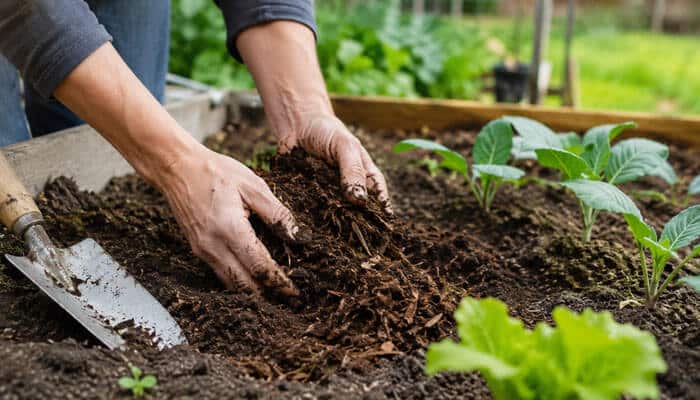
Organic matter can improve soil structure and water management, making it an important part of long-term garden success. In sandy soil, compost may improve moisture and nutrient retention. In heavier soil, it can support better aggregation, drainage, and root movement.
Suitable materials may include:
- Finished compost
- Composted leaves
- Well-decomposed manure
- Aged plant-based compost
- Properly managed cover-crop residue
Use Compost Carefully
Compost should be mature, clean, and suitable for gardening.
Poor-quality compost may contain:
- Weed seeds
- Excess salts
- Pathogens
- Plastic fragments
- Persistent herbicide residues
- Unbalanced nutrients
More compost is not always better. Repeated heavy applications of compost or manure can increase phosphorus or salt levels beyond what plants need. For long-term garden success, treat compost as a soil amendment rather than an unlimited fertilizer.
Do Not Use Every Soil Product Interchangeably
Potting mix, topsoil, garden soil, compost, and raised-bed mix are not necessarily the same.
Container plants generally need a lightweight potting mix that drains while retaining enough moisture. Dense native soil may compact inside a pot and restrict drainage.
Choose products according to their intended use:
| Product | Common purpose |
| Potting mix | Containers and indoor plants |
| Topsoil | Filling or leveling outdoor areas |
| Finished compost | Improving soil organic matter |
| Raised-bed mix | Filling raised growing beds |
| Seed-starting mix | Germinating seeds and raising seedlings |
Avoid Common Soil-Improvement Mistakes
Do not:
- Till or dig saturated soil.
- Bury unfinished compost around active roots.
- Add large amounts of sand to clay without expert guidance.
- Apply raw manure around crops close to harvest.
- Use lawn fertilizer containing weed killer in a vegetable garden.
- Add amendments without measuring the area.
- Assume organic products cannot damage plants when overapplied.
6. Plan the Garden Layout Before Planting
Careful planning can improve garden success by making watering, weeding, inspection, harvesting, and seasonal maintenance easier. Draw a simple plan before purchasing plants. Include beds, paths, irrigation lines, trellises, and mature plant sizes.
Position Plants by Mature Height
Place tall plants where they will not unnecessarily shade shorter sun-loving crops.
Depending on the location and season, place:
- Tall trellises along an appropriate edge
- Frequently harvested herbs near the entrance
- Spreading crops where vines have room
- Perennial plants outside annually cultivated areas
- Shade-tolerant crops where afternoon shade may be beneficial
Use Correct Spacing
Seedlings look small when planted, but mature plants may require much more room.
Overcrowding can:
- Reduce airflow
- Limit sunlight
- Increase competition for water and nutrients
- Hide pest problems
- Make harvesting difficult
- Increase the spread of certain diseases
Use the spacing recommendation for the specific variety rather than estimating from the transplant’s current size. Correct spacing supports healthier growth and improves the conditions needed for dependable garden success.
Install Supports Early
Install cages, stakes, and trellises before plants become large. Early installation reduces the risk of damaging established roots and stems.
Support may be useful for:
- Indeterminate tomatoes
- Pole beans
- Peas
- Cucumbers
- Small melons
- Raspberries
- Tall flowering plants
Use soft ties and inspect them as stems expand.
Design for Easy Access
Create paths wide enough to reach plants without stepping into growing areas.
For improved accessibility, consider:
- Taller raised beds
- Firm, level paths
- Containers placed at a comfortable height
- Beds narrow enough to reach from both sides
- Irrigation controls located near the path
- Frequently harvested crops placed closest to the entrance
A convenient garden is more likely to receive consistent care.
7. Plant at the Correct Time, Depth, and Sequence
Correct planting practices support early establishment and increase the likelihood of garden success throughout the growing season. Warm-season crops planted into cold soil may become stressed. Cool-season crops planted too late may experience excessive heat before reaching maturity.
Distinguish Cool- and Warm-Season Crops
Common cool-season crops include:
- Lettuce
- Spinach
- Peas
- Radishes
- Kale
- Broccoli
- Cabbage
- Carrots
Common warm-season crops include:
- Tomatoes
- Peppers
- Cucumbers
- Beans
- Squash
- Eggplants
- Melons
Use regional planting calendars, local frost dates, soil temperatures, and seed-packet instructions rather than relying on one universal planting date.
Decide Between Seeds and Transplants
Direct sowing is often suitable for crops that grow quickly or dislike root disturbance.
Common direct-sown crops include:
- Carrots
- Radishes
- Beans
- Peas
- Corn
- Beets
- Turnips
Transplants can give slower-growing crops a head start.
Common transplant crops include:
- Tomatoes
- Peppers
- Eggplants
- Broccoli
- Cabbage
- Cauliflower
Follow the Recommended Planting Depth
Seeds planted too deeply may not have enough stored energy to reach the surface. Seeds planted too shallowly may dry out, wash away, or fail to establish strong roots.
Follow the instructions for the specific crop because seed size and planting requirements vary significantly.
Harden Off Seedlings
Indoor seedlings need time to adjust to sunlight, wind, and outdoor temperatures.
Gradually increase outdoor exposure over approximately one week instead of moving seedlings directly from a protected indoor environment into full sun.
During hardening:
- Begin in a sheltered location.
- Limit direct sunlight at first.
- Increase outdoor time gradually.
- Protect seedlings from strong wind.
- Bring them inside if damaging cold is expected.
- Keep the growing medium appropriately moist.
Use Succession Planting for Continued Garden Success
Succession planting helps produce harvests over a longer period and uses limited space more efficiently.
Three practical methods are:
- Staggered sowing: Plant small batches of lettuce, radishes, beans, or carrots every one to three weeks.
- Same-space succession: Replace an early crop, such as peas or spinach, with a warm-season or fall crop.
- Variety succession: Plant early-, mid-, and late-maturing varieties of the same vegetable.
Succession planting can keep the garden productive throughout the season and prevent the entire crop from becoming ready at once.
It can also protect overall garden success by ensuring that one period of extreme weather or pest pressure does not affect every planting at the same growth stage.
8. Water According to the Soil and Plant
Smart watering is essential for garden success, but there is no single schedule that works for every garden.
The amount and frequency needed depend on:
- Rainfall
- Temperature
- Wind
- Plant age
- Soil texture
- Root depth
- Mulch
- Container size
- Growth stage
Check Moisture Below the Surface
The soil surface may look dry while the root zone remains moist.
Before watering, check beneath the surface with a finger, trowel, soil probe, or suitable moisture-testing method.
Water slowly enough for moisture to enter the soil rather than run away from the plant.
Direct Water Toward the Roots
Where practical:
- Water early in the day.
- Apply water to the soil rather than routinely wetting leaves.
- Use drip irrigation or soaker hoses.
- Repair leaks.
- Prevent excessive runoff.
- Recheck moisture after watering.
- Adjust irrigation after significant rain.
Established plants generally benefit from thorough watering that reaches their active roots. Newly sown beds and young seedlings may need lighter, more frequent moisture while establishing.
Consistent root-zone moisture supports plant development and reduces problems that can weaken garden success.
Water Containers More Frequently
Containers dry faster than many in-ground beds, especially during hot or windy weather.
Water until excess moisture begins leaving the drainage holes. Empty saucers that remain filled for long periods so roots do not sit in stagnant water.
Small containers, dark pots, hanging baskets, and unglazed clay pots may dry particularly quickly.
Recognize Watering Problems
| Sign | Possible explanation |
| Dry soil and wilted leaves | Insufficient water |
| Afternoon wilt | Temporary heat stress or insufficient moisture |
| Yellow leaves and constantly wet soil | Excess moisture or root damage |
| Cracked tomatoes or fruits | Irregular soil moisture |
| Blossom-end rot | Moisture inconsistency affecting calcium movement |
| Fungus gnats around indoor pots | Persistently damp growing mix |
| Wilt in wet soil | Damaged roots may be unable to absorb water |
Wilting does not automatically mean a plant needs more water. Inspect the soil first.
9. Use Mulch and Fertilizer Responsibly
Responsible use of mulch and fertilizer supports garden success without creating avoidable plant or environmental problems. Mulch and fertilizer serve different purposes.
Mulch protects the soil surface. Fertilizer supplies specific nutrients. Neither can correct inadequate sunlight, poor drainage, severe compaction, or an unsuitable climate.
Apply an Appropriate Mulch
Organic mulch may:
- Reduce evaporation
- Suppress weeds
- Moderate soil temperature
- Reduce erosion
- Limit soil splash onto leaves
- Add organic matter as it decomposes
Possible materials include:
- Shredded leaves
- Clean straw
- Untreated grass clippings
- Pine needles
- Finished compost
- Wood chips in suitable areas
Coarse wood chips are generally more appropriate for paths, trees, shrubs, and perennial beds than for areas where tiny vegetable seeds are being sown.
Keep mulch away from direct contact with plant stems and tree trunks. A dense, wet pile against a stem may encourage decay and pest activity.
Fertilize for the Crop, Not the Entire Garden
The three numbers on many fertilizer labels represent nitrogen, phosphorus, and potassium.
These nutrients perform different functions, and plant requirements vary. Leafy vegetables may respond differently from fruiting crops, herbs, or perennial flowers.
Excess fertilizer can:
- Burn roots
- Increase salt buildup
- Produce weak, overly leafy growth
- Reduce flowering or fruiting
- Increase vulnerability to certain pests
- Allow nutrients to enter waterways
Use soil-test recommendations, crop guidance, and label directions. Measure the treatment area before applying the product.
Avoid fertilizers that combine nutrients with lawn herbicides. Products intended to kill lawn weeds may injure or kill garden plants.
10. Support Pollinators and Beneficial Insects
Pollination is an important but frequently overlooked part of garden success. Cucumbers, melons, pumpkins, squash, and many fruit crops depend on or benefit substantially from insect pollination. Poor pollination may result in low fruit set, undersized fruit, or misshapen produce.
Create a Pollinator-Friendly Garden
Support pollinators by:
- Growing flowers with different shapes
- Providing blooms during early, middle, and late parts of the season
- Selecting plants suited to the local region
- Allowing some herbs to flower
- Providing a shallow water source with safe landing points
- Reducing unnecessary pesticide use
- Preserving nesting and overwintering habitat where practical
A garden that supports pollinators may experience better fruit development, stronger biodiversity, and more reliable garden success.
Use Pesticides Carefully
When treatment is necessary, follow the pesticide label exactly.
Avoid applying pesticides when bees and other pollinators are actively visiting flowers. Pay attention to bloom-time restrictions, weather conditions, and application timing.
Do not spray open flowers unless the product label permits the application and treatment is genuinely necessary.
Remove Row Covers at Flowering
Row covers can protect plants from insects and cold temperatures, but they may also prevent pollinators from reaching flowers.
Remove or open covers when insect-pollinated crops begin blooming unless the plants are being hand-pollinated or the system provides pollinator access.
Protect Beneficial Insects
Not every insect is a pest.
Beneficial insects may pollinate flowers or feed on aphids, caterpillars, insect eggs, and other pests.
Examples include:
- Lady beetles
- Lacewings
- Hoverflies
- Parasitic wasps
- Predatory bugs
- Ground beetles
Broad pesticide applications may kill beneficial organisms along with the intended pest.
Does Companion Planting Improve Garden Success?
Companion planting can be useful when it is based on practical garden design rather than exaggerated claims.
Helpful approaches include:
- Combining plants with different mature heights
- Growing flowers that support beneficial insects
- Pairing early and late crops
- Trellising vines above lower-growing plants
- Using tall crops to provide carefully planned afternoon shade
- Increasing plant diversity
However, many companion-planting charts make unsupported promises that one plant will always repel a pest or improve another plant’s flavor.
Use companion planting to improve diversity, habitat, spacing, and seasonal productivity—not as a substitute for healthy soil, correct watering, and responsible pest management.
11. Manage Weeds, Pests, Diseases, and Weather
Regular monitoring is one of the simplest ways to protect garden success. Inspect the garden at least once or twice each week.
Look under leaves, around stems, near the soil line, inside flowers, and on developing produce.
Early warning signs include:
- Chewed leaves
- Sticky residue
- Insect eggs
- Discolored spots
- Powdery growth
- Distorted new leaves
- Stem damage
- Premature fruit drop
- Wilting despite moist soil
Control Weeds While They Are Small
Young weeds are easier to remove and less likely to have produced seeds.
Useful controls include:
- Mulching
- Hand pulling
- Shallow hoeing
- Drip irrigation
- Removing weeds before flowering
- Using clean compost
- Keeping paths covered
Avoid deep cultivation near established plants because it may damage roots and bring buried weed seeds closer to the surface.
Follow Integrated Pest Management
Integrated pest management, or IPM, emphasizes prevention, monitoring, identification, and the least disruptive effective control.
Use this sequence:
- Identify the affected plant.
- Examine the complete pattern of damage.
- Determine whether the cause is an insect, disease, animal, nutrient problem, watering issue, or weather event.
- Decide whether treatment is necessary.
- Choose the lowest-risk effective option.
- Follow label directions when using a pesticide.
- Monitor the result.
Do not apply fertilizer, fungicide, or insecticide until the likely cause has been identified.
Accurate diagnosis protects plants, beneficial organisms, and long-term garden success.
Rotate Plant Families
Some pests and diseases affect several crops within the same plant family.
Where space permits, avoid growing members of the same family in the same location for several seasons.
| Plant family | Common members |
| Tomato family | Tomatoes, peppers, potatoes, eggplants, tomatillos |
| Squash family | Cucumbers, pumpkins, squash, melons |
| Cabbage family | Broccoli, kale, cabbage, cauliflower, radishes |
| Bean family | Beans, peas, black-eyed peas |
| Onion family | Onions, garlic, leeks, shallots |
| Carrot family | Carrots, parsley, celery, dill |
Rotation is harder in small gardens. Combine it with:
- Disease-resistant varieties
- Healthy transplants
- Good airflow
- Clean tools
- Trellising
- Sanitation
- Prompt removal of infected material
Protect Plants From Extreme Weather
Weather protection can preserve garden success when frost, heat, wind, or heavy rain threatens vulnerable plants.
Frost
- Monitor local forecasts.
- Use frost cloth or a secured row cover.
- Avoid placing ordinary plastic directly against leaves.
- Ventilate or remove covers as temperatures rise.
- Delay planting heat-loving crops into cold soil.
Excessive heat
- Check soil moisture more frequently.
- Apply mulch.
- Provide temporary afternoon shade where appropriate.
- Avoid heavy pruning or transplanting during severe heat.
- Water containers before they become completely dry.
Strong wind
- Stake tall plants.
- Secure cages and trellises.
- Protect new transplants.
- Use permeable wind protection that reduces wind without creating excessive turbulence.
Heavy rain
- Keep drainage channels clear.
- Avoid walking on saturated soil.
- Re-cover exposed roots.
- Replace displaced mulch.
- Wait until foliage dries before working with disease-affected plants.
Cold frames, low tunnels, and row covers can extend the growing season, but they require ventilation to prevent overheating.
12. Harvest, Record Results, and Prepare for Next Season
Harvesting and recordkeeping complete the cycle of garden success. Harvest timing affects flavor, texture, productivity, and storage life.
Harvest at the Right Stage
General guidance includes:
- Pick leafy greens while leaves are tender.
- Harvest beans before pods become tough.
- Pick summer squash before it becomes oversized.
- Harvest cucumbers before seeds become hard.
- Cut herbs before flowering when leaf flavor is the priority.
- Use clean tools for thick or tough stems.
- Move harvested produce out of direct sunlight.
- Handle fruits and vegetables gently.
Frequent harvesting may encourage continued production in beans, cucumbers, summer squash, and certain herbs.
Follow Basic Food-Safety Practices
Homegrown produce can be contaminated by animals, dirty tools, unsafe compost, or poor hygiene.
Reduce the risk by:
- Washing hands before harvesting
- Keeping pets and poultry out of growing areas
- Using clean harvest containers
- Cleaning garden tools
- Avoiding visibly contaminated produce
- Washing fruits and vegetables under clean running water
- Refrigerating perishable produce promptly
Do not wash fruits and vegetables with household soap or detergent.
Keep a Garden Journal
A garden journal turns each season into useful information and can improve future garden success.
Record:
- Plant names and varieties
- Sowing dates
- Transplanting dates
- Weather conditions
- Fertilizer applications
- Pest and disease problems
- First and final harvest dates
- Approximate harvest quantities
- Successful varieties
- Unsuccessful varieties
- Changes needed next season
Photographs can help document sunlight, spacing, pest damage, weather injury, and seasonal progress.
Prepare the Garden for the Next Season
At the end of the growing period:
- Remove diseased plants and spoiled produce.
- Compost only suitable healthy material.
- Clean cages, stakes, containers, and tools.
- Update the crop-rotation plan.
- Protect exposed soil with mulch or a suitable cover crop.
- Record which varieties performed well.
- Test the soil before applying major amendments.
Healthy soil should not remain unnecessarily bare. Mulch and properly managed cover crops can reduce erosion, suppress weeds, retain nutrients, and add organic material. End-of-season preparation creates the foundation for next year’s garden success.
Garden Success Troubleshooting Guide
| Symptom | Possible causes | First action |
| Tall, thin growth | Insufficient light or overcrowding | Check sunlight and spacing |
| Yellow lower leaves | Excess water, nutrient shortage, or natural aging | Inspect soil moisture first |
| Flowers but no fruit | Heat, cold, poor pollination, or excess nitrogen | Review weather and pollinator activity |
| Brown leaf edges | Drought, salts, fertilizer damage, or root stress | Check moisture and recent applications |
| Seeds fail to emerge | Incorrect depth, drying, cold soil, or old seed | Review sowing conditions |
| Fruit cracks | Irregular soil moisture | Improve watering consistency |
| White coating on leaves | Possible powdery mildew | Confirm the problem and improve airflow |
| Wilt in wet soil | Root damage or poor drainage | Stop watering and inspect drainage |
| Chewed leaves | Insects, slugs, or animals | Inspect plants at different times |
| Large leaves but few flowers | Excess nitrogen or insufficient sunlight | Review fertilizer and light |
| Blossom-end rot | Irregular moisture affecting calcium movement | Maintain more consistent moisture |
| Small harvest | Crowding, poor pollination, unsuitable variety, or stress | Review the entire growing environment |
One symptom can have several causes. Diagnose the full pattern before applying a treatment.
A Simple Weekly Routine for Garden Success
Consistent attention is more valuable than occasional intensive work.
| Task | Suggested frequency |
| Check soil moisture | Several times per week during warm weather |
| Inspect leaves and stems | Once or twice per week |
| Remove young weeds | Weekly or as needed |
| Harvest ready produce | Every few days during peak production |
| Check stakes and ties | Weekly during rapid growth |
| Inspect container drainage | After heavy watering or rain |
| Update the garden journal | Weekly |
| Review weather forecasts | Before planting and during extreme conditions |
Following a simple routine helps you identify problems early and maintain steady garden success without spending every day on intensive maintenance.
Common Garden Success Mistakes
- Starting Too Large
An oversized garden can become difficult to water, weed, inspect, and harvest. Begin with a manageable area and expand gradually.
- Choosing Plants Before Evaluating the Site
A plant cannot perform well when its light, climate, or drainage requirements are not met.
- Skipping the Soil Test
Fertilizing without understanding the soil may worsen an existing imbalance.
- Planting Too Closely
Crowding reduces light and airflow while increasing competition for water and nutrients.
- Watering on a Fixed Schedule
Weather, plant size, soil, and season all affect water demand. Check the soil before irrigating.
- Applying Too Much Fertilizer
More fertilizer does not guarantee more flowers or fruit. Excess nutrients may damage plants and reduce productivity.
- Treating Every Insect as Harmful
Many insects are harmless or beneficial. Identify them before applying a control.
- Ignoring Small Problems
Pests, weeds, and diseases are usually easier to manage when discovered early.
- Growing Crops No One Uses
Choose plants that provide practical, nutritional, cultural, or personal value to your household.
- Leaving Soil Bare
Bare soil is more vulnerable to weeds, erosion, moisture loss, and temperature extremes.
- Harvesting Too Late
Overmature produce may lose tenderness and flavor. Delayed harvesting can also reduce continued production. Avoiding these mistakes can protect garden success and make the growing season more productive and enjoyable.
Final Thoughts: Garden Success
Long-term garden success comes from understanding the growing environment and responding to plants throughout the season. Begin with a realistic goal. Choose a manageable garden type, measure the sunlight, select climate-appropriate plants, test the soil, and plan the layout before planting.
Water according to soil moisture, protect the soil with mulch, fertilize only when necessary, support pollinators, rotate plant families, and inspect plants regularly. Your first season does not have to be perfect. Record what succeeds, investigate what fails, and use that information to improve the following season.
Every planting season gives you new information about your soil, weather, plant varieties, and maintenance habits. Applying those lessons steadily is what turns a basic growing space into lasting garden success. With careful observation and consistent maintenance, even a small garden can become productive, resilient, and rewarding.
Garden Success FAQs
1. What Is the Most Important Factor in Garden Success?
The most important factor in garden success is matching plants to the right sunlight, climate, soil, drainage, water, and spacing. Plants perform best when their natural growing requirements are consistently met.
2. How Can Beginners Achieve Garden Success?
Beginners can achieve garden success by starting with a small space, selecting locally suitable plants, testing the soil, watering according to moisture levels, and checking plants regularly for pests or diseases.
3. Can You Achieve Garden Success in Containers?
Yes. Garden success is possible in containers when plants receive enough sunlight, drainage, water, nutrients, and root space. Use quality potting mix and containers large enough for mature plants.
4. How Often Should a Garden Be Watered?
There is no universal watering schedule. Check the soil below the surface and consider rainfall, temperature, wind, plant size, soil texture, and container size before watering.
5. Does Mulch Improve Garden Success?
Yes. Mulch supports garden success by conserving moisture, suppressing weeds, moderating soil temperature, reducing erosion, and preventing soil from splashing onto plant leaves.
