


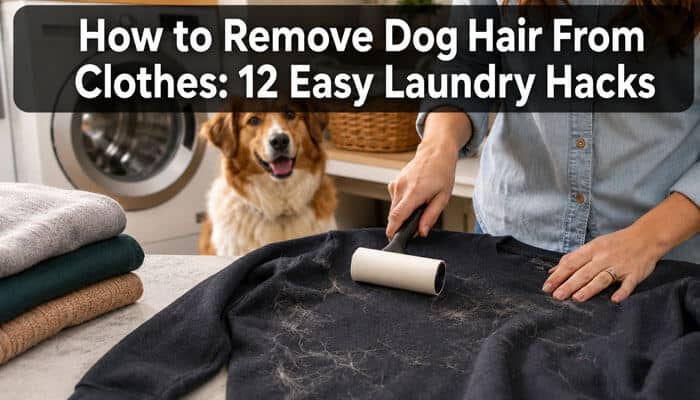

Dog hair can cling to shirts, trousers, coats, uniforms, activewear, blankets, and almost every fabric surface in a pet-friendly home. Long, soft fur may sit visibly on top of clothing, while short, stiff hairs can push between fabric fibres and remain embedded even after an ordinary wash cycle. Learning how to remove dog hair from clothes starts before the garments enter the washing machine. When heavily fur-covered clothing becomes wet, loose hair may form clumps, attach to other items, or collect around the washer drum, door seal, filter, and drainage system. Washing alone is therefore not always enough.
The most effective approach is to remove as much dry fur as possible, wash a manageable load, reduce static, and capture the remaining hair during drying. For garments that can safely be tumble-dried, a short no-heat dryer cycle before washing can loosen surface hair and move it towards the lint filter.
This complete guide explains how to remove dog hair from clothes using 12 easy laundry hacks. It also covers embedded dog hair, delicate fabrics, washing-machine maintenance, pet stains, allergy concerns, common laundry myths, and practical ways to prevent fur from returning to freshly cleaned clothes.
Quick Answer: How to Remove Dog Hair From Clothes
The best general method for how to remove dog hair from clothes is:
- Shake the clothing outdoors.
- Remove loose fur with a lint roller, garment brush, or slightly damp rubber glove.
- Place tumble-dry-safe garments in a dryer for approximately 10 minutes on a no-heat or air-only setting.
- Clean the dryer lint filter.
- Wash the garments in a moderately sized load.
- Measure detergent according to the product instructions.
- Select an extra rinse when necessary.
- Dry every garment according to its care label.
- Clean the lint filter again.
- Remove remaining strands after the clothing is completely dry.
The most important principle is to remove dog hair in stages. Dry brushing removes surface fur, washing removes soil and loosened debris, and drying or final lint rolling captures strands that survive the wash.
Always check the garment’s care label before using a washing machine, dryer, stain remover, fabric conditioner, or laundry accessory.
Key Takeaways
- Understanding how to remove dog hair from clothes begins with dry removal.
- Shake, brush, or lint-roll clothing before washing it.
- Do not place extremely hairy garments directly into an overloaded washer.
- Use a no-heat dryer cycle only when the garment permits tumble drying.
- Wash heavily covered clothing separately from clean or lint-attracting fabrics.
- Use the correct amount of detergent instead of adding extra product.
- Add an extra rinse when heavily covered or textured clothes need it.
- Reduce static to prevent loosened fur from clinging to clothing again.
- Clean the dryer lint filter every time the dryer is used.
- Treat dog hair, pet stains, odours, and allergens as separate problems.
- Brush your dog regularly to reduce loose hair throughout the home.
- Store clean clothing away from pet-accessible beds, sofas, and floors.
Why Is It Difficult to Remove Dog Hair From Clothes?
Understanding why fur clings to fabric can help you choose the right method for how to remove dog hair from clothes. Dog hair attaches to clothing because of static electricity, friction, fabric texture, moisture, body oils, and the physical shape of individual hairs.
Static electricity
When fabrics rub together, they can develop electrical charges. Lightweight dog hair, lint, and dust are then attracted to the material instead of falling away.
Static is often more noticeable:
- On polyester and synthetic clothing
- During dry weather
- When garments are overdried
- When a dryer is overloaded
- When similar synthetic materials rub together
Reducing static during drying can help prevent loosened dog hair from sticking to clothing again.
Textured fabrics
Dog hair becomes trapped more easily in fabrics with raised fibres, loose weaves, or brushed surfaces.
Common hair-attracting materials include:
- Fleece
- Flannel
- Velvet
- Brushed cotton
- Wool blends
- Loose knitwear
- Textured polyester
- Some athletic fabrics
Smooth, tightly woven fabrics are usually easier to clean because they provide fewer openings for dog hair to enter.
Short and coarse dog hair
Long dog fur often remains visible on the fabric surface. Short, stiff hairs may be more difficult because individual strands push between fibres at different angles. This embedded hair may need to be loosened with a rubber glove, garment brush, or silicone tool before a lint roller can collect it.
Oils, saliva, and moisture
Natural coat oils, saliva, rainwater, mud, and other residues can make dog hair cling more firmly. Once a large amount of hair becomes wet, it may form clumps rather than rinsing away evenly. This is why learning how to remove dog hair from clothes before washing is so important.
Restricted movement in the washer
Garments need room to move through water and detergent. When the washing machine is overloaded, clothing remains pressed together, and dog hair can stay trapped between items.
Which Method Should You Use?
The best answer to how to remove dog hair from clothes depends on the amount of fur, the fabric, the available appliances, and whether the item has stains.
| Situation | Best first step | Laundry method | Final treatment |
| Light hair on a shirt | Lint roller | Wash only when necessary | Roll again before wearing |
| Heavy hair on washable clothes | Shake and brush outdoors | No-heat dryer cycle, then wash | Dry and clean the lint filter |
| Embedded hair in fleece | Rubber glove or silicone brush | Wash separately | Brush again when dry |
| Pale fur on black clothing | Reusable lint brush | Keep away from towels | Inspect under bright light |
| Hair on wool knitwear | Soft garment brush | Follow the care label | Dry flat when instructed |
| Dry-clean-only clothing | Soft brush | Professional cleaning | Store in a garment bag |
| Hair with dried mud | Brush off dry material | Pretreat and wash | Inspect before applying heat |
| Hair with urine | Remove fur and blot the stain | Pretreat and wash | Air dry and inspect |
| Clothes being worn | Lint roller or masking tape | No washing required | Reduce static if suitable |
| Hairy dog bedding | Shake or vacuum outdoors | Wash in a manageable load | Clean appliance filters |
| No dryer available | Shake, brush, and roll | Wash with an extra rinse if needed | Air dry and lint-roll |
| Embellished garment | Soft garment brush | Follow the care label | Avoid aggressive adhesive |
Tools That Make Dog-Hair Removal Easier
You do not need every product marketed to pet owners. A few reliable tools can make how to remove dog hair from clothes much easier.
| Tool | Best use | Main benefit | Important caution |
| Adhesive lint roller | Everyday clothing | Fast surface removal | Test delicate finishes |
| Reusable lint brush | Coats and trousers | Low ongoing cost | Clean after each use |
| Masking tape | Small stubborn areas | Useful in emergencies | Avoid very strong adhesive |
| Rubber household glove | Fleece and durable fabric | Gathers fur into clumps | Use only slightly damp |
| Silicone pet-hair brush | Embedded hair | Reusable and effective | May snag loose knitwear |
| Soft garment brush | Wool and structured clothing | Gentle treatment | Use the correct brush type |
| Microfibre cloth | Light fur and dust | Washable and reusable | Avoid aggressive rubbing |
| Upholstery vacuum attachment | Coats and heavy items | Removes large amounts quickly | Use low suction |
| No-heat dryer setting | Tumble-dry-safe clothes | Loosens dry fur | Check the care label |
| Dryer sheet | Static-prone clothes | May reduce static cling | Not suitable for every fabric |
| Dryer balls | Compatible dryer loads | Help separate garments | Results vary |
| Built-in pet-hair filter | Compatible washers | Captures loosened hair | Requires regular cleaning |
How to Remove Dog Hair From Clothes: 12 Easy Laundry Hacks
1. Shake the Clothes Outdoors
The first step in how to remove dog hair from clothes is often the simplest: take the garment outdoors and shake it. Hold the item by a strong area, such as the shoulders, waistband, or upper edge. Shake each sleeve, trouser leg, pocket, and lining separately so loose fur falls away.
For durable clothing, you can lightly tap it against a clean outdoor railing. Avoid dirty walls, floors, or rough surfaces that could stain or damage the material.
This method is particularly useful for:
- T-shirts
- Jeans
- Hoodies
- Dog-walking clothes
- Washable jackets
- Blankets
- Furniture covers
- Car-seat covers
Shaking will not remove deeply embedded hair, but it reduces the quantity entering your washing machine. Avoid aggressive shaking with loose knitwear, sequins, weak seams, damaged garments, or vintage textiles.
2. Use a Lint Roller Before Washing
A lint roller is one of the fastest tools for how to remove dog hair from clothes with light or moderate fur coverage. Place the garment on a clean, flat surface. Roll from the shoulders towards the bottom using short, overlapping movements.
Place one hand inside sleeves or trouser legs to create a firmer surface. This allows the adhesive sheet to make better contact with the fabric. Replace the sticky sheet when it becomes covered. Continuing with a full sheet can redistribute fur rather than collect it.
Lint rollers are useful for:
- Cotton shirts
- Office clothing
- School uniforms
- Jeans
- Leggings
- Smooth jackets
- Lightly covered knitwear
- Dark clothing with pale fur
A reusable lint roller or velvet lint brush may be more economical in homes with several dogs. Test adhesive on an inside seam before using it on silk, suede, velvet, loose wool, printed graphics, or decorative finishes.
3. Lift Stubborn Dog Hair With Masking Tape
Masking tape is a practical solution when a lint roller is unavailable or cannot reach small areas. Wrap a strip of masking tape around your fingers with the sticky side facing outward. Press it gently onto the affected section and lift it away. Move to a clean part of the tape after several presses.
Use masking tape around:
- Cuffs
- Collars
- Waistbands
- Pocket openings
- Side seams
- Coat shoulders
- Fabric-covered buttons
This technique is particularly useful when learning how to remove dog hair from clothes while travelling or immediately before an event. Avoid duct tape and heavy packing tape. Strong adhesive can pull fibres, leave residue, or lift printed designs. Use tape as a targeted treatment rather than covering the entire garment.
4. Use a Slightly Damp Rubber Glove
A clean rubber glove produces friction that gathers loose fur into removable clumps. Put on the glove and dampen the palm very lightly. Sweep your hand across the garment in one direction. Pick off the collected hair, rinse the glove, and repeat.
A rubber glove works especially well on:
- Fleece
- Denim
- Polyester jackets
- Heavy cotton
- Fabric bags
- Durable workwear
- Car-seat transfer marks
- Pet blankets
The glove should be barely damp. Too much water can spread dirt, create water marks, or make fur more difficult to collect. Test an inside seam first, especially on dark or unfamiliar fabric. Stop if dye transfers to the glove. For many pet owners, this is one of the most affordable methods for how to remove dog hair from clothes without a lint roller.
5. Brush in More Than One Direction
Short dog hairs often enter fabric at different angles. Brushing in only one direction may therefore leave many strands behind. Lay the garment flat and use a reusable fabric brush or silicone pet-hair brush. Begin with short downward strokes, then brush sideways and gently against the weave.
Changing direction exposes the ends of stiff hairs, making them easier to remove with masking tape or a lint roller. Clean the brush regularly. A brush covered with fur may transfer the collected hair back onto the garment.
Avoid aggressive brushing on:
- Loose knits
- Silk
- Lace
- Sequins
- Beading
- Weak seams
- Delicate embroidery
- Fragile vintage fabric
This method is especially useful for how to remove dog hair from clothes made from fleece or brushed polyester.
6. Use a Vacuum Attachment on Heavy Clothing
A clean upholstery attachment can remove large amounts of dog hair from coats, jackets, bags, and other durable materials. Lay the garment flat and use low suction. Keep the nozzle moving instead of holding it in one location. Test a hidden section first.
Vacuuming is most suitable for:
- Winter coats
- Canvas jackets
- Denim jackets
- Heavy workwear
- Durable fabric bags
- Thick dog blankets
Do not vacuum silk, loose wool, lace, sequined clothing, or damaged fabric. Strong suction can pull loose threads and distort delicate materials.
Vacuuming is not usually necessary for light shirts, but it can be a useful first step when researching how to remove dog hair from clothes with heavy fur buildup.
7. Run a No-Heat Dryer Cycle Before Washing
For garments that are safe to tumble dry, this is one of the most effective techniques for how to remove dog hair from clothes.
Place the dry, fur-covered clothes inside the dryer and select:
- Air Fluff
- Air Only
- No Heat
- A comparable unheated setting
Run the dryer for approximately 10 minutes. Tumbling loosens the fur, while airflow moves it towards the lint filter.
After the cycle:
- Remove the garments.
- Clean the lint filter.
- Inspect the dryer drum.
- Wipe away accessible fur if the appliance instructions permit it.
- Transfer the clothing to the washing machine.
Do not use this method when the label says:
- Do not tumble dry
- Dry clean only
- Dry flat
- Line dry only
A no-heat cycle still creates friction and movement. It may damage leather, suede, structured clothing, fragile embellishments, or garments that prohibit tumble drying.
8. Separate Heavily Covered Clothing
Do not place one extremely hairy sweatshirt into a load of otherwise clean work clothing. Fur released from one item can settle on another, particularly when the receiving fabric is synthetic, dark, fuzzy, or brushed.
Separate clothing according to:
- Hair coverage
- Fabric type
- Colour
- Soil level
- Care instructions
- Lint production
Keep lint-producing towels away from fleece, polyester, and other lint-attracting fabrics. Heavily covered dog bedding should also be separated from valuable or delicate clothing. Separating loads is a simple but important part of how to remove dog hair from clothes without spreading it to other garments.
9. Avoid Overloading the Washing Machine
Clothes need room to circulate through water and detergent.
An overloaded washer can:
- Trap hair between garments
- Restrict water movement
- Reduce detergent distribution
- Limit rinsing
- Leave hair on fleece and textured fabrics
- Create an unbalanced load
- Make stains harder to remove
Follow the washing machine’s capacity instructions. Front-loading machines, top-loading agitator washers, and impeller washers move clothing differently. The garments should not be compressed into a solid mass. Two moderately sized loads often provide better results than one tightly packed cycle.
When deciding how to remove dog hair from clothes in a washing machine, remember that load size can be as important as detergent or water temperature.
10. Choose the Correct Cycle and Detergent Amount

After removing the loose fur, wash the clothing according to its care label.
Consider:
- Fabric type
- Colour
- Soil level
- Garment construction
- Elastic components
- Decorative elements
- Stain type
- Drying restrictions
Does hot water remove dog hair better?
Hot water does not dissolve dog hair.
Dog hair is removed mainly through:
- Manual brushing
- Friction
- Water circulation
- Drum movement
- Rinsing
- Filtration
- Dryer airflow
Using water that is hotter than the garment permits may cause shrinkage, fading, loss of shape, or damage to elastic. Choose the water temperature according to the garment’s care label and the type of stain.
Do not add excessive detergent
More detergent does not create more airflow, washing space, or filtration. Excess product can leave residue on clothing or inside the machine.
Follow the recommended dose for:
- Load size
- Soil level
- Water hardness
- Washer type
- Product concentration
Using the right detergent amount supports how to remove dog hair from clothes without leaving the fabric coated or difficult to rinse.
11. Use an Extra Rinse and Reduce Static
An additional rinse may help carry away loosened dog hair and detergent residue.
Consider an extra rinse when:
- The clothes had heavy fur coverage.
- The load contains fleece or brushed material.
- Hair remains after the main wash.
- The machine has a pet-care cycle.
- The garments were heavily soiled.
- Someone in the household is sensitive to detergent residue.
An extra rinse cannot compensate for a severely overloaded washer. Reduce the load size when repeated rinsing does not improve the result.
Reduce static during drying
Static can cause loosened hair to cling again, especially on synthetic clothes.
Possible options include:
- A compatible dryer sheet
- Correctly dispensed fabric conditioner
- Dryer balls
- A laundry product formulated for static control
- Avoiding excessive drying
- Using smaller dryer loads
Check garment and product labels before using fabric conditioner on:
- Activewear
- Microfibre cloths
- Flame-resistant clothing
- Waterproof materials
- Towels
- Moisture-wicking fabrics
Reducing static is an important final step in how to remove dog hair from clothes made from polyester and other synthetics.
12. Inspect and Lint-Roll Clothes After Drying
After the garments are completely dry, examine them under bright light.
Check:
- Collars
- Cuffs
- Waistbands
- Underarms
- Pocket edges
- Side seams
- Fleece linings
- Trouser hems
- Areas that touched furniture
Remove the final strands with a lint roller, masking tape, or garment brush. Store the clothing immediately. Use a clean folding surface and laundry basket, then place the garments inside a closed wardrobe or drawer.
A freshly washed shirt can become covered with dog hair again within minutes when placed on a pet-accessible bed, sofa, chair, or floor. The final inspection is an essential part of how to remove dog hair from clothes completely.
Best Dog-Hair Removal Method by Fabric Type
Different materials require different approaches. The safest method for how to remove dog hair from clothes should always match the fabric.
| Fabric or garment | Recommended method | Avoid |
| Cotton T-shirt | Shake, lint-roll, wash, and tumble dry if permitted | Excessive heat |
| Denim | Brush and wash in a manageable load | Packing with too many heavy items |
| Polyester | Lint-roll, rinse thoroughly, and control static | Overdrying |
| Fleece | Use a rubber glove or silicone brush before washing | Washing with lint-producing towels |
| Wool sweater | Use a soft garment brush and approved cleaning method | Unapproved tumble drying |
| Silk | Use a soft brush or professional cleaner | Strong tape and rubbing |
| Velvet | Use a specialist brush or professional care | Brushing against the pile |
| Linen | Lint-roll and follow the care label | Unnecessary high heat |
| Activewear | Remove hair before washing | Unapproved fabric conditioner |
| Waterproof jacket | Use a soft brush and approved cleaner | Damaging the protective coating |
| Leather | Use specialist leather care | Washing machine and dryer |
| Suede | Seek professional cleaning | Water and adhesive tape |
| Dry-clean-only coat | Brush gently and use professional cleaning | Home laundering |
| Sequined clothing | Use gentle manual removal | Rollers that catch embellishments |
| Flame-resistant sleepwear | Follow the label precisely | Unapproved fabric softener |
Always begin with the least aggressive method likely to work.
How to Remove Dog Hair From Clothes Without a Dryer
A dryer can make fur removal easier, but it is not essential.
Here is how to remove dog hair from clothes without a dryer:
Step 1: Allow damp clothing to dry
If the garment became wet from rain or contact with a damp dog, allow it to dry according to its care label. Dry fur is easier to brush and roll.
Step 2: Shake it outdoors
Remove as much loose surface hair as possible.
Step 3: Use a lint roller or brush
Work on one section at a time.
Step 4: Try a slightly damp rubber glove
This works particularly well on fleece and durable synthetic fabrics.
Step 5: Wash a manageable load
Do not pack the machine tightly.
Step 6: Add an extra rinse when needed
This may carry away hair loosened during washing.
Step 7: Air dry correctly
Hang or lay the garment flat as directed by the label.
Step 8: Finish after the garment is dry
Use a lint roller, masking tape, or garment brush to collect the remaining strands.
How to Remove Dog Hair From Clothes While Wearing Them
Sometimes you notice dog hair moments before work, a meeting, an interview, or an event.
Use this quick routine for how to remove dog hair from clothes while wearing them:
- Stand under bright light.
- Smooth the clothing with one hand.
- Roll from the shoulders downward.
- Use masking tape around cuffs, seams, and collars.
- Wipe durable areas with a barely damp rubber glove.
- Allow any moisture to evaporate.
- Inspect the back, sleeves, and trouser legs.
Keep a compact lint roller in:
- Your car
- Your desk
- A travel bag
- A coat pocket
- An entryway drawer
For static-prone garments, use only an anti-static product that is compatible with the fabric.
How to Remove Embedded Dog Hair From Clothes
Short, stiff dog hair can become lodged between fibres rather than resting on the surface.
Use this process for how to remove dog hair from clothes when the strands are deeply embedded:
- Lay the garment flat.
- Stretch the fabric gently without distorting it.
- Brush in several directions.
- Use a rubber glove to gather loosened strands.
- Press masking tape onto the exposed ends.
- Repeat before washing.
- Inspect the garment again after it dries.
Fleece, flannel, brushed cotton, and polyester may require several passes. Avoid pulling individual hairs aggressively with tweezers. Tweezers may damage fabric loops, pull threads, or create visible snags.
How to Remove Dog Hair From Delicate Clothes
Delicate garments require less friction and closer attention to the care label.
Dry-clean-only clothing
Take the garment to a professional cleaner and mention:
- Pet hair
- Dander
- Odour
- Mud
- Saliva
- Urine
- Any stain treatment already used
Wool and cashmere
Use a soft garment brush designed for wool. Brush with the grain rather than scrubbing repeatedly.
Silk
Avoid strong adhesive, aggressive rubbing, and untested moisture treatments. Professional cleaning may be safest when the dog hair is mixed with a stain.
Velvet
Use a specialist velvet brush and work in the direction of the pile.
Sequins and embellishments
Use a soft brush or low-adhesion tape between decorative elements. Do not roll directly over beads, sequins, or loose embroidery.
When considering how to remove dog hair from clothes made from delicate fabric, remember that a no-heat dryer cycle is not automatically safe. Tumbling can still stretch, distort, or abrade the garment.
How to Remove Dog Hair From Clothes With Mud or Pet Stains
Dog hair removal and stain removal should be handled as separate stages.
The safest order is:
Remove loose hair → identify the stain → pretreat → wash → inspect → dry
Dried mud
Allow ordinary mud to dry when practical. Brush away the loose dirt before treating the remaining mark.
Rubbing wet mud may push particles deeper into the fabric.
Coat oils and saliva
Remove visible dog hair, then apply a compatible laundry detergent or stain remover to the affected section.
Test coloured garments in a hidden area before treating the visible stain.
Urine
For fresh urine:
- Blot rather than rub.
- Remove visible dog hair.
- Rinse or pretreat according to the garment label.
- Wash separately when necessary.
- Air dry and inspect the garment.
Do not apply dryer heat until the stain and odour have been removed. Heat may make remaining stains more difficult to treat.
Vomit, faeces, or material from an ill pet
Wear disposable or washable gloves and keep contaminated clothing separate from clean laundry. Wash your hands thoroughly after handling animal waste. Follow veterinary advice when the pet has a diagnosed infectious condition.
This section is important because how to remove dog hair from clothes is not the same as disinfecting or removing biological stains.
How to Clean Dog Hair From a Washing Machine
After washing heavily covered clothing:
- Remove visible fur clumps from the drum.
- Inspect the door gasket or lid area.
- Check accessible detergent dispensers.
- Clean removable filters according to the manual.
- Wipe the drum with a clean cloth.
- Run the manufacturer-recommended cleaning cycle when necessary.
- Allow the machine to dry as directed.
Front-loading washing machines
Inspect the folds of the rubber door seal, where wet hair can collect.
Top-loading agitator washers
Check the drum, agitator base, dispensers, and accessible lint filters.
Impeller washing machines
Avoid packing clothing tightly because effective garment movement is necessary.
High-efficiency washers
Use high-efficiency detergent when required and avoid excessive suds.
Washers with pet-hair filters
Clean the dedicated filter at the interval stated in the manual. A filter already filled with fur cannot continue capturing hair effectively.
Contact an appliance technician when you notice:
- Slow drainage
- Repeated drain errors
- Water remaining in the drum
- Unusual noises
- Leaks
- Persistent odours
- A stuck filter
- Hair inside an inaccessible component
Do not dismantle internal appliance parts while the machine is connected to power.
Keeping the washer clean supports your overall routine for how to remove dog hair from clothes and prevents old fur from transferring to future loads.
How to Clean Dog Hair From a Dryer
After each dryer load:
- Remove and clean the lint screen.
- Inspect the drum and door opening.
- Remove accessible fur.
- Reinstall the lint screen correctly.
- Never operate the dryer without its filter.
Follow the dryer manual for:
- Cleaning the lint-screen housing
- Inspecting the exhaust duct
- Checking the outside vent
- Removing residue from the screen
- Arranging professional vent cleaning
Investigate unusually long drying times, poor airflow, or excessive heat. These may indicate restricted ventilation.
A clean lint filter improves airflow and makes the dryer more effective when using it as part of how to remove dog hair from clothes.
Common Myths About How to Remove Dog Hair From Clothes
Myth 1: Vinegar dissolves dog hair
Vinegar does not dissolve dog hair during an ordinary laundry cycle. It may help with certain odours or stains when used correctly, but it cannot replace brushing, tumbling, rinsing, or filtration. Do not pour vinegar into a washing machine unless the appliance instructions permit it.
Myth 2: Baking soda breaks down dog fur
Baking soda may help control some odours, but it does not physically remove dog hair. The strands still need to be loosened through brushing, tumbling, rinsing, or filtration.
Myth 3: More detergent removes more hair
Additional detergent does not create more drum space, airflow, or washing action. Excess product may leave residue on clothing and inside the washing machine.
Myth 4: Hot water melts dog hair
Normal laundry water does not melt dog hair. Water that is too hot may shrink, fade, or damage the garment.
Myth 5: Bleach removes dog hair
Bleach may treat certain stains or microorganisms when the label permits it, but it does not physically remove pet hair. Never mix chlorine bleach with ammonia, vinegar, or other household cleaners.
Myth 6: Every garment can use the dryer hack
A no-heat dryer cycle still creates friction. It may damage clothing labelled for flat drying, line drying, or professional cleaning.
Myth 7: Any sponge can collect dog hair in a washer
Ordinary kitchen sponges, disposable wipes, and unapproved rubber items may break apart, release residue, or catch on clothing. Use only accessories designed for laundry and compatible with your appliance.
Myth 8: Removing visible hair eliminates allergens
A garment may look free from fur while still carrying microscopic pet allergens.
Dog Hair, Dander, and Pet Allergies
People with pet allergies generally react to proteins associated with dander, saliva, and urine rather than the visible hair strand itself.
Dog hair can transport those allergens onto clothing, bedding, furniture, and other household surfaces. Removing visible fur improves the appearance of clothing, but it does not guarantee that every allergen has been removed.
Allergy-conscious laundry routine
- Change clothes after prolonged contact with a dog.
- Wash your hands after grooming or handling pet bedding.
- Wash affected garments according to their care labels.
- Keep clean clothes in closed storage.
- Vacuum upholstered furniture.
- Wash dog bedding regularly.
- Keep the dog out of the allergic person’s bedroom.
- Avoid shaking heavily covered clothing indoors.
- Consult an allergist when symptoms continue.
People with severe allergies may need broader exposure-control measures in addition to learning how to remove dog hair from clothes.
Seek urgent medical help for serious breathing difficulty, severe swelling, or other significant reactions.
How to Prevent Dog Hair From Covering Clothes
Knowing how to remove dog hair from clothes is useful, but preventing heavy buildup can save time and protect your laundry appliances.
Brush your dog regularly
Routine brushing removes loose fur before it reaches clothing and furniture.
The amount of shedding varies according to:
- Breed
- Coat type
- Season
- Age
- Health
- Grooming routine
Ask a veterinarian or professional groomer to recommend an appropriate brush.
Watch for unusual shedding
Contact a veterinarian when shedding is accompanied by:
- Bald patches
- Red skin
- Open sores
- Persistent scratching
- Sudden coat thinning
- Excessive licking
- Unusual skin odour
- Visible parasites
Cover the dog’s favourite furniture
Use washable covers on:
- Sofas
- Beds
- Fabric chairs
- Car seats
- Dog sleeping areas
Shake or vacuum the covers before washing.
Use a closed laundry hamper
Do not leave dirty or clean clothing on floors, beds, chairs, or sofas where the dog rests.
Close wardrobes and drawers
Airborne dog hair can settle on clothing that has not yet been worn.
Establish clean-clothing zones
Keep your folding table, workwear wardrobe, and clean-laundry area inaccessible to pets whenever practical.
Vacuum frequently
Focus on:
- Sofas
- Rugs
- Fabric headboards
- Car interiors
- Dog beds
- Wardrobe areas
- Laundry-room floors
Wash pet bedding regularly
Remove loose hair before washing and follow the bedding’s care label.
Wear dedicated grooming clothes
Wear an older, smooth-fabric shirt or grooming apron while brushing or bathing your dog.
Choose smoother fabrics
Tightly woven fabrics are generally easier to clean than fleece, loose knitwear, and heavily brushed materials. Preventive habits make how to remove dog hair from clothes and reduce the number of heavily contaminated laundry loads.
Troubleshooting: How to Remove Dog Hair From Clothes When Normal Washing Fails
| Problem | Likely cause | Recommended solution |
| Hair remains after washing | Too much fur entered the washer | Brush or use a no-heat dryer cycle first |
| Hair transfers to other clothes | Mixed laundry load | Separate heavily covered garments |
| Fleece remains covered | Hair is embedded in raised fibres | Use a rubber glove or silicone brush |
| Synthetic clothes attract hair | Static electricity | Avoid overdrying and use suitable static control |
| Washer drum contains fur | Excessive loose hair | Wipe the drum and inspect filters |
| Hair returns after folding | Contaminated surface | Clean the basket and folding area |
| Black clothes show every strand | Strong colour contrast | Inspect under bright light |
| Clothing feels coated | Too much detergent | Measure correctly and rinse properly |
| Clothes smell after washing | Remaining stain or dirty washer | Pretreat stains and clean the machine |
| Dryer takes longer | Restricted airflow or overloaded dryer | Clean the lint filter and inspect ventilation |
| Stiff hairs remain embedded | Hair entered from multiple angles | Brush in different directions and use tape |
| Coat cannot be washed | Care-label restriction | Brush gently and seek professional cleaning |
Complete Laundry Routine for Dog Owners
A consistent routine makes how to remove dog hair from clothes easier and prevents fur from accumulating inside appliances.
Before laundry day
- Brush your dog according to its coat type.
- Vacuum dog-friendly furniture.
- Shake pet bedding outdoors.
- Store heavily covered garments separately.
- Check clothing care labels.
Before washing
- Sort garments by colour, fabric, soil, and fur level.
- Shake the clothing outdoors.
- Lint-roll or brush the fabric.
- Pretreat visible stains.
- Use a no-heat dryer cycle for suitable items.
- Clean the dryer lint filter.
During washing
- Load the washer loosely.
- Measure detergent correctly.
- Select a care-label-approved cycle.
- Use a pet-hair programme when available.
- Add an extra rinse when necessary.
After washing
- Inspect stains before drying.
- Check the washer drum and gasket.
- Dry each garment according to its label.
- Clean the dryer lint filter.
- Remove remaining dog hair manually.
- Fold clothes on a clean surface.
- Store garments in a closed wardrobe or drawer.
Final Verdict: How to Remove Dog Hair From Clothes
The best approach to how to remove dog hair from clothes is to work in stages instead of expecting one washing cycle to solve the entire problem. Begin by shaking, brushing, or lint-rolling the clothing while it is dry. When the care label permits it, use a short no-heat dryer cycle before washing so that loose fur can move towards the lint filter.
Wash a moderately sized load with the correct amount of detergent. Select an additional rinse when the clothing has heavy fur coverage or textured fabric. Avoid excessive heat and always follow the garment’s care instructions. After washing, inspect stains before applying dryer heat. Dry the garment correctly, clean the lint filter, and remove any remaining strands manually.
Long-term prevention is equally important. Regular grooming, clean dog bedding, washable furniture covers, frequent vacuuming, closed hampers, and protected clothing storage can significantly reduce how much fur reaches your laundry. A consistent remove, tumble, wash, dry, inspect, and store routine provides the most practical answer to how to remove dog hair from clothes while protecting the fabric, reducing appliance buildup, and keeping your wardrobe cleaner.
How to Remove Dog Hair From Clothes FAQs
1. What is the fastest method for How to Remove Dog Hair From Clothes?
The fastest way for How to Remove Dog Hair From Clothes is using a lint roller or masking tape on dry fabric before washing to quickly lift surface pet hair.
2. How to Remove Dog Hair From Clothes in a washing machine effectively?
To properly understand how to Remove Dog Hair From Clothes in a washing machine, pre-shake or brush clothes, avoid overload, and use an extra rinse cycle for best results.
3. Does a dryer help in How to Remove Dog Hair From Clothes?
Yes, a no-heat dryer cycle helps in How to Remove Dog Hair From Clothes by loosening hair and pushing it into the lint filter before washing.
4. Why does dog hair stick to clothes so easily?
Dog hair sticks due to static electricity, fabric texture, and moisture. This makes How to Remove Dog Hair From Clothes harder without proper pre-treatment methods like brushing or lint rolling.
5. How can I prevent dog hair from sticking to clothes?
Prevention is key in How to Remove Dog Hair From Clothes. Regular pet grooming, using lint rollers daily, and storing clothes in closed wardrobes reduces hair buildup significantly.
