



Fit Starts With Geometry
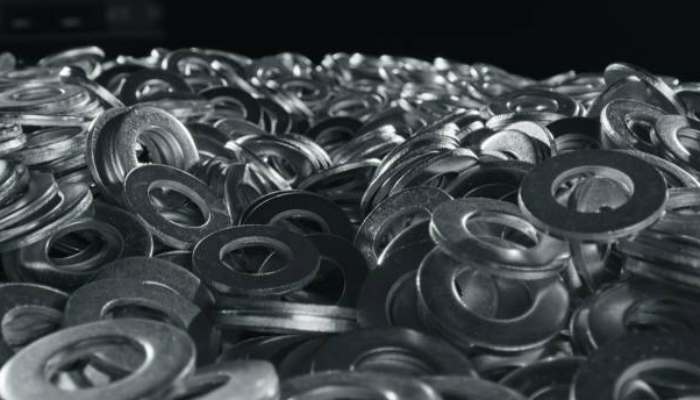
Before a joint can hold clamp force, the washer must sit correctly against both surfaces. In assemblies with oversized holes, offset bolt paths, narrow shoulders, or limited clearance, custom washers help correct contact issues without changing the larger design. Proper inside diameter, outside diameter, profile, and thickness keep parts centred, supported, and repeatable under service loads.
Why Standard Parts Fall Short
Catalogue washers use common dimensions for broad availability. That convenience can hide fit problems during early builds. A part may cover too little bearing area, collide with a rib, or leave witness marks from uneven contact. In production, that small mismatch can create sorting, scrap, and repair work. A custom part gives the joint geometry that the drawing actually needs.
Load Distribution Matters
Fasteners concentrate force at the hole. Washers spread that force across nearby material. If the contact area is too small, aluminium, plastic, composites, or painted steel can crush, craze, or deform. A wider or shaped washer lowers surface pressure. Better bearing support also protects slots, castings, covers, and brackets during tightening and later service.
Thickness Controls Stack Height
Stack height affects thread engagement, torque response, and final position. A washer that is too thin can dish under load. One that is too thick may reduce usable thread length. Custom thickness helps hold spacing without extra shims. That control supports consistent clamp behaviour, cleaner assembly steps, and fewer adjustments during repeated production runs.
Material Selection Sets Strength
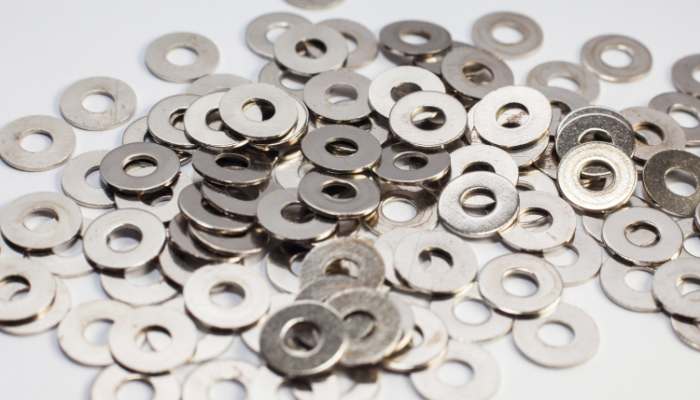
Material choice determines hardness, corrosion response, conductivity, and fatigue behaviour. Carbon steel, alloy steel, stainless steel, brass, and speciality metals each serve different conditions. Heavy clamp loads require adequate yield strength. Moisture, salt, or chemicals call for corrosion resistance. The right material prevents embedding, wear, staining, and failure of hidden joints.
Heat Treating Adds Control
Heat treatment changes hardness and load resistance. That control matters in equipment exposed to vibration, impact, or repeated maintenance. If a washer is too soft, it can embed into the mating surface. If the hardness is too high, the cracking risk rises. Controlled processing helps balance strength, toughness, and service life.
Finish Reduces Risk
Surface finish affects corrosion protection, friction, and installation feel. Zinc plating, phosphate coating, oil, and other coatings serve different environments. Finish also changes the torque behaviour because friction influences the clamp force. Matching the surface treatment to the application helps prevent rust, galling, paint damage, and unpredictable tightening results.
Shape Solves Packaging Problems
Round washers do not suit every joint. D-shaped, square, rectangular, tabbed, slotted, or notched profiles can fit difficult spaces. A custom outline may clear welds, ribs, housings, or bent flanges. It can also prevent rotation while the fastener is tightened. That saves time where operators need quick, accurate placement.
Tolerance Supports Repeatability
Loose dimensions may be acceptable for low-risk hardware. Precision assemblies need tighter limits. Inside diameter affects fastener clearance. The outside diameter controls bearing area. Flatness influences force transfer. Thickness sets spacing. When those features stay consistent, torque results become easier to predict, and production teams face fewer interruptions.
Vibration Needs Better Contact
Vibration, cycling, and impact expose weak joints quickly. Poor washer fit can allow settling, fretting, or clamp loss. A washer with suitable hardness, bearing area, and surface condition helps stabilise contact. It does not replace sound fastener design, but it supports the joint where movement, shock, and relaxation create risk.
Cost Comes From Failure
A low unit price can become expensive when a washer causes downtime, scrap, sorting, or field repair. Custom parts can eliminate secondary operations and reduce added spacers. They can also combine spacing, bearing support, and fit correction into a single component. Purchase cost matters, but failure cost usually matters more.
Engineering Input Improves Results
Good washer design starts with application facts. Engineers should review load, fastener size, mating material, environment, installation method, and expected service life. Drawings need clear critical dimensions and tolerances. Samples can confirm fit before release. Testing then checks torque behaviour, deformation, corrosion exposure, and vibration response before full production.
Conclusion
Custom washers solve problems that standard hardware often leaves unresolved. They improve fit, spread load, control spacing, resist wear, and support stable fastening in demanding assemblies. Their value shows up as fewer adjustments, cleaner builds, and better service performance. For manufacturers, the washer should never be treated as a minor afterthought. It is a practical engineering choice that helps our assemblies perform more consistently and with fewer avoidable failures.
