


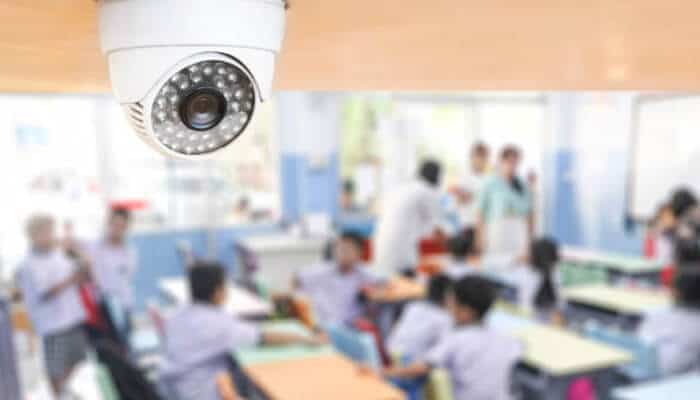

School surveillance used to mean a few cameras in the hallway and a tape locked in the principal’s office. That era is over. Today’s schools rely on far more sophisticated systems: cloud-connected cameras, visitor management tools, access control platforms, device monitoring, vape detectors, and AI-assisted alerting. These tools can improve safety and help staff respond faster when something goes wrong. But they also raise a harder question that schools can no longer afford to treat as secondary: how do you protect student privacy while expanding surveillance?
That tension is now at the center of school safety conversations. Parents want campuses to be secure. Administrators want clear evidence when incidents happen. Teachers want support, not more friction. Students, meanwhile, are growing up in environments where monitoring can feel constant. The challenge is not whether schools should use surveillance technologies at all. It’s whether they can do so without normalizing unnecessary intrusion, over-collection of data, or broad access to sensitive information.
Safety and Privacy Are Not Opposing Goals
One of the biggest mistakes schools make is framing privacy as an obstacle to security. In practice, the opposite is often true. Privacy-conscious systems tend to be better governed, more precisely scoped, and less vulnerable to misuse.
A surveillance program becomes risky when it expands without clear boundaries. Maybe footage is stored for longer than necessary. Maybe too many staff members can access it. Maybe clips are shared externally without redacting bystanders. Maybe an AI tool is introduced before anyone has asked basic questions about bias, retention, or parental notification. None of that improves safety. It simply increases exposure.
The most effective school safety strategies focus on proportionality. What data is actually needed? Who needs access to it? For how long? Under what circumstances should it be reviewed or shared? Once schools start asking those questions, privacy becomes part of operational discipline, not a competing agenda.
Why the Stakes Are Higher in Education
Schools are not just another kind of workplace or public building. They are responsible for minors, and that changes everything. Surveillance in a school captures more than incidents; it records daily routines, social interactions, emotional moments, disciplinary events, and sometimes even health-related situations. In the wrong hands, or handled carelessly, that data can do lasting harm.
Children Cannot Meaningfully Opt Out
Adults in many monitored environments at least understand they are being observed and can choose to avoid certain spaces or platforms. Students usually cannot. Attendance is mandatory, and their ability to consent is limited by age, context, and power dynamics. That creates a higher ethical bar for schools than for most other institutions.
Compliance Is Only the Starting Point
Laws such as FERPA, state student data privacy statutes, and district-level records policies matter, but compliance alone does not solve the problem. A school can technically meet minimum legal requirements and still create a culture of excessive monitoring. Good governance goes beyond checking a box. It includes transparency, restraint, and thoughtful safeguards around access and sharing.
That is one reason many districts are rethinking how they handle recorded footage and incident documentation, especially when material must be shared with families, law enforcement, insurers, or legal teams. Tools like student privacy protection software for academic institutions are increasingly part of that conversation because they help schools limit unnecessary exposure of personally identifiable information when records move beyond the original safety team.
The Hidden Risks Are Usually Operational
When privacy failures happen in schools, they are not always dramatic hacks or headline-making scandals. More often, they come from everyday processes that were never designed carefully enough.
Too Much Access, Too Little Oversight
In many districts, surveillance access expands over time. A few administrators need video access, then campus security, then IT, then maybe outside vendors. Without role-based permissions and audit trails, schools can lose visibility into who is viewing what and why. That creates both security and reputational risk.
Data Retention Creep
Storage is cheaper than it used to be, so footage often stays archived far longer than necessary. But if schools keep everything “just in case,” they increase the amount of sensitive data that could later be breached, subpoenaed, or misused. Retention policies should reflect actual operational need, not vague institutional anxiety.
Context Collapse
A video clip recorded for safety purposes can quickly become something else when shared without care. A hallway altercation may also reveal uninvolved students, disability accommodations, or private disciplinary circumstances. Once footage leaves its original context, the privacy implications multiply.
What Better Privacy Practice Looks Like
Schools do not need to abandon surveillance tools to improve privacy. They need clearer standards for how those tools are deployed and governed.
A strong privacy framework usually includes a few basics:
- data minimization, so schools collect only what they need
- limited retention periods tied to specific purposes
- strict access controls with logs and review procedures
- redaction and secure sharing workflows for footage and records
- transparent communication with families, staff, and students
These are not abstract ideals. They directly affect whether surveillance systems are trusted. And trust matters. If families believe monitoring is excessive or opaque, even well-intentioned safety initiatives can trigger resistance.
The Role of Trust in School Safety
Surveillance systems work best when the community understands their purpose. That means schools should be prepared to explain not just what they use, but why they use it, what limits are in place, and how student rights are protected.
Transparency Reduces Fear and Confusion
Parents are more likely to support camera systems or digital monitoring when districts clearly communicate where those systems operate, what events trigger review, how long records are kept, and who can request access. Vague assurances rarely hold up. Specific policies do.
Students Notice the Culture Around Monitoring
Students are often more aware of surveillance than adults assume. If monitoring feels punitive or indiscriminate, it can damage school climate. If it is targeted, accountable, and paired with visible privacy safeguards, it is easier to justify as part of a broader safety strategy.
Privacy by Design Will Become the New Standard
As school safety technology grows more advanced, privacy can no longer be bolted on after procurement. It has to be part of the decision from the start. District leaders should evaluate systems not only for detection capabilities and ease of use, but also for data handling, vendor access, auditability, and disclosure controls.
That shift is already underway. The schools that handle surveillance best are not necessarily the ones with the most technology. They are the ones with the clearest rules, the strongest internal discipline, and the deepest understanding that protecting students includes protecting their data, identity, and dignity.
In education, privacy is not a luxury feature. It is part of the duty of care.
