


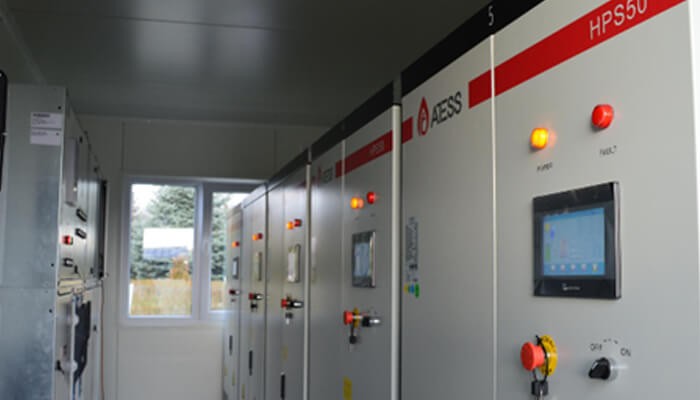

For developers and operators, achieving large-scale energy storage and dispatch within limited physical space while minimizing thermal and conversion losses has become an urgent engineering challenge.
The direction for solving this problem is shifting from traditional topological structures toward high-frequency technology.
Advantages of High-Frequency Technology
By increasing switching frequency, high-frequency technology reconstructs the operating modes of power conversion and magnetic components from the ground up. It not only significantly reduces the volume of passive components but also demonstrates fundamental advantages in efficiency, response speed, and system integration.
High-frequency technology enhances energy storage systems across three core dimensions:
1. Energy Efficiency
By reducing switching losses and conduction losses during power conversion, high-frequency topologies achieve higher overall conversion efficiency. This translates into lower energy losses during charge-discharge cycles and increased usable output from the storage system, directly improving project-level revenue.
2. Power Density
The higher switching frequency enables significant miniaturization of inductors, transformers, and power modules, thereby increasing power density. The value of this advantage is multifaceted: lighter equipment reduces transportation and installation costs; reduced footprint and equipment room space requirements are especially critical in high-land-cost environments; and it creates favorable conditions for system-level integration.
3. Grid Interaction
High-frequency technology enables millisecond-level power response speed and excellent grid-tie power quality, characterized by low harmonic distortion. This allows energy storage systems not only to perform basic charge and discharge functions but also to deliver advanced grid services, such as frequency regulation and voltage support, significantly enhancing their added value and intelligence.
Value of High-Frequency Technology Across Multiple Scenarios
ATESS has fully embraced high-frequency technology in its latest generation of high-frequency power inverters(PCS). By leveraging the fundamental advantages of high-frequency architectures, including higher power density, faster response, and greater efficiency, ATESS high-frequency inverters deliver proven value across grid-side, user-side, and backup power applications.
1. Grid-Side (Utility-Scale Energy Storage)
In grid-side applications, energy storage systems do more than provide fundamental energy time-shifting; they also bear the critical responsibility of maintaining grid stability.
Leveraging millisecond-level power response, ATESS high-frequency inverters can swiftly execute dispatch commands from the grid, significantly enhancing both primary and secondary frequency regulation performance.
This characteristic is particularly vital in scenarios with high renewable energy penetration. When wind or solar output fluctuates drastically, the ATESS system provides instantaneous power compensation to effectively suppress frequency volatility, ensuring the safety and stability of the grid.
Furthermore, the ATESS high-frequency inverters feature robust grid-support capabilities, including High/Low Voltage Ride-Through (H/LVRT), reactive power regulation, and weak grid adaptability, performing exceptionally well in renewable energy hubs and remote or unstable grid environments.
2. User-Side (C&I Storage)
For C&I scenarios, spatial efficiency and ROI are the primary drivers for project implementation. The high power density of ATESS high-frequency inverters allows for flexible deployment in space-constrained industrial parks, factories, and commercial buildings.
At the functional level, high-frequency power inverters support precision peak shaving, valley filling, and demand-side management, automatically optimizing charging and discharging strategies based on electricity price signals and load curves.
This intelligent energy management enables C&I users to capture peak-to-valley arbitrage and reduce electricity costs, while also unlocking participation in emerging business models such as virtual power plants (VPP) and demand response (DR).
3. Backup Power (UPS / Data Centers)
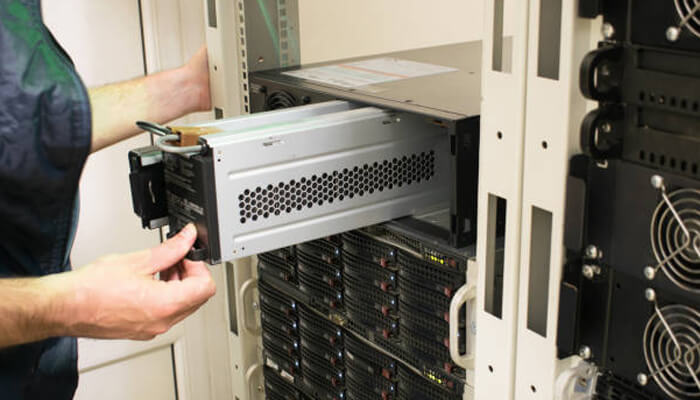
In mission-critical backup scenarios such as data centers, financial systems, and medical facilities, power continuity and reliability are the top priorities. ATESS high-frequency inverters offer ultra-fast dynamic response, supporting seamless transition between on-grid and off-grid modes.
In the event of a grid failure or blackout, the PCS completes the switch within milliseconds, ensuring uninterrupted power supply to critical loads and meeting the stringent transition-time requirements of Data Center Tier certifications.
Future Outlook
Looking ahead, high-frequency technology will continue to deepen across semiconductors, system integration, and intelligence, driving the evolution of high-frequency inverters toward higher efficiency, greater density, and superior autonomy.
1. Semiconductor Revolution
Third-generation wide-bandgap (WBG) semiconductors, represented by Silicon Carbide (SiC) and Gallium Nitride (GaN), are rapidly becoming the “standard configuration” for next-generation high-frequency inverters.
Compared to traditional silicon-based devices, SiC and GaN offer significantly higher switching frequencies, lower conduction losses, and superior thermal stability.
- These higher switching frequencies allow passive components (such as inductors and transformers) within high-frequency inverters to be further miniaturized, continuously boosting power density.
- Lower losses translate directly into enhanced system efficiency and reduced cooling requirements, effectively lowering total operational costs.
2. Deep Ecosystem Integration
In traditional energy storage, the PCS, BMS, and thermal management are often developed as independent, decoupled subsystems. While this provides clear boundaries, it often results in system redundancy, communication latency, and suboptimal coordination.
The technical trajectory is shifting from independent design toward multi-dimensional coupling. Within this framework, high-frequency inverters serve as the core execution layer, working in close coordination with BMS and thermal management systems:
- The all-in-one hybrid inverter dynamically adjusts dispatch strategies based on real-time battery status from the BMS.
- The thermal management system synergistically regulates cooling based on the temperature of both power modules and battery cells
This closed-loop linkage improves reliability and optimizes structural layout, reducing system footprint for deployment in complex environments.
3. AI-Driven Decision Making
Traditional systems rely on preset strategies, which struggle to adapt to volatile electricity prices, load fluctuations, or equipment anomalies. The integration of AI and edge computing enables high-frequency inverters to collect multi-dimensional data in real time, including voltage, current, temperature, and SOC. By leveraging machine learning algorithms, the energy storage system achieves precise status awareness, early fault detection, and dynamic optimization of charge/discharge strategies. For instance:
- Forecast electricity price trends to pre-emptively adjust schedules
- Identify battery aging patterns to extend service life
- Coordinate with VPP platforms for optimal economic dispatch.
Conclusion
From enhancing energy efficiency and power density to enabling millisecond-level grid response, high-frequency inverters are redefining the value proposition of energy storage across grid-side, user-side, and backup power applications.
With a deep commitment to high-frequency technology and continuous innovation, ATESS delivers high-performance, high-reliability energy storage inverter solutions with exceptional value. Explore ATESS today.
