


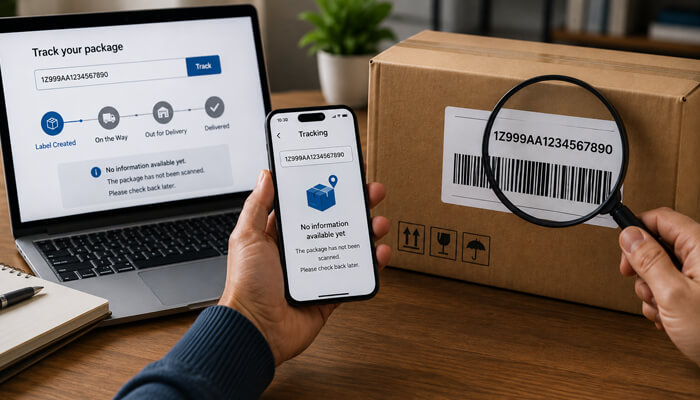

When you order something online, you usually get a tracking number right away—but that number often shows no status until the carrier scans your package for the first time. That gap can make shoppers worry: Is the number fake? Did the seller actually ship my order? Understanding how tracking numbers are built and why a label might show “No information available” can help you check legitimacy across UPS, FedEx, USPS, Royal Mail and other couriers.
Different carriers, different patterns
Every major carrier uses its own tracking number formats. Knowing the basic patterns makes it easier to spot obvious fakes:
- UPS numbers usually start with 1Z and are 18 characters long, consisting of a shipper account number, service code, package identifier and a check digit. There are also 9‑digit, 10‑character and 12‑digit formats for older shipments and freight.
- FedEx numbers are typically 12 or 15 digits, sometimes 20 or 22, and never begin with 1Z.
- USPS tracking numbers are 20–22 digits and often start with prefixes like 9400 or 9205. Certified mail uses letter-based patterns.
- International postal services (Royal Mail, Canada Post, etc.) may use 13‑character codes that end with country identifiers (like “GB” or “CN”), or long numeric strings for parcel services.
Because each carrier recognizes only its own formats, a quick length and prefix check can reveal whether a number belongs to the claimed courier.
Five quick checks for any tracking number
You don’t need to wait for a first scan to know if a tracking number is legitimate. These simple steps apply across most carriers:
1. Check the length. UPS accepts numbers with 9, 10, 12 or 18 characters, FedEx uses 12 or 15, USPS uses 20–22. Anything far outside the typical range is suspicious.
2. Check the prefix. Does it start with 1Z (UPS), 94/92 (USPS) or a numeric pattern consistent with FedEx? If a supposed UPS number doesn’t start with 1Z or a known freight code, it’s likely wrong.
3. Look for service codes. In UPS numbers, the seventh and eighth characters indicate the service level (01 for Next Day Air, 02 for Second Day, 03 for Ground). FedEx and USPS embed service info differently, but official guides list valid ranges.
4. Validate the check digit. Many carriers include a check digit to prevent typos. For UPS 1Z numbers, the final character is calculated from the preceding characters. Free online calculators can verify this digit instantly.
5. Test it on the carrier’s site. Paste the number into the carrier’s tracking page. If the site doesn’t recognize the format at all, it’s probably invalid. Be patient—some numbers won’t return data until a few hours after the first scan, but they should still be accepted as valid.
Why status updates can take time

Seeing “Label created” or “No information available” doesn’t necessarily mean your number is fake. Carriers only update their systems after scanning the physical package, and there can be delays:
- Scanning delays: Packages sometimes miss a scanner or travel through a facility outside business hours. Carriers like UPS note that a temporary gap in tracking history often resolves within 24 hours.
- Weekend slowdowns: UPS Ground and many postal networks have limited weekend operations, so a parcel scanned on Friday evening may not show anything new until Monday.
- Customs clearance: International shipments must clear customs in the destination country, which can introduce extra waiting time.
- Unscanned labels: Sometimes sellers create a label but don’t hand the package over right away. Until the carrier scans it, you’ll see “Tracking number not found.” Waiting a day usually fixes this.
Using third‑party tools to streamline tracking
If you handle multiple packages at once or want to monitor shipments from various carriers in one place, an external dashboard can help. For example, the https://trackingpackage.com/ups-tracking tool allows you to enter tracking numbers from UPS and other carriers, consolidate updates and track international shipments online without juggling multiple websites. Tools like this automatically recognize the carrier from the number format and update you when a package changes hands, such as when UPS Mail Innovations hands over to the postal service.
Interesting facts and delivery stories
Tracking numbers might seem mundane, but they’re tied to some remarkable tales:
- Uniform prefixes help security. Logistics experts note that the ubiquitous “1Z” prefix not only standardizes UPS shipments worldwide, it also makes tracking numbers harder to fake. This uniformity helps scanners instantly identify a package’s origin and route it quickly.
- Tracking numbers expire. Carriers typically recycle tracking numbers after a few months. UPS keeps tracking history for about 120 days after delivery. After that, the number may be reassigned.
- Letters found decades later. Mail doesn’t always arrive on time. A World War II love letter sent in 1945 surfaced 64 years later when Royal Mail finally redirected it to an RAF base. A French woman received a letter meant for her great‑grandfather a staggering 138 years after it was posted. These stories highlight how resilient postal systems can be—and why tracking numbers exist in the first place.
Staying informed
You don’t need to be an expert to spot a fake tracking number. By learning the common patterns across carriers, checking the length and prefix, and understanding that status updates may lag by a day or two, you can shop online with more confidence. If a number still looks suspicious after these checks, contact the seller or carrier for clarification. Otherwise, sit back, refresh your tracking dashboard and watch your package make its way to you—sometimes with its own little story attached.
