



The home renovation industry generates billions of dollars each year, and tile work sits at the heart of some of the most in-demand projects: bathroom remodels, kitchen upgrades, luxury flooring installations, and new construction finishes. Yet despite the enormous opportunity, most aspiring tile contractors never make the leap from skilled worker to profitable tile contracting business owner. The gap is not technical skill. It is business structure.
This guide walks you through every critical step of launching a tile contracting business that generates real income, from licensing and pricing to client acquisition and brand building.
1. Understand the Market Before You Pick Up a Trowel
Before investing in equipment or registering a business, spend time understanding your local demand. The tile contracting industry is hyperlocal by nature. Your success depends on the density of renovation activity within your service radius.
Research the following in your area:
- Average home values and renovation budgets
- Number of active real estate transactions (a strong proxy for remodeling activity)
- Competitor density and how they position themselves (premium vs. budget)
- Local builder and developer networks you could tap into
You do not need a formal market study. A few hours browsing local Houzz profiles, Google Maps contractor listings, and neighborhood Facebook groups will tell you a great deal about pricing expectations and underserved niches.
2. Build a Portfolio That Does the Selling for You
In the tile contracting business, your portfolio is your most powerful sales tool. Before you have reviews and referrals, you need compelling visual proof of your work. A company like TILEDGE Tile Contractor demonstrates how a well-curated portfolio of completed projects builds instant credibility with prospective clients who are evaluating multiple contractors.
Start documenting every project from day one:
- Take photos before, during, and after installation
- Photograph details: grout lines, transitions, pattern work, finished corners
- Shoot in good natural light or invest in a simple ring light setup
- Get the client’s permission to use photos in your marketing
Even three or four beautifully photographed completed projects will do more to win you new business than any written description of your experience. Platforms like Houzz, Google Business Profile, and Instagram are all visual-first, and tile work photographs exceptionally well.
Use your portfolio strategically. When a homeowner asks for a quote on a marble shower, lead with photos of your best marble work. Tailor the proof to the project type.
3. Get Licensed, Insured, and Legitimate
Nothing kills a tile contracting business faster than a legal or liability problem in the first year. Before you take a single paid job, get your paperwork in order.
- Business registration: Register as an LLC or sole proprietorship depending on your state. An LLC is almost always worth the small filing fee because it separates your personal assets from business liability.
- Contractor license: Most states require a contractor license for any work above a certain dollar threshold. Requirements vary significantly by state, so check with your state’s contractor licensing board.
- General liability insurance: This protects you if you damage a client’s property. A policy in the range of $1 million in coverage typically costs a few hundred dollars per year and is non-negotiable for working with homeowners or developers.
- Workers’ compensation: If you plan to hire help, workers’ comp is required in most states. Even as a solo operator, some general contractors will require proof before allowing you on a job site.
Getting these in place does more than protect you legally. It immediately distinguishes you from the large pool of unlicensed operators that homeowners rightly distrust.
4. Define Your Services and Specialization
One of the most common mistakes new tile contractors make is trying to do everything. The contractors who build strong reputations and command premium pricing are the ones who specialize.
Consider focusing on one or two of the following:
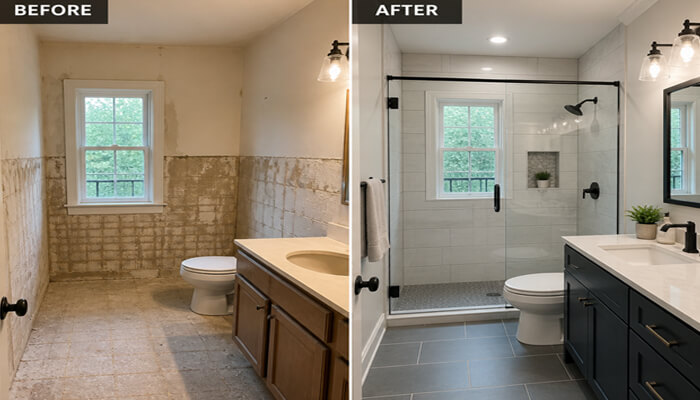
- Bathroom tile installation (showers, floors, walls): High demand, high repeat potential through referrals
- Kitchen backsplash work: Faster projects, good margins, steady volume
- Large-format porcelain and stone flooring: Premium segment, fewer competitors
- Commercial tile work: Consistent volume, longer contracts, requires bonding
Specialization does two things for your business. It makes your portfolio more compelling to the right clients, and it makes estimating, purchasing, and executing jobs far more efficient. A contractor who has installed 200 shower surrounds is faster and more accurate than one who splits time across every surface type.
5. Price Your Work to Build a Real Business
Underpricing is the single most common reason tile contracting businesses fail within the first two years. New contractors often price to win jobs rather than to sustain a business, and the math never works out.
A sustainable pricing model must account for:
- Direct labor costs: Your time plus any helpers, at a fully-loaded rate that accounts for taxes and downtime between jobs
- Materials: Always purchase materials yourself and mark them up. Letting clients source their own tile is a recipe for delays, defects, and disputes
- Overhead: Vehicle costs, tool maintenance, insurance, software, marketing
- Profit margin: Not a bonus. A real line item. Aim for at least 20 to 30 percent net margin on every job
Many experienced contractors price tile work by the square foot for straightforward installs, and by the job for complex projects with intricate patterns, natural stone, or unusual site conditions. Track every job’s actual hours versus estimated hours until your estimates become reliable.
Do not compete purely on price. Homeowners who choose the cheapest contractor available are also the most likely to dispute invoices, leave negative reviews, and refer more price-sensitive clients. Build your reputation on quality and reliability instead.
Build Your Client Acquisition Engine
Most tile contractors start with word of mouth. That is a fine place to start, but it is not a business strategy. You need a repeatable system for generating leads.
- Google Business Profile: This is non-negotiable. Claim and fully complete your listing. Add photos, your service area, hours, and a description of your specializations. Ask every satisfied client to leave a review. A contractor with 40 five-star Google reviews will consistently outrank competitors with none, regardless of website quality.
- Local SEO: Create a simple website with a page for each core service and a page for each geographic area you serve. Basic on-page SEO targeting phrases like “tile installer in [your city]” can generate consistent inbound leads within six to twelve months.
- Referral partnerships: Introduce yourself to interior designers, general contractors, kitchen and bath showrooms, and real estate agents in your area. These relationships are slow to build but produce high-quality, pre-qualified referrals once established.
- Before-and-after content: Short videos of transformations posted to Instagram or TikTok regularly outperform any paid advertising for local service businesses. The content is inherently visual and shareable, and the algorithm rewards local discovery.
Diversify your lead sources from the start. A business that depends entirely on one channel, whether that is Google, a single referral partner, or a home services platform, is one algorithm change or relationship breakdown away from a serious revenue problem.
7. Set Up Operations to Scale
The difference between a contractor who earns a good living and one who builds a business is systems. From your first job, establish processes for the following:
- Estimating and proposals: Use a consistent template. Document your scope of work in detail, including what is and is not included, to prevent scope creep and disputes.
- Scheduling: Tile work involves multiple visits: surface prep, installation, grouting, sealing, and final inspection. Use a simple scheduling tool to avoid double-booking and to give clients accurate timelines.
- Invoicing and payments: Collect a deposit before ordering materials. Use invoicing software to track payments. Establish clear late payment terms in your contracts.
- Supplier relationships: Open trade accounts with two or three tile distributors. Trade pricing typically runs 20 to 40 percent below retail, which either improves your margins or allows you to offer more competitive pricing on materials.
- Subcontractor network: As you grow, you will encounter projects that require work outside your scope: waterproofing, plumbing rough-in, drywall repair. Build relationships with reliable subcontractors now so you can offer clients a more complete solution later.
8. Think Like a Brand, Not Just a Contractor
Most local tile contractors operate as commodities. They show up, do the work, send an invoice, and move on. That is a viable existence, but it is not a business with equity.
The contractors who build lasting, high-value businesses treat every client interaction as a brand moment. This means:
- Showing up on time, every time
- Communicating proactively about schedules and any unexpected site conditions
- Leaving the job site cleaner than you found it
- Following up after project completion to confirm satisfaction
- Making it effortless for happy clients to refer you
Over time, these habits compound into a reputation that allows you to charge premium rates, be selective about the projects you take on, and build a business with genuine goodwill value.
Final Thoughts
Starting a profitable tile contracting business from scratch is entirely achievable, but it requires more than technical skill. The contractors who build thriving businesses combine excellent craft with sound business fundamentals: proper licensing, smart pricing, a strong portfolio, diversified lead sources, and systems that allow them to grow without burning out.
The home renovation market rewards specialists with strong reputations. Position yourself correctly from day one, document your work, build relationships, and treat every project as evidence of what your business stands for. The growth will follow.
