


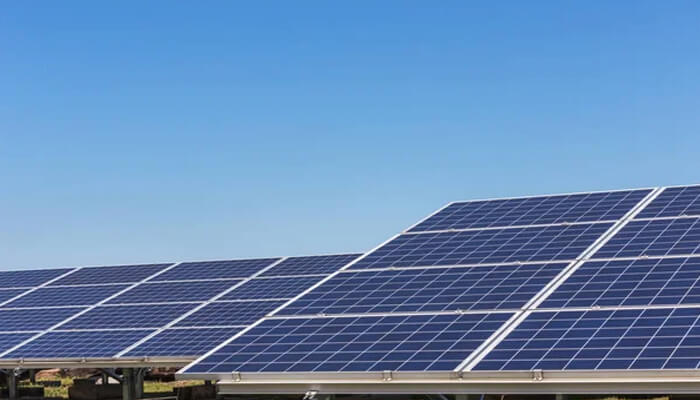

When decision makers evaluate commercial solar panels, the real question is not just “Which panel produces power?” It is “Which panel fits the building, the budget, and the long-term operation plan without creating new problems?”
That is where the comparison becomes practical. Traditional glass solar panels remain the standard choice for many projects, but flexible solar panels deserve serious attention because they are lightweight, adaptable, and easier to match with buildings that do not behave like simple flat roofs. Industry guidance also makes clear that PV systems should be designed around the site’s structural conditions, with attention to roof penetrations, load, and durability over a typical 25-30 year lifetime. These considerations are central when evaluating commercial PV panels for long-term use.
Why Flexible Solar Panels Stand Out
Flexible solar panels are especially attractive in commercial settings because they are built for fit. Research in the field notes that thin-film solar cells can be integrated into building materials such as rooftop shingles, tiles, standing-seam metal roofs, and building facades. It also highlights flexible form factors and lower mass as key advantages for next-generation PV applications. In plain terms, that means flexible panels can work where rigid glass modules may be awkward, heavy, or harder to attach cleanly.
Structural Fit Across Commercial Buildings
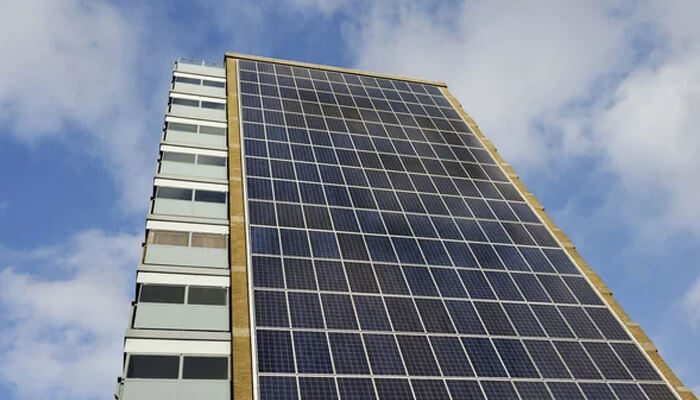
For a decision maker, that matters because not every commercial roof is a clean, wide, perfectly flat surface. Some buildings have metal roofs, membrane roofs, curved sections, or structural limits that make weight a real issue. General procurement guidance says PV systems should be designed for minimal building penetrations, and if penetrations cannot be avoided, they must be properly sealed. That is one reason lightweight and low-profile systems can be so appealing: they reduce the pressure to modify the building just to make solar work. This becomes especially relevant when planning commercial buildings with solar panels that must adapt to varied roof conditions.
Where Glass Panels Still Fit
Glass solar panels still have a place. They are the familiar, mainstream option, and they often make sense where the roof structure is strong, the surface is standardized, and the owner wants the broadest market-tested solution. Industry standards note that modules are tested against load ratings, and module choice should match the weather and structural conditions of the site. In other words, rigid glass modules are not a bad choice; they are just not always the smartest choice for commercial sites with tricky roofs or installation constraints.
Project Efficiency and Installation Benefits
This is where the commercial argument shifts toward flexible solar panels. For many decision makers, the value is not only the panel itself. It is the total project experience: faster installation, fewer structural headaches, less need for roof modification, and better compatibility with difficult surfaces. Industry summaries also highlight process integration, easy installation, reliability, durability, and safety as major requirements for building-integrated solar products. That aligns closely with what commercial owners care about most: reducing disruption while still adding energy capacity.
Durability and Risk Considerations
There is also a resilience angle. Field assessments have found that some older rooftop systems using adhesive-mounted flexible solar failed under extreme conditions, and guidance warns against systems that rely solely on adhesives or direct attachment to the roof without proper mounting considerations. That does not mean all flexible systems are weak. It does mean that buyers should choose modern products and mounting methods carefully, and avoid outdated adhesive-only approaches. The better conclusion is not “flexible is risky,” but “flexible must be specified correctly.” This applies equally when selecting commercial PV panels for long-term reliability.
Choosing the Right System for Your Building
So, which is the best commercial solar panel? For many decision makers, flexible solar panels are the stronger strategic choice when the building is the limiting factor. They are often the better answer for metal roofs, curved roofs, weight-sensitive structures, and projects where installation simplicity matters as much as raw output. Glass panels still matter for standard, high-capacity rooftops, but flexible panels solve a broader range of commercial problems with less friction. That is why, in real decision-making, flexibility is not a compromise. It is often the advantage. This is why many commercial buildings with solar panels now consider flexible systems as part of their planning strategy.
FAQs
1) Are flexible solar panels less reliable than glass panels?
Not automatically. Reliability depends on the product design, mounting method, and site conditions. Industry guidance emphasizes durability, load ratings, and proper system design. The wrong installation can fail regardless of panel type.
2) Why would a commercial building choose flexible panels instead of glass panels?
Because flexible panels are lighter, easier to adapt to unusual roof shapes, and less demanding on the building structure. They can also reduce the need for invasive roof work.
3) When are glass solar panels still the better choice?
When the roof is strong, flat, standardized, and the project priority is a conventional, widely deployed PV format. In those cases, rigid modules can be an efficient and familiar option.
