




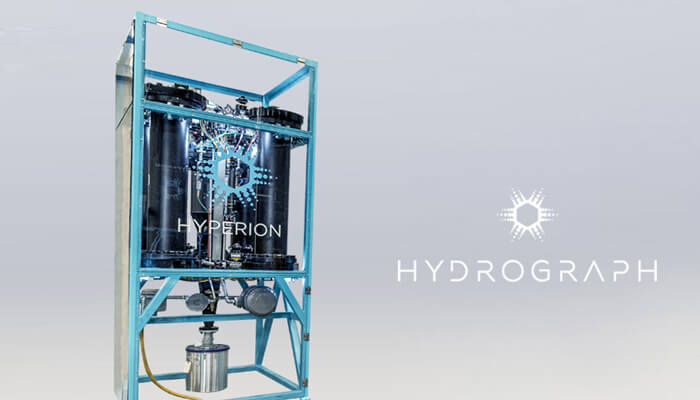
Kjirstin Breure is the President, CEO, and Board Chair of HydroGraph Clean Power Inc., a nanotechnology firm with operations in Austin, Texas, as well as Vancouver, Canada. The company manufactures graphene with 99.8% carbon purity for commercialization through a patented Hyperion detonation process.
Kjirstin joined HydroGraph in 2020 as its first employee and Chief Operating Officer, helping form the company’s strategy and brand identity. In her current role, she manages research and development, production, intellectual properties, and media reach. She’s been a member of the board since 2021.
Kjirstin holds a BSc in Political Science and an MSc in Materials Science and Engineering from Arizona State University. She has over 10 years of experience working for technology firms in machine learning, data analytics, and blockchain.
Q: HydroGraph is one of the world’s purest producers of graphene. What excites you about the material?
Kjirstin Breure: Graphene is a highly versatile material, and its possibilities truly inspire me. Its applications in electronics and sustainable energy feel limitless. At HydroGraph, we focus on producing high-quality, scalable graphene for industries ranging from water purification to energy storage. I love seeing a scientific concept move from the lab to products people use every day. Turning an idea into practical impact is incredibly motivating.
Q: You were HydroGraph’s first employee and COO. How did that early experience form your leadership style?
Kjirstin Breure: Joining a completely new company taught me the importance of agility and adaptability. I wore multiple hats in those very early days, managing operations and coordinating R&D projects. I learned how to scale a business from a small lab operation to a commercially viable enterprise. As a leader, it helped me learn the value of listening to my team and encouraging different ideas. I also learned that transparency, structured problem-solving, and empowering people to take ownership are essential for growth. I still carry these lessons with me now as CEO.
Q: Many leaders struggle with balancing innovation and business realities. How do you manage that tension?
Kjirstin Breure: Balancing innovation with the practicalities of business requires both structure and flexibility. First, I evaluate the potential impact of a new idea with its feasibility, scalability, and environmental footprint. HydroGraph prioritizes projects that deliver measurable results while pushing the boundaries of technology. Innovation for the sake of novelty rarely sustains a business, so every project is rooted in a clear value proposition. We also maintain an iterative mindset, testing ideas quickly and adjusting based on data rather than assumptions. This balance helps us stay ahead in technology without losing focus on tangible results.
Q: Your career experience includes AI, blockchain, and nanotechnology. How do you keep up in such fast-moving fields?
Kjirstin Breure: Staying ahead requires a mix of structured learning, curiosity, and experimentation. I often read scientific journals, industry reports, and emerging tech blogs. Attending conferences and connecting with peers helps me see where different technologies intersect and where opportunities may arise. I also prioritize hands-on experimentation because mere theoretical knowledge is not enough. You must see how ideas work in practice. Surrounding myself with experts who challenge my assumptions has been essential for growth. Continuous learning in fast-moving fields is developing a mindset that adapts quickly to change.
Q: In a new tech company, how do you balance bold innovation with maintaining credibility in the market?
Kjirstin Breure: Bold innovation is exciting, but it only matters if people trust your company to deliver on it. I ground ambitious projects in rigorous testing and transparent reporting. At HydroGraph, we make sure every claim about our graphene products is backed by reproducible data, which builds credibility with investors, partners, and customers. Explaining the technology in practical terms also helps people understand both the possibilities and the limitations. Risk-taking is essential, but it should never come at the expense of integrity. By combining calculated experimentation with consistent, evidence-based messaging, companies can push boundaries while establishing a strong, trustworthy reputation.
