




The crypto space is drowning in bad advice disguised as wisdom. Scroll through any trading forum or social media feed, and you will find confident-sounding rules that get repeated so often they start to feel like truth. The problem is that many of these widely accepted crypto trading myths are either completely wrong or dangerously oversimplified. Beginners who follow them without questioning end up paying the price with real money.
I believed several of these myths myself early on. They sounded logical. They came from people with large followings. And they cost me thousands of dollars before I realized that popularity does not equal accuracy. Educational platforms like https://bitcoinmargin.com have been doing good work debunking some of these misconceptions, but the myths spread faster than the corrections ever will.
So let me walk you through the ones that do the most damage.
You Need to Be Right Most of the Time to Make Money
This is perhaps the most damaging myth in all of trading, not just crypto. Beginners believe that profitable trading means having a high win rate. They aim to be right on 70%, 80%, even 90% of their trades. When they hit a losing streak, they assume their strategy is broken and abandon it for something new.
The reality is that many professional traders are profitable with win rates below 50%. Some of the most successful traders in history win on fewer than half their trades.
“Five to one means I’m risking one dollar to make five. What five to one does is allow you to have a hit ratio of 20%. I can actually be a complete imbecile. I can be wrong 80% of the time, and I’m still not going to lose.” — Paul Tudor Jones, founder of Tudor Investment Corporation
The math is simple but counterintuitive. If your average winner is five times larger than your average loser, you only need to be right 20% of the time to break even. The risk reward ratio matters far more than the win rate. A trader who wins 30% of the time with a 4 to 1 reward to risk ratio will massively outperform a trader who wins 70% of the time with a 0.5 to 1 ratio.
Stop obsessing over being right. Start obsessing over how much you make when you are right versus how much you lose when you are wrong.
You Should Hold Through Every Dip
“HODL” has become the unofficial religion of crypto. And for long term investors with a multi year time horizon and no leverage, it can be a valid strategy. But beginners hear this mantra and apply it to active trades, refusing to cut losses because they have been told that selling during a dip makes you weak.
This confusion between investing and trading has destroyed more beginner accounts than almost any other myth. There is a critical difference between a planned long term investment in Bitcoin where you accept volatility as part of the journey and an active trade where your thesis has been invalidated but you refuse to exit because someone on the internet told you to hold.
“If you have a losing position that is making you uncomfortable, the solution is simple. Get out, because you can always get back in.” — Paul Tudor Jones
When you enter a trade with a defined stop loss and the price hits that level, the trade is over. The market has told you that your thesis was wrong in this instance. Holding through that moment is not conviction. It is denial. And denial in leveraged or oversized positions can turn a manageable loss into a devastating one.
HODL is an investment philosophy. It is not a trading strategy. Knowing which mode you are in before you put money at risk prevents this myth from wrecking your account.
More Indicators Mean Better Analysis
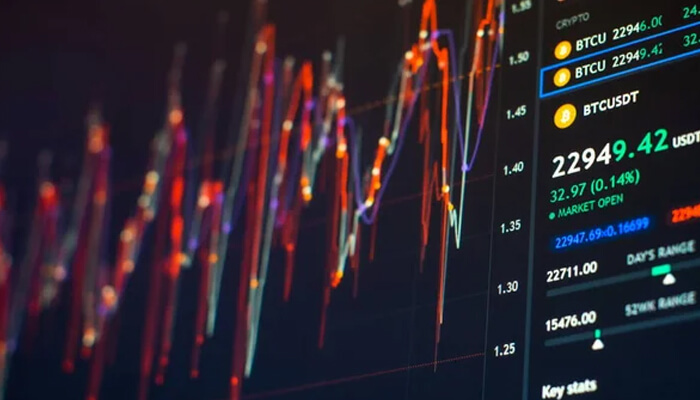
I covered this in previous articles but it deserves repeating because the myth is so persistent. Beginners see professional looking charts covered in colored lines and assume that complexity equals sophistication. So they load up every indicator TradingView offers and feel more prepared.
What actually happens is the opposite. More indicators create more conflicting signals, which creates more confusion, which creates either paralysis or bias confirmation. You end up ignoring the three indicators that say sell and fixating on the one that says buy because you already decided what you wanted to do.
“There is no magic to classical charting. The magic is in combining insightful and experienced chart analysis with sound risk management.” — Peter Brandt, 40 year veteran trader
Notice that Brandt says “chart analysis” singular, not “twelve simultaneous technical indicators cross referenced with sentiment data and lunar cycles.” The magic is in depth of understanding, not breadth of data.
Two to three indicators maximum. One for trend, one for momentum, volume for confirmation. Master those before even thinking about adding anything else.
You Need a Lot of Money to Start Trading
This myth keeps people on the sidelines unnecessarily and pushes others to trade with money they cannot afford to lose. The belief that you need $10,000 or $50,000 to start trading crypto is simply false. Most exchanges allow you to trade with as little as $10 or $20.
The flip side of this myth is equally dangerous. Some beginners hear that you can start small, so they deposit a small amount and then use maximum leverage to simulate having a large account. This is worse than waiting. A $200 account on 50x leverage will almost certainly be liquidated within days.
The healthy approach is to start with an amount you can genuinely afford to lose entirely. Use zero leverage. Trade small positions and focus on the process rather than the dollar amount of your profits. A trader who turns $500 into $600 through disciplined trading over three months has learned more than a trader who turns $500 into $5,000 through reckless leverage and then loses it all the following week.
Your account size will grow naturally as your skills improve. Rushing that process through leverage or oversized risk is the fastest way to restart from zero.
You Can Predict Where the Price Will Go
This might be the myth that creates the most frustration. Beginners enter the market believing that with enough study, enough indicators, and enough experience, they will be able to predict price movements with certainty. When their predictions fail, they feel inadequate and search for better tools or more complex methods.
The truth is that nobody can predict the future. Not the best technical analyst. Not the most connected insider. Not the most sophisticated algorithm. Trading is not about prediction. It is about probability. You identify setups where the odds are slightly in your favor, size your position appropriately, manage your risk, and let the outcome play out over a large sample of trades.
This shift in mindset from prediction to probability is one of the most liberating realizations a beginner can have. You stop beating yourself up over losing trades because you understand that losses are a natural, expected part of any probabilistic system. You stop searching for the perfect indicator because you accept that perfection does not exist. And you start focusing on the only things you can actually control: your risk, your process, and your discipline.
The Myth That Costs the Most of All
If I had to pick the single most expensive myth in crypto trading, it would be this: that there is a shortcut. A secret indicator. A private signal group. A guru with a crystal ball. Something out there that will let you skip the learning process and go straight to consistent profits.
That shortcut does not exist. Every consistently profitable trader I know built their skill through months or years of deliberate practice, painful losses, honest self reflection, and relentless refinement of their process. The journey is not glamorous. It is not fast. And it cannot be purchased.
The sooner you accept that, the sooner you stop wasting money on promises and start investing it in the only thing that actually pays long term dividends: your own understanding of the market and yourself.
