




Table of Contents
- Understanding Multi-Cloud Cost Challenges
- Implementing Cost Allocation Models
- Monitoring Resource Usage and Configurations
- Leveraging Reserved Instances and Spot Pricing
- Utilizing Cloud Cost Management Tools
- Establishing Centralized Cost Visibility
- Adopting FinOps Practices
- Conclusion
Managing expenses across multiple cloud platforms requires a careful, streamlined approach that goes beyond basic budgeting. As organizations increasingly adopt multi-cloud strategies to enhance flexibility, resilience, and performance, many teams struggle to keep costs in check. Without a systematic approach, the diversity of providers, each with unique billing formats and pricing models, creates significant barriers to achieving visibility and effective control over spending. For businesses adopting a multicloud FinOps methodology, the challenge lies in unifying disparate cost structures and managing separate invoicing systems, all while ensuring operational needs are met without overspending.
Without proper processes and tools in place, expenses in a multi-cloud environment can quickly spiral out of control. This often results in wasted resources, duplicated efforts, and unexpected overages that even the most experienced teams may not anticipate. However, by developing a robust cloud cost management strategy, multi-cloud teams can not only minimize unnecessary expenses but also foster greater accountability across the organization. Effective strategies empower decision-makers to optimize every dollar spent, improve budgeting accuracy, and achieve greater operational efficiency. This article offers actionable guidance for multi-cloud teams looking to simplify cloud cost management, maintain financial control, and support organizational growth.
Understanding Multi-Cloud Cost Challenges
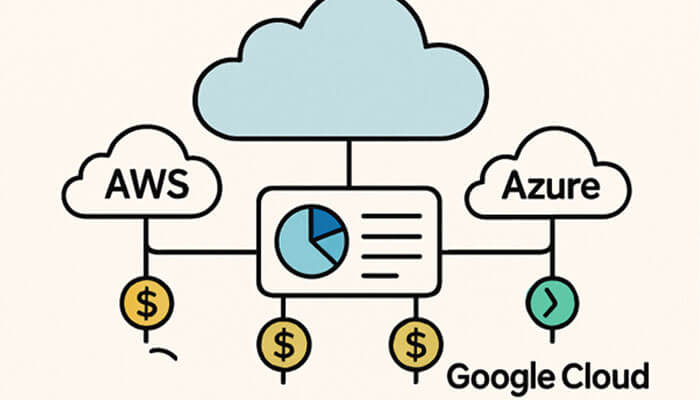
Multi-cloud environments combine services from multiple providers like AWS, Azure, and Google Cloud, allowing organizations to choose optimal services, avoid vendor lock-in, and boost resilience. However, each provider’s unique pricing, discounts, and billing complicate cost prediction. What seems affordable for one team may turn costly for another due to usage differences or hidden fees. Challenges include lack of unified reporting and inconsistent tagging, making resource tracking and cost allocation difficult. Teams often manually reconcile bills, risking errors and obscuring true costs, which leads to inefficiencies and missed opportunities.
Implementing Cost Allocation Models
Establishing transparent cost allocation models is key to effective multi-cloud cost management. Start by defining clear boundaries around how costs should be distributed among departments, project teams, or even individual users. Using tagging or dedicated accounts, organizations can map expenses back to relevant stakeholders, providing granular insights into who uses what, and at what cost. When teams see the direct impact of their decisions on cloud spend, greater accountability naturally follows. These models also enable organizations to perform more accurate chargebacks or showbacks, helping business unit leaders make data-driven decisions about investment and resource utilization. An allocation model is not static—it should be revisited and updated regularly to reflect new business priorities, evolving projects, or organizational changes. By continuously refining the cost allocation framework, companies ensure that resources consistently support the most strategic goals.
Monitoring Resource Usage and Configurations
Comprehensive monitoring is crucial for identifying cost-saving opportunities in multi-cloud environments. Utilizing modern monitoring tools and dashboards enables teams to gain real-time visibility into resource consumption, facilitating the identification of underutilized resources for right-sizing or decommissioning. Consistent tagging practices improve resource tracking, while automated enforcement policies help prevent confusion and resource orphaning. Regular audits of configurations and usage data can uncover patterns of overprovisioning and outdated resources, allowing organizations to optimize spending and align cloud resources with operational priorities.
Leveraging Reserved Instances and Spot Pricing
Major cloud providers offer cost-saving options through reserved and spot instances. Reserved instances allow organizations to secure lower rates for predictable workloads by prepaying or committing for 1-3 years, reducing costs by 30-70% compared to pay-as-you-go pricing. In contrast, spot instances utilize unused capacity at discounts up to 90%, suitable for batch processing and fault-tolerant workloads, though they can be interrupted. A strategy that combines reserved, spot, and on-demand resources is essential for optimizing performance and reducing costs as organizational needs change.
Utilizing Cloud Cost Management Tools
Modern organizations rely on specialized cloud cost management tools to simplify tracking and optimizing spend across multiple platforms. Solutions like CloudZero, CloudHealth, and native offerings from cloud providers present data in centralized dashboards, aggregating spend information and surfacing actionable insights. AI-powered anomaly detection flags unusual spikes, enabling teams to respond to budget variances before they result in costly overruns.
Advanced tools increasingly support unit economics, allowing teams to drill down into metrics such as cost per customer, cost per deployment, or cost per feature. This perspective transforms cost management from a reactive, high-level process into a proactive, business-driven practice. Integrating these tools with internal reporting systems and automating data collection relieves technical teams of manual reporting and frees up time for more strategic work.
Establishing Centralized Cost Visibility
Centralizing cloud financial data improves transparency and streamlines reporting, particularly for organizations managing multiple providers. By using financial management platforms that aggregate billing data and resource usage across clouds, companies can compare offerings and identify trends at both granular and macro levels. This unified approach enables teams to evaluate how consumption shifts over time, forecast future requirements, and develop smarter budget plans based on historical and projected usage.
With centralized visibility, business leaders are better equipped to prioritize investments, quickly spot inefficiencies, and adjust strategies as needed to meet changing business and market demands. The ability to review multi-cloud data side by side also uncovers redundant services or missed opportunities for consolidation, further lowering overall spend.
Adopting FinOps Practices
FinOps, or Cloud Financial Operations, integrates finance, engineering, and operations teams to enhance oversight of cloud spending through a collaborative framework. This culture promotes transparency via shared dashboards and regular check-ins, enabling teams to understand the financial implications of their technology choices. Continuous optimization is crucial, as teams review costs and performance metrics to prevent overspending and resource waste. Education in budgeting best practices empowers all stakeholders, fostering a culture of innovation and responsibility in cloud investment management.
Conclusion
Multi-cloud cost management can seem overwhelming, but organizations that proactively address complex billing, implement strong allocation models, and adopt the right tools can simplify the process. Leveraging reserved and spot pricing opportunities, maintaining effective monitoring, and establishing centralized cost visibility are all critical steps. By fostering a FinOps culture and focusing on continuous improvement, teams can enhance operational efficiency, reduce waste, and gain greater control over their cloud investments.
