



eSIM Technology: The Next Big Shift in Global Connectivity for Business and Travel
In an increasingly connected world, seamless access to mobile data is no longer a luxury—it’s a necessity. Whether for business operations, remote work, or international travel, the demand for reliable and flexible connectivity continues to grow. At the center of this transformation is Holafly’s eSIM technology, a digital innovation that is reshaping how individuals and businesses connect across borders.
As traditional telecom models struggle to keep pace with global mobility, eSIM is emerging as a scalable, future-ready solution.
The evolution of mobile connectivity
Over the past two decades, mobile connectivity has undergone a dramatic evolution. From early SIM cards tied to specific carriers to the rise of smartphones and mobile internet, each phase has brought greater convenience and accessibility.
However, the traditional SIM model has remained largely unchanged. Users still need to insert physical cards, switch between networks manually, and often deal with region-specific limitations. For global travelers and businesses operating internationally, this model can be inefficient and restrictive.
At the same time, the rise of cloud computing, remote work, and digital services has increased the need for always-on connectivity—regardless of location.
Why traditional SIM models are becoming outdated
The limitations of traditional SIM cards are becoming more apparent in today’s globalized environment. For international users, switching SIM cards can be inconvenient and time-consuming. It often involves finding local vendors, navigating language barriers, and temporarily losing access to a primary phone number.
Roaming, while convenient, introduces another set of challenges. High costs, limited data allowances, and unpredictable billing make it an unreliable option for many users. Businesses, in particular, face difficulties managing connectivity expenses for employees traveling across multiple regions.
These inefficiencies highlight the need for a more flexible and digital-first approach to mobile connectivity.
How eSIM technology works
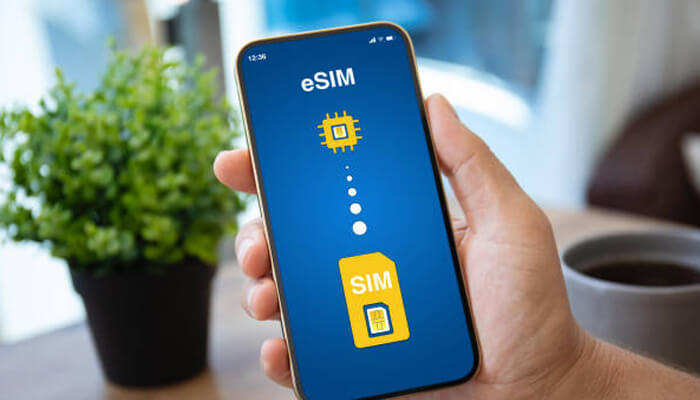
eSIM, or embedded SIM, is a digital alternative to the traditional SIM card. Instead of requiring a physical chip, the eSIM is built directly into the device. Users can download and activate mobile plans remotely, often within minutes.
This eliminates the need for physical handling and enables users to switch between carriers or plans without changing hardware. Multiple profiles can be stored on a single device, allowing for greater flexibility and control.
From a technological perspective, eSIM represents a shift toward software-defined connectivity, where network access can be managed dynamically and remotely.
Business and travel implications
The implications of eSIM technology extend far beyond convenience. For businesses, it offers a more efficient way to manage global operations. Employees traveling internationally can access local networks instantly, reducing downtime and improving productivity.
For digital nomads and remote workers, eSIM provides the freedom to move between countries without worrying about connectivity gaps. This aligns with the growing trend of location-independent work, where professionals rely on stable internet access to perform their tasks.
In the travel sector, eSIM is transforming the customer experience. Travelers can prepare their connectivity before departure, ensuring they are online from the moment they arrive. This is particularly valuable for tasks such as navigation, booking, and communication.
As digital-first solutions reshape global mobility, services like Holafly’s esim with unlimited data are emerging as practical tools for professionals and travelers who need reliable, borderless connectivity.
The rise of borderless connectivity
One of the most significant advantages of eSIM technology is its ability to enable borderless connectivity. Users are no longer tied to a single carrier or region. Instead, they can access networks in multiple countries through a single digital interface.
This has important implications for industries such as logistics, tourism, and international business. Companies can deploy devices globally without the need for physical SIM distribution, simplifying operations and reducing costs.
For consumers, the benefits are equally compelling. Greater transparency in pricing, easier setup, and improved user experience are driving adoption across different segments.
The future of telecom and global mobility
As eSIM adoption continues to grow, it is likely to play a central role in the future of telecommunications. Major device manufacturers have already embraced the technology, and many network providers are expanding their eSIM offerings.
Looking ahead, eSIM could become the standard for mobile connectivity, replacing traditional SIM cards entirely. This shift would further accelerate the move toward digital ecosystems, where connectivity is integrated seamlessly into devices and services.
In parallel, advancements in 5G and IoT (Internet of Things) will amplify the impact of eSIM. From connected vehicles to smart devices, the ability to manage connectivity remotely will be critical.
Conclusion
eSIM technology represents a fundamental shift in how we think about mobile connectivity. By removing the physical limitations of traditional SIM cards, it enables a more flexible, efficient, and user-centric approach.
For businesses, it offers a scalable solution to support global operations. For travelers and remote workers, it provides the freedom to stay connected without friction.
As the world becomes increasingly interconnected, technologies like eSIM are not just innovations—they are essential building blocks of the digital future.
