


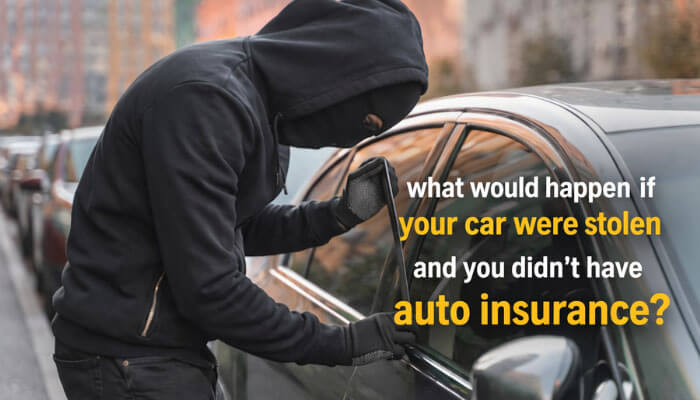

Car theft is one of the most stressful situations any vehicle owner can experience. Discovering that your car has disappeared can quickly turn into financial panic—especially if you do not have auto insurance coverage. Many drivers wonder what would happen if your car were stolen and you didn’t have auto insurance, because the consequences can be severe and long-lasting.
Vehicle theft remains a global issue affecting millions of drivers every year. According to the National Insurance Crime Bureau (NICB), more than one million vehicles were reported stolen in the United States in 2023, marking one of the highest theft rates in recent years.
In many cases, auto insurance policies with comprehensive coverage protect owners from the financial losses associated with theft. However, when a car is stolen without insurance protection, the entire financial burden falls on the owner.
This guide explains what happens when your car is stolen without insurance, the financial and legal consequences, what steps you should take after a theft, and how drivers can protect themselves from future risks.
Understanding Car Theft and Insurance Coverage
Before exploring the consequences, it is important to understand how insurance normally works in car theft situations.
Auto insurance policies typically include several types of coverage.
| Insurance Type | What It Covers | Theft Coverage |
|---|---|---|
| Third-Party Liability | Damage or injury caused to others | No |
| Collision Coverage | Damage from accidents | No |
| Comprehensive Insurance | Theft, vandalism, natural disasters | Yes |
If your vehicle is stolen and you have comprehensive insurance, the insurer usually compensates the owner based on the Insured Declared Value (IDV) after claim verification.
However, if you do not have insurance, you receive no financial compensation for the stolen vehicle.
Does Comprehensive Insurance Always Cover Car Theft?
Comprehensive auto insurance is the primary type of coverage that protects against vehicle theft. Unlike liability or collision coverage, comprehensive insurance protects drivers from non-collision incidents such as:
-
Vehicle theft
-
Vandalism
-
Natural disasters
-
Fire damage
-
Falling objects
If the stolen vehicle is not recovered, the insurer usually compensates the owner based on the insured market value of the vehicle.
What Happens If Your Car Is Stolen With vs Without Insurance
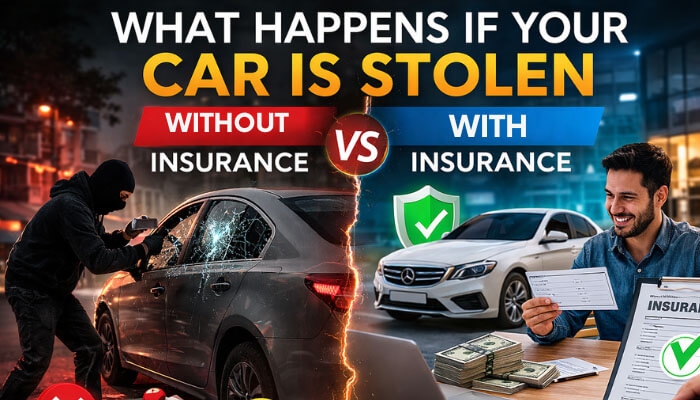
Understanding the difference between having insurance and not having coverage highlights why insurance protection is important.
| Situation | With Comprehensive Insurance | Without Insurance |
|---|---|---|
| Financial Compensation | Insurance company reimburses vehicle value | No compensation |
| Loan Balance | Insurance may help cover loan balance | Owner must pay entire loan |
| Repair Costs (if recovered damaged) | Covered by insurance | Owner pays repair costs |
| Transportation Costs | Some policies offer rental coverage | Owner pays for transport |
| Financial Impact | Reduced financial loss | Full financial burden |
Immediate Steps to Take if Your Car Is Stolen
Even without insurance coverage, taking quick action can improve the chances of recovering your vehicle.
1. File a Police Report Immediately
Contact the police and provide details such as:
-
Vehicle registration number
-
Make and model
-
Color and identifying features
-
Location and time of theft
Filing a police report creates an official record and helps authorities track stolen vehicles.
2. Notify the Regional Transport Office (RTO)
In countries such as India, vehicle theft should also be reported to the Regional Transport Office (RTO) to avoid legal liability if the stolen vehicle is used illegally.
3. Inform Your Lender (If the Car Was Financed)
If the car was purchased through a loan, you must inform the lender immediately. Loan payments usually continue even after the vehicle is stolen.
4. Check Security Cameras and Witnesses
Nearby homes, offices, or parking areas may have surveillance footage that can help identify the thief.
Financial Consequences of Car Theft Without Insurance
The biggest impact of uninsured car theft is financial.
1. Complete Loss of the Vehicle’s Value
Without insurance coverage, the owner loses the entire value of the vehicle.
Replacing the vehicle must be done using personal savings or another loan.
2. You Still Must Pay the Car Loan
Even if your car is stolen, lenders still require repayment.
You must continue paying:
-
Remaining loan balance
-
Monthly EMI payments
-
Interest charges
3. Transportation Costs Increase
Losing your vehicle means relying on alternative transportation such as:
-
Taxi services
-
Ride-sharing apps
-
Public transportation
-
Rental vehicles
These costs can add up quickly.
4. Loss of Personal Items in the Car
Items stored in the vehicle may also be stolen, including:
-
Electronics
-
Work equipment
-
Important documents
These losses are usually not covered without insurance.
What Happens if the Stolen Car Is Recovered Later?
Law enforcement agencies recover a significant number of stolen vehicles each year, although recovery rates vary depending on the region and type of vehicle.
If the car is found:
-
Police will contact the registered owner
-
Ownership verification will be completed
-
The vehicle may be returned to the owner
However, recovered vehicles may sometimes be:
-
Stripped for valuable parts
-
Damaged during illegal use
-
Used for criminal activities
Without insurance coverage, all repair costs must be paid by the owner.
Legal Consequences of Driving Without Insurance
Driving without insurance is illegal in many countries.
Under the Motor Vehicles Act in India, all vehicles must have at least third-party insurance coverage.
Possible penalties include:
-
Fines starting around ₹2,000
-
Higher fines for repeat offenses
-
Possible legal penalties or imprisonment
-
Liability for accident damages
How a Car Theft Insurance Claim Normally Works
If a vehicle owner has comprehensive insurance, the claim process typically includes several steps.
Typical Claim Process
-
File a First Information Report (FIR)
-
Inform the insurance company
-
Submit required documents
-
Wait for investigation
-
Receive compensation if the car is not recovered
Documents Required for Car Theft Insurance Claim
| Document | Purpose |
|---|---|
| FIR (Police Report) | Confirms that the vehicle was stolen |
| Registration Certificate (RC) | Proves ownership |
| Insurance Policy Document | Verifies active coverage |
| Driving License | Confirms driver’s identity |
| Car Keys | Demonstrates possession of original keys |
| Claim Form | Official insurance claim submission |
What Is Gap Insurance?
Gap insurance protects drivers who still owe money on a car loan.
It covers the difference between the vehicle’s market value and the remaining loan balance.
| Car Value | Loan Balance | Gap Coverage |
|---|---|---|
| $15,000 | $18,000 | $3,000 |
Without gap insurance, the owner must continue paying the remaining loan balance even if the car is stolen.
Common Causes of Vehicle Theft
Understanding why cars are stolen can help reduce the risk.
Common causes include:
-
Leaving keys inside the vehicle
-
Unlocked doors or windows
-
Parking in poorly lit areas
-
Lack of anti-theft systems
-
Organized auto theft networks
Popular Anti-Theft Devices for Cars
| Device | How It Works | Benefit |
|---|---|---|
| GPS Tracking System | Tracks vehicle location in real time | Helps recover stolen cars |
| Steering Wheel Lock | Locks the steering wheel | Prevents driving the vehicle |
| Engine Immobilizer | Prevents engine start without correct key | Stops unauthorized use |
| Car Alarm System | Triggers alarm when tampered | Deters thieves |
| Smart Vehicle Apps | Allows remote monitoring | Improves vehicle security |
Car Theft Statistics
Vehicle theft remains a major global problem.
Important facts include:
-
A vehicle is stolen every 30–40 seconds worldwide
-
Millions of cars are reported stolen each year
-
SUVs and popular sedans are common targets
-
Many thefts occur in residential parking areas
According to the Insurance Information Institute, vehicle theft costs insurers and owners billions of dollars annually.
Most Commonly Stolen Vehicle Types
| Vehicle Type | Reason for Theft |
|---|---|
| SUVs | High resale demand |
| Pickup Trucks | Valuable parts and strong demand |
| Popular Sedans | Easy resale and availability |
| Luxury Cars | High black market value |
How Drivers Can Protect Themselves From Financial Loss
Drivers can reduce the financial impact of vehicle theft by taking preventative measures.
Important steps include:
-
Purchasing comprehensive auto insurance
-
Installing GPS tracking systems
-
Using steering wheel locks
-
Parking in well-lit areas
-
Avoiding leaving valuables inside the car
-
Keeping digital copies of vehicle documents
Why Auto Insurance Is Essential
Auto insurance acts as a financial safety net.
Without coverage, unexpected events such as theft, accidents, or natural disasters can cause severe financial damage.
Insurance helps drivers:
-
Protect their investment
-
Avoid major financial losses
-
Meet legal requirements
-
Recover financially after theft
Key Takeaways
-
If your car is stolen without insurance, you receive no compensation.
-
You may still need to continue paying your car loan.
-
Reporting the theft to police and transport authorities is essential.
-
Comprehensive insurance provides protection against theft.
-
Installing anti-theft devices can reduce the risk of vehicle theft.
Final Thoughts
Having your car stolen can be a devastating experience, especially if you do not have insurance coverage. Without protection, vehicle owners must absorb the full financial loss, including replacing the vehicle and continuing loan payments.
Understanding what would happen if your car were stolen and you didn’t have auto insurance highlights why comprehensive coverage is essential for protecting vehicle owners from major financial losses. Comprehensive auto insurance provides valuable protection and peace of mind against unexpected losses.
FAQs
2. Can you buy car insurance after your car has been stolen?
No. Insurance must be active before the theft occurs. You cannot buy a policy after the car is stolen and expect coverage.
3. How long does a stolen car insurance claim take?
Most insurance companies take 30–90 days to settle a stolen vehicle claim while authorities attempt to recover the car.
4. Does car insurance cover items stolen from inside the vehicle?
Usually no. Comprehensive insurance covers the car itself, while personal belongings may be covered by homeowners or renters insurance.
5. Can a GPS tracker help recover a stolen car?
Yes. GPS tracking systems allow real-time location tracking, which can significantly improve the chances of recovering a stolen vehicle.
